
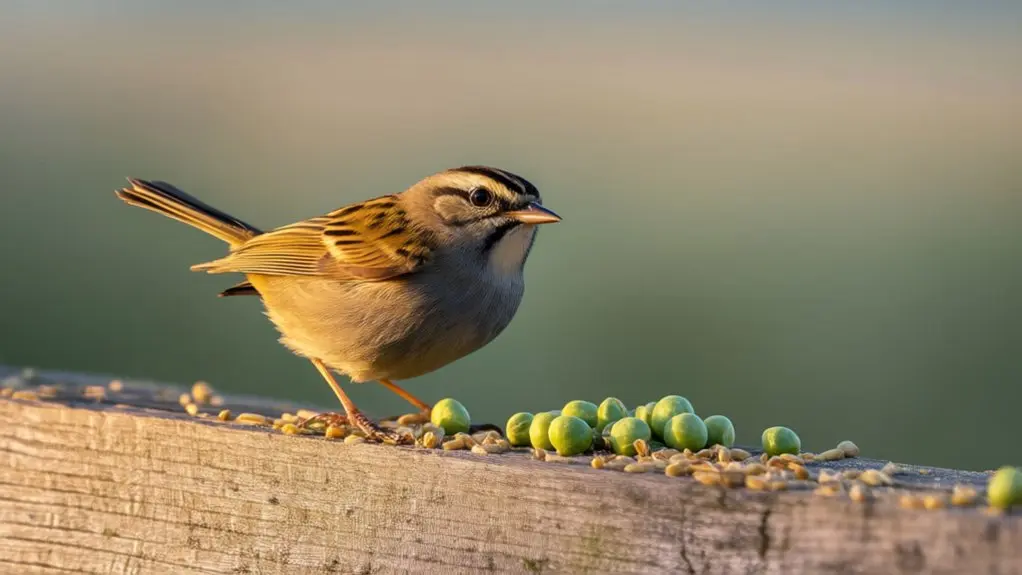
You can safely feed dried peas to wild birds, but only after soaking them overnight to soften and reduce choking risks. Larger birds like parrots and pigeons handle them well, while smaller species often avoid or struggle with dried peas.
Offer peas in moderation, just a few for small birds and a tablespoon for bigger ones, and watch their response. If you want to make the most of dried peas and explore bird preferences, there’s plenty more to discover.
Are Dried Peas Safe for Wild Birds?
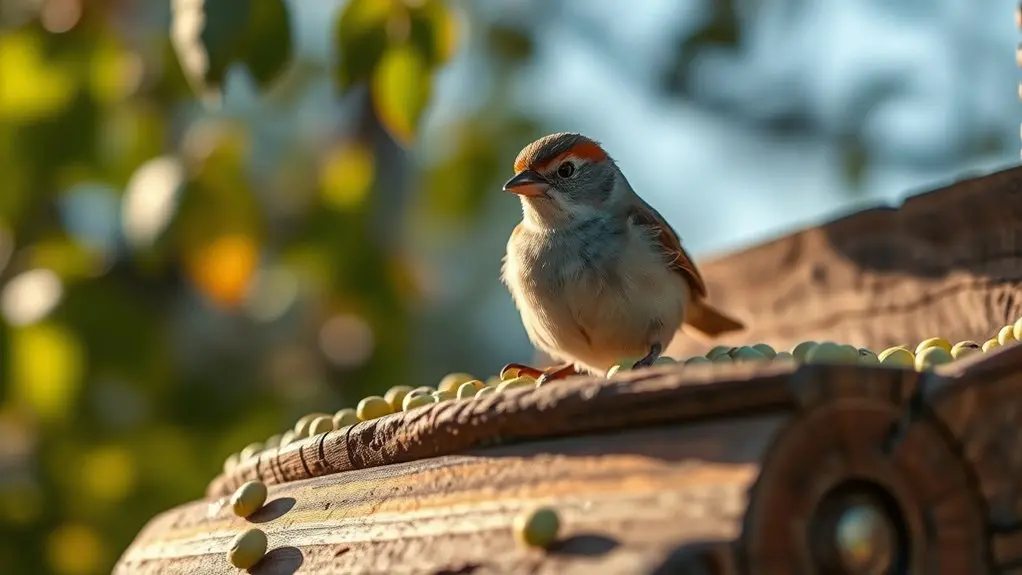
Wondering if dried peas are safe for wild birds? The answer is yes, but with some caution.
Dried peas can be nutritious, offering high protein and fiber, but not all birds handle them well. Larger birds tend to eat dried peas without issues, while smaller species often avoid them.
To make sure dried peas are safe and easier to digest, you should soak them first. Offering them dry might pose a choking hazard or be too tough.
Remember, dried peas shouldn’t replace a bird’s main diet but can be a healthy treat in moderation.
When selecting foods for your feathered visitors, make sure you choose foods that are safe and suited to their size and dietary needs.
Why Birds Avoid Uncooked Dried Peas
Although dried peas offer good nutrition, birds often avoid uncooked ones because they’re hard and tough to digest, especially for smaller species like sparrows and chickadees.
When you feed wild birds, you’ll notice they tend to ignore uncooked dried peas since these peas are too tough and sometimes frozen, making them unappealing.
Wild birds often ignore uncooked dried peas because they are tough and unappealing, especially when frozen.
Birds eat seeds and grains that are softer and easier to consume, so uncooked dried peas don’t fit their preference.
Furthermore, dried peas don’t provide the quick energy many birds need, especially in colder months.
If you want to feed wild birds effectively, it’s better to offer softer, more familiar options like sunflower seeds or millet rather than uncooked dried peas, which they usually avoid.
Nutritional Benefits of Dried Peas for Birds
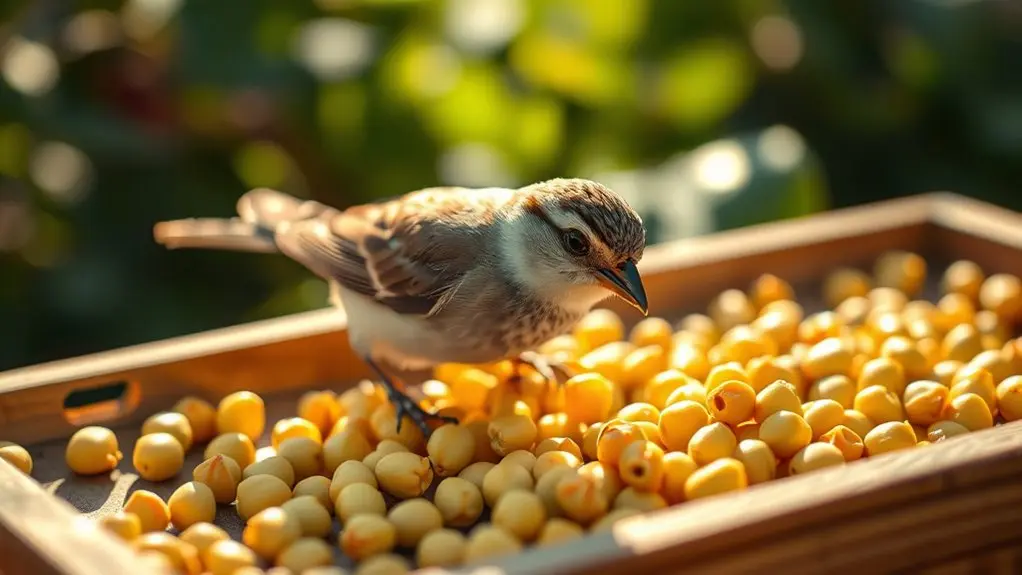
While uncooked dried peas may not appeal to many birds, their nutritional value shouldn’t be overlooked.
These split peas offer impressive nutritional benefits that can support your feathered friends’ health in multiple ways:
- Protein and fiber: With about 8.3g each per 100g, they help maintain muscle health and promote digestion.
- Essential micronutrients: Vitamins like K (2.9mcg per 100g) support blood health and healing.
- Energy boost: The high carbohydrate content (21.1g per 100g) provides concentrated energy, especially useful in colder months.
Including split peas in your birds’ diet as an occasional treat can enhance their nutrition without overwhelming their usual food sources.
How to Prepare Dried Peas for Wild Birds
Before you offer dried peas to wild birds, make sure you soak them overnight in fresh water. This helps make them safe and soft for the birds to eat.
Once they’ve soaked, give them a good rinse and drain them well.
Then, think about whether you need to mash the peas, especially if you’re feeding smaller birds.
Just remember to serve these peas in moderation, and always keep safety in mind to ensure it’s a healthy treat for your feathered friends.
Soaking Techniques For Peas
When you soak dried peas overnight in cool water, you rehydrate them and make them safer and easier for birds to eat. Proper soaking softens the peas, reducing the risk of choking and improving digestibility.
Here’s how to prepare peas effectively:
- Soak peas in cool water for 8-12 hours to fully rehydrate them.
- Drain and rinse thoroughly to remove any phytic acid or impurities that might be harmful.
- For smaller birds, mash the rehydrated peas to help them eat easily; larger birds can handle whole peas.
Avoid mixtures containing canned peas, as added salt can harm birds.
Serving Tips For Birds
Properly preparing dried peas is only part of the process; serving them correctly guarantees your feathered visitors enjoy a safe and nutritious treat.
After soaking and rinsing the peas to create rehydrated peas, offer them in moderation to avoid overfeeding.
Smaller birds may need you to mash the peas for easier consumption, while larger birds can handle whole peas. Limit small birds to 2-3 peas a few times a week and larger birds up to 1 tablespoon per serving.
Always supervise feeding to confirm the birds eat safely and avoid any contamination.
Remember to skip canned peas because of added salt, sticking to fresh or frozen varieties without additives. This approach keeps your wild birds healthy and happy.
Safety Precautions When Feeding
Although dried peas can be a healthy snack for wild birds, you need to take specific safety precautions to prepare them correctly. Proper preparation guarantees the peas are safe and easy for birds to eat.
Follow these steps:
- Soak the dried peas overnight in fresh, cool water to soften them and remove any harmful substances.
- Drain and rinse the peas thoroughly before serving to eliminate contaminants. Mash them if feeding small birds for easier consumption.
- Offer peas in moderation, about 2-3 for small birds and up to one tablespoon for larger parrots, to avoid digestive issues.
Always supervise birds while feeding to prevent choking hazards and guarantee their safety.
Introducing Dried Peas to Wild Birds
If you want to introduce dried peas to wild birds, start by soaking them overnight to rehydrate and soften the peas. This makes them safer and easier for birds to eat. Dried peas offer a nutritious source of plant-based protein and fiber, which help wild birds’ muscle and feather health.
However, feeding preferences vary. Local species like sparrows and chickadees might favor other seeds over dried peas. To encourage mental stimulation and natural foraging behaviors, offer dried peas as an occasional treat rather than a staple.
Remember to feed small birds just 2-3 rehydrated peas a few times a week, while larger birds can handle bigger portions.
Which Bird Species Eat Dried Peas?
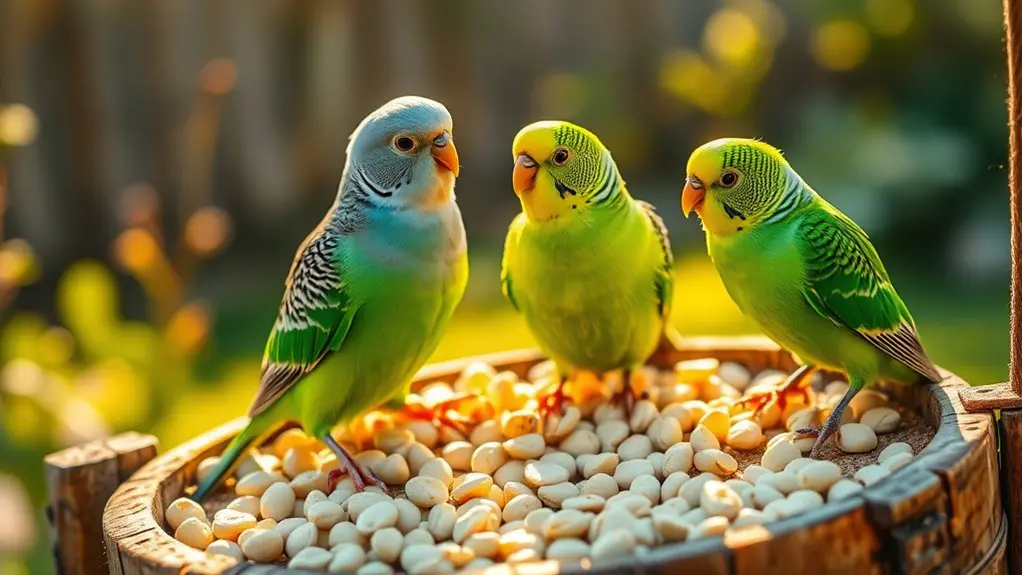
You’ll find that larger birds, like parrots and some pigeons, really enjoy dried peas because they can handle their texture.
On the other hand, smaller birds—think sparrows and chickadees—usually steer clear of dried peas and prefer softer seeds instead.
Knowing which species eat or avoid dried peas can help you choose the right food to attract the birds you want to see.
It makes feeding time a lot more rewarding!
Birds That Consume Peas
Since dried peas are larger and firmer than many common bird foods, they mainly attract bigger bird species like parrots, pigeons, and doves.
These birds often find dried peas a valuable protein source and enjoy the texture. Smaller birds, such as sparrows, usually avoid them, as peas are often added to mixes aimed at larger species.
Here are three key birds that consume dried peas:
- Parrots – They often find dried peas mentally stimulating, encouraging natural foraging behaviors.
- Pigeons and doves – These birds benefit from the protein content and commonly eat dried peas.
- Some songbirds – Juncos may eat peas if other food is scarce, but they prefer seeds over legumes.
You’ll notice dried peas suit larger birds more than smaller ones.
Species Avoiding Dried Peas
Although some birds enjoy dried peas, many common backyard species tend to avoid them. Birds like sparrows, chickadees, and northern flickers usually skip peas, preferring seeds and grains instead. Even squirrels show little interest in dried peas.
If you’re feeding wild birds, it’s good to know which species generally steer clear of peas to avoid wasted food.
| Bird Species | Preference for Dried Peas | Typical Diet Focus |
|---|---|---|
| Sparrows | Avoid | Seeds, grains |
| Chickadees | Avoid | Insects, seeds |
| Northern Flickers | Avoid | Insects, berries |
| Squirrels | Avoid | Nuts, seeds |
Understanding species that avoid peas helps you tailor your bird feeding strategy effectively.
Are Dried Peas Suitable for Small Songbirds?
How well do dried peas suit small songbirds? Their feeding preferences and bird behavior suggest dried peas aren’t the best choice. Small songbirds often avoid dried peas because they’re hard and tough to eat without soaking.
To understand this better, consider:
- Texture Challenge: Dried peas are too hard for many small birds to crack, limiting access to nutrients.
- Feeding Preferences: Species like sparrows and chickadees prefer softer, easier seeds, avoiding dried peas.
- Seed Alternatives: Options like sunflower seeds or specialized bird mixes attract more small birds due to better accessibility and taste.
If you want to include dried peas, soak them overnight to soften.
Otherwise, stick to seed alternatives that better match small songbirds’ natural feeding behavior and preferences.
Mistakes to Avoid When Feeding Dried Peas
When feeding dried peas to birds, you need to avoid some common mistakes that could harm their health or discourage them from eating. One common misconception is offering dried peas without soaking them first. Always rehydrate peas overnight to ease digestion issues and guarantee safety.
Also, avoid feeding dried peas to small birds frequently or in large amounts, as their digestion is sensitive. Limit servings to 2-3 rehydrated peas a few times a week.
Another mistake is introducing peas abruptly; gradual introduction prevents upset stomachs.
Finally, check the peas’ quality. Choose 100% green peas without salt or preservatives to avoid harming birds.
Seasonal Effects on Feeding Dried Peas to Birds
Since seasonal changes influence birds’ feeding habits, you’ll notice dried peas are less appealing during colder months when they become too hard or frozen.
Temperature impact plays a big role in their seasonal preferences and feeding behavior.
Temperature significantly shapes birds’ feeding choices and seasonal behaviors throughout the year.
To feed birds effectively, consider these points:
- In winter, birds prefer high-energy foods like seeds and nuts over dried peas, which feel tough in the cold.
- Spring and summer bring more insects and fresh foods, so birds lose interest in dried peas during these warmer months.
- Adjust your feeding strategy seasonally to match birds’ changing preferences and maintain their reliance on your feeders year-round.
Signs Birds Like or Reject Dried Peas
Although some birds might nibble on dried peas, many commonly reject them, leaving these legumes untouched in feeders. You’ll notice that sparrows, chickadees, and flickers often avoid dried peas due to their hardness, especially during colder months when frozen peas are unappealing.
Observing bird feeding behaviors, you’ll find magpies and squirrels also bypass dried peas, favoring more accessible seeds instead. These dried peas preferences highlight how seasonal bird diets influence what birds eat.
When you see peas left uneaten, it’s a clear sign that birds don’t favor them. To support local birds effectively, it’s important to recognize these signs of rejection and adjust your feeder offerings based on natural bird feeding behaviors and seasonal dietary changes.
Alternatives to Dried Peas for Wild Bird Feeders
If you want to attract more birds to your feeder, switching from dried peas to more appealing alternatives is key. Birds often reject dried peas, so offering options that match their preferences will boost visits.
To enhance seed diversity and improve your feeding strategies, consider these three alternatives:
- Junco mix – excludes dried peas and attracts a wider variety of birds.
- Black oil sunflower seeds – cost-effective and beloved by many species.
- Quality seed mixtures – free of inedible ingredients like split peas, promoting seed diversity.
Pairing these options with fresh water encourages regular visits and supports bird health.
Understanding bird preferences helps you tailor your feeding strategies, ensuring your wild bird feeders become a popular spot for diverse species year-round.
Where to Buy Quality Dried Peas for Bird Feeding
Finding quality dried peas for bird feeding can make a big difference in attracting and nourishing your feathered visitors. Start by checking local suppliers, especially if you live near regions like Tasmania, known for producing up to 99% of Australia’s processing peas.
Local sources often guarantee freshness and support reduced travel distances. You can also explore online retailers and specialty bird stores, which offer a variety of dried peas for easy price and quality comparison.
When buying, make certain the peas are 100% green peas without additives and intended specifically for animal consumption.
For regular feeding, consider bulk purchasing. It’s cost-effective and guarantees a steady supply of quality dried peas to keep your birds happy and healthy.
Frequently Asked Questions
Can Dried Peas Cause Allergies in Birds?
Yes, dried peas can cause allergies in birds, although it’s uncommon. When you introduce dried peas, which offer good dried peas nutrition, follow bird feeding guidelines carefully.
Watch for allergy symptoms like lethargy, feather plucking, or digestive issues. If you spot any signs, stop feeding them immediately.
Gradually adding dried peas lets you monitor your bird’s reaction, ensuring their diet stays safe and nutritious without triggering allergies.
How Often Should I Feed Dried Peas to Birds?
You should follow feeding guidelines by offering dried peas a few times a week rather than daily.
Serving sizes vary: small birds get 2-3 soaked peas, medium parrots about a teaspoon, and large parrots up to a tablespoon.
This frequency guarantees your bird enjoys the nutritional benefits without overdoing it.
Always soak peas overnight and balance them with other foods to keep your bird’s diet well-rounded and healthy.
Can Dried Peas Be Mixed With Other Seeds Safely?
Back in the days of jousting knights, you’d want to mix dried peas with other seeds safely by following proper preparation methods.
You can enjoy the nutritional benefits of dried peas by combining them with smaller seeds, making the blend easier for birds to eat.
Stick to feeding guidelines by introducing the mix gradually, ensuring freshness, and balancing the seeds for peak nutrition.
This way, you’ll keep your feathered friends happy and healthy.
Do Dried Peas Attract Unwanted Pests to Feeders?
Yes, dried peas can attract unwanted pests to your feeders because leftover seeds often encourage pest behavior like rodents and insects rummaging around.
To maintain good feeder hygiene, you should regularly remove uneaten dried peas and clean your feeders thoroughly.
Using natural repellents nearby can also help keep pests at bay.
Choosing seed mixes without dried peas reduces the risk, making your bird feeding area cleaner and safer for your feathered visitors.
Are Canned Peas Safe for Birds Compared to Dried Ones?
Think of canned peas as a tempting but risky shortcut; they might seem convenient, but they lack the nutritional benefits dried peas offer.
Compared to dried peas, canned pea benefits fade due to added salt and preservatives, which aren’t safe for birds.
Nutritional comparisons show dried peas retain more protein and fiber when soaked properly.
Conclusion
So, can birds eat dried peas? Well, yes, but only if you want to watch them turn their beaks up like you just offered them bad coffee. While dried peas pack some nutrition, birds usually prefer their meals a bit more lively.
If you’re hoping for a bird buffet, soften those peas first or stick to tried-and-true snacks. Otherwise, you might just end up with a very polite, yet very hungry, flock of picky eaters.