
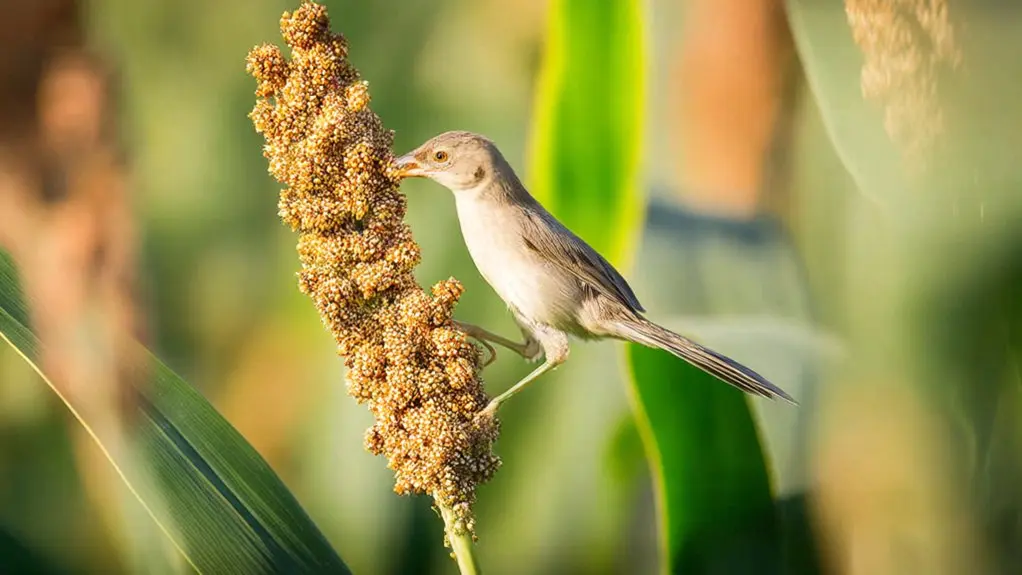
You can safely feed millet to many wild and pet birds, including finches, sparrows, doves, and parakeets. It provides key carbohydrates, fats, proteins, vitamins, and minerals that support energy and feather health.
Millet suits ground-feeding species when scattered near cover or offered on low platforms. Just avoid tube feeders and wet seeds because they can cause mold.
Timing when you feed and mixing millet with other seeds can help birds eat more and reduce waste. For more detailed guidance, check out effective millet feeding techniques and precautions.
Can Birds Eat Millet? Which Species Prefer It?
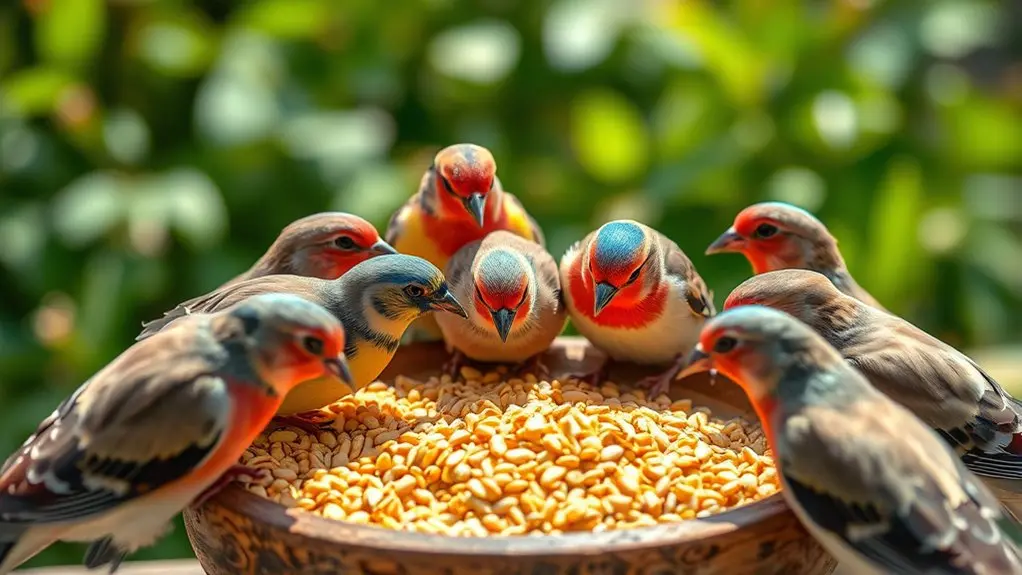
Although millet might seem like a simple seed, it plays a crucial role in the diets of many bird species. You’ll find that wild birds such as finches, juncos, doves, and sparrows often prefer millet as a primary food source.
If you keep pet birds like canaries, finches, lovebirds, or parakeets, you’ll notice they readily consume millet, especially in spray form. Ground-feeding species like quail, towhees, and cardinals are particularly attracted to white millet placed on ground or platform feeders.
Birds with delicate bills, including small songbirds and finches, favor millet presented as spray or small seeds. Larger birds like grouse and quail also consume millet, highlighting its versatility across a wide range of bird species.
Nutritional Benefits of Millet for Birds
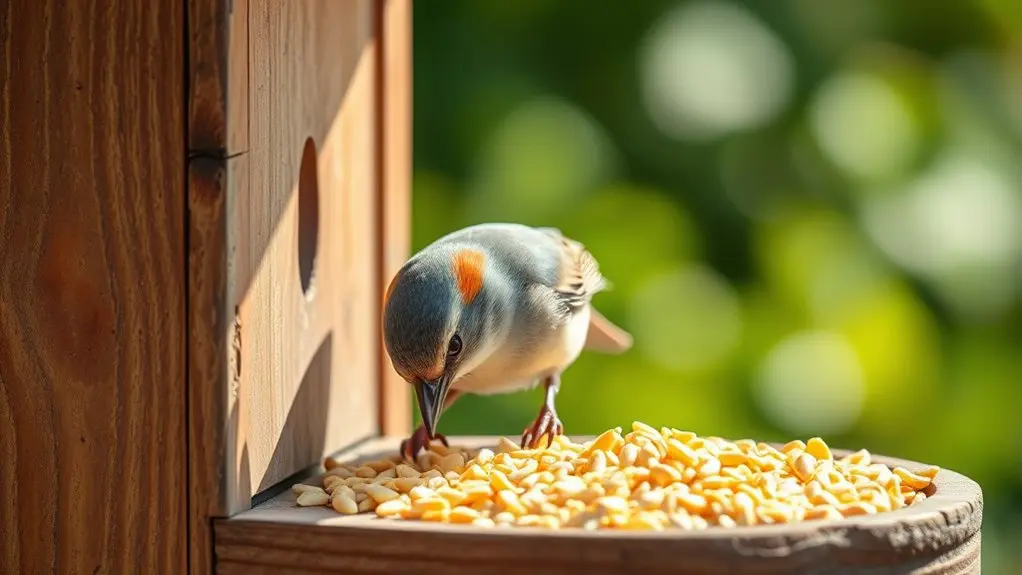
When you offer millet to birds, you provide them with a nutrient-dense seed that delivers high carbohydrates essential for sustaining their energy levels. This is especially important during periods of intense activity or cold weather.
Millet’s significant oil content supplies fats necessary for energy storage and thermoregulation.
Millet’s rich oil content provides essential fats for energy storage and maintaining body heat.
It also contains modest amounts of protein, vitamins, and minerals that contribute to overall health and feather development. Hulled millet, in particular, enhances digestibility and reduces risks of waste and mold accumulation compared to unhulled varieties. So, it’s a smarter choice if you want to keep things clean and healthy.
This nutritional profile makes millet especially crucial for small songbirds like finches, sparrows, and doves. These birds depend on high-energy foods to maintain vitality.
Incorporating millet into their diet supports their metabolic demands and promotes resilience in various environmental conditions.
How to Feed Millet to Wild Birds: Tips and Strategies
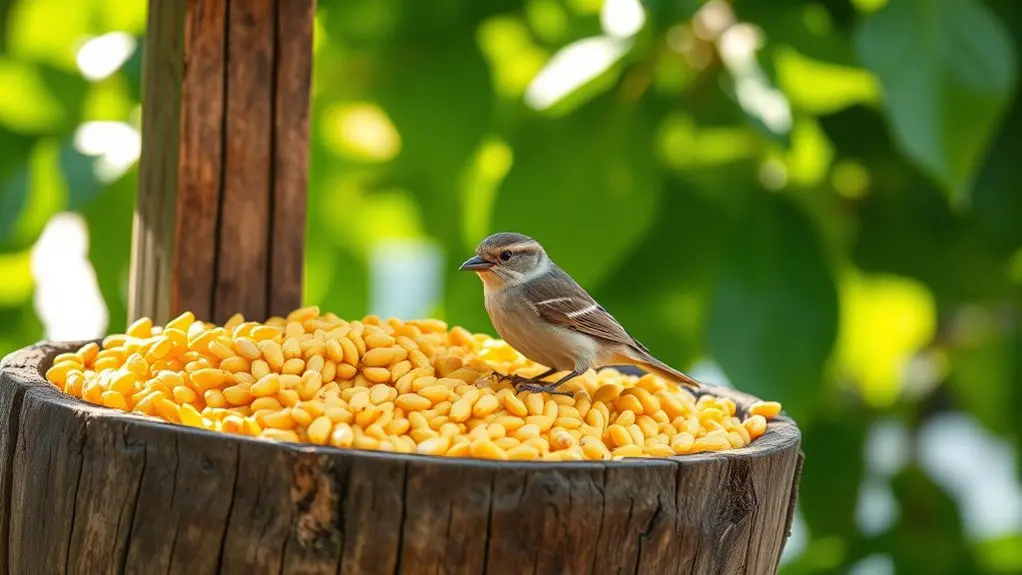
Providing millet to wild birds requires thoughtful placement and presentation to maximize accessibility and appeal. Scatter millet directly on the ground near shrubs or brush piles to attract ground-feeding birds like sparrows, doves, and juncos.
Alternatively, use low platform feeders or shallow trays with good drainage to accommodate species that forage close to the ground.
Avoid placing pure millet in tube feeders because wild birds are less likely to recognize it there.
Timing your feeding during migration seasons, such as spring and fall, can increase the variety of birds visiting your feeding spot. These times are great because birds are looking for energy-rich food to fuel their journeys.
Also, keep things clean by regularly washing feeding areas. Don’t overfeed millet—that helps prevent mold growth and keeps the seed quality high.
This way, you make sure the birds get safe and healthy food every time they visit.
Should You Mix Millet With Other Seeds? Pros and Cons
You might want to mix millet with other seeds if you’re looking to attract a wider variety of birds. Different birds have their own favorite types of seeds, so offering a mix can cater to more species.
On the other hand, mixing seeds can sometimes lead to more waste. Birds often go for their preferred seeds and leave the millet behind.
Plus, unhulled millet tends to spoil pretty quickly, which can cause mold to develop.
Benefits Of Seed Mixing
Although mixing millet with other seeds might seem beneficial by offering variety, it often leads to significant seed waste because many birds selectively consume their preferred seeds and leave millet uneaten. However, seed mixing can provide dietary diversity, potentially supplying a broader range of nutrients beneficial for bird health.
Mixing seeds may also mimic natural foraging conditions, encouraging birds to engage in more varied feeding behaviors. Additionally, combining seeds can be cost-effective when using inexpensive fillers like millet, allowing you to offer a larger quantity of feed.
Despite these advantages, it’s important to monitor spoilage risks, especially with unhulled millet, which can promote mold growth. Balancing variety and seed quality is key to maximizing the benefits of seed mixing while minimizing waste and health concerns.
Drawbacks Of Mixed Seeds
Since many birds prefer specific seeds like sunflower or peanuts, mixing millet with other seeds often leads to significant portions of millet going uneaten. This uneaten millet can germinate, fostering mold growth that poses health risks to birds.
Commercial seed mixes include millet mainly for volume and profit, rather than nutritional value or preference.
When millet and other less favored seeds are combined, the neglected seeds spoil faster, especially under humid conditions. This spoilage not only increases waste but also decreases birds’ overall nutritional intake.
To minimize these drawbacks, it’s more effective to offer seeds separately. Doing so allows birds to select preferred seeds, reduces the risk of mold development, and prevents unnecessary seed waste. This promotes better health and feeding efficiency.
Preventing Millet Waste and Mold When Feeding Birds
When feeding birds millet, preventing waste and mold requires careful management of seed quantity and moisture levels. You should only scatter millet amounts birds can consume within 1-2 days to avoid leftovers that promote mold growth.
Wet millet encourages germination and fosters bacteria and fungi, increasing mold risk.
Using hulled millet rather than unhulled reduces waste and the chance of leftover seeds spoiling.
Overfilling feeders leads to spoilage, so fill them conservatively to maintain seed freshness.
Regularly clean feeding areas to remove debris and ensure good drainage, which minimizes moisture accumulation and mold development.
These practices help maintain a hygienic feeding environment, supporting birds’ health by providing fresh, uncontaminated millet while minimizing seed loss due to spoilage or fungal contamination.
It’s all about keeping things fresh and tidy so the birds get the best feed without the mess.
Best Feeders for Millet: Wild and Pet Bird Options
Choosing the right feeder type makes a big difference in how well millet reaches both wild and pet birds. Wild species like juncos and finches usually prefer ground or low platform feeders. Pet birds such as canaries and budgerigars often enjoy millet offered in spray form or through specialized feeders.
To get the best results with millet feeding, consider these options:
- Use shallow, ground-level, or tray-style feeders. These help ground-feeding birds get easy access and also reduce seed waste.
- Try squirrel-proof, ventilated feeders (like the Eliminator™) to keep larger animals from stealing the millet.
- Mix millet with other seeds to attract a wider variety of birds.
- Place feeders near cover to give birds a sense of safety while they eat. This encourages more species to come around.
Picking feeders based on the type of bird and their habits really helps millet get delivered efficiently and supports their dietary needs.
Using Millet to Attract Ground-Feeding Birds
Millet serves as an effective attractant for ground-feeding birds such as sparrows, doves, juncos, and towhees because of its nutritional profile and ease of consumption. You can attract these species by offering millet directly on the ground or using low platform feeders. These feeders work well since they match how these birds like to forage.
Birds tend to seek millet near protective cover like shrubs or brush piles. So, placing feed in these spots encourages their natural behavior and helps improve feeding success.
Scattering millet on the ground is great because it mimics natural foraging conditions and promotes diverse bird activity.
To keep the birds coming back, you’ll need to replenish millet regularly and keep feeding areas clean. This helps minimize the risk of disease and ensures continued bird activity.
Using millet thoughtfully like this supports healthy ground-feeding bird populations in your local environment.
When and Where to Scatter Millet for Best Results
You should scatter millet near shrubs or brush piles to attract ground-feeding birds. It’s also great to spread it along hedge edges during migration seasons to catch the attention of passing songbirds.
Try placing millet on low platform feeders or directly on the ground. This encourages natural foraging behaviors, which birds really seem to enjoy.
Just be sure to time your scattering carefully so you don’t overfeed the birds. And use dry millet, spread thinly—this helps reduce mold and bacterial growth.
Optimal Scattering Locations
When scattering millet, placing it near shrubs or brush piles provides an ideal environment to attract ground-feeding birds such as sparrows and doves. You should avoid open, exposed areas where millet can be easily blown away or spoiled by rain. Positioning millet close to natural cover encourages birds to forage safely, increasing feeding activity.
During migration, spreading millet along hedge edges or open spaces boosts visibility and accessibility.
To optimize scattering locations, consider these tips:
- Scatter millet on the ground near dense shrubs or brush piles.
- Use low platform feeders close to cover to mimic natural foraging.
- Avoid exposed areas prone to wind and moisture damage.
- Regularly replenish millet to maintain consistent food sources and attract diverse species.
This approach supports natural behaviors and sustains bird populations effectively. It’s a simple way to make sure your feathered visitors keep coming back.
Seasonal Timing Tips
Although ground-feeding birds can consume millet year-round, scattering it strategically according to seasonal conditions maximizes feeding efficiency and bird attraction.
In early spring and fall, place millet near shrubs or brush piles to draw migrating species.
During dry seasons, distribute millet along hedge edges or in low platform feeders to compensate for scarce natural food.
After rainfall, scatter millet on the ground to encourage germination and attract birds seeking moisture-rich seeds.
In winter, use millet in open areas to support ground-foraging birds like doves and sparrows.
Avoid applying millet in hot, humid weather to reduce mold development and spoilage, which pose health risks.
By timing millet distribution based on environmental factors, you optimize its availability and appeal to diverse bird populations throughout the year.
Just remember, a little planning goes a long way when it comes to keeping your feathered friends happy!
Ground Versus Platform
Since ground-feeding birds prefer easy access to their food, scattering millet directly on the ground near shrubs or cover attracts species like sparrows, doves, and juncos effectively.
Alternatively, using low platform feeders mimics natural foraging conditions by presenting millet at surface level, which can increase bird activity.
Avoid tube feeders for millet, as these are unsuitable for ground-feeding species.
Timing your millet distribution during early morning or late afternoon aligns with peak foraging periods, helping optimize food uptake and bird presence.
To maximize millet feeding success:
- Scatter millet on the ground near natural cover.
- Use low platform feeders to simulate natural feeding.
- Avoid enclosed tube feeders for millet.
- Clean feeding areas regularly to prevent mold and bacterial growth.
This approach guarantees safe, efficient feeding and supports healthy bird populations.
It’s a simple way to help the birds enjoy their meals just like they do in the wild.
Common Mistakes to Avoid When Feeding Millet
To guarantee the health of your birds and the effectiveness of millet as a feed, you should avoid several common mistakes. First, don’t scatter wet millet because it can germinate, encourage mold, and pose health risks.
Also, avoid overfeeding millet to prevent spoilage, bacterial growth, and unnecessary waste, especially if consumption is slow.
Refrain from offering pure white millet in tube or seed feeders since birds prefer it on the ground or platform feeders.
And don’t rely solely on millet in bird mixes. Birds often cherry-pick favored seeds, leaving millet unused and increasing waste.
Finally, store millet in a cool, dry place to prevent moisture absorption, mold development, and bacterial contamination.
Following these simple tips will help keep millet a safe and healthy part of your birds’ diet.
Spray Millet Benefits for Pet Birds
You’ll find that spray millet really taps into your pet bird’s natural foraging instincts. It encourages them to pick seeds straight from the stalk, which is great for keeping their mind active.
Plus, this little activity gives their beak and bills a gentle workout, helping to keep them in good shape and healthy.
Foraging Instinct Stimulation
Although pet birds receive their food in captivity, offering spray millet provides essential stimulation for their natural foraging instincts. Spray millet mimics the experience of searching and picking seeds from stalks, which encourages your bird to engage in innate behaviors vital for mental and physical health.
This natural activity supports cognitive function and reduces stress caused by boredom.
Here’s how spray millet benefits your pet bird’s foraging instincts:
- Encourages delicate seed picking, enhancing mental stimulation
- Supports natural seed-searching behavior, promoting well-being
- Helps maintain healthy beak and bill shape through nibbling
- Reduces stress by providing purposeful activity
Including spray millet regularly enriches your bird’s environment and fosters overall happiness by catering to instinctual needs. It’s a simple way to make their day more interesting and keep them feeling great!
Bill Health Exercise
When pet birds nibble on spray millet, they actively exercise their bills, which helps maintain proper shape and prevents overgrowth. This nibbling engages their natural foraging and chewing behaviors, promoting consistent bill wear. The physical action of picking millet from the stalk also strengthens bill muscles, supporting overall structural health.
Plus, millet’s high alkalinity and easy digestibility contribute to ideal beak condition by supporting healthy tissue growth. Regularly offering spray millet not only encourages mental stimulation but also reduces boredom. And that indirectly benefits bill health by motivating natural behaviors.
Incorporating spray millet into your bird’s diet provides a scientifically sound method to maintain beak functionality and prevent common issues like deformities or excessive growth. This way, your pet’s bill stays strong and well-shaped over time.
Frequently Asked Questions
Can Millet Cause Allergies in Certain Bird Species?
Yes, millet can cause allergies in certain bird species. You should monitor your birds closely for symptoms like itching, swelling, or respiratory distress. This is especially important if they have known sensitivities or respiratory issues.
Keeping an eye on them can help prevent any adverse reactions. Better safe than sorry when it comes to your feathered friends!
How Does Millet Affect a Bird’s Digestive System?
Millet supports your bird’s digestion by promoting alkalinity and easing nutrient absorption. Its soft hulls reduce gut abrasion, which helps prevent impaction.
But be careful not to feed too much. Overdoing it can disrupt your bird’s digestive balance.
Is Millet Safe for Baby Birds or Chicks?
Yes, millet is safe for baby birds and chicks when given in small, controlled amounts. You should introduce it gradually to avoid digestive issues. Always provide a balanced diet to prevent nutritional deficiencies.
It’s a good idea to keep an eye on how they respond to millet at first. That way, you can make sure it’s helping them grow without causing any problems. Just remember, variety in their diet is key!
Can Millet Be Used as a Training Treat for Pet Birds?
Yes, you can use millet as a training treat for pet birds. Its small size makes it easy for birds to handle and enjoy.
Plus, it’s really tasty and packed with good nutrients. This makes it super effective for reinforcing behaviors during training sessions.
Using millet can also help keep your bird mentally stimulated. So, it’s a great choice to keep your feathered friend happy and engaged!
How Long Can Millet Be Stored Before It Loses Nutrition?
A stitch in time saves nine: you can store millet up to 6-12 months if kept cool, dry, and airtight. Exposure to moisture, light, or heat breaks down nutrients faster, so inspect regularly for spoilage or pests.
It’s a good idea to check on your millet every now and then to make sure it’s still fresh. Keeping it stored properly helps maintain its nutrition and flavor for longer. Just remember, the better the storage conditions, the longer it stays good!
Conclusion
You might be surprised to learn that millet makes up about 20% of the diet for many ground-feeding birds like sparrows and doves. By incorporating millet thoughtfully, you provide essential nutrients and attract a wider variety of species.
Remember to feed it properly to avoid waste and mold. With careful attention, millet becomes a valuable, scientifically backed addition to your bird-feeding routine. It enhances both their health and your backyard’s biodiversity.