
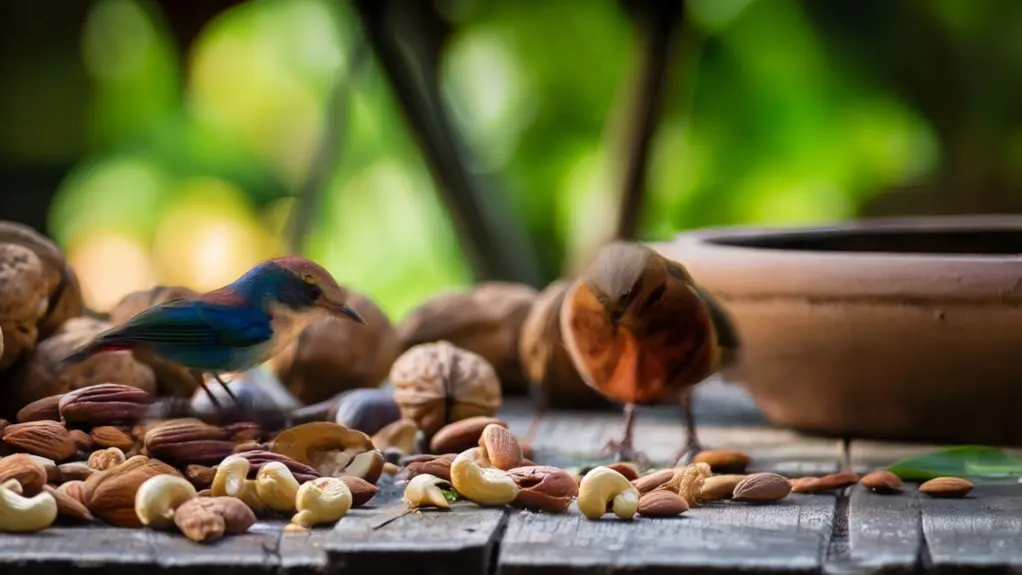
You can safely offer birds unsalted, plain mixed nuts like almonds, walnuts, pecans, and cashews. Just make sure they’re free from salts, sugars, or any flavorings. Always remove or crack shells to prevent choking, especially for smaller birds.
Also, check the nuts for mold or spoilage before serving. It’s a good idea to store nuts in airtight containers in cool, dry places. This helps keep them fresh and preserves their nutritional value.
Remember to follow proper portion control and encourage natural foraging behaviors to support bird health. It’s interesting to explore how different species interact with nuts and what feeding techniques work best.
Safe Mixed Nuts for Birds
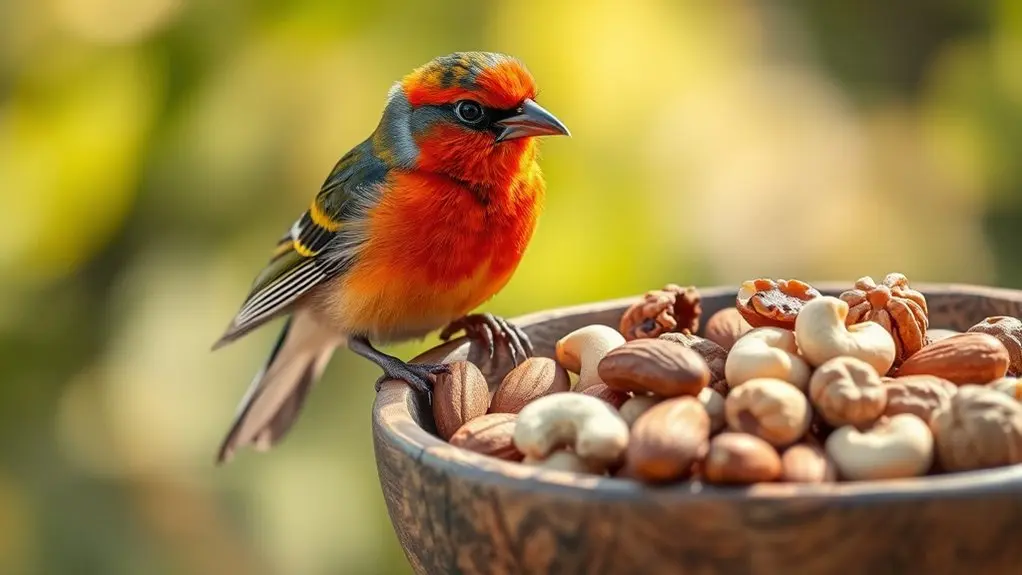
Although not all nuts are suitable for birds, you can safely offer unsalted, plain mixed nuts such as almonds, walnuts, pecans, and cashews to them. These nuts must be free of salts, sugars, flavorings, or coatings to avoid toxicity.
Whole in-shell nuts like pecans and peanuts provide enrichment for birds capable of cracking shells. This encourages natural foraging behaviors.
However, shelled nuts are better for smaller or less powerful birds so they don’t get hurt trying to open hard shells.
Before feeding, always check nuts for mold, spoilage, or discoloration because these can be harmful.
Which Nuts and Seeds to Avoid
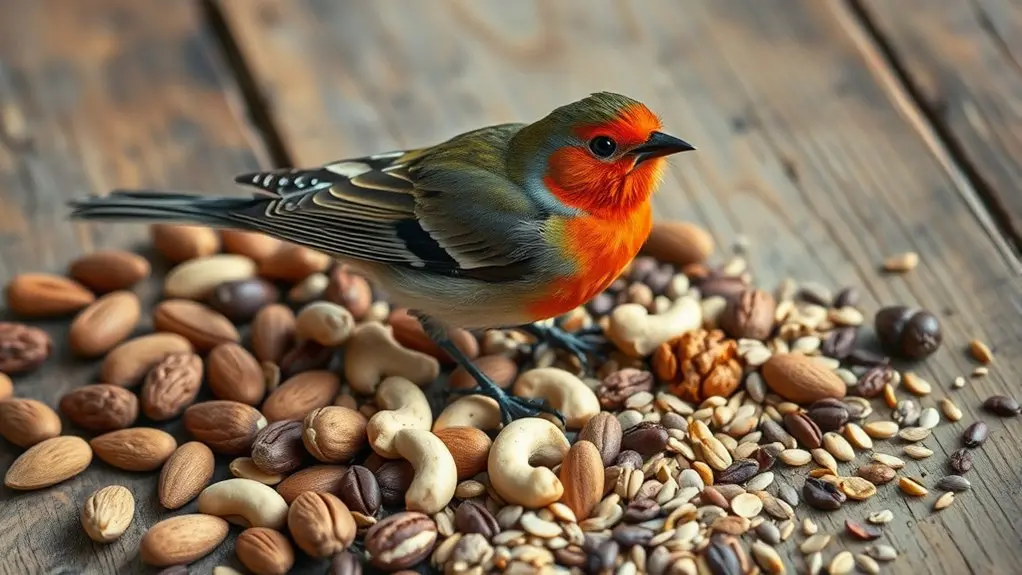
You should avoid nuts that have added salt, seasonings, or oils because these can be harmful to your bird’s health.
Also, be careful with moldy or spoiled seeds since they might contain mycotoxins, which are toxic to birds.
Oh, and one more thing—raw peanuts can sometimes have aflatoxins, so it’s best to leave those out of your bird feeding routine altogether.
Nuts With Added Salt
When feeding nuts to birds, avoid those with added salt, as excess sodium can cause dehydration and serious health issues such as kidney problems.
Salted peanuts, honey-roasted nuts, and other flavored varieties often contain oils, preservatives, and seasonings unsafe for avian consumption. These additives increase sodium intake beyond what birds can physiologically handle, disrupting their electrolyte balance.
Elevated sodium levels strain renal function, potentially leading to kidney damage. Additionally, salt promotes water loss, risking dehydration.
To protect your backyard birds, always choose plain, unsalted, and unseasoned nuts.
This ensures you provide a safe, nutritious food source without exposing them to harmful chemicals or excessive sodium. Being vigilant about nut selection prevents adverse health effects and supports the well-being of wild and pet birds alike.
Moldy Or Spoiled Seeds
If nuts and seeds develop mold or spoil, they produce mycotoxins that pose serious health risks to birds. You should never offer nuts or seeds with a musty smell, discoloration, visible mold, or slimy texture. These are clear signs of spoilage.
Feeding moldy seeds can cause respiratory issues, gastrointestinal distress, and even neurological damage in birds. To protect your feathered friends, store nuts and seeds in a cool, dry place. Inspect them regularly for any signs of spoilage.
Discard any contaminated items immediately to prevent toxin exposure. Avoiding moldy or spoiled nuts and seeds is critical to maintaining the health and safety of backyard birds.
These toxins can lead to severe and sometimes fatal outcomes.
Raw Peanuts Risks
Although raw peanuts are a popular snack for humans, they pose significant risks to birds because of the potential presence of aflatoxins. These are toxic compounds produced by certain molds. When birds eat these mycotoxins in large amounts, it can cause severe liver damage or even death.
So, you should avoid offering raw peanuts unless you’re sure they’re free of aflatoxins. Also, nuts with hard shells that birds can’t easily crack, or those that show signs of mold or discoloration, can increase the risk of choking or poisoning.
Processed peanuts, like honey roasted or salted kinds, have additives that are harmful to birds. It’s best to keep those out of their diet altogether.
To keep birds healthy, stick to unsalted, unseasoned, and properly stored nuts. Always make sure they’re free from mold and any contaminants before feeding.
How to Prepare and Serve Mixed Nuts
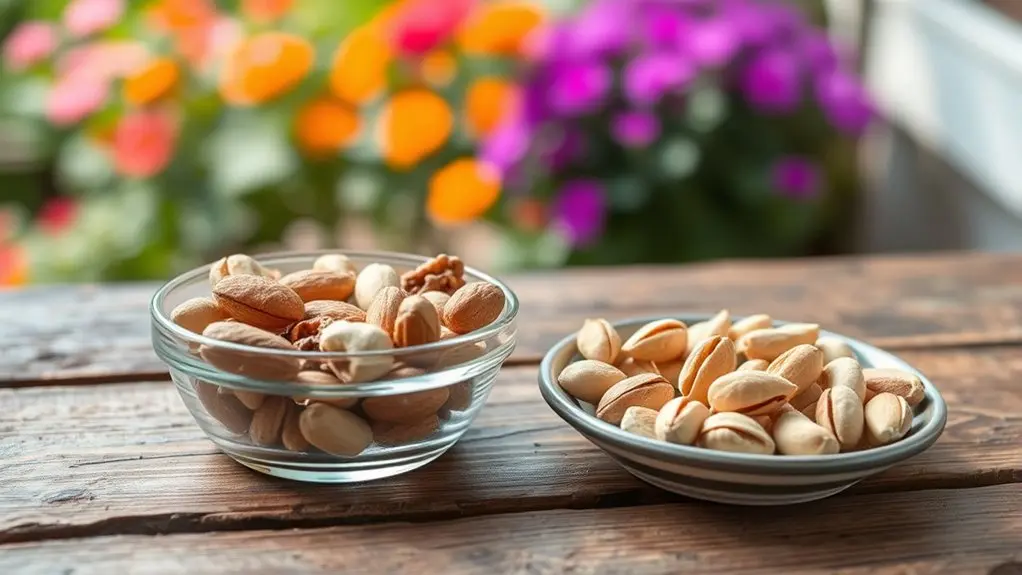
Before you offer mixed nuts to birds, it’s important to remove any salted or flavored ones to keep them safe. You don’t want to accidentally give them something that could harm them.
Also, try partially cracking larger nuts. This makes it easier for smaller birds to get to the food and encourages their natural foraging behavior, which is really fun to watch.
And one more thing—serving nuts in different forms and using the right feeders can make feeding more efficient. It also helps reduce the chances of contamination, keeping everything clean and healthy for the birds.
Nut Preparation Tips
When preparing mixed nuts for birds, selecting unsalted, plain varieties without added flavors or coatings is essential to guarantee their safety. Begin by removing shells from nuts, which minimizes choking hazards and prevents mess.
For larger nuts, crack or cut them into smaller pieces to accommodate smaller bird species’ beak sizes and feeding capabilities.
Store your mixed nuts in a cool, dry environment to prevent mold growth or spoilage. Be sure to inspect the nuts carefully before offering them to birds.
Avoid salted, roasted, or seasoned nuts, as these may contain harmful oils or additives.
Proper nut preparation not only ensures safety but also makes it easier for birds to eat and digest their food. This helps promote healthy feeding behavior and minimizes risks that come with improper nut handling.
Taking these steps really makes a difference for your feathered friends.
Serving Nuts Safely
Since birds have varying feeding habits and physical capabilities, serving nuts safely requires careful preparation tailored to their needs. You should always choose unsalted, plain mixed nuts without coatings or seasonings to avoid harmful additives.
Offer nuts in their natural form, whole or cracked open, to encourage natural feeding behaviors.
For smaller or hesitant birds, removing shells reduces choking risks and makes it easier for them to eat.
Proper storage is essential too. Keep nuts in a cool, dry place to prevent mold and spoilage.
Avoid any nuts that show signs of mold, discoloration, or off-odors because these can be toxic.
- Use only plain, unsalted mixed nuts without flavorings
- Serve nuts whole or cracked to support natural feeding
- Remove shells for small or cautious birds to prevent choking
- Store nuts properly and discard any spoiled ones
Encouraging Foraging Behavior
Although birds naturally forage for food, you can enhance their engagement by preparing mixed nuts thoughtfully. Break nuts into smaller pieces to prevent overfeeding and accommodate smaller birds. Offering nuts in their shells encourages cracking behavior, stimulating natural foraging instincts.
You can hide or scatter nuts around your yard to promote hunting activity. Using feeding stations or platforms that require birds to work for their food extends foraging time and cognitive engagement.
Always make certain nuts are unsalted, plain, and free from flavorings or processing, as additives can harm birds.
How to Control Nut Portions for Your Birds
Controlling nut portions for your birds guarantees they receive appropriate nutrition without the risks associated with overfeeding. Overfeeding nuts can lead to obesity and nutritional imbalances, so precise portion control is essential. You should offer small, measured amounts daily, tailored to your bird’s species and size.
Proper nut portioning ensures balanced nutrition and prevents obesity in birds.
Breaking larger nuts into smaller pieces helps regulate intake and makes consumption easier. Using pre-portioned containers or dish servings allows you to monitor the quantity provided effectively.
Plus, removing uneaten nuts promptly prevents spoilage and mold growth, ensuring your birds consume only fresh, safe food.
Offer small, measured portions to minimize waste and overfeeding. Break large nuts into bite-sized pieces for easier consumption. Use pre-portioned containers or dishes to track daily servings.
Remove uneaten nuts regularly to avoid spoilage and health risks.
How to Store Mixed Nuts and Seeds Properly
When you store mixed nuts and seeds properly, you substantially reduce the risk of spoilage and mold growth. Use airtight containers to limit exposure to air and moisture, and place them in a cool, dry area away from direct sunlight.
Proper ventilation is essential; it prevents moisture buildup that promotes fungal contamination. Avoid humid environments, as excess moisture accelerates spoilage and mold development.
Regularly inspect your nuts and seeds for mold, discoloration, or musty odors before offering them to birds, ensuring safety. To maintain freshness and minimize waste, store small, manageable quantities and replenish supplies frequently.
Following these guidelines, you create ideal conditions that preserve the nutritional quality of nuts and seeds, supporting safe feeding practices for your birds. It’s a simple way to keep your bird’s snacks fresh and healthy!
Which Birds Love Nuts and How They Eat Them
Since nuts provide a rich source of fats and proteins, many bird species actively seek them out as a critical energy resource. You’ll notice that birds with strong beaks, like woodpeckers, efficiently crack hard nuts, while smaller birds such as finches feed on crushed nut pieces.
Birds with strong beaks crack nuts, while smaller species prefer crushed pieces for essential fats and proteins.
Some species, like nuthatches, demonstrate impressive foraging by storing nuts for later use.
Understanding which birds prefer nuts and their feeding methods can help you provide appropriate food. Cardinals, jays, woodpeckers, and chickadees crack or peel nuts before eating. High-fat nuts like peanuts and tree nuts are favored during migration and winter.
Nuthatches and titmice store nuts in hidden locations. Finches and sparrows consume crushed or chopped nut pieces suited to their smaller beaks.
Frequently Asked Questions
Can Mixed Nuts Cause Allergies in Wild Birds?
You shouldn’t worry much; mixed nuts rarely cause allergies in wild birds. However, individual birds might have sensitivities, so you should introduce nuts gradually.
Make sure they’re plain, unsalted, and additive-free to minimize any risks. It’s always better to be safe when feeding our feathered friends!
Do Mixed Nuts Affect Bird Behavior or Aggression?
Imagine a bustling marketplace where every vendor vies for attention; similarly, mixed nuts can spark territorial behavior in birds competing for food.
However, if you provide plenty, you’ll see less aggression and more peaceful feeding.
How Often Should I Rotate Nut Varieties for Birds?
You should rotate nut varieties for birds at least once a month. This practice prevents nutrient imbalances, reduces mold risk, and maintains dietary diversity. It really helps promote ideal health for your feathered friends.
Plus, switching things up reduces the chance that birds will get bored or develop strong preferences for just one type of nut. Variety is the spice of life—even for birds! So keeping their nut options fresh and different is a great habit to get into.
Are There Seasonal Differences in Birds’ Nut Preferences?
Yes, you’ll notice birds prefer high-fat nuts like peanuts in winter for energy.
In spring and summer, they favor softer nuts or seeds to support breeding and feeding young.
This change reflects their seasonal nutritional needs.
Can Offering Mixed Nuts Attract Unwanted Wildlife?
You attract birds, squirrels, and raccoons alike when offering mixed nuts; you invite both benefits and pests.
You can reduce unwanted wildlife by using unsalted nuts and squirrel-proof feeders, controlling access to high-fat, energy-rich foods.
This way, you still get to enjoy the visitors you want without encouraging the ones you don’t. It’s all about finding the right balance.
Conclusion
When feeding birds mixed nuts, choose safe varieties and avoid toxic ones. Make sure to prepare them properly and control portions carefully. Storing nuts in airtight containers helps keep them fresh and prevents spoilage.
It’s also good to know which birds enjoy nuts and how they eat them. This way, you can provide the best nutrition for your feathered friends.
By following these simple guidelines, you’ll help keep your birds healthy, happy, and thriving. Plus, you’ll create a balanced, safe, and enjoyable feeding experience every time.