
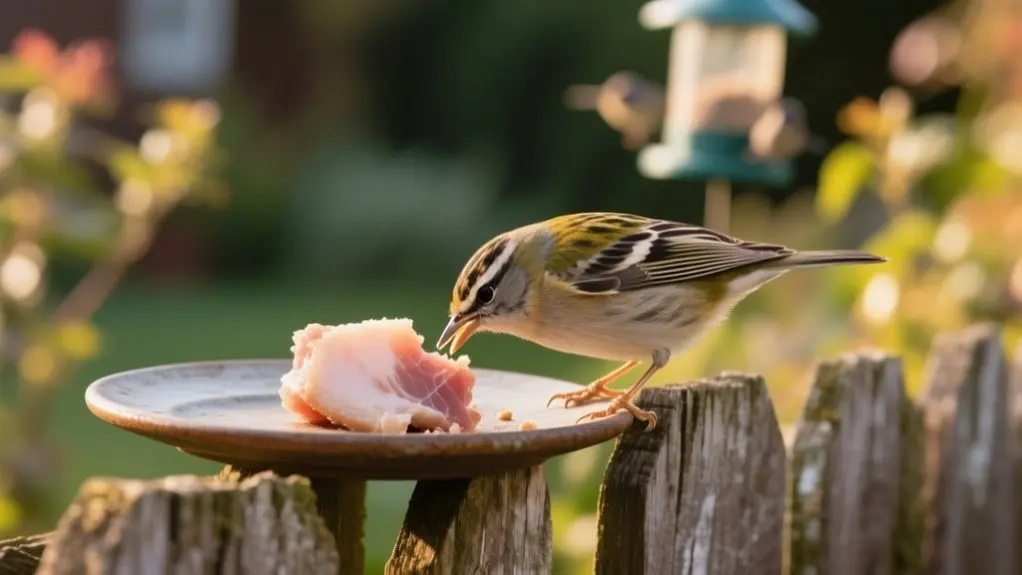
You can safely feed birds certain fats like suet and venison fat. These give them essential energy, especially in colder months. Avoid fats like coconut, palm oils, or cooking fats because they melt too easily and can harm feathers, causing greasiness and health problems.
Using suet feeders in shaded areas keeps the fat solid and birds safe. If you want to support your feathered friends properly, there’s plenty more to know about choosing and feeding the right fats.
What Types of Fat Can Birds Safely Eat?
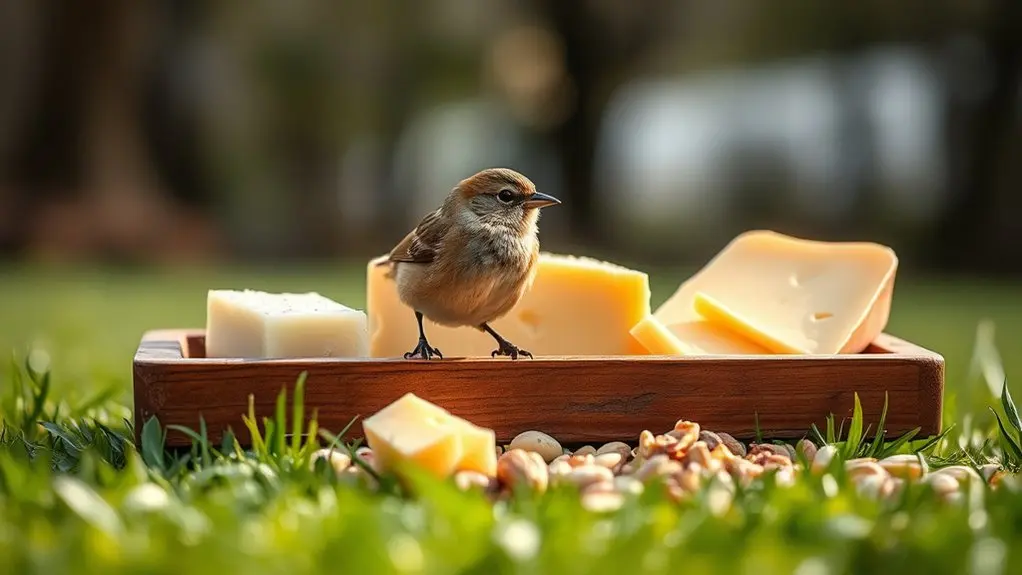
While not all fats are safe for birds, you can confidently offer suet, a rendered beef fat with a melting point around 110 degrees Fahrenheit. This minimizes the risk of feather contamination.
Suet feeders are popular because this type of fat holds up well in various temperatures, keeping your feathered friends clean and healthy.
Other fats, like venison fat, also stay solid at room temperature and can be a safe option during warm weather.
Avoid fats with low melting points, such as coconut or palm oils, which can grease feathers and cause problems.
Fresh ground peanut butter without added oils or sugars can be mixed with suet for a nutritious treat.
Choosing the right fat guarantees your birds get the energy they need safely.
Why Is Suet the Best Fat for Birds?
You’ll find suet is an ideal fat for birds because it provides high energy and stays solid at temperatures they can handle.
It’s mainly made from beef fat, which melts around 110°F. This means it won’t get too messy or unsafe for the birds.
By choosing suet, you’re helping keep the birds healthy.
Plus, it attracts a variety of species to your feeder, making your backyard a lively spot for birdwatching.
Suet Composition Benefits
Because suet is made mostly from beef fat found around cattle kidneys and loins, it packs a powerful energy punch that birds rely on, especially during cold weather and migration.
Suet offers concentrated fats that quickly replenish birds’ energy reserves when food is scarce.
Plus, rendered suet resists rancidity and melting, so it stays fresh and safe for birds even in warmer temperatures.
You’ll notice over two dozen bird species, like woodpeckers and chickadees, flock to suet feeders, boosting your backyard’s bird diversity.
The high-fat content supports their nutritional needs, helping them survive harsh conditions.
When you provide suet, you’re offering a reliable, nutrient-dense food source that plays a crucial role in birds’ health and energy maintenance.
Melting Point Importance
Although many fats provide energy, suet stands out as the best choice for birds due to its high melting point of about 110 degrees Fahrenheit. This melting point keeps suet solid in typical outdoor temperatures, preventing it from becoming greasy and harming birds’ feathers.
In contrast, fats like rendered beef fat melt at around 95 degrees, and coconut or palm oils melt even lower, between 75 and 77 degrees. These lower melting points can cause feather contamination, reducing waterproofing and insulation.
By choosing suet, you help maintain feather integrity, ensuring birds stay warm and dry.
Plus, suet’s stability in warmer weather means you can offer it year-round, attracting a wide variety of bird species regardless of the season.
Bird Safety Considerations
When choosing fat for feeding birds, you want to pick one that stays solid and safe in outdoor conditions. Suet fits this need perfectly.
Suet’s higher melting point keeps it from turning greasy and sticking to birds’ feathers, a key bird safety consideration. Because it resists rancidity and melting, suet lasts longer, especially in cold weather when natural food is scarce.
It also provides essential nutrients, helping birds stay strong through winter. To maximize bird safety considerations, use a cage feeder and place suet in shaded spots to prevent contamination.
Suet attracts various birds like woodpeckers and chickadees, making it a safe, nutritious choice you can rely on for healthy backyard bird feeding.
What Happens If Birds Eat the Wrong Fats?
If birds eat the wrong fats, you could unintentionally harm their feathers and overall health. The fat found in some oils, like coconut or palm, has low melting points and can damage feathers by making them oily and less waterproof. This can increase the risk of hypothermia.
Also, fats with high salt content from processed foods may dehydrate birds and harm their health. When unsuitable fats stick to feathers, birds struggle to clean themselves, risking starvation or death.
| Fat Type | Risk Level | Effect on Birds |
|---|---|---|
| Coconut Oil | High | Feathers oily, waterproofing lost |
| Palm Oil | High | Feather damage, hypothermia risk |
| Processed Fats | Moderate to High | Dehydration, health issues |
| Suet | Safe | Nutritional, high melting point |
How Does Fat Affect Bird Feathers and Waterproofing?

When fat gets on a bird’s feathers, it can mess up their waterproofing and insulation. This leaves them open to the cold.
The thing is, birds can’t clean this fat off by themselves. So, the fat often ends up contaminating their feathers.
This contamination is a big problem because it puts birds at serious risk—it affects their ability to stay warm and, in some cases, even survive.
Fat Impact On Feathers
Although fat is an essential nutrient, it can severely impair your bird’s feather waterproofing, leaving them vulnerable to cold and hypothermia. The fat impact on feathers is significant. Greasy feathers lose their ability to repel water, and birds can’t clean this oiliness themselves since they lack access to soap in nature.
When you feed birds at bird feeders, offering high-fat foods might seem helpful, but it can unintentionally coat their feathers with fat. Birds grooming themselves can spread this fat from their feet to feathers, making the problem worse.
This damage can lead to starvation or death from exposure, as feathers lose insulation and buoyancy. To protect your feathered friends, avoid feeding them inappropriate fats and maintain proper feeding practices that support their feather health.
Waterproofing And Insulation
Fat doesn’t just affect how your bird’s feathers look. It directly undermines their ability to repel water and trap heat.
When fat coats feathers, it compromises waterproofing, causing feathers to become saturated and less effective at keeping your bird dry. This makes your bird vulnerable to cold and hypothermia.
Birds often spread fat accidentally during grooming, especially from their feet, but they can’t remove fat from feathers themselves.
In the wild, soap isn’t available to clean greasy feathers, which interferes with insulation and body temperature regulation.
As a result, fat-contaminated feathers make it difficult for birds to stay warm and dry, increasing risks of starvation or death from exposure.
Risks Of Feather Contamination
If your bird’s feathers become contaminated with fats, you’ll notice their waterproofing ability quickly diminishes.
Fat can make feathers greasy, causing them to lose insulation and leaving your bird vulnerable to cold and hypothermia.
Birds can’t remove fat from their feathers on their own, so contamination can lead to serious health risks, including starvation or death if they can’t effectively groom.
Notably, grooming can spread fat from their feet to feathers, worsening the problem.
Even small amounts of inappropriate fat, like rendered beef fat that melts at around 95°F, can disrupt feather function, especially in warm conditions.
Keeping fat away from your bird’s feathers is essential to maintaining their waterproofing and insulation, ensuring they stay healthy and protected from the elements.
Can Cooking Fats Like Butter or Lard Be Used for Birds?
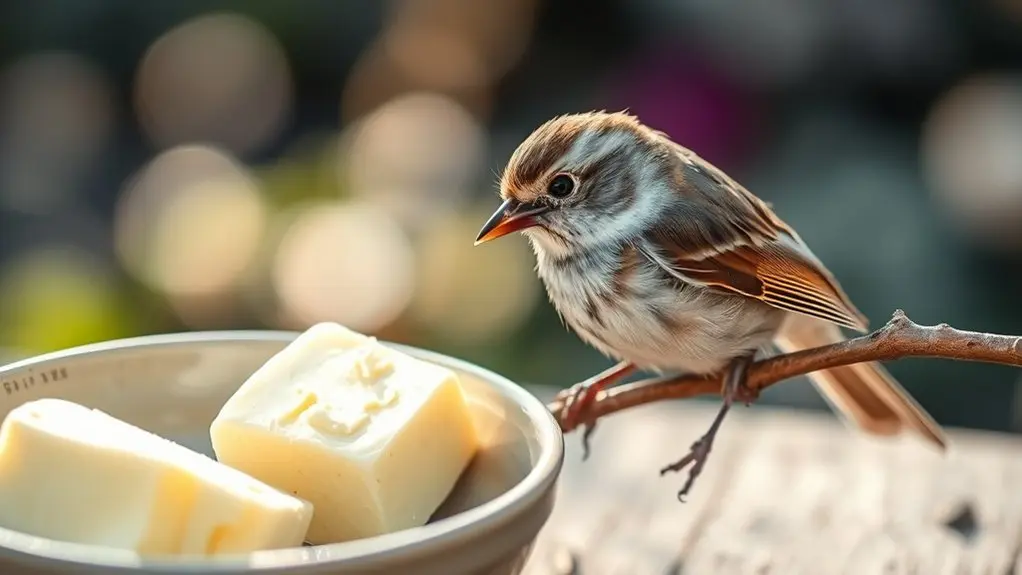
Wondering whether you can use cooking fats like butter or lard to feed birds? It’s best to avoid them.
Cooking fats such as butter and lard contain high salt levels and additives that can harm birds. They also spoil easily, turning rancid and risking birds’ health.
Unlike suet, these fats lack essential nutrients and melt too quickly in warm weather. Plus, cooking fats can stick to feathers, ruining their waterproofing and insulation, which may cause hypothermia or starvation.
While wild birds naturally consume animal fats from carcasses, cooking fats are processed differently and aren’t safe.
Instead, choose rendered beef fat suet, as it provides crucial energy without the dangers associated with cooking fats like butter or lard.
What Are Safe Alternatives to Beef Suet for Bird Feeding?
If you’re looking for a solid alternative to beef suet, venison fat is a great choice. It stays firm even when the weather gets warmer, which makes it perfect for bird feeding.
Another tasty option is mixing fresh ground peanut butter—just make sure it doesn’t have added oils or sugars—with suet. Birds really seem to enjoy that blend.
Just keep in mind to pick fats that match the season. That way, you’ll keep your bird feeders both safe and nutritious for your feathered friends.
Venison Fat Benefits
Three key benefits make venison fat an excellent alternative to beef suet for feeding birds. Venison fat offers essential fatty acids that support bird health. It stays solid at room temperature for easy use in warmer climates and attracts a variety of species, including dark-eyed juncos.
By choosing venison fat, you contribute to reducing waste and promoting wildlife sustainability.
Consider these benefits when feeding birds with venison fat:
- You provide a nutritious, natural fat source that many birds love.
- You help birds thrive with a diverse diet, especially in colder months.
- You support local ecosystems by repurposing hunter-collected fat.
- You enjoy watching a wider range of feathered visitors at your feeder.
Venison fat truly stands out as a safe, beneficial choice for bird feeding.
Peanut Butter Mixtures
When you want to offer birds a safe and energy-rich alternative to beef suet, fresh ground peanut butter without added oils or sugars works well. Peanut butter mixtures combined with rendered suet create nutritious blends that attract many bird species.
Adding ground oatmeal, corn flour, or quick oats improves texture and appeal. Use a suet feeder to keep the mixture clean and accessible, reducing fatty residue risks. Always watch birds’ health when introducing new mixtures.
| Ingredient | Purpose |
|---|---|
| Fresh peanut butter | Energy-rich base |
| Ground oatmeal | Adds texture and fiber |
| Rendered suet | Boosts nutrition and binding |
These peanut butter mixtures offer a safe, tasty alternative for feeding wild birds.
Seasonal Fat Choices
Although beef suet remains a popular choice for feeding birds, you can safely use alternatives like venison fat. Venison fat stays solid at room temperature and works well in warmer seasons.
When choosing seasonal fat choices for bird food, it’s important to avoid fats like coconut or palm oil. These melt too easily and can harm birds’ feathers.
Instead, opt for properly rendered fats combined with nutritious nuts and seeds to attract various bird species.
- Venison fat offers a safe, stable alternative during warm weather
- Fresh ground peanut butter (no oils or sugars) boosts nutrition
- Nuts and seeds add essential nutrients and variety
- Proper rendering prevents rancidity and keeps birds healthy
Choosing the right fats guarantees your bird food supports their wellbeing year-round.
How to Prepare and Store Suet for Backyard Birds
Start by cutting the fat into small pieces and heating it gently in a double boiler until it melts into a liquid.
Pour the melted fat into molds and let it cool until it solidifies into suet.
To provide a varied diet, mix in seeds, nuts, or fruits before it hardens.
Rendered suet is ideal because it resists melting and rancidity, especially in warmer weather.
Once prepared, store your suet in the freezer to keep it fresh and ready year-round.
When feeding, use a suet feeder with a cage design to protect the suet from contamination and keep it secure for birds to access easily.
This way, you guarantee safe, nutritious fat feeding for your backyard birds.
When Is the Best Season to Feed Fat to Birds?
Providing suet to your backyard birds offers them a rich source of energy, especially during colder months. Fat-packed suet helps birds survive winter when natural food is scarce.
While winter remains the prime season for feeding fat, many bird lovers also offer suet in summer. This seasonal feeding attracts unique species, enriching your birdwatching experience.
Consider these moments to share fat with your feathered friends:
- Crisp winter mornings when birds need extra fuel
- Early spring to support returning migratory birds
- Summer shaded spots to prevent suet spoilage
- Late fall as birds prepare for colder days
Feeding fat thoughtfully year-round guarantees your backyard birds stay energized and healthy through every season.
Which Bird Species Are Most Attracted to Fat Foods?
If you want to attract a wide variety of birds to your yard, offering fat-rich foods like suet is a great strategy. Many wild birds, including woodpeckers, Carolina chickadees, and tufted titmice, are found around suet feeders. These birds rely on beef fat and other fats, especially in winter.
You can also add seeds to suet at room temperature to appeal to even more backyard bird species like eastern bluebirds and brown thrashers. The feathers of birds benefit from the energy fat provides, keeping them healthy and active.
| Bird Species | Attraction Reason |
|---|---|
| Woodpeckers | Love beef fat |
| Carolina Chickadees | Found at suet feeders |
| Tufted Titmice | High energy needs |
| Eastern Bluebirds | Attracted by added seeds |
| Brown Thrashers | Drawn to fat foods |
How to Use Suet Feeders Safely
When you use suet feeders, choosing one with a cage enclosure helps keep birds clean and reduces contamination risks. This design prevents birds from getting greasy and protects them from harmful bacteria.
Always place your suet feeder in a shaded spot to avoid melting, which can harm birds.
Regular cleaning is essential to keep the feeder safe and inviting. Remember, rendered suet melts at about 110 degrees Fahrenheit, making it a safer fat option.
Avoid spreading fats directly on trees or feeders, as it can ruin birds’ feathers.
Protect the birds you love by using cage-enclosed suet feeders.
Keep their feathers clean and waterproof.
Provide a safe, shaded feeding environment.
Prevent harmful bacteria buildup with regular cleaning.
Common Mistakes That Harm Birds When Feeding Fat
While using suet feeders correctly helps keep birds safe, certain common mistakes can still cause harm when feeding fat. One major error is using cooking fats with salt or additives, which can dehydrate birds and cause health issues.
Also, spreading fat directly on tree branches leads to greasy feathers, impairing waterproofing and insulation.
Poor feeding techniques, like offering unrendered fats, risk rancidity and toxicity. Mixing fats with processed oils creates a harmful blend that birds can’t digest properly.
Finally, neglecting to clean feeders regularly allows fat build-up, increasing contamination and illness risks.
How Fat Helps Birds Stay Healthy and Survive
Because birds burn through much of their fat reserves during cold nights and migration, providing high-fat foods like suet helps them maintain strength and survive harsh conditions.
Fat digestion plays a crucial role in quickly converting these concentrated energy sources into fuel for their bodies.
Efficient fat digestion rapidly transforms dense energy into vital fuel for birds’ active lives.
Suet, often mixed with peanut butter, offers essential nutrients that support their metabolic needs and aid in replenishing energy reserves swiftly.
When you offer high-fat foods, you’re helping birds:
- Endure freezing nights when natural food is scarce
- Sustain long migratory flights without exhaustion
- Keep their feathers in top condition for insulation
- Recover energy rapidly after intense activity
Frequently Asked Questions
Can Fat Feeding Increase Bird Aggression or Territorial Behavior?
Yes, fat feeding can increase aggression triggers and territorial behavior among birds.
When you offer high-fat foods like suet, you might notice birds becoming more competitive and defensive around feeding spots.
This happens because abundant fatty food sources encourage certain species, like woodpeckers and chickadees, to guard their territory more fiercely.
Do Fat-Rich Diets Affect Bird Migration Patterns?
Imagine migration timing as a finely tuned clock, and fat-rich diets as its winding key. You’ll find that birds rely heavily on stored fat to fuel their long journeys, so when high-fat foods are abundant, they can delay or hasten migration timing.
This means you’ll see shifts in when and where birds migrate, as fat reserves boost endurance and influence their departure, making fat a vital factor in migration patterns.
How Often Should Fat Treats Be Given to Pet Birds?
You should limit the feeding frequency of fat treats to pet birds to once or twice a week.
This controlled feeding helps prevent health issues like obesity while still providing extra energy during demanding times, such as molting or breeding.
Start with small amounts to see how your bird reacts, and always use fresh, safe fat sources.
Sticking to a proper feeding frequency keeps your bird healthy and happy.
Can Baby Birds Safely Consume Fat-Based Foods?
Yes, baby birds can safely consume fat-based foods, but you need to focus on nutritional balance. Fat should be a supplementary energy source, not the main part of their diet.
You’ll want to offer fats cautiously, ensuring they’re free from harmful additives like salt or sugar.
Providing a mix of protein-rich foods with small amounts of safe fats helps support healthy growth and feather development without causing digestive or health problems.
Are There Any Signs of Fat Intolerance in Wild Birds?
Like a car sputtering when the fuel’s wrong, wild birds show signs of fat intolerance through poor fat digestion.
You’ll notice feather deterioration or excessive preening, which signals their waterproofing is compromised.
If a bird seems lethargic, struggles to fly, or grooms more than usual, fat digestion issues might be the cause.
Keep an eye out for greasy feathers or trouble staying warm; these are key fat intolerance signals you shouldn’t ignore.
Conclusion
Feeding birds fat is like giving them a little extra warmth on a chilly day. It helps them stay healthy and energetic. You want to stick with safe fats like suet, which supports their feathers and waterproofing without causing harm.
Avoid cooking fats like butter or lard, as they can upset their systems. Use suet feeders properly, and don’t make common mistakes. With the right care, you’ll help your feathered friends thrive all year round.