
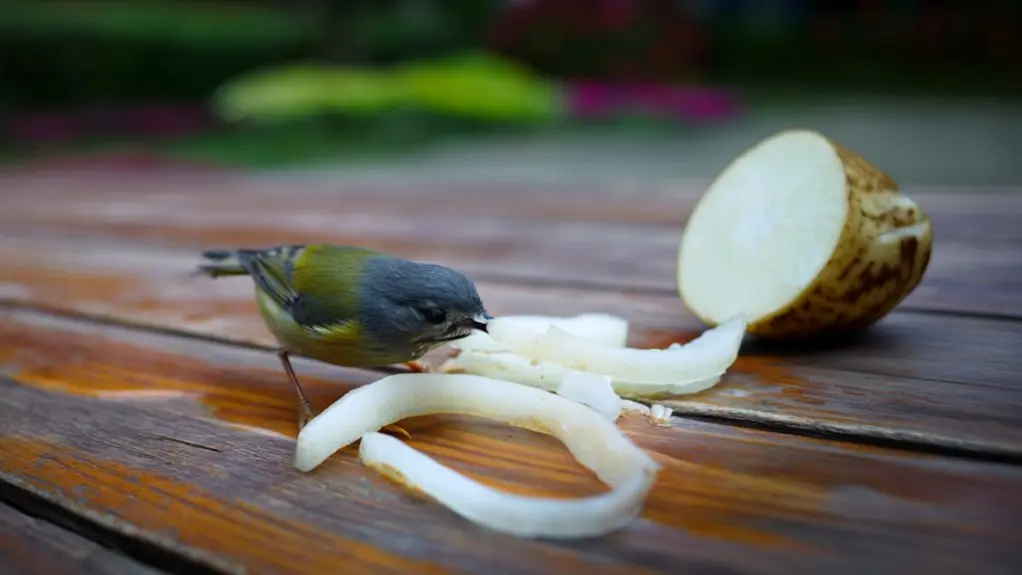
You can safely offer your bird small, peeled pieces of jicama as a crunchy, hydrating treat rich in fiber and vitamin C. Make sure to remove the peel and seeds, and serve it raw and plain, in moderation, to avoid digestive upset.
Introduce it gradually to monitor for any adverse reactions. While jicama isn’t a staple food, it’s a healthy way to diversify your bird’s diet.
More details on safe preparation and benefits follow.
What Is Jicama And Why Consider It For Birds?
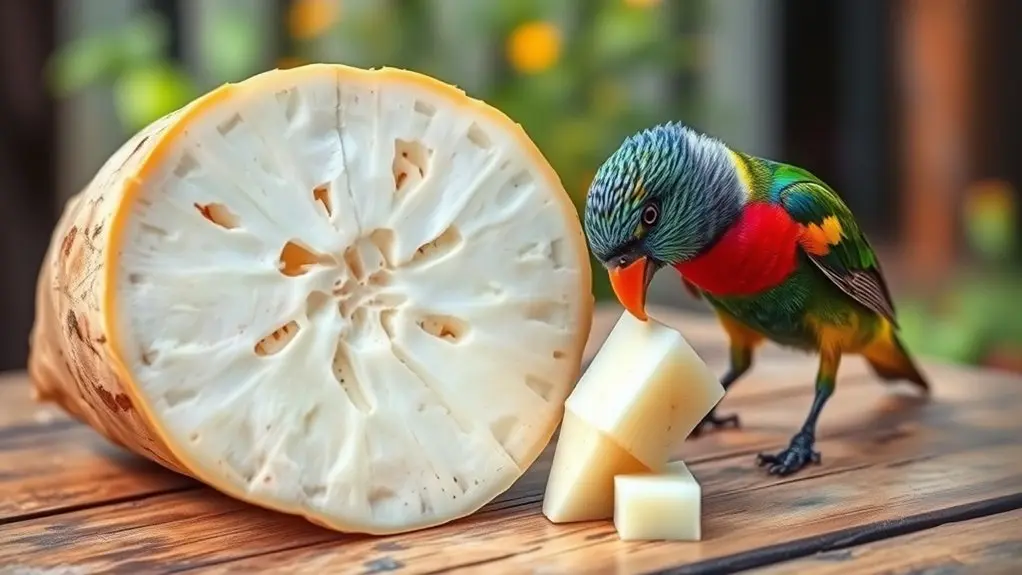
Although jicama isn’t a common bird food, you might consider offering it as a healthy treat because this root vegetable is rich in dietary fiber, vitamin C, and antioxidants.
Native to Mexico, jicama has a crunchy texture and mildly sweet flavor, making it appealing to many birds.
Its crisp, water-rich flesh provides hydration and low-calorie nutrition, which can support your bird’s overall health.
Often eaten raw, jicama’s firm texture and mild taste make it a safe potential addition to your bird’s diet in moderation.
Including jicama as an occasional snack can diversify their food options while delivering essential nutrients.
Understanding what jicama is and its benefits helps you make informed decisions about your bird’s dietary variety.
Can Birds Safely Eat Jicama And In What Amounts?
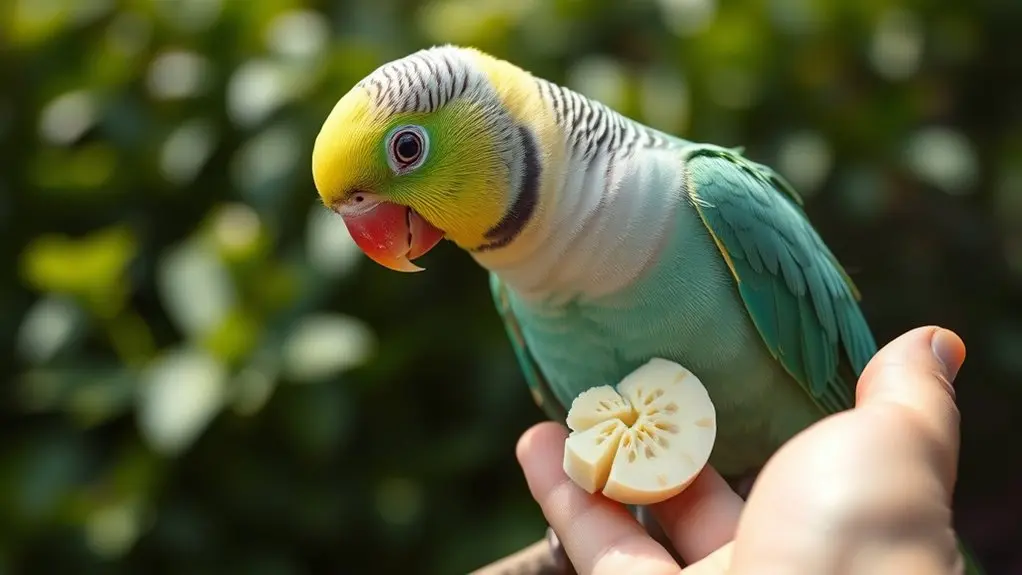
When you offer jicama to your bird, you should keep the portions small to guarantee safety and avoid digestive discomfort. Jicama is non-toxic and safe in moderation, but feeding too much at once can cause digestive upset because of its high fiber content.
Offer jicama in small portions to ensure safety and prevent digestive upset for your bird.
Always remove the peel and seeds before serving to prevent choking hazards.
Cut the jicama into small, manageable pieces that your bird can easily handle.
Since jicama has high water content and low fat, it works better as a hydrating treat rather than a staple food.
Jicama’s Nutritional Pros And Cons For Birds
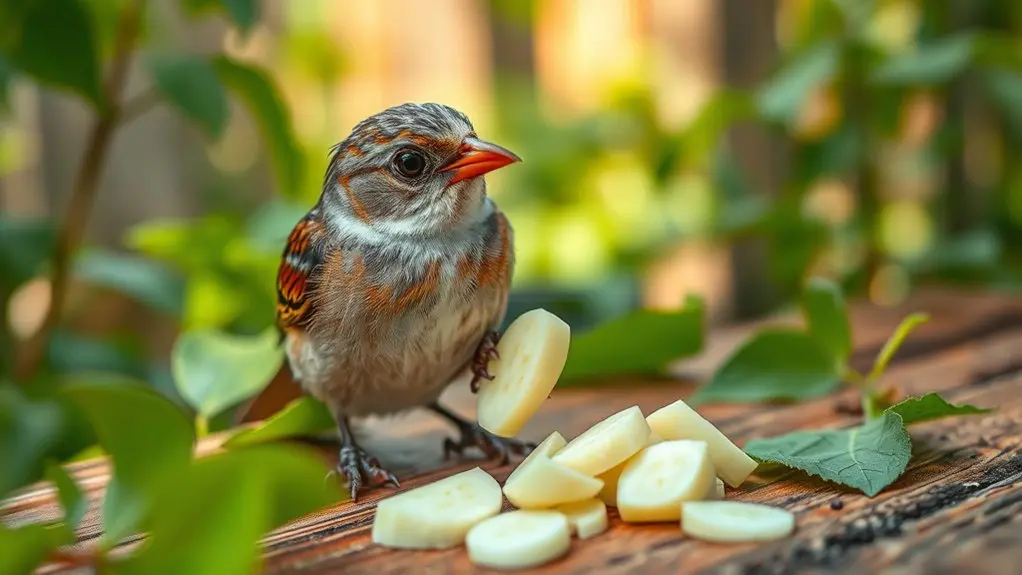
You’ll find that jicama offers some great nutrients for your bird, like being low in fat and high in water content.
Plus, it has prebiotic fiber, which is awesome for supporting your bird’s digestive health.
That said, you do need to be a bit careful. Jicama contains oxalates, and those can be risky, especially if your bird has kidney problems.
Nutrient Content Overview
Because jicama offers a unique combination of nutrients, it can be a beneficial addition to your bird’s diet when given in moderation. It’s low in calories but rich in dietary fiber, about 6 grams per 100 grams, supporting healthy digestion.
Jicama also provides essential nutrients like vitamin C, potassium, and small amounts of magnesium, which help boost immunity and maintain muscle function.
Its high water content, around 90%, aids hydration, but you should limit portions to avoid digestive upset. Additionally, jicama contains inulin, a prebiotic fiber that, in excess, may cause digestive issues.
Keep in mind its relatively high carbohydrate content. So, balancing jicama with other foods prevents potential weight gain.
Potential Health Risks
While jicama offers valuable nutrients that can benefit your bird, it also carries certain risks you should consider before adding it to their diet. Jicama contains inulin, a soluble fiber that might cause digestive upset if your bird consumes too much.
Also, the root contains saponins, bitter compounds that can be toxic in large quantities. Feeding jicama too frequently may lead to weight gain due to its high carbohydrate content, even though it’s low in fat.
Plus, the skin may harbor pesticide residues or contaminants, so thorough washing or peeling is essential.
Overfeeding jicama can disrupt your bird’s nutritional balance since it lacks key nutrients found in a varied diet.
How Jicama Compares To Other Bird-Safe Fruits And Veggies
Although many fruits and vegetables are safe for birds, jicama stands out because it has low sugar content and high levels of vitamin C and potassium. This makes it a healthier alternative to sweeter options like apples and berries. You’ll find jicama offers hydration and fiber with its crisp texture and mild, sweet flavor. Many birds really enjoy it.
When comparing jicama to other bird-safe produce, consider these points:
- It has lower sugar than fruits like berries and apples, which helps reduce caloric intake.
- It’s rich in essential nutrients like potassium and vitamin C, supporting overall health.
- It provides natural hydration and fiber, unlike processed or seed-based diets.
Serving jicama peeled and sliced is just like how you’d prepare other safe veggies such as carrots or cucumbers. This way, your bird gets a nutritious, crunchy treat they’ll love.
Potential Digestive Issues And Signs Your Bird Has A Bad Reaction To Jicama
You’ll want to keep an eye out for any digestive issues like diarrhea or an upset stomach after your bird munches on jicama.
If you spot anything unusual right away—like your bird becoming lethargic, losing its appetite, vomiting, or having abnormal droppings—that’s a clear sign something’s not right.
When that happens, it’s best to stop giving jicama and check in with your vet as soon as you can.
Digestive Symptoms To Watch
Because jicama contains high levels of inulin, feeding it to your bird without caution can lead to digestive upset or gas. You need to watch closely for symptoms indicating your bird is having a bad reaction.
Key digestive symptoms to monitor include:
- Diarrhea or abnormal stool consistency, which signals gastrointestinal discomfort
- Lethargy or unusual inactivity, often linked to digestive distress
- Swollen abdomen or difficulty defecating, suggesting possible bloating or constipation
Overfeeding jicama may disrupt your bird’s gut flora, leading to bacterial imbalance and worsening symptoms.
So, start by introducing jicama gradually and observe your bird carefully. If you notice any of these signs, reduce or stop feeding jicama and consult an avian vet.
That way, you can help ensure your bird’s digestive health stays intact.
Immediate Bird Reaction Signs
Monitoring your bird closely after introducing jicama is important, as some birds may show immediate signs of digestive upset or discomfort. Look for loose or abnormal droppings, which often indicate digestive issues.
Immediate reactions like lethargy or reduced activity can signal a negative response. Vomiting or regurgitation shortly after eating jicama is a clear sign your bird isn’t tolerating it well.
Also, watch for behavioral signs such as fluffing feathers or tail bobbing, which suggest gastrointestinal distress.
More severe symptoms like difficulty breathing or swelling around the beak and eyes may point to an allergic reaction requiring prompt veterinary care.
Safe Alternatives To Jicama For Your Bird’s Diet
When introducing new foods to your bird’s diet, selecting safe alternatives to jicama guarantees they receive proper nutrition without any health risks. You want to offer foods that are easy to digest and rich in essential nutrients. Consider these options:
Crunchy vegetables like bell peppers and carrots, which support healthy chewing and digestion. Fruits such as apples and berries provide hydration and natural vitamins without excessive sugar. Leafy greens like kale and spinach offer a nutrient-rich boost while diversifying their diet safely.
Avoid starchy or high-sugar foods that mimic jicama’s texture, as they may cause digestive problems or imbalances. Always make sure new foods are free from pesticides, seeds, and additives to protect your bird’s health.
These alternatives will help you maintain a balanced and safe diet for your feathered friend.
Tips For Introducing Jicama And Other New Foods To Your Bird
Introducing jicama and other new foods to your bird requires a careful, step-by-step approach to guarantee they accept the change without any health issues. Start by offering small, manageable pieces of fresh, peeled jicama to monitor your bird’s reaction. Serve it alongside familiar foods to encourage acceptance and provide comfort with new flavors.
Introduce new foods like jicama gradually with small pieces alongside familiar favorites to ensure a smooth transition.
Gradually incorporate jicama into your bird’s varied diet, ensuring it’s free from seasonings or preservatives. Watch closely for any signs of digestive upset or allergic reactions during this process.
Use positive reinforcement and patience to help your bird become comfortable with trying new foods, especially crunchy options like jicama.
This method supports a smooth dietary shift while prioritizing your bird’s health and well-being. Just take it slow, and you’ll see your bird enjoying new tastes in no time!
Summary: Should You Feed Jicama To Your Bird?
Feeding jicama to your bird can be a healthy addition to their diet if done carefully and in moderation. Jicama offers hydration and essential nutrients like vitamin C and fiber, making it a beneficial occasional treat. However, you need to be cautious about the amount and preparation.
Keep these key points in mind:
- Serve only fresh or cooked jicama, avoiding any seasoning, salt, or sugar additives.
- Introduce jicama gradually to monitor for any digestive upset, as raw jicama contains inulin, a fiber that might cause issues in some birds.
- Limit the quantity to prevent digestive discomfort and ensure it complements a balanced diet.
Frequently Asked Questions
Can Jicama Seeds or Skin Harm Birds if Ingested?
Yes, jicama seeds can harm birds because they contain toxic saponins. These compounds might cause gastrointestinal problems or even poisoning.
The skin is usually safer, but it’s a good idea to peel it anyway. This helps avoid pesticide residues and lowers any potential risks to your birds. Better safe than sorry, right?
Is Jicama Safe for Baby or Young Birds?
Like walking a tightrope, you must introduce jicama cautiously to baby birds. Peel and wash it thoroughly, avoid seasonings, and watch for digestive upset.
When done right, it’s a safe, occasional treat for young birds. Just take it slow and keep an eye on how they respond.
How Should Jicama Be Prepared Before Feeding to Birds?
You should peel jicama thoroughly and remove any seeds. Then, cut it into small pieces.
Serve it raw and fresh, and make sure to avoid any preservatives or additives. This way, your birds can enjoy it safely without any choking hazards. It’s a simple step but really important for their health!
Can Feeding Jicama Affect a Bird’s Feather Quality?
Yes, feeding jicama excessively can affect your bird’s feather quality. It lacks essential nutrients needed for vibrant feathers, so you should offer it sparingly alongside a balanced diet.
This way, your bird gets the variety it needs without compromising its healthy plumage. Remember, moderation is key when introducing any new food to your feathered friend.
Are Certain Bird Species More Sensitive to Jicama Than Others?
Yes, you’ll find finches and canaries are more sensitive to jicama’s starch. Larger birds like parrots tend to tolerate it better.
Always consider your bird’s individual health and dietary needs before offering jicama. It’s better to be safe than sorry!
Conclusion
Feeding jicama to your bird can be a revitalizing and nutritious treat, much like a cool breeze on a warm day. You should offer it in moderation, watching closely for any adverse reactions.
Remember, variety is key. Balance jicama with other safe fruits and veggies to guarantee a well-rounded diet. Introducing new foods gradually helps your bird adjust comfortably.
This keeps its health and happiness soaring. Always prioritize your bird’s unique needs when making dietary choices.