
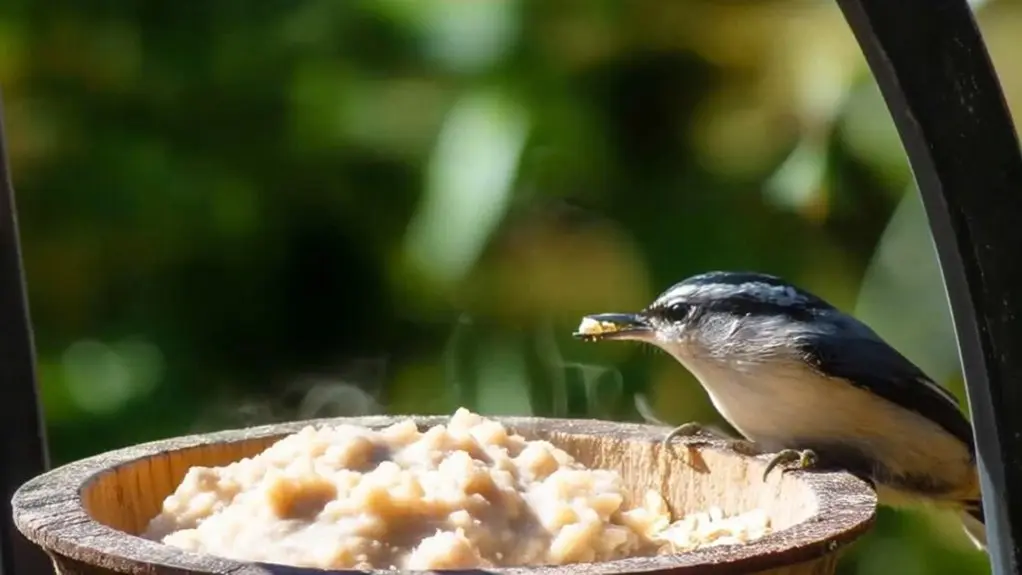
You can safely offer birds cooked oatmeal in small, plain portions without added sugar or salt. It provides beneficial nutrients like B vitamins, minerals, and fiber, supporting their energy and digestion.
However, watch out for the sticky texture since it might cause choking. Also, don’t feed it too often to avoid digestive issues or mold growth.
Keep an eye on how the birds react so you can adjust the amounts you give them. Trying out different preparation tips and alternatives will help you take the best care of your feathered visitors.
Is Cooked Oatmeal Safe for Birds?
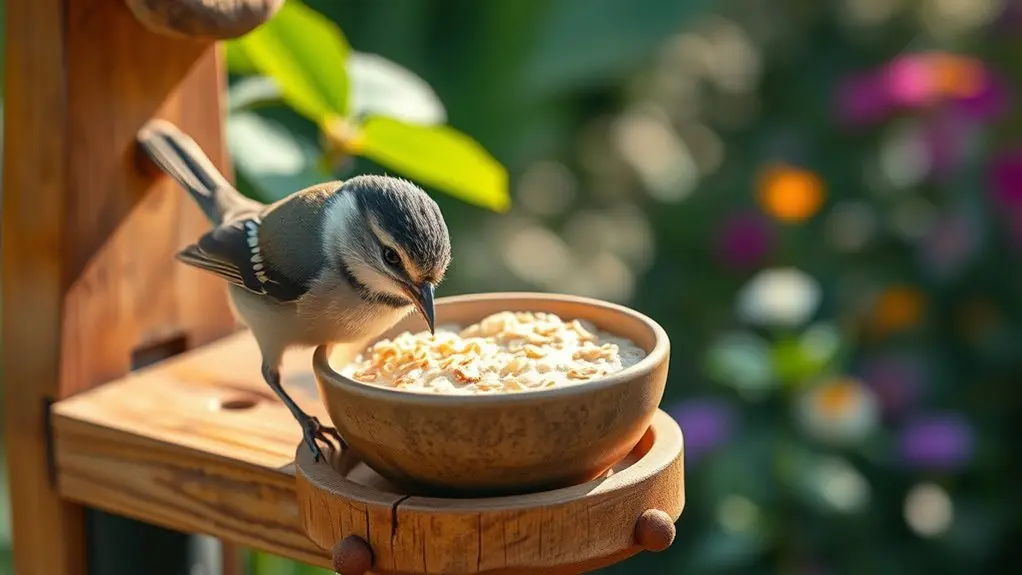
While cooked oatmeal might seem like a healthy treat for birds, it can actually pose several risks. Its sticky, thick texture may gum up their beaks and even cause choking. You should avoid feeding birds cooked oatmeal regularly because it’s harder for them to digest and can spoil quickly, leading to health problems.
Instead, uncooked oats are a safer choice since they’re less likely to cause digestive or respiratory issues. If you do decide to offer cooked oatmeal, make sure it’s completely cooled and only given in small, infrequent amounts.
Overall, providing dried oats or raw cereals that closely mimic birds’ natural diets is a better way to keep them safe and healthy.
What Are the Nutritional Benefits of Cooked Oatmeal?
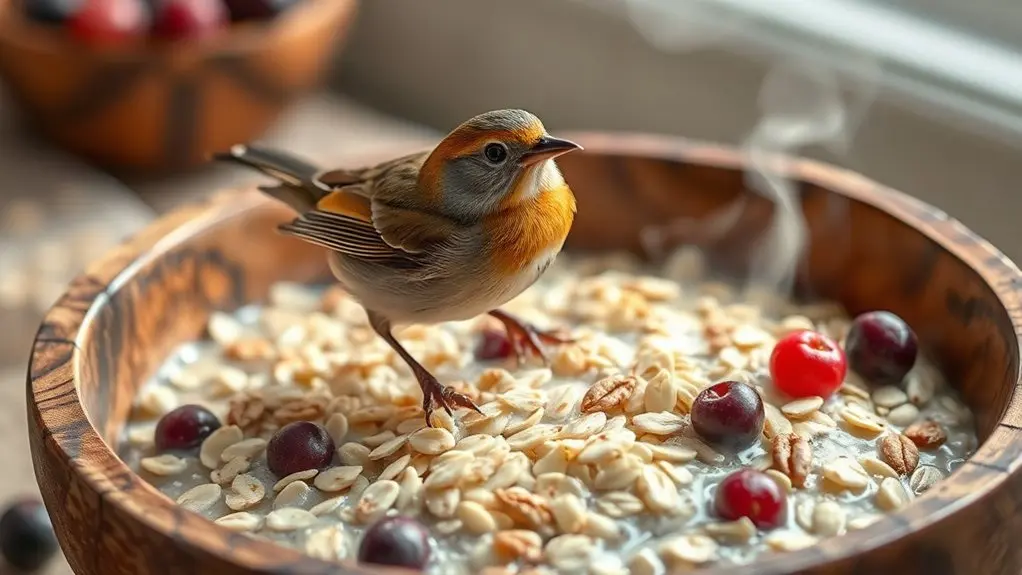
Because cooked oatmeal contains a variety of essential vitamins and minerals, it can offer several nutritional benefits to birds when given properly. It’s rich in B vitamins like B1, B2, B3, B5, B6, and B9, which support overall bird health and energy metabolism.
The minerals calcium, iron, magnesium, manganese, phosphorus, potassium, and zinc contribute to strong bones and efficient metabolic functions. Its high carbohydrate content provides birds with a quick and sustained energy boost, essential for their active lifestyles.
Additionally, the dietary fiber in oatmeal aids digestion and promotes a healthy gut. Oatmeal’s nutritious and anti-inflammatory properties can also help reduce skin and feather irritation, supporting your bird’s comfort and well-being naturally.
What Are the Risks of Feeding Cooked Oatmeal to Birds?
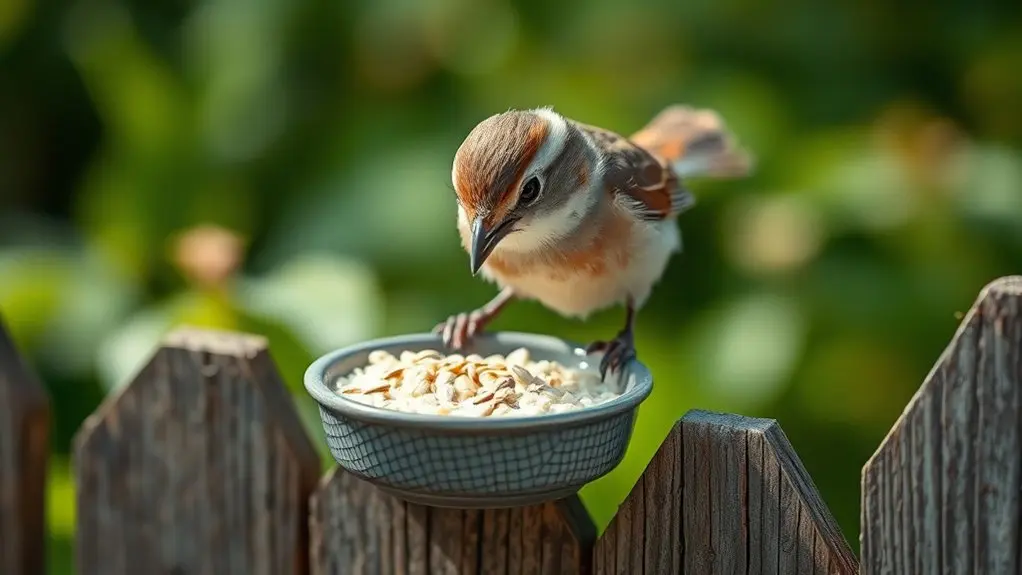
Although cooked oatmeal offers nutritional benefits, feeding it to birds comes with certain risks you should consider. Its sticky, thick texture can make it hard for birds to swallow and may cause gagging or choking. If birds consume large amounts, the oatmeal’s stickiness could block their airways, posing serious danger.
Also, the high moisture content encourages mold growth if the oatmeal isn’t eaten quickly, which can harm their health. Cooked oats might be tougher for birds to digest, potentially leading to gastrointestinal issues.
Regularly feeding cooked oatmeal can disrupt their natural foraging habits and unbalance their diet. To keep birds safe and healthy, it’s important to offer oatmeal cautiously and in moderation, understanding these potential risks.
Why Should You Avoid Adding Sugar or Salt to Oatmeal?
Keeping birds safe means paying close attention not only to the texture and amount of oatmeal you offer but also to what you add to it. You should avoid adding sugar or salt because birds’ bodies can’t process these substances properly, which raises the risk of toxicity and health problems.
Excess salt can cause dehydration, kidney damage, and neurological issues. Sugar may lead to obesity, diabetes, and metabolic disturbances. Birds also lack the taste receptors to handle high levels of sugar or salt, making these additives unnecessary and harmful.
So, it’s really best to skip the sugar and salt altogether.
Instead, you can safely enhance oatmeal with natural flavors like fruits or vegetables. These alternatives provide nutrients without risking your feathered friends’ health. This way, you keep them nourished and safe.
How Do You Prepare Cooked Oatmeal for Wild Birds?
When you’re getting cooked oatmeal ready for wild birds, just be sure it’s completely cooled down first. You don’t want to accidentally hurt them with something too hot.
You can toss in some bird-safe goodies like seeds or dried fruits to give them a nice nutritional boost. Just remember, no sugar, salt, or spices—those aren’t good for birds at all.
It’s also a good idea to serve the oatmeal in clean, shallow containers. That way, the feeding spot stays safe and comfortable for your feathered friends to enjoy.
Safe Cooking Methods
Since wild birds have sensitive digestive systems, you should prepare cooked oatmeal carefully to guarantee it’s safe and nutritious for them. Use plain oats cooked in water. Skip sugar, salt, or any flavorings.
Cook the oats thoroughly until soft and fully expanded, then let them cool to room temperature before serving. Avoid adding milk, butter, or spices, as these can harm birds.
Serve the oatmeal in shallow feeders or on clean surfaces to minimize mess and contamination.
Always offer fresh oatmeal and discard any leftovers after a few hours to prevent mold growth.
Suitable Ingredients Choices
Although you want to provide a nutritious treat, it’s essential to choose ingredients that are safe and beneficial for wild birds. When preparing cooked oatmeal, focus on simplicity and safety to support their health.
Use plain oats without added sugars, salts, or spices to avoid harmful substances. Cook oats thoroughly with clean water only. Skip milk or flavorings to prevent digestive issues.
Let the oatmeal cool to room temperature before offering it. This makes sure it won’t burn or cause discomfort to the birds.
You can also enhance the meal by mixing in small amounts of bird-safe seeds, nuts, or dried fruits. This boosts both nutrition and appeal.
Serve the oatmeal moist but not sticky, in shallow dishes or on bird tables. This helps reduce choking risks and invites birds to enjoy their treat.
How Often Should You Feed Cooked Oatmeal to Birds?
You should offer cooked oatmeal to birds just once or twice a week. This helps avoid digestive issues like bloating.
Make sure to keep the portions small and serve the oatmeal at room temperature so it’s comfortable and safe for them to eat.
Also, try rotating oatmeal with other safe foods. This way, you help keep their diet balanced and protect their overall health.
Feeding Frequency Guidelines
When offering cooked oatmeal to birds, it’s important to limit the frequency to guarantee their health and natural behaviors remain intact. Feeding oatmeal too often can cause digestive issues and nutritional imbalances.
To keep your feathered friends healthy, follow these feeding frequency guidelines:
Offer cooked oatmeal only as an occasional treat, not as a daily food. Limit servings to 2-3 times per week to prevent dependency and support natural foraging. Provide small portions to avoid overfeeding and reduce spoilage risk.
Serve oatmeal fresh and cooled to prevent mold growth and ensure safety. This way, you’re making sure your birds enjoy a tasty treat without any health risks. Just a little oatmeal now and then goes a long way!
Moderation And Risks
Limiting the frequency of cooked oatmeal treats helps protect birds from several health risks tied to overfeeding. You should offer cooked oatmeal only in small, infrequent amounts, ideally no more than once or twice a week.
Feeding it too often can cause digestive issues and lead to malnutrition since oatmeal lacks essential nutrients.
Overfeeding may also make birds reliant on human-provided food, which disrupts their natural foraging habits. Plus, eating too much can result in obesity and other health problems.
To keep birds healthy, use cooked oatmeal as an occasional treat rather than a dietary staple.
Always make sure their main diet consists of a balanced mix of seeds, nuts, and fresh foods. This approach respects their natural needs and promotes overall well-being.
How Can You Tell If Birds Like or Reject Cooked Oatmeal?
Although birds can’t tell you directly, their behavior provides clear clues about whether they like cooked oatmeal. Paying attention to how they interact with the food helps you understand their preferences.
Here are four signs to look for:
- Birds enthusiastically pecking and consuming the oatmeal indicate they enjoy it.
- Ignoring the oatmeal or avoiding the feeding area suggests rejection.
- Increased activity and visits around the oatmeal spot show interest and acceptance.
- Leaving uneaten portions or signs of discomfort point to possible intolerance or dislike.
What Are Some Safe Alternatives to Cooked Oatmeal?
If you’re looking to give birds some safe alternatives to cooked oatmeal, try offering nutrient-rich seeds like sunflower seeds or unsalted peanuts. Birds really enjoy these, and they provide great energy.
You can also add fresh fruits to the mix, like berries or apple slices. These fruits give birds vitamins and hydration, which they definitely appreciate.
And if you want to go a step further, unsalted suet is a fantastic energy-packed treat that helps support their active lifestyles. It’s a nice way to keep them fueled and happy!
Nutritious Seed Options
When you want to provide your birds with safe and nutritious alternatives to cooked oatmeal, seeds like sunflower, millet, safflower, and nyjer offer essential fats and proteins that support their health. You’ll want to offer these seeds in moderation and alongside other foods to maintain a balanced diet.
Here are some tips to keep in mind:
- Choose bird-specific seed mixes to ensure balanced nutrition without harmful additives.
- Offer a variety of seeds to encourage natural foraging and prevent dietary gaps.
- Store seeds in airtight containers to avoid mold and contamination.
- Avoid over-reliance on high-fat seeds by mixing them with other healthy food options.
Fresh Fruit Choices
How can you provide your birds with safe and nutritious alternatives to cooked oatmeal? Fresh fruits like apples, berries, and melons are excellent choices. They offer essential vitamins and hydration.
Just make sure to remove seeds and pits, especially from apples and cherries, since they contain harmful cyanide compounds. Bananas, oranges, and grapes also provide natural sugars and antioxidants that support your bird’s health.
Serving a variety of fresh fruits encourages natural foraging behavior and promotes dietary diversity. Always cut fruits into small, manageable pieces. Double-check they’re free from pesticides and mold to keep your birds safe.
Energy-Rich Suet Use
Alongside fresh fruits, energy-rich suet offers a reliable alternative to cooked oatmeal for feeding birds. Suet is a hard fat that provides essential calories without the risks of spoilage or stickiness. It remains solid at room temperature, reducing mold growth and keeping birds safe.
When you choose suet, make sure it’s free from additives, salt, or preservatives. You can offer it in natural feeders or mesh bags to attract various insect-eating species. Here are some key points to think about:
- Suet provides a dense energy source during scarce food periods.
- It’s less likely to spoil compared to cooked oatmeal.
- Suet attracts a wide range of birds, supporting winter feeding.
- Always select plain, additive-free suet for bird safety.
This makes suet a smart, nutritious choice for your feathered friends.
How Can You Gradually Introduce Cooked Oatmeal to Birds?
Because birds may be cautious about new foods, you’ll want to introduce cooked oatmeal slowly by mixing small amounts into their regular meals. Start with just a teaspoon of unsweetened, unflavored oatmeal served at room temperature. Observe your birds carefully for any signs of digestive upset or refusal.
To make the oatmeal more appealing, try blending in familiar ingredients like fruits or seeds. Over several days, gradually increase the oatmeal portion while continuing to monitor their reactions and tolerance.
This gentle approach helps birds adjust comfortably to the new food without overwhelming their digestive systems or causing stress. By taking it slow and paying attention, you’ll encourage your birds to accept cooked oatmeal as a safe, nutritious addition to their diet.
Tips for Safe and Healthy Bird Feeding With Oatmeal
When you feed birds oatmeal, it’s important to prioritize their safety and health by choosing the right type and preparation. Cooked oatmeal’s sticky texture can harm birds, so consider safer alternatives and proper handling.
Here are four tips for safe, healthy bird feeding with oatmeal:
- Offer uncooked or dried oats instead of cooked oatmeal to prevent beak issues.
- Ensure oatmeal is plain with no added sugars, salts, or flavorings that could hurt birds.
- Control portions carefully to avoid digestive problems like bloating or choking.
- If you do use cooked oatmeal, let it cool completely before serving to avoid burns.
Just keep these tips in mind, and your feathered friends will enjoy a tasty and safe treat!
Frequently Asked Questions
Can Birds Eat Oatmeal Raw Instead of Cooked?
Yes, you can feed birds raw oats instead of cooked. Raw oats retain more nutrients and avoid sticky, messy issues.
Just make sure they’re plain, fresh, and offered in moderation. This helps keep your feathered friends healthy and happy.
Is Instant Oatmeal Safe for Birds to Consume?
You shouldn’t feed birds instant oatmeal; it contains added sugars, artificial flavors, and preservatives. You should choose plain, unsweetened oats instead.
This way, you’ll protect their digestion, support their health, and provide them with safer, natural nutrition. It’s always better to keep their diet simple and natural. That’s what helps them thrive!
What Types of Birds Prefer Eating Oatmeal?
You’ll find sparrows, finches, chickadees, and seed-eating songbirds like buntings prefer oatmeal. Ground-feeders such as doves and thrushes also enjoy it, especially during colder months when they need extra energy.
It’s pretty interesting how birds have their own favorites, right? Oatmeal provides a nice boost for them, especially when the weather gets chilly. So, if you’re thinking about feeding birds, oatmeal can be a great choice.
Can Cooked Oatmeal Help Birds During Migration?
You’d think sticky oatmeal is a perfect fuel, but it can gum up birds’ beaks. Still, in small amounts, it gives quick energy during migration. Just don’t rely on it long-term or overfeed your feathered travelers.
How Should You Store Cooked Oatmeal for Bird Feeding?
You should store cooked oatmeal in an airtight container in the fridge. Use it within 1-2 days to keep it fresh. Always reheat it to lukewarm before feeding birds.
Try not to leave it out for more than two hours. This helps keep it safe and prevents spoilage. That way, your feathered friends get a tasty and healthy treat every time.
Conclusion
You might think feeding cooked oatmeal to birds is a game-changer, and honestly, it can be! Just remember, it’s not bird buffet gold. Too much sugar or salt, and you’re basically serving a disaster.
Keep it plain, warm, and in small amounts. You’ll have feathered fans flocking to your feeder like it’s the best meal of their lives.
With care, you’re helping birds thrive, not just survive!