
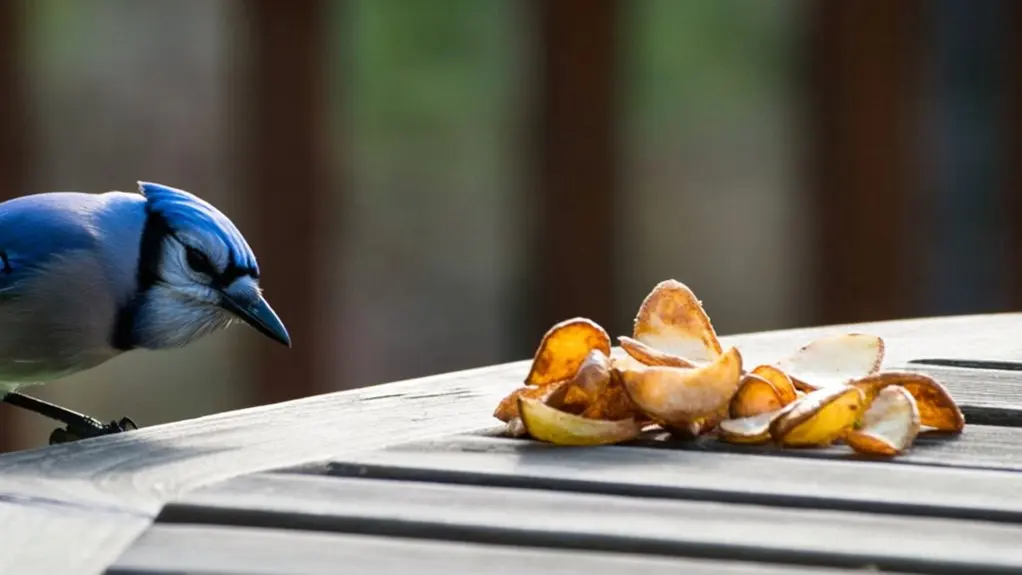
You can safely feed birds cooked potato skins if you prepare them properly. Always peel, cook thoroughly, and avoid seasonings or additives.
Cooking neutralizes toxic solanine found in raw skins and softens the flesh. This helps reduce digestion and choking risks.
Offer small, plain pieces occasionally, focusing on ground-feeding species like sparrows or thrushes. Just keep an eye out for any adverse reactions.
Also, make sure to maintain hygiene by removing leftovers promptly. Understanding these safety and feeding guidelines helps guarantee healthy, safe enjoyment of cooked potato skins by your birds.
What Are Cooked Potato Skins? Benefits for Birds
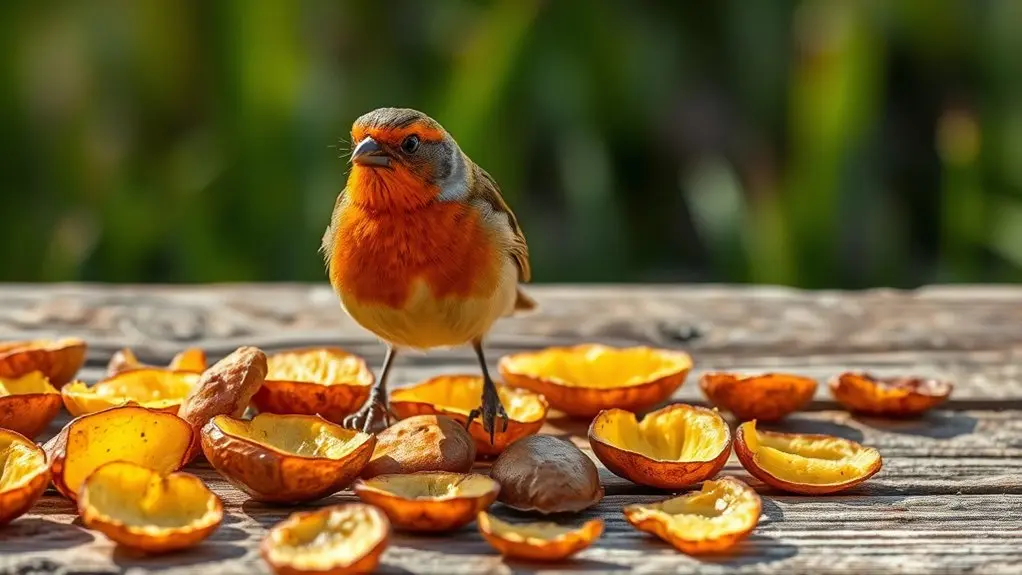
Although cooked potato skins are often overlooked, they can serve as a beneficial supplement for birds when prepared properly. These skins are the outer layers of potatoes that you’ve thoroughly cooked and peeled before offering to birds.
While they contain fewer nutrients than the potato flesh, they still provide fiber and antioxidants.
Though less nutrient-dense than the flesh, potato skins offer valuable fiber and antioxidants for birds.
Feeding birds plain, cooked potato skins in moderation adds roughage to their diet, which aids digestion and supports gut health. This roughage promotes efficient nutrient absorption and overall digestive function.
Including these skins as part of a varied diet can help supplement birds’ energy requirements, particularly during colder months when energy demands increase.
Just make sure the skins are free from seasonings or additives to keep things safe and nutritious. It’s a simple way to add a little extra to their meals without any fuss.
Why Are Raw Potato Skins Harmful to Birds?
You should avoid feeding birds raw potato skins because they contain solanine, a toxic compound that’s mostly found in the skin and sprouts.
This toxin can cause some serious health problems for birds, like digestive issues and even neurological damage.
Toxic Compounds in Skins
Because raw potato skins contain solanine, a natural toxin, they pose significant health risks to birds. Solanine concentrates primarily in the skins and sprouted areas, making these parts especially dangerous. When birds eat raw potato skins, solanine can cause severe symptoms.
These symptoms range from gastrointestinal distress to neurological problems, and in some cases, even death. It’s important to know which parts of the potato are risky so you can keep your birds safe.
| Compound | Location in Potato | Effect on Birds |
|---|---|---|
| Solanine | Skins, sprouts | Toxic, causes poisoning |
| Chaconine | Skins, green parts | Adds toxicity, neurological issues |
| Other glycoalkaloids | Skins, eyes | Potent toxins, harmful outcomes |
Understanding these toxic compounds helps you prevent accidental poisoning by avoiding raw potato skins in bird diets. So, it’s best to steer clear of feeding birds any raw potato skins or sprouts.
Risks of Raw Potatoes
When birds consume raw potato skins, they ingest high levels of solanine, a natural toxin concentrated in these parts. This can trigger severe digestive and neurological issues.
Solanine is primarily found in the skin and sprouts of raw potatoes, making these areas especially hazardous.
This toxin interferes with normal cellular function, causing symptoms that range from gastrointestinal distress to neurological impairment and paralysis. If birds eat enough solanine, it can even be fatal.
Cooking potatoes thoroughly breaks down solanine, making the skins safe for birds to eat. So, you should avoid feeding raw potato skins to birds to prevent solanine poisoning and the health risks that come with it.
Making sure potatoes are well-cooked is really important to keep birds safe from these toxic effects.
How Cooking Makes Potato Skins Safe for Birds
When you cook potato skins, the heat really cuts down on solanine and other harmful compounds, so they become much safer for birds to eat.
Plus, cooking softens the skins, which means there’s less chance of choking or digestive problems.
On top of that, the cooking process gets rid of dirt, bacteria, and pesticides, making the skins even safer for your feathered friends.
Heat Reduces Toxicity
Although raw potato skins contain solanine, a toxic compound harmful to birds, cooking effectively reduces this risk by breaking down the toxin. Heat changes solanine’s chemical structure, turning it into a less toxic form. Boiling or baking potatoes lowers solanine concentration a lot, making the skins safer for birds to eat.
Properly cooked skins have very little leftover toxin, so the chance of poisoning goes way down.
| Cooking Method | Temperature (°F) | Solanine Reduction (%) |
|---|---|---|
| Boiling | 212 | 85 |
| Baking | 350 | 90 |
| Steaming | 212 | 80 |
This controlled heat exposure makes sure solanine is neutralized. That means you can safely offer cooked potato skins to birds without worry.
Cooking Softens Potato Skin
Reducing solanine through cooking not only lowers toxicity but also changes the physical properties of potato skins, making them softer and easier for birds to digest. When you boil or bake potatoes thoroughly, the heat breaks down the fibrous structure of the skin, which cuts down its toughness.
This softening helps birds break down the skin more easily in their digestive system, so they can absorb nutrients better. Also, cooking messes with the proteins and starches inside the skin, making it tastier and easier to digest.
By turning the tough, raw skin into something more flexible, cooking lets ground-feeding birds eat potato skins safely without worrying about digestive problems or blockages.
Removes Harmful Compounds
Because raw potato skins contain solanine, a natural toxin harmful to birds, cooking plays an essential role in making them safe for consumption. When you cook potato skins at high temperatures, solanine denatures, considerably reducing its toxicity. This process neutralizes the compound, preventing potential digestive or neurological issues in birds.
Additionally, peeling potatoes before cooking further lowers residual solanine levels, enhancing safety. It’s important to guarantee the skins are fully cooked and plain, without seasoning, as additives could introduce other risks.
By applying proper cooking methods, you effectively eliminate harmful compounds, making the potato skins a safe occasional treat for your birds.
Avoid feeding raw or undercooked skins, as the solanine remains active and dangerous. Just make sure to cook them thoroughly and keep it simple, so your feathered friends stay happy and healthy!
Nutritional Benefits of Cooked Potato Skins for Birds
When you include cooked potato skins in a bird’s diet, you provide valuable dietary fiber that supports digestive health. These skins also contain essential vitamins and minerals that enhance immune function and physiological processes. Feeding plain, properly cooked potato skins ensures safety and nutritional benefits without exposing birds to harmful toxins or additives.
| Nutrient | Benefit |
|---|---|
| Dietary Fiber | Improves digestion and gut health |
| Vitamin C & B6 | Supports immune system and metabolism |
| Potassium & Magnesium | Aids muscle function and metabolic regulation |
Incorporating cooked potato skins can contribute to a balanced diet for ground-feeding birds. Just be sure to avoid raw or seasoned skins, as they may contain compounds harmful to avian health. It’s always best to keep things simple and safe for your feathered friends.
Which Bird Species Can Safely Eat Cooked Potato Skins?
Understanding which bird species can safely consume cooked potato skins allows you to apply the nutritional benefits effectively without risking avian health.
You need to target species that naturally digest starchy, ground-based foods and avoid those with specialized diets.
Small to medium ground-feeding birds like blackbirds, thrushes, and sparrows can safely eat fully cooked, peeled potato skins.
Doves and certain finches tolerate cooked skins if they’re soft and free from seasonings or additives.
Insectivorous or specialized feeders shouldn’t be offered potato skins due to their distinct dietary needs.
Larger birds, including gulls and pigeons, can consume cooked skins in moderation to prevent overfeeding complications.
How to Prepare and Offer Cooked Potato Skins Safely
Although cooked potato skins can benefit certain bird species, you must prepare and offer them carefully to guarantee safety. First, always peel potatoes to remove the skins, since they contain higher levels of solanine, a toxin harmful to birds.
If you do use skins, cook them thoroughly until soft to reduce residual toxins.
Serve the cooked skins in small, manageable pieces to prevent choking and aid digestion, especially for smaller birds. Avoid adding seasonings, butter, or salt, as these additives can irritate or harm birds.
Finally, remove any leftover potato skins after a few hours to prevent spoilage and discourage pests.
Following these steps ensures you provide a safe, suitable treat while minimizing health risks for your avian friends.
How Often Should You Feed Birds Cooked Potato Skins?
After preparing and offering cooked potato skins safely, it’s important to think about how often you feed them to birds. Overfeeding can cause nutritional imbalances and health issues. To keep your feathered friends healthy, follow these simple guidelines.
First, offer cooked potato skins only once or twice a week to limit their starch intake. If you decide to feed them more often, keep an eye on the birds for any signs of digestive upset. It’s best not to make potato skins a staple in their diet to avoid dependency on human-provided food.
Also, be sure to remove any uneaten skins promptly. This helps prevent spoilage and keeps pests away.
Taking these steps will help you enjoy feeding birds safely and responsibly.
Foods to Avoid When Feeding Cooked Potato Skins
When feeding cooked potato skins to birds, you must avoid certain types and preparations to prevent health risks. Avoid skins from green or sprouted potatoes, as they contain elevated solanine levels, which are toxic.
Never offer raw or heavily processed potato skins; these can cause digestive problems and toxicity.
Avoid raw or heavily processed potato skins to prevent digestive issues and potential toxicity in birds.
Steer clear of seasoned or flavored skins, especially those with salt, butter, or spices, since these additives can harm birds.
Also, potato skins may retain pesticide residues or contaminants, so make sure they come from thoroughly washed, pesticide-free sources.
Proper peeling and cooking reduce solanine but don’t eliminate it entirely, so always offer minimal amounts.
Prioritize plain, clean, cooked skins without additives to protect birds from poisoning and digestive distress when feeding cooked potato skins.
It’s better to be safe than sorry when it comes to their health!
Keeping Feeding Areas Clean When Offering Cooked Potato Skins
Since cooked potato skins can spoil quickly and attract pests, you need to clean feeding areas regularly to keep things safe for birds. Proper hygiene helps prevent mold, bacteria, and diseases that can come from leftover food.
Here’s what you should do: remove and discard uneaten cooked potato skins promptly to keep pests away. Clean feeding surfaces and feeders with hot, soapy water to disinfect and get rid of harmful germs.
Try not to leave potato skins out overnight because damp conditions encourage bacteria and fungi to grow. It’s also a good idea to set up a regular cleaning schedule.
That way, the feeding area stays clean and safe for the birds to enjoy.
Frequently Asked Questions
Can Birds Eat Leftover Cooked Potato Skins From My Meals?
You can feed birds leftover cooked potato skins only if they’re fully cooked, unsalted, and free from oils, butter, or spices.
Offer these skins sparingly as treats. Avoid giving them raw or green skins because those can be toxic.
It’s always better to be cautious when feeding birds human food!
Are Baked Potato Skins Safer Than Boiled Ones for Birds?
Yes, baked potato skins are safer than boiled ones for birds because baking reduces moisture, which limits bacterial growth. You should always peel the skins to reduce solanine, a natural toxin found in potatoes.
Also, it’s best to serve the skins plain and in moderation to protect your bird’s health. Giving too much or adding seasoning can cause digestive issues. So, keep it simple and don’t overdo it!
Can Cooked Potato Skins Help Birds With Digestive Issues?
Yes, cooked potato skins can aid your bird’s digestion by providing insoluble fiber that improves gut motility and reduces discomfort. Just make certain you serve them plain and in moderation to prevent gastrointestinal blockages or imbalances.
It’s a simple way to help your feathered friend feel better, but don’t go overboard. Too much could cause more harm than good. So, keep it balanced and watch how your bird reacts!
Is It Safe to Feed Cooked Potato Skins to Baby Birds?
You shouldn’t feed cooked potato skins to baby birds because they contain solanine, which is toxic. Their immature digestive systems struggle with skins, risking choking or gastrointestinal issues.
It’s better to stick to peeled, cooked potato flesh for safety. That way, you’re keeping things simple and safe for the little ones.
How Do Cooked Potato Skins Compare to Other Vegetable Snacks for Birds?
Think of cooked potato skins as the reliable worker in your bird’s diet factory. They offer digestible carbs but lack the vibrant vitamin diversity of carrots or broccoli. So, they’re more of a moderate, safe supplement rather than a nutrient powerhouse.
They do their job well, but if you want to really boost your bird’s health, mixing in other veggies is the way to go. Variety is key, after all!
Conclusion
Think of cooked potato skins as a gentle bridge for your birds, transforming a once-toxic raw ingredient into a nutritious treat. Just like a skilled chef removes harmful elements from a dish, cooking neutralizes solanine, making skins safe and beneficial.
Remember, moderation is key. Feeding cooked skins occasionally supports your feathered friends’ health without overwhelming their diet. Keep preparation clean, and you’ll offer a safe, tasty snack that your birds will appreciate. It’s much like a well-crafted puzzle piece fitting perfectly into their balanced nutrition.