
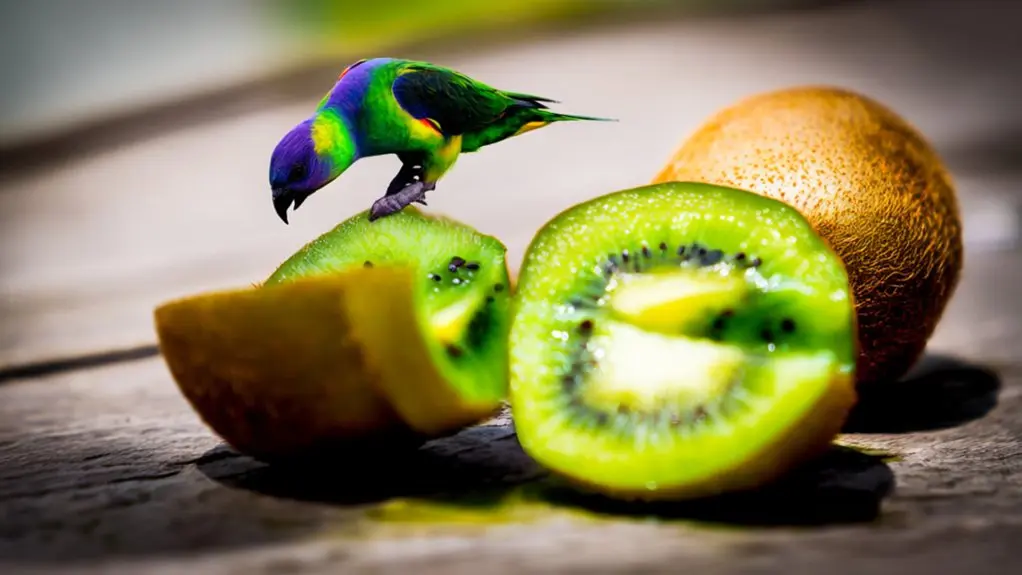
You can safely feed your bird kiwi when you prepare it properly by washing it thoroughly, removing the skin and seeds, and serving small, manageable portions. Kiwi offers valuable vitamin C, antioxidants, fiber, and minerals that support immune and digestive health. Just be careful not to overfeed, as that can cause gastrointestinal upset.
While kiwi is a beneficial occasional treat, it’s best to include it as part of a balanced diet alongside other alternatives. Understanding these guidelines helps guarantee your bird’s safety and nutrition. Plus, it gets you ready to explore more detailed care considerations for your feathered friend.
Is Kiwi Safe for Parrots and Conures?
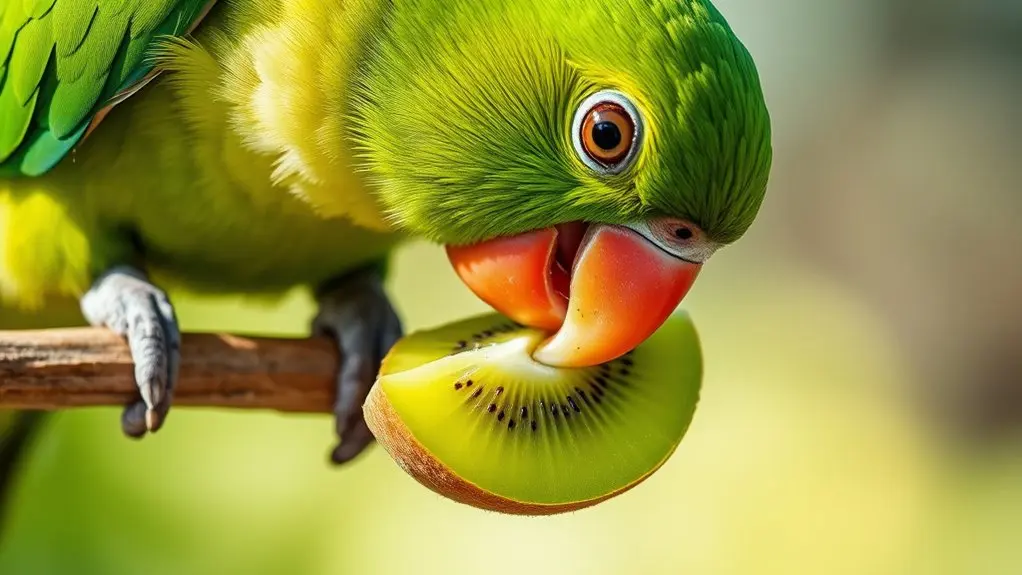
Although kiwi fruit contains beneficial nutrients like vitamin C, you should feed it to parrots and conures in moderation and with proper preparation.
Kiwi seeds are non-toxic and safe for birds but should be given sparingly to prevent potential digestive disturbances.
Kiwi seeds are safe for birds but should be fed in moderation to avoid digestive issues.
The fruit’s high fiber content supports digestion but can cause gastrointestinal discomfort if overfed.
You must always remove the skin if it appears tough or difficult to digest, as it may irritate your bird’s digestive tract.
Gradually introducing kiwi into your bird’s diet allows you to monitor tolerance and avoid adverse reactions.
No toxic effects have been documented in parrots or conures consuming kiwi, making it a safe occasional treat when you adhere to these guidelines.
How to Prepare Kiwi Safely for Your Bird
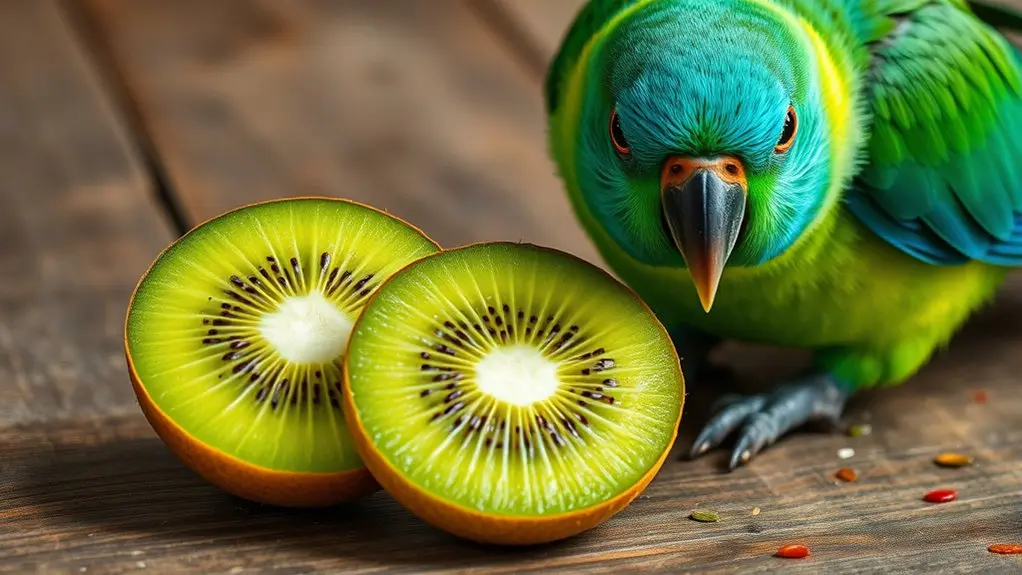
When offering kiwi to your bird, proper preparation guarantees safety and maximizes nutritional benefits. First, always wash the kiwi thoroughly to eliminate pesticides and contaminants that could harm your bird.
Second, remove the skin, as it’s tough to digest and may harbor residual chemicals or wax.
Then, cut the kiwi into small, manageable pieces to prevent choking hazards and make consumption easier. Also, avoid feeding kiwi seeds since some may be toxic or difficult for birds to digest.
Serve the prepared kiwi at room temperature and integrate it moderately into your bird’s balanced fruit diet.
This careful preparation guarantees your bird receives kiwi’s nutrients safely. It supports their overall health without introducing digestive or toxic risks.
How Much Kiwi Should Parrots and Conures Eat?
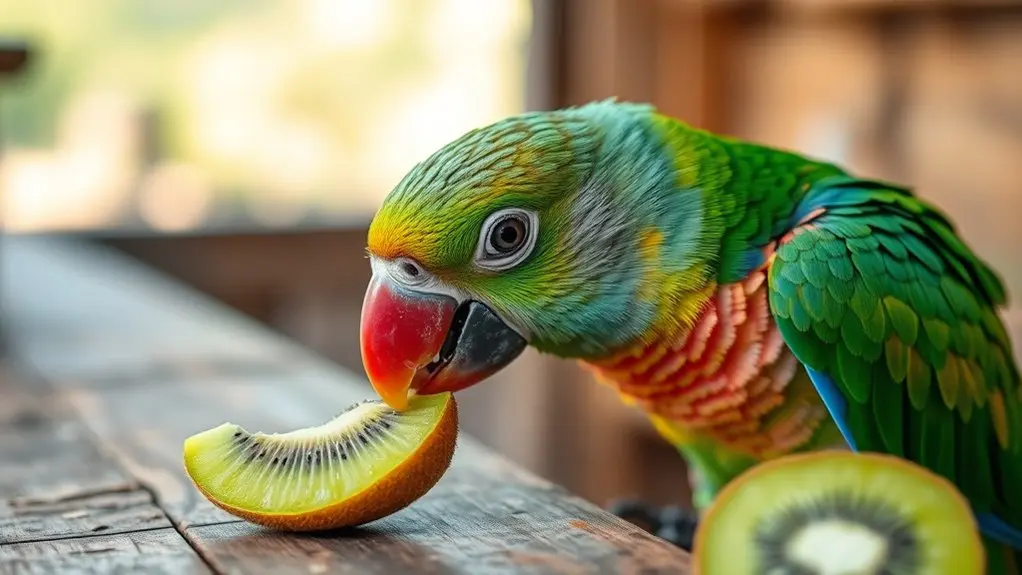
You should offer parrots and conures about 1-2 teaspoons of peeled, seedless kiwi per serving to avoid digestive issues.
Since kiwi contains enzymes and a lot of fiber, it’s best to limit feedings to just a few times a week as an occasional treat.
Keeping an eye on portion size and how often you feed it helps maintain your bird’s digestive health and overall well-being.
Recommended Kiwi Serving
Since kiwi contains high fiber and natural sugars, you should offer it to parrots and conures in controlled amounts to prevent digestive issues. To guarantee safe feeding, follow these guidelines:
Start with 1-2 teaspoons of peeled, seedless kiwi per serving, adjusting based on your bird’s size. Introduce kiwi gradually to observe any allergic reactions or digestive discomfort.
For larger parrots, up to a quarter of a fresh kiwi daily is generally safe; smaller birds require proportionally less.
Always remove the skin and seeds to minimize choking risks. By sticking to these recommendations, you can safely add kiwi to your bird’s diet without compromising their digestive health or overall well-being.
Portion Size Guidelines
Proper portion control plays a significant role in safely incorporating kiwi into your parrot or conure’s diet.
For smaller species or young birds, offer only a few small bite-sized pieces to minimize digestive upset. Typically, 1-2 teaspoons per feeding suits most conures and medium-sized parrots.
Larger parrots, such as macaws, can tolerate up to 1-2 tablespoons daily as part of a balanced diet.
It’s essential to limit kiwi treats to no more than 10% of your bird’s total daily intake to avoid excessive sugar consumption.
Always serve fresh, ripe kiwi with the skin and seeds removed to reduce potential hazards and maximize nutritional benefits.
Monitoring portion size guarantees your bird gains the advantages of kiwi without risking digestive or metabolic issues.
Frequency Of Feeding
How often should you offer kiwi to your parrots and conures to guarantee their digestive health and nutritional balance? To ensure safe consumption, limit kiwi to a controlled frequency and quantity. Consider these guidelines:
Feed small to medium parrots a few slices or a teaspoon of chopped kiwi no more than 2-3 times a week to prevent digestive upset from its high fiber.
For larger parrots, offer up to a quarter of a kiwi once or twice weekly, adjusting based on their overall diet and health.
Keep kiwi under 10% of their total daily fruit intake to maintain nutritional balance.
Always remove skin and seeds before feeding to avoid choking hazards and potential pesticide exposure.
Following this schedule helps maintain optimal digestive health and nutrient absorption.
Nutrients Kiwi Provides to Parrots and Conures
You’ll find that kiwi fruit offers a rich nutritional profile that’s really good for parrots and conures. It’s packed with vitamin C, which helps support their immune system. Plus, it has antioxidants that work to reduce oxidative stress.
On top of that, kiwi provides dietary fiber that’s great for digestion. And since it’s low in fat but full of essential minerals like potassium, it contributes to their overall health in a balanced way.
Kiwi Nutritional Profile
Although kiwi might seem like a simple fruit, it offers a complex nutritional profile that benefits parrots and conures considerably. When you feed kiwi to your birds, you provide them with:
- Omega-3 Fatty Acids: Kiwi seeds are rich in alpha-linolenic acid (ALA), essential for cellular function and overall bird health.
- Vitamin C: This antioxidant vitamin supports immune system efficiency and helps combat oxidative stress.
- Dietary Fiber: Kiwi’s fiber content promotes healthy digestion and maintains gut integrity.
Additionally, kiwi is low in saturated fats, which helps reduce risks associated with lipid imbalances. The antioxidants within kiwi further help protect cells by mitigating oxidative damage.
While kiwi eggs aren’t typically fed to parrots, their yolk content is nutrient-dense and crucial for chick development.
Benefits For Parrots
Since kiwi seeds contain high levels of Omega-3 fatty acids, feeding them to parrots and conures supports healthy skin and feather development. These fatty acids also help reduce inflammation and improve cardiovascular health in your bird.
Kiwi fruit provides essential vitamin C and antioxidants, which boost immune function and protect cells from oxidative stress. Plus, the fruit’s fiber aids digestion, promoting gut health.
Kiwi seeds serve as a valuable plant-based Omega-3 source, comparable to flax or chia seeds, especially when processed to enhance digestibility.
Adding kiwi to your parrot’s balanced diet can really contribute to overall energy and well-being.
Benefits of Feeding Kiwi to Parrots and Conures
When you include kiwi seeds in the diet of parrots and conures, you provide them with a rich source of Omega-3 fatty acids that promote healthy feather and skin development. Kiwi seeds also contain antioxidants and healthy fats, which contribute to improved immune function and overall well-being.
Kiwi seeds offer parrots Omega-3s, antioxidants, and healthy fats for vibrant feathers and strong immunity.
Plus, processing methods like roasting or pelleting can enhance digestibility without losing nutrients, so your bird gets the most benefit.
Here’s why it’s a great idea:
Ground kiwi seeds can really boost metabolizable energy, improving energy absorption from 693 to 4,089 kcal/kg. Omega-3 fatty acids help prevent inflammation and support cardiovascular health.
And those antioxidants? They strengthen your bird’s immune defense and vitality.
Adding kiwi seeds to a balanced diet supports your bird’s metabolic health and overall performance in a natural and efficient way. It’s an easy step to help keep your feathered friend happy and healthy.
Possible Risks of Feeding Kiwi to Your Bird
Feeding kiwi to your bird offers nutritional benefits, but it also requires caution to avoid potential risks. Kiwi flesh is non-toxic, yet its tough, fibrous texture may challenge some birds’ digestion.
Excessive consumption of kiwi or its seeds can lead to gastrointestinal upset, primarily due to high fiber and acid content.
Also, certain kiwi varieties might contain trace pesticide residues if not organically grown, which could pose health concerns. To minimize risks, always remove the skin and seeds before offering kiwi to your bird. This helps reduce choking hazards and prevents your bird from ingesting non-edible parts.
It’s a good idea to monitor portion sizes and ensure the fruit is fresh and pesticide-free. Doing this will help maintain your bird’s digestive health while safely providing the nutritional advantages of kiwi.
Are Kiwi Seeds and Skin Safe for Parrots?
Although kiwi seeds and skin are often overlooked, they can be safe for parrots if handled properly. Kiwi seeds are non-toxic and contain beneficial Omega-3 fatty acids, antioxidants, and fiber. These nutrients support digestive health when fed in moderation.
The skin is generally safe but requires thorough washing to remove pesticides and contaminants. Some owners remove the fuzzy outer layer to prevent choking or pesticide ingestion. It’s a good idea to be cautious with that fuzzy part.
When offering kiwi seeds and skin to your parrot, consider these guidelines:
- Wash the kiwi skin thoroughly before feeding to eliminate harmful residues.
- Remove the fuzzy outer skin if you’re concerned about choking hazards.
- Introduce seeds and skin gradually to monitor any adverse reactions from natural acids.
Doing these things will help keep your feathered friend safe and happy!
Where Kiwi Fits in a Balanced Bird Diet
Understanding the role of kiwi within your bird’s diet helps you provide balanced nutrition that supports health and vigor. Kiwi offers high vitamin C, essential antioxidants, and dietary fiber, making it a beneficial supplemental treat for parrots, conures, and small birds.
Its soft texture and unique flavor encourage consumption, enhancing dietary variety. However, kiwi should complement, not replace, other fruits, vegetables, and formulated pellets to maintain nutritional completeness.
Always remove kiwi’s skin and seeds before feeding, as seeds may pose toxicity or digestion issues. Feeding kiwi in moderation prevents nutrient imbalance while leveraging its health-promoting properties.
Integrating kiwi thoughtfully within a diverse diet ensures your bird receives well-rounded nutrients crucial for immune function, digestion, and overall well-being. It’s all about balance and variety to keep your feathered friend happy and healthy.
Alternatives to Kiwi for Vitamin C and Fiber
When you want to provide your bird with ample vitamin C and dietary fiber beyond kiwi, several nutritious alternatives exist. You can diversify your bird’s diet with these options:
- Bell peppers, strawberries, and kale are rich in vitamin C and safe for birds, supporting immune function.
- Oranges and guavas offer high vitamin C content, enhancing antioxidant protection.
- Broccoli and Brussels sprouts supply both fiber and vitamin C, aiding digestion and nutrient absorption.
Additionally, bird-specific supplements can provide these nutrients without the risk of toxicity from overfeeding.
Incorporating a variety of fresh, organic produce ensures balanced nutrient intake and prevents relying on just one source like kiwi. This approach promotes excellent health and supports your bird’s immune and digestive systems effectively.
Frequently Asked Questions
Can Kiwi Cause Allergies in Birds?
Yes, kiwi can cause allergies in some birds if they’re sensitive to specific proteins. You should introduce kiwi gradually and watch for swelling or respiratory issues.
If your bird shows any adverse reactions, it’s best to avoid giving it kiwi altogether. Just keep an eye on how your feathered friend responds when trying new foods.
How Often Should I Introduce New Fruits Like Kiwi?
You should introduce new fruits like kiwi once or twice weekly, starting with small amounts. This approach lets you monitor your bird’s reaction and prevents digestive upset.
It also guarantees a balanced, varied diet while minimizing allergy risks. Just take it slow and watch how your bird responds. That way, you keep things safe and tasty!
Can Baby Birds Eat Kiwi Safely?
Yes, you can safely feed baby birds small amounts of ripe, pesticide-free kiwi. Just make sure it’s mashed or pureed to prevent choking.
Introduce it gradually and keep an eye on how they respond. If you’re unsure, it’s a good idea to check with an avian vet for proper nutritional guidance.
Does Feeding Kiwi Affect a Bird’s Droppings?
You know what they say: moderation is key. Feeding kiwi can make your bird’s droppings softer or more frequent because of its water and fiber content.
But when given in balanced amounts, it won’t cause abnormal changes or harm your bird’s digestive health. Just keep an eye on how much you’re offering, and your feathered friend should be just fine!
Is Frozen Kiwi as Nutritious as Fresh Kiwi for Birds?
Frozen kiwi retains most nutrients like vitamin C and fiber, so you can confidently feed it to your bird. Although freezing slightly alters texture and reduces some heat-sensitive vitamins, it remains a nutritious, safe alternative to fresh kiwi.
That said, the texture might be a bit different, which some birds might notice. But overall, it’s a great option if fresh kiwi isn’t available or when you want to keep some on hand for later.
Conclusion
You can safely offer kiwi to your parrot or conure in moderation. Just make sure to remove the seeds and skin to avoid digestive issues. While kiwi provides valuable vitamin C and fiber, the idea that its seeds pose a choking hazard doesn’t have solid proof but is still something to be cautious about.
Try to include kiwi as part of a varied diet to get the most benefits and keep risks low. Always watch how your bird reacts because each one can tolerate foods differently. It’s all about finding what works best for your feathered friend.