
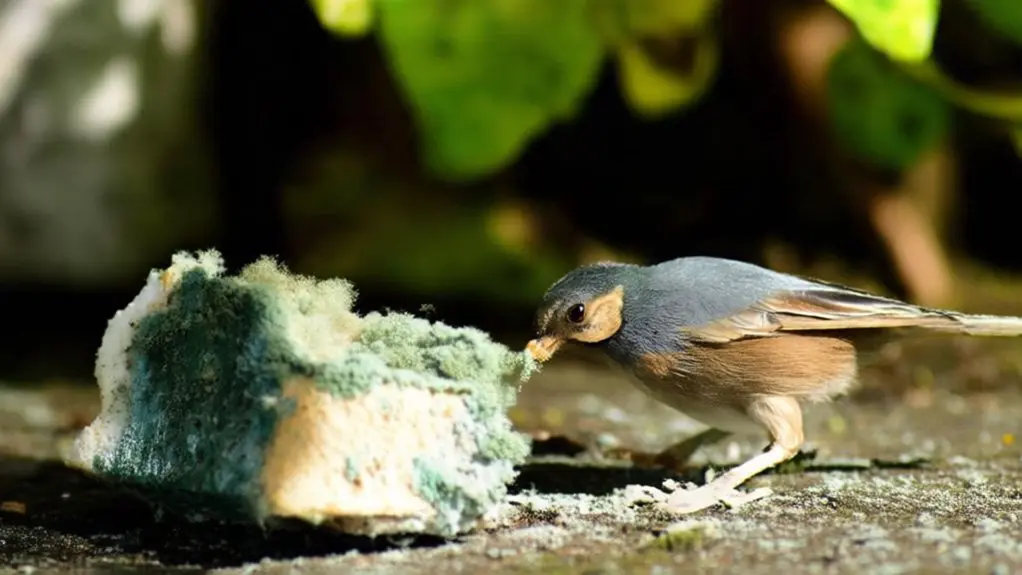
You shouldn’t feed birds mouldy bread because it contains toxic fungi and bacteria that harm their health. These toxins cause digestive issues, respiratory problems, and weaken their immune systems. This can lead to infections and organ damage.
Heat-resistant mycotoxins like aflatoxins and ochratoxins can cause liver and kidney damage. Repeated exposure increases the risk of death.
Feeding mouldy bread also disrupts bird behavior and overall well-being. Understanding these effects helps you protect wild birds in a way that’s both effective and compassionate.
Why Mouldy Bread Is Harmful to Birds
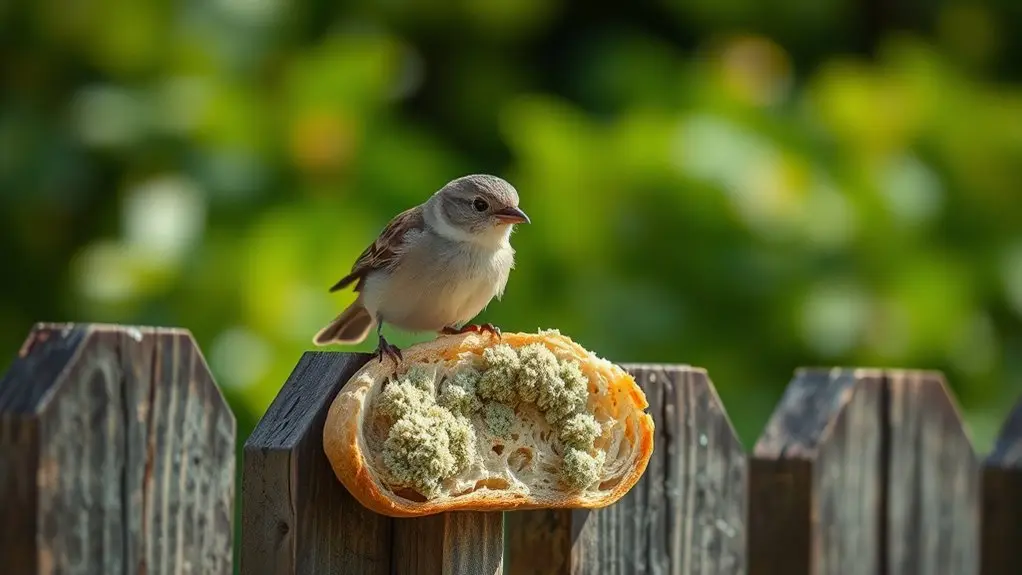
Although bread is a common food given to wild birds, mouldy bread contains harmful bacteria and fungi that can cause serious infections and illnesses.
Mouldy bread harbors harmful bacteria and fungi, posing serious health risks to wild birds.
When birds consume mouldy bread, they may develop respiratory problems and digestive disturbances due to the microbial contamination. You should know that ingestion of mould spores weakens their immune systems, making them more susceptible to disease.
Small and vulnerable bird species are particularly at risk, as their bodies may not tolerate the toxic effects of these microorganisms.
Additionally, feeding mouldy bread facilitates the spread of mold-related illnesses within bird populations by exposing multiple individuals to pathogens.
Consequently, providing mouldy bread compromises bird health and can contribute to broader ecological impacts through disease transmission.
It’s essential to avoid offering birds any food showing visible mold growth.
Toxins in Mouldy Bread and Their Effects
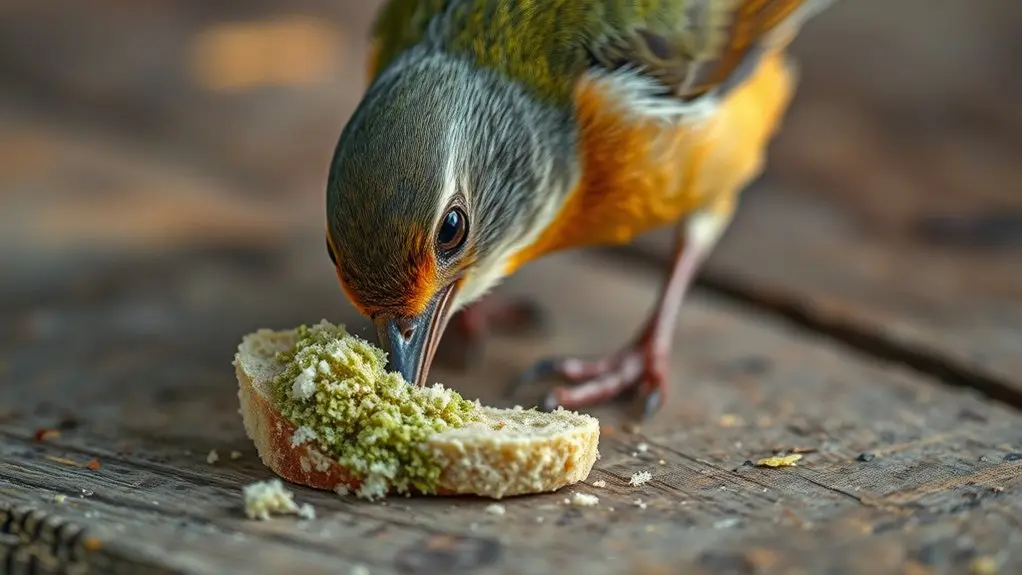
You should know that mouldy bread contains different mycotoxins, including aflatoxins. These toxins can cause serious health problems like liver damage, weakened immune systems, and breathing difficulties in birds.
Even a little bit of mouldy bread can make toxins build up in their bodies, leading to symptoms such as weakness and vomiting.
Types Of Toxins
How do toxins in mouldy bread affect birds? The primary harmful agents are mycotoxins such as aflatoxins, which cause liver damage and suppress the immune system.
Certain molds produce ochratoxins, compounds linked to kidney damage and neurological impairments.
These toxins are heat-resistant, so toasting or cooking the bread doesn’t neutralize their effects.
Birds ingesting mouldy bread may also experience allergic reactions or respiratory issues, depending on species sensitivity.
Chronic exposure to these toxins can contribute to long-term health complications, potentially increasing mortality rates in wild populations.
Understanding the specific types of toxins present helps clarify why feeding birds mouldy bread is hazardous, as these compounds interfere with essential organ function and overall physiological health.
Health Risks For Birds
When birds consume mouldy bread, they risk ingesting mycotoxins that can severely impair their health. These toxins may cause acute poisoning, leading to digestive disturbances such as vomiting and diarrhea, especially in small bird species.
Mycotoxins also weaken the immune system, which makes birds more vulnerable to secondary infections. Alongside toxins, mouldy bread often harbors harmful bacteria. These bacteria can cause infections when ingested.
Repeated consumption of contaminated bread can lead to chronic health issues, including systemic toxicity and organ damage. In some cases, this can even result in death.
Because of these risks, feeding mouldy bread to birds poses significant health hazards.
Preventing Mold Exposure
Since mouldy bread contains harmful mycotoxins that pose serious health risks to birds, preventing their exposure is vital for safeguarding avian well-being. These toxins can cause respiratory distress, immune suppression, and organ damage when ingested. You should immediately discard any bread showing visible mold to minimize risk.
Mold spores spread quickly in feeding areas, increasing toxin exposure, so maintaining clean feeding environments is essential. Providing fresh, uncontaminated food ensures birds avoid symptoms like lethargy, diarrhea, and neurological impairments linked to mycotoxin poisoning.
Regularly inspect and replace bird feed to prevent mold growth. By actively managing what you offer, you reduce the likelihood of toxin ingestion, thereby protecting birds from severe health consequences associated with mold exposure in their diet.
It’s all about keeping their food safe and fresh to keep them healthy.
How Mouldy Bread Messes With Birds’ Digestion
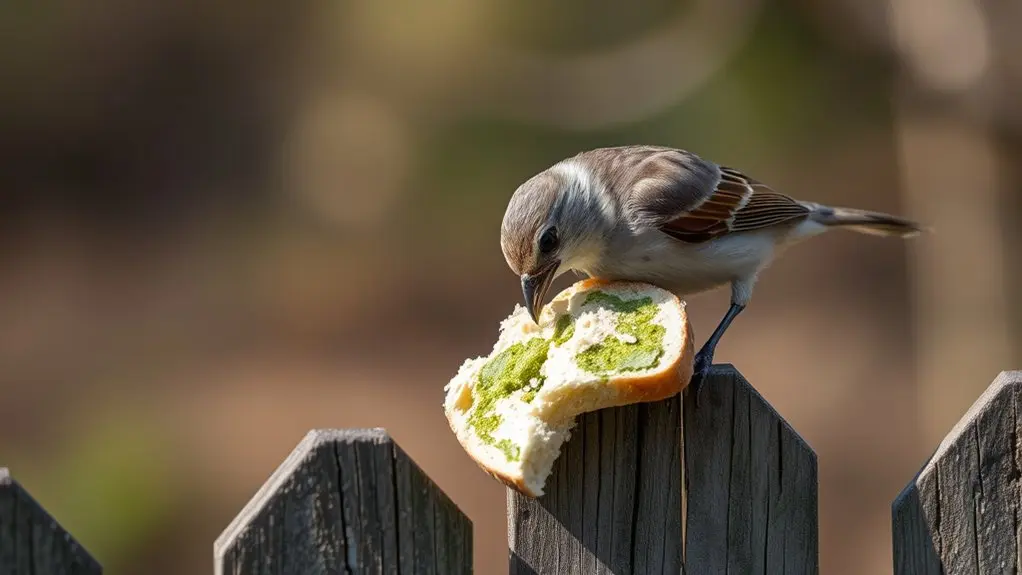
Although mouldy bread might seem harmless, it actually contains bacteria and toxins that can seriously mess with birds’ digestion. When birds eat this bread, harmful mould spores get into their digestive tract and interfere with normal digestion. This can cause some pretty uncomfortable gastrointestinal issues.
These toxins can build up over time, leading to poisoning and long-term health problems. And it’s not just digestion that gets affected. Birds’ immune systems can take a hit too, making it harder for them to fight off other illnesses.
Feeding mouldy bread can cause infections and blockages in the digestive system. Birds might also face respiratory problems from breathing in the spores. Plus, their immune system can get suppressed, which makes them more vulnerable overall.
Health Risks of Feeding Bread to Waterfowl and Wild Birds
Feeding bread to waterfowl and wild birds poses significant health risks that extend beyond simple nutritional imbalances. Bread, especially mouldy, disrupts natural diets, leading to conditions like Angel Wing syndrome, immune suppression, and increased vulnerability to infections. Harmful bacteria and toxins in mouldy bread cause digestive issues, while a bread-heavy diet displaces essential nutrients.
You might unintentionally harm bird populations by interfering with their natural foraging behavior. It’s important to understand these risks so you can make informed choices for bird health.
| Risk | Impact on Birds | Emotional Response |
|---|---|---|
| Nutritional Deficit | Angel Wing deformity | Concern for bird welfare |
| Toxins & Bacteria | Digestive infections | Alarm over suffering |
| Immune Weakening | Higher disease risk | Urgency to protect birds |
Signs a Bird Has Eaten Mouldy Bread
You’ll often notice that birds who’ve eaten mouldy bread seem weak and lethargic. They might even have trouble flying.
Sometimes, they show signs of respiratory distress, like coughing or sneezing.
Behavioral changes are common too, such as a loss of appetite.
In more severe cases, you might see neurological symptoms like trembling or disorientation, which means the mould toxicity is really affecting them.
Symptoms Of Illness
When a bird consumes mouldy bread, it often shows clear signs of illness that you can observe. Mould toxins affect multiple body systems, leading to symptoms ranging from mild to severe. You might notice the bird becoming lethargic, weak, and losing its appetite, indicating early distress.
Respiratory difficulties may develop, with coughing or labored breathing signaling toxic effects on the lungs. Additionally, gastrointestinal poisoning symptoms can appear, including vomiting and diarrhea.
Watch for these key signs:
- Lethargy, weakness, and reduced appetite
- Respiratory distress such as coughing or difficulty breathing
- Gastrointestinal upset, including vomiting and diarrhea
These symptoms reflect the bird’s compromised immune system and potential toxin-induced damage. So, it’s important to get immediate attention to prevent rapid health decline.
Behavioral Changes Noticed
Although birds may initially appear normal after consuming mouldy bread, you can often detect specific behavioral changes indicating poisoning. You might notice lethargy, reduced activity, or difficulty flying. Some birds display tremors, disorientation, or unusual vocalizations, signaling neurological distress.
Vomiting and diarrhea also frequently occur. In severe cases, sudden death may result from bacterial infections or toxins.
| Behavioral Change | Emotional Impact |
|---|---|
| Lethargy and inactivity | Concern for bird’s health |
| Tremors and disorientation | Distress and confusion |
| Vomiting and diarrhea | Urgency for intervention |
| Sudden death | Deep sadness and loss |
Recognizing these signs lets you act quickly, which can potentially save the bird’s life. So, keep an eye out and don’t hesitate to intervene if needed.
Safe and Nutritious Alternatives to Mouldy Bread for Birds
Because mouldy bread can be harmful to birds, offering safe and nutritious alternatives is crucial for their health. You can provide food sources rich in essential nutrients and energy that support bird well-being without the risks associated with bread.
Consider these options: seeds such as sunflower or niger seeds, which supply vital nutrients. Unsalted nuts like peanuts offer high-energy content that’s beneficial for metabolism. Fresh fruits including apple slices or berries deliver natural sugars and vitamins.
Additionally, suet blocks serve as an energy-dense choice, especially useful during colder periods to help birds maintain body heat.
Always make sure birds have access to clean, fresh water, as hydration plays a critical role in their survival and physiological function.
Best Practices for Feeding Wild Birds Without Mouldy Bread
To guarantee the health and safety of wild birds, you should always offer fresh, uncontaminated food and avoid feeding them mouldy bread. Moldy bread harbors harmful bacteria and fungi, which can cause infections or illness in birds.
Store bread properly in a cool, dry environment to minimize mold growth. Inspect feeding areas regularly and discard any bread showing mold before offering it.
Instead of bread, consider providing nutritionally rich alternatives such as seeds, nuts, and fresh fruit, which better support avian health. These alternatives supply essential nutrients and reduce the risk of disease transmission.
Frequently Asked Questions
Can Birds Develop Immunity to Mould Toxins Over Time?
No, birds can’t develop immunity to mould toxins over time. These toxins build up in their bodies and cause chronic health problems. They also weaken the immune system, which isn’t good news for birds.
How Quickly Do Symptoms Appear After a Bird Eats Mouldy Bread?
You’ll notice symptoms within hours to a couple of days after your bird eats mouldy bread. Immediate signs include vomiting or diarrhea.
Respiratory issues and lethargy might develop over several days, indicating toxin exposure. Keep a close eye on your bird during this time. If you see any of these signs, it’s best to act quickly.
Are Some Bird Species More Resistant to Mouldy Bread Effects?
Think some birds handle moldy bread better? Yes, species like ducks show resilience. But no bird is immune to mycotoxins.
You should avoid feeding moldy bread. It risks chronic health issues regardless of species. Better safe than sorry!
Can Mouldy Bread Affect Bird Migration or Breeding Patterns?
Yes, mouldy bread affects bird migration and breeding by weakening their immune system and reducing stamina. It also disrupts hormonal balance, which is crucial for their natural cycles.
This can lead to decreased reproductive success. Ultimately, it impairs long-distance travel and nesting behaviors, both of which are essential for population stability.
Is It Safe to Feed Birds Bread That Looks Only Slightly Mouldy?
You shouldn’t feed birds bread that looks slightly mouldy. Mould spores can cause respiratory issues, digestive upset, and immune suppression.
You risk harming birds because their bodies can’t safely process mycotoxins present even in minimal mould growth. So, it’s really best to avoid giving them any mouldy bread at all.
Conclusion
Feeding birds mouldy bread is like offering them a ticking time bomb. The toxins disrupt their digestion and pose serious health risks.
Instead of risking their well-being, choose safe, nutritious alternatives that support their natural diet. By understanding the dangers and adopting responsible feeding habits, you help protect wild birds from harm and promote their health.
Remember, your choices directly influence the delicate balance of their ecosystem. So, it’s worth thinking twice before tossing out that old bread.