
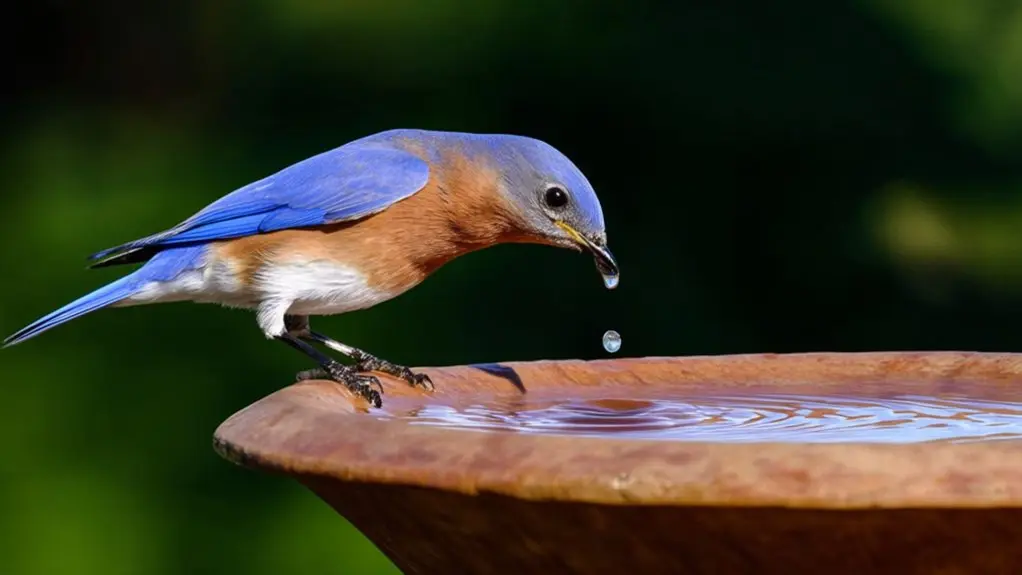
Yes, you can safely offer birds cold water during winter, as it supports their hydration without harming them when properly managed. Birds naturally prefer cold, fresh water, which helps reduce microbial growth and conserves their energy compared to melting snow.
However, you must prevent water from freezing on feathers to avoid frostbite or injury. Maintaining clean, accessible water sources encourages bird health and activity in cold months.
Learn how to optimize water provision for their survival and safety. It’s all about keeping things simple and making sure the birds have what they need to thrive.
Can Birds Safely Drink Cold Water?
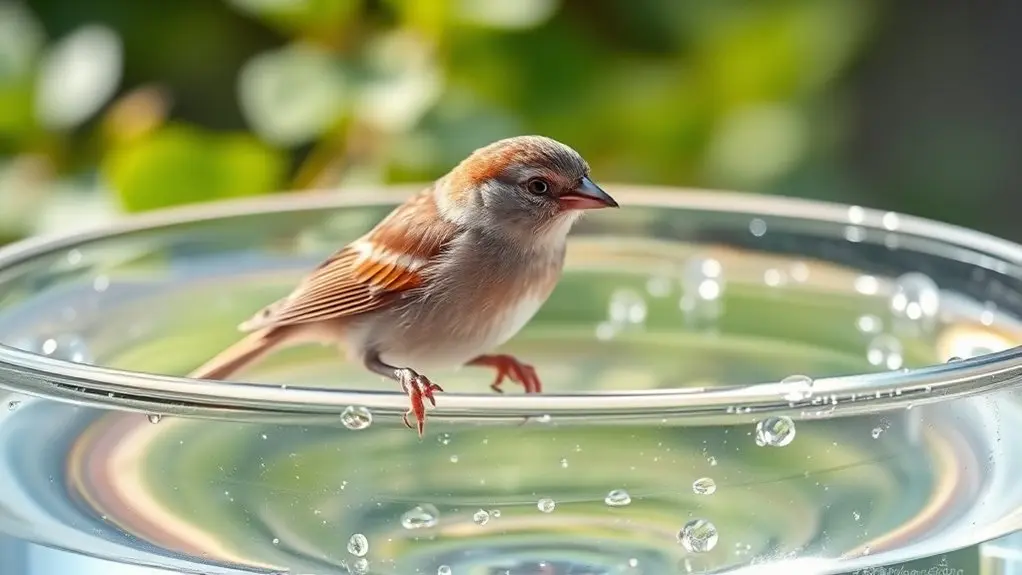
Although some might worry about the effects of cold water on birds, they can safely drink it without harm. In fact, cold water often inhibits microbial growth, making it a healthier choice. Cold temperatures reduce bacterial and algal proliferation, lowering contamination risks in water sources accessible to birds.
Many species naturally prefer cold water for drinking and bathing, especially during winter months when water quality can decline. Providing clean, cold tap water, without additives like ice or antifreeze, is both safe and beneficial.
By maintaining a clean, cold water supply, you help support bird hydration and overall health. This simple action aligns with birds’ natural behaviors and environmental adaptations, ensuring they access safe drinking water even in colder conditions.
Why Liquid Water Is Vital for Birds in Winter
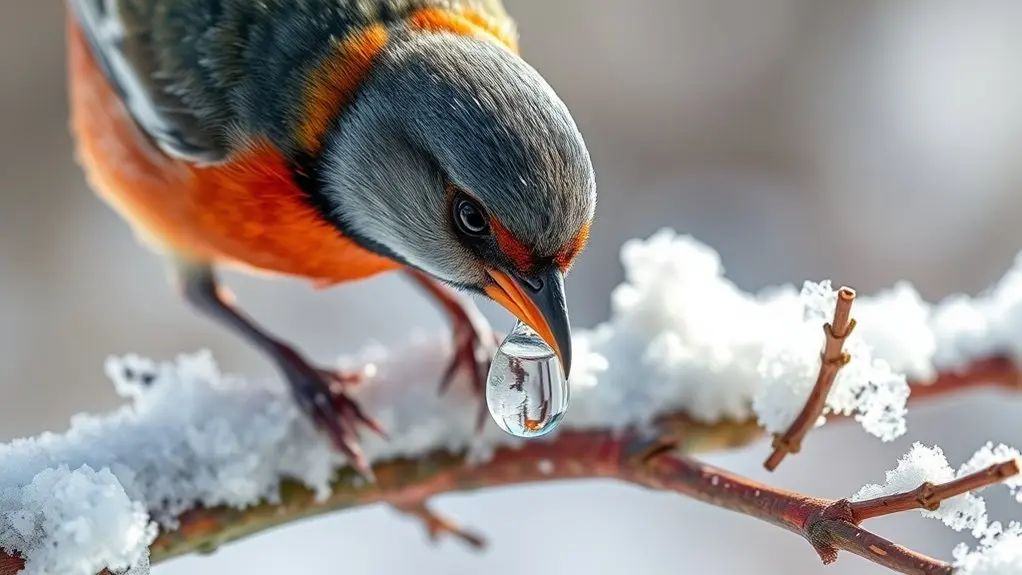
You need to understand that birds rely on liquid water in winter to stay hydrated. That’s because snow and ice require extra energy to convert into drinkable water.
When birds melt snow, they end up using valuable calories, which can lower their energy reserves needed for survival. So, providing accessible liquid water helps birds save energy and stay hydrated during those cold conditions.
Winter Hydration Needs
Because birds expend a lot of energy melting snow or ice just to get a drink, providing them with easy access to liquid water during winter is really important. It helps them save their calories for other vital activities.
You should know that liquid water lets birds stay hydrated without using up extra energy to melt frozen water. Plus, cold water slows down microbial growth, which means less chance of contamination and safer drinking and bathing spots.
During freezing nights, natural water sources often freeze solid. So, having open water available can be a lifesaver when food and water get scarce. Some bird species are quite good at finding and using these liquid water sources, even when it’s really cold out.
Making sure birds have easy access to liquid water helps meet their hydration needs. It promotes energy efficiency and supports their overall survival through the winter.
Energy Costs of Snow
Access to liquid water during winter not only provides hydration but also considerably reduces the energy birds must spend to stay alive. When birds consume snow, they face significant energetic challenges due to the phase change from solid to liquid.
Melting snow requires twice the energy compared to simply warming liquid water to body temperature.
This process depletes their limited caloric reserves, which are essential for flight, thermoregulation, and survival. Melting snow demands substantial heat energy for the phase change. Warming snow after melting delays access to liquid water.
Energy spent on snow melting reduces calories for critical activities. Providing liquid water conserves energy by eliminating melting needs.
Where Birds Find Water Naturally in Winter
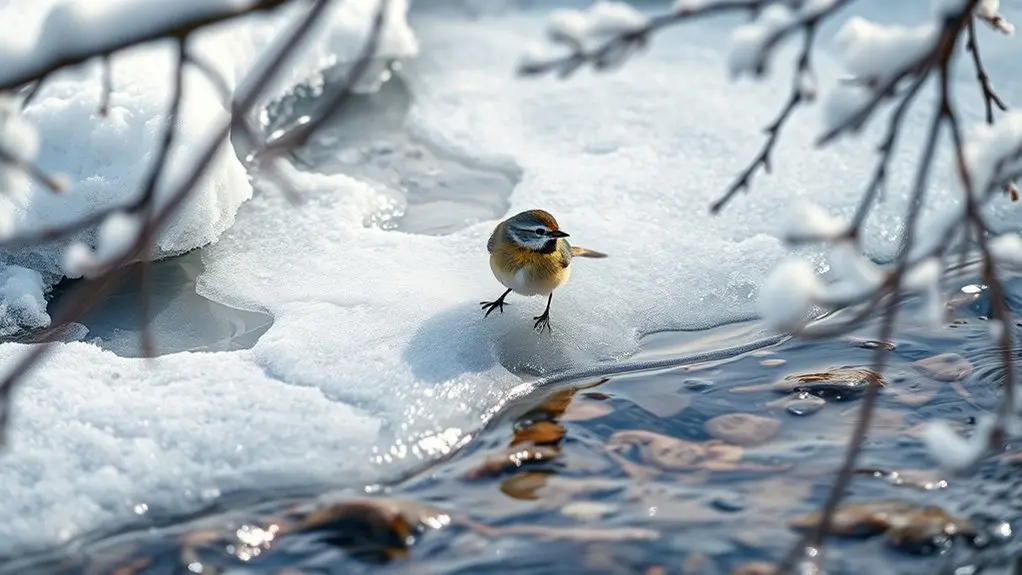
Although winter presents significant challenges, birds locate water through several natural means to meet their hydration needs. You’ll find that birds drink from melting snow, ice, dripping icicles, and small puddles formed during brief warm spells. Some species, like waterfowl, access open water in lakes or ponds that stay unfrozen due to currents or snow insulation.
Large flocks often gather at these scarce water sources to hydrate efficiently.
| Water Source | Description |
|---|---|
| Melting snow & ice | Consumed directly or melted internally |
| Dripping icicles | Provide accessible liquid water during freeze |
| Open water bodies | Lakes/ponds remain unfrozen by currents |
Understanding these sources helps you appreciate how birds survive winter hydration challenges. It’s pretty interesting to see how nature provides for them even in the coldest months.
Why Eating Snow Costs Birds More Energy
When birds eat snow, they’ve to use a lot of energy to melt it before their bodies can actually absorb the water. Melting snow takes twice as much heat energy as just warming up liquid water to their body temperature. So, birds end up burning more calories than they get from the snow. This means they risk running low on energy.
Here’s why eating snow is costly for birds: melting snow demands a lot of calories to turn solid ice into liquid water. Using that much energy can drain the reserves they need to survive the winter.
On top of that, birds have to burn more calories inside their bodies, which leaves less energy for flying and staying warm. That’s why avoiding snow helps them save energy that’s super important for getting through tough conditions.
Understanding this makes it clear why birds do better when they can drink liquid water instead of just eating snow.
Risks of Offering Water to Birds in Winter
Providing birds with liquid water during winter seems beneficial since it spares them the energy cost of melting snow. However, offering water can pose serious risks. When water freezes on birds’ feathers, it immobilizes them, increasing hypothermia and injury risks.
Heated birdbaths create a paradox: water may remain liquid, but extreme cold can cause feathers to freeze upon contact, sometimes leading to death. Frostbite can occur if birds can’t quickly shake off frozen water.
Documented cases exist of birds falling mid-flight after bathing in heated water, likely due to feather freezing or disorientation.
Safe Ways to Provide Water for Birds in Winter
You should use unbreakable, shallow bowls for the water. Then, keep the water ice-free by removing any ice regularly or by bringing the water indoors to warm up.
It’s also a good idea to place water sources where birds feel safe from predators. Look for spots that offer clear escape routes and good visibility so the birds can keep an eye out.
If you’re using heated birdbaths, make sure to cover them with nonmetallic grilles. And be careful with immersion heaters—use them in a way that prevents freezing but doesn’t create any hazards for the birds.
Winter Water Safety
Although winter poses challenges for birds seeking water, you can guarantee their safety by using unbreakable shallow bowls and removing ice regularly to keep water accessible.
Position birdbaths in sunny locations and elevate them on pedestals to minimize freezing and reduce predator threats.
Avoid additives like antifreeze, as they harm birds and damage feathers.
Maintain cleanliness and monitor water quality to ensure it remains fresh and inviting.
To optimize winter water safety:
- Use unbreakable shallow bowls to prevent breakage and facilitate drinking.
- Place birdbaths in sunny spots and elevate them to reduce freezing risks.
- Remove ice frequently to keep water available and safe.
- Clean and check water regularly to maintain hygiene and bird health.
Heated Birdbath Tips
When winter temperatures drop below freezing, heated birdbaths offer a reliable solution to keep water accessible for birds without the risk of ice formation. You should use unbreakable, shallow dishes and regularly remove ice or bring water indoors to prevent freezing.
Cover heated birdbaths with nonmetallic grilles or sticks to stop birds from contacting heating elements directly. Immersion-style heaters designed specifically for birdbaths maintain liquid water without overheating or freezing.
Elevate the birdbath on pedestals or deck railings to reduce predator access and enhance safety. Regular cleaning and temperature monitoring are essential to prevent ice buildup or overheating, ensuring a safe drinking environment.
These precautions help maintain consistently safe water conditions for birds throughout harsh winter conditions. It’s a simple way to keep your feathered friends happy and healthy all season long.
Placement And Maintenance
Maintaining accessible and safe water sources for birds during winter involves strategic placement and regular upkeep. You should place birdbaths where birds can easily escape predators, like outdoor cats, and elevate them on stands to reduce risk.
Positioning baths in sunny areas helps slow freezing, extending water availability. Use shallow, unbreakable dishes and remove ice frequently or apply safe de-icers to maintain liquid water.
Regular cleaning is essential to guarantee water remains fresh and free from contaminants, encouraging bird visits.
Place birdbaths with clear escape routes from predators. Elevate baths on pedestals or stands for safety and accessibility. Position baths in sunny spots to delay freezing. Clean and monitor water frequently to keep it fresh and safe.
Maintaining a Winter Birdbath
To support local bird populations during freezing temperatures, you need to keep your winter birdbath filled with fresh, cold water. Using heated birdbaths or adding safe de-icers prevents freezing, ensuring birds have continuous access to liquid water.
Position the birdbath in a sunny area to naturally reduce ice formation. Elevate it on a pedestal or railing to minimize predator threats and make it easier to check.
Regular maintenance is essential: remove ice and snow promptly and clean the birdbath frequently to keep it hygienic and inviting.
These practices create a reliable water source during winter, supporting birds’ hydration needs when natural sources freeze. With consistent care, birds can thrive despite harsh conditions.
It really shows how important it’s to be precise and proactive with winter birdbath maintenance.
Tips to Attract Birds With Winter Birdbaths
Although winter conditions challenge bird activity, you can attract more birds by strategically placing and maintaining your birdbath. Position it in sunny, sheltered spots to delay freezing and increase usage.
Elevate the bath on platforms or pedestals to ease bird access and reduce predator risk.
Keeping water clean and refreshed is essential to prevent microbial growth and sustain bird interest. During extreme cold, cover heated baths with nonmetallic grilles or sticks to avoid feather freezing.
- Place birdbaths in sunny, sheltered locations for slower freezing.
- Use elevated stands to improve safety and accessibility.
- Refresh water regularly to inhibit microbial buildup.
- Employ nonmetallic covers on heated baths to protect feathers.
These methods enhance winter birdwater availability, supporting avian hydration and thermoregulation.
Monitoring Bird Activity Around Winter Water Sources
Strategically placing and maintaining birdbaths in winter sets the stage for effective observation of bird activity. You should position birdbaths in visible, accessible locations to monitor behavior easily.
Elevate water sources on pedestals or railings to identify which species visit and how frequently.
Regularly check water levels and cleanliness to guarantee birds have consistent access to fresh, safe water. Using transparent or open-sided containers allows you to quickly assess water temperature and detect ice or debris.
By observing the number of birds and their bathing or drinking patterns, you gain insight into their winter water preferences.
This systematic monitoring helps you understand how birds interact with cold water sources. It informs future placement and maintenance for improved bird welfare during colder months.
Keeping an eye on these details really makes a difference for our feathered friends.
Frequently Asked Questions
Do Birds Prefer Cold Water Over Room Temperature Water?
Yes, you’ll find birds prefer cold water over room temperature because it’s more invigorating and closer to their natural environment.
Cold water also inhibits microbial growth, helping keep their drinking source cleaner and safer for them. So, it’s kind of like giving them a fresher, healthier drink.
Birds seem to enjoy the chill, which makes sense since they’re used to cooler streams and puddles in the wild. It’s just more natural for them.
Can Freezing Temperatures Harm a Bird’s Throat When Drinking?
You wouldn’t want to sip a frozen goblet like a Victorian noble. Freezing temperatures can harm a bird’s throat by causing ice to form. This ice can obstruct airflow and risk choking or respiratory distress during drinking.
It’s pretty rough when you think about it. Birds need to stay hydrated, but icy conditions make it tricky for them to drink safely. So, it’s important to keep their water from freezing whenever possible.
How Often Should I Change Water in a Winter Birdbath?
You should change the water in a winter birdbath every 1-2 days.
During freezing weather, increase how often you change it to prevent ice buildup and bacterial growth. This helps keep the water fresh, clean, and easy for birds to access.
Keeping the water accessible is really important, especially when temperatures drop. Birds rely on it, so a little extra attention goes a long way!
Are Some Bird Species More Tolerant of Cold Water?
Yes, you’ll find that species like waterfowl and northern passerines tolerate cold water better due to adaptations like specialized feathers and insulation. These features help them stay warm even in chilly environments.
On the other hand, tropical birds don’t have these adaptations. So, they’re less suited to cold water exposure and usually avoid it altogether. Makes sense, right?
Does Cold Water Affect Bird Digestion or Metabolism?
Think of cold water as a brief winter chill; it can slow your bird’s digestion slightly by lowering metabolic rates. However, their warm bodies quickly neutralize this, so overall metabolism and digestion remain efficient and largely unaffected.
It’s kind of like when you step outside on a cold day for just a moment—you feel the chill, but you warm up fast. Birds handle it the same way with cold water, so there’s no need to worry about it messing with their digestion.
Conclusion
You might think cold water would shock birds, but they can safely drink it as long as it’s not freezing.
Actually, providing liquid water in winter helps support their energy balance. Eating snow uses up more calories, so having water available is a big help.
By keeping a safe, unfrozen water source, you’re helping birds stay hydrated and healthy during harsh conditions.
Keep an eye on your birdbath to make sure you’re meeting their needs while also minimizing any risks in cold weather.