
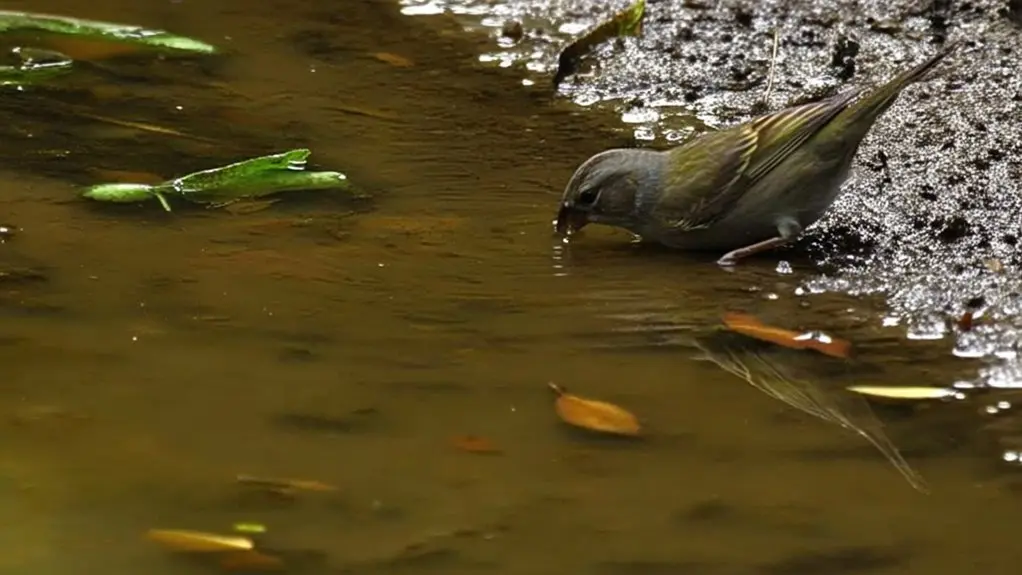
You shouldn’t let birds drink dirty water because it contains harmful bacteria, mold, and toxins that can cause serious illnesses like gastrointestinal infections and respiratory problems. Stagnant water promotes pathogen growth, weakening their immune systems and leading to dehydration or behavioral changes.
Always provide filtered, clean, or moving water to reduce these risks and support bird health. If you want to create a safer environment for birds, understanding proper water maintenance and signs of illness is essential.
Why Dirty Water Is Dangerous for Birds
Although birds often rely on natural water sources, drinking dirty water exposes them to harmful bacteria such as Salmonella and Pseudomonas. These bacteria can cause serious gastrointestinal infections.
You should understand that standing or contaminated water often contains mold spores. These spores can lead to respiratory illnesses like Aspergillosis.
Additionally, chemicals present in tap water such as chlorine, chloramine, fluoride, and heavy metals pose toxic risks. They may cause long-term health problems for birds.
When birds consume polluted water, they face increased risks of systemic infections and immune system compromise. This makes them more vulnerable to various diseases.
Recognize that symptoms like lethargy, decreased appetite, diarrhea, or respiratory distress often appear subtly. That’s why it’s so important to provide clean, safe water to protect their health.
Recognizing Illness From Contaminated Water
You might notice birds drinking contaminated water showing subtle signs like lethargy, decreased appetite, or respiratory distress before their illness gets worse. It’s important to keep a close eye on them because symptoms such as diarrhea or neurological changes usually don’t show up until after they’ve been exposed for a while.
Catching these signs early can really help prevent serious health problems caused by bacteria, mold, or toxins in dirty water.
Symptoms Of Waterborne Illness
When birds drink contaminated water, they often develop subtle symptoms that can be easy to overlook but are essential for early detection. You might notice lethargy, decreased appetite, or abnormal droppings, which indicate an underlying issue.
Respiratory signs such as labored breathing or sneezing may signal exposure to mold spores or bacteria present in dirty water.
Gastrointestinal problems, including diarrhea and vomiting, commonly arise from ingesting pathogens like Salmonella.
Additionally, feather plucking or skin irritation can result from mold exposure or bacterial infections linked to contaminated water.
Since early symptoms are often subtle, you need to observe birds regularly and carefully to identify potential waterborne illnesses promptly.
By keeping a close eye on your birds, you can catch these signs early and get them the help they need before things get worse.
It’s all about staying vigilant and acting quickly to keep your feathered friends healthy.
Early Detection Signs
Since birds often hide symptoms until illness advances, recognizing early signs of waterborne illness requires careful observation of subtle behavioral and physical changes. You should watch for decreased water intake, lethargy, and reduced interest in food. These behavioral shifts often signal contamination-related distress.
Physically, look for feather plucking, labored breathing, and abnormal droppings. These can indicate infections from bacteria or mold present in dirty water. Diarrhea and respiratory difficulties are common symptoms linked to these pathogens.
Regularly monitoring your bird’s activity and physical health ensures you catch hydration-related issues early, which improves treatment outcomes. By staying vigilant to these subtle cues, you can intervene before the illness progresses.
This helps protect your bird’s overall well-being and prevents severe complications associated with contaminated water exposure.
Common Waterborne Illnesses Affecting Birds
Although birds often rely on natural water sources, contaminated water can expose them to harmful bacteria like Salmonella and Pseudomonas. These bacteria can cause severe gastrointestinal and systemic infections.
Birds drinking contaminated water risk serious infections from bacteria like Salmonella and Pseudomonas.
Mold spores from stagnant water or leftover food may lead to respiratory illnesses such as Aspergillosis.
On top of that, chemicals commonly found in tap water like chlorine, chloramine, fluoride, and heavy metals pose risks of long-term organ damage and neurological problems.
Birds drinking contaminated water often show subtle symptoms like lethargy, decreased appetite, diarrhea, or difficulty breathing. The tricky part is they tend to hide these signs until the illness progresses.
Understanding these common waterborne illnesses is essential because they considerably impact avian health. You should recognize the risks linked to contaminated water to protect birds effectively and keep them healthy.
Safe Water Options for Birdbaths and Drinkers
To provide safe water for birds, it’s best to choose filtered or purified sources that reduce harmful chemicals and contaminants. This helps ensure the water is clean and healthy for them.
Plus, regular cleaning and maintenance of birdbaths are key. It prevents bacterial and fungal growth, which can quickly spoil the water quality.
Choosing Safe Water
How can you guarantee the water you provide to birds is safe and healthy? Start by choosing filtered or purified water, like reverse osmosis or carbon-filtered options. These help reduce exposure to chlorine, chloramine, and heavy metals.
Bottled spring water labeled additive-free is also a safer alternative to tap water. It helps minimize toxins that could harm birds.
If you collect rainwater, make sure it’s properly filtered to remove contaminants since it naturally lacks chemical additives. Regularly testing and treating your water source is key to keeping it free from bacteria, mold, and pollutants that can be harmful to birds.
Avoid long-term use of distilled water unless advised by a veterinarian. Distilled water doesn’t have minerals that are important for avian health.
Cleaning And Maintenance
Selecting safe water is only part of maintaining a healthy environment for birds. Regular cleaning and upkeep of birdbaths and drinkers play a big role in preventing harmful bacterial growth. You should empty and rinse these containers frequently with a hose to avoid stagnation and microbial buildup.
Use a vinegar solution, mixing one part vinegar to nine parts water, and a wire brush to scrub all surfaces gently. Avoid harsh household cleaners. After scrubbing, rinse thoroughly to get rid of any vinegar residue before refilling with fresh water.
Make sure to clean these containers at least once a week. If it’s hot or humid, clean them even more often to stop mold and bacteria from growing.
Finally, let both the cleaning tools and containers dry completely before refilling because moisture can encourage microbial growth that might harm the birds’ health.
Filtering And Treatment
Why does filtering and treating water matter for birdbaths and drinkers? Proper filtration removes harmful chemicals, heavy metals, and pathogens, making sure birds get safer hydration. Using devices like carbon filters or reverse osmosis systems really cuts down on contaminants.
Distilled water, while free from impurities, doesn’t have essential minerals. So, it should be supplemented or used sparingly. When you collect rainwater, it needs filtration too — to keep out bacteria and airborne pollutants.
Regular water testing is a smart move. It helps catch toxins like chlorine and pesticides early, which lowers the risk of poisoning.
| Method | Removes Contaminants | Notes |
|---|---|---|
| Carbon Filters | Chemicals, heavy metals | Effective for routine use |
| Reverse Osmosis | Broad spectrum contaminants | Highly efficient but costly |
| Distilled Water | Impurities | Mineral deficient; use wisely |
Filtered, treated water keeps birds hydrated and healthy. It also helps prevent disease.
Essential Tips for Cleaning and Maintaining Birdbaths
Although birdbaths may seem simple to maintain, regular cleaning is essential to prevent bacterial buildup and guarantee safe drinking water for birds. You should clean your birdbath at least once a week, increasing frequency in hot or humid conditions.
Follow these key steps:
- Empty and rinse the birdbath thoroughly with a hose to remove stagnant water and debris.
- Scrub the basin using a wire brush and a vinegar solution (1 part vinegar to 9 parts water) to eliminate mold, algae, and residue. Avoid chemical cleaners to protect birds.
- Rinse all vinegar residues completely and allow the birdbath to dry fully before refilling to prevent mold growth.
If you stick to these methods, you’ll keep the birdbath hygienic, reduce the risk of pathogens, and help support the health of your feathered visitors.
How Moving Water Keeps Birdbaths Safe and Attractive
Keeping your birdbath clean is just one part of ensuring a healthy environment for birds. Incorporating moving water can further enhance its safety and appeal. Moving water prevents stagnation, which reduces bacteria, mold, and algae growth that contaminate the water.
The sound and sight of flowing water attract more birds. This encourages natural drinking and bathing behavior. Plus, aeration from fountains decreases harmful microorganisms and deters mosquito larvae breeding.
Moving water features are also easier to clean regularly. This helps maintain a safer habitat for your feathered visitors.
| Benefit | Mechanism | Effect on Birdbath |
|---|---|---|
| Prevents stagnation | Continuous movement | Reduces bacteria and algae |
| Attracts birds | Visual and auditory stimuli | Increases bird visits |
| Aerates water | Bubbling fountains | Lowers pathogen levels |
| Discourages mosquitoes | Disrupts larvae development | Limits disease vectors |
| Easier maintenance | Regular water circulation | Keeps water cleaner longer |
Monitoring Bird Behavior to Prevent Water-Related Illness
When you monitor bird behavior closely, you can detect early signs of water-related illness before they become severe. Pay attention to subtle changes in drinking habits and physical condition to safeguard their health.
Here are three critical steps you should take:
Three essential actions to protect your birds from water-related illness.
- Observe drinking frequency and volume; a decrease may indicate dehydration or illness linked to contaminated water.
- Watch for behavioral shifts such as lethargy, reduced grooming, or prolonged fluffiness, which often signal hydration problems.
- Check for physical symptoms like abnormal droppings or respiratory difficulty that can result from exposure to dirty water.
Also, don’t forget to inspect birdbaths regularly for stagnation, mold, or debris. Cleaning up quickly and keeping the water fresh can really help prevent illness.
This way, your birds stay healthy and hydrated.
Frequently Asked Questions
Can Birds Develop Immunity to Contaminated Water?
No, birds can’t develop immunity to contaminated water. You should know repeated exposure weakens their immune system, increasing infection risk.
Protecting birds means providing clean water since they rely on it for health and survival. It’s really important to keep their water sources safe and fresh. That way, they stay healthy and strong.
Do Certain Bird Species Prefer Natural Dirty Water?
Yes, certain bird species prefer natural dirty water, like waterfowl and shorebirds. They’ve evolved to make the most of murky environments for foraging and hydration.
That said, they tend to avoid water that’s heavily contaminated because it can be harmful to their health. So, while they’re okay with some dirtiness, there’s definitely a limit to what they’ll tolerate.
How Does Water Temperature Affect Bird Drinking Habits?
You might think birds drink any water temperature, but they actually prefer cool or lukewarm water. Extreme temperatures tend to deter them from drinking. Sudden changes in temperature can cause discomfort and reduce their hydration.
Can Birds Transmit Waterborne Diseases to Humans?
Yes, birds can transmit waterborne diseases like Salmonella to you through contaminated water or droppings.
You should practice proper hygiene and regularly clean birdbaths to reduce your risk of infection from these pathogens.
It’s a simple step that goes a long way in keeping you safe. Just a little care helps prevent these illnesses.
Are There Natural Remedies to Purify Bird Drinking Water?
Yes, you can purify bird drinking water naturally by boiling it. Adding small amounts of apple cider vinegar, lemon juice, or diluted tea tree oil also helps. Using activated charcoal filters is another great option.
Don’t forget to regularly change the water to keep it fresh and reduce pathogens and contaminants. These simple steps can make a big difference in keeping your bird’s water clean and safe.
Conclusion
You want your feathered visitors to thrive, not suffer from dirty water. Picture crystal-clear birdbaths, gently rippling with fresh, moving water. These are safe havens where birds sip healthily and preen brightly.
By regularly cleaning and monitoring these waters, you prevent diseases unseen to the naked eye. Remember, clean water isn’t just a luxury; it’s essential for vibrant bird life.
Keep their drinking spots pristine, and you’ll watch their lively, healthy behaviors flourish. It really makes a difference to their well-being.