
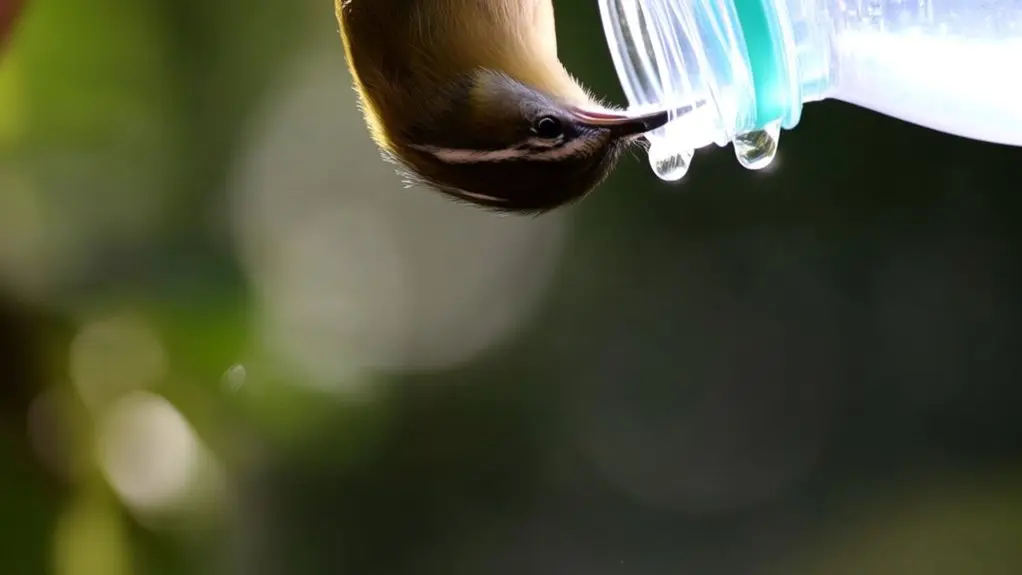
You can provide your pet birds with clean, safe hydration using water bottles made from glass or metal that resist bacteria and leaks. Larger parrots adapt well to bottle drinking, but small songbirds may struggle because of their dipping style.
Birds drink by dipping and tilting their heads, so bottle designs must accommodate this without requiring suction. Proper cleaning and maintenance guarantee water safety and consistent access.
Understanding these factors will help you optimize your bird’s drinking experience and health. It’s all about making sure your feathered friend stays happy and hydrated!
Are Water Bottles Safe For Birds?
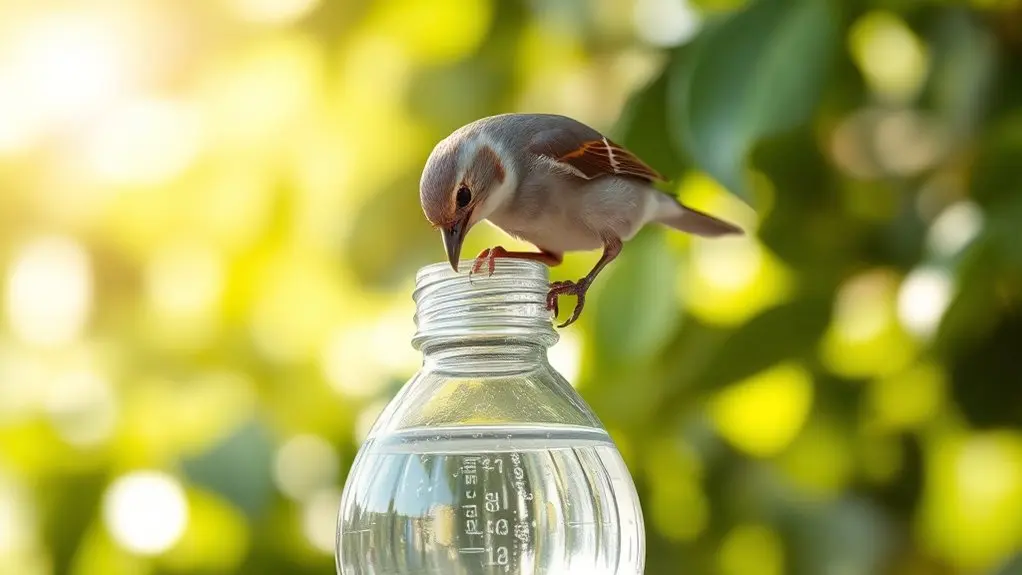
Although some birds may initially struggle to use water bottles, those made from high-quality glass or metal provide a safe and hygienic drinking option when properly maintained. These materials inhibit bacterial growth and prevent leaks, which reduces contamination risks.
You’ll need to clean the bottles regularly with appropriate tools to eliminate biofilm or bacteria that could harm your bird.
Unlike traditional dishes, water bottles minimize spillage and wet bedding. This lowers the chance of mold development or other hazards.
Monitoring water levels and inspecting the bottle for blockages or damage is essential to ensure consistent access and prevent safety issues.
With attentive maintenance and observation, water bottles offer a reliable and sanitary hydration method suitable for various birds.
Which Bird Species Adapt Best To Water Bottles?
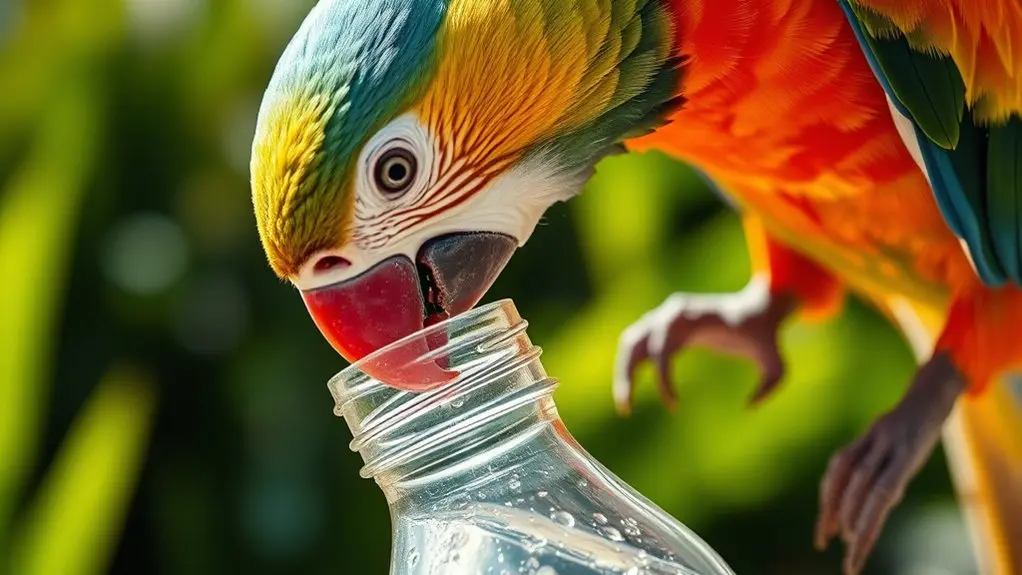
When selecting a water bottle for your bird, consider its species-specific behaviors and physical traits, as these influence how well it adapts to this drinking method. Larger parrots like cockatoos and conures adapt best. Their intelligence and strong beaks allow them to manipulate the ball mechanism easily.
Blue jays, which tilt their heads to drink, can adjust with proper training. On the other hand, small songbirds such as finches and canaries struggle due to their size and dipping drinking style.
Species like swallows, accustomed to foraging mid-flight, find water bottles less natural and may resist this option.
How Birds Drink Without Lips: What It Means For Water Bottles
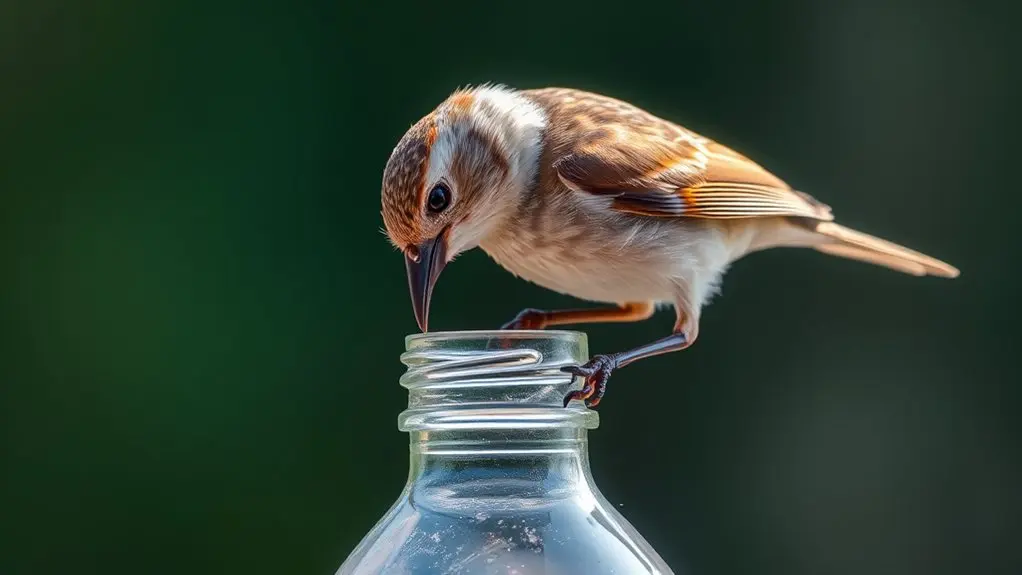
Because birds lack lips, they can’t suck water like mammals do. So, they drink by dipping their bills into water and then tilting their heads back to swallow. This unique anatomy affects how they interact with water bottles. Here’s what you need to know:
Birds can’t suck water like mammals; they dip their bills and tilt their heads to drink.
Birds rely heavily on gravity to move water down their throats, so water bottles must allow enough flow for dipping. Some species, like pigeons, use their tongues to suck water, so bottles with drip mechanisms suit them best.
Birds that scoop water while flying need accessible surfaces or bowls rather than narrow bottle openings.
The absence of lips means water bottles should accommodate various drinking styles, avoiding designs that require suction. Understanding these mechanics helps you choose water bottles that match your bird’s natural drinking behavior.
Benefits Of Water Bottles For Pet Birds
You’ll find that water bottles keep your bird’s water clean because they prevent contamination and spills that often happen with open dishes.
Plus, they make it super easy to see how much water your bird is actually drinking since you can watch the visible air pockets. This way, you can be sure your pet stays properly hydrated.
Also, picking water bottles made from durable materials like glass or metal helps cut down on bacterial growth and leaks. That means you’re supporting your bird’s health with a more reliable and hygienic water source over the long run.
Clean Water Maintenance
How can you guarantee your pet bird always has access to clean, uncontaminated water? Using water bottles designed for pet birds provides an effective solution. These bottles minimize contamination and maintain hygiene, which is critical for your bird’s health.
Consider these key points:
- Water bottles prevent contamination by blocking bird droppings and debris, unlike open dishes.
- The air pocket inside bottles lets you easily monitor water levels, so you always know when it’s time for a refill.
- Durable glass or metal bottles resist bacterial growth better than plastic, which helps keep the water pure.
- Regular cleaning of bottles is essential to avoid bacterial buildup and maintain a hygienic drinking environment. It’s a simple step that makes a big difference!
Monitoring Water Consumption
When you use water bottles for your pet bird, you can easily monitor its daily water intake through the visible air pocket and clear design. This makes it simple to detect irregularities promptly and guarantee consistent hydration.
The bottle’s transparency helps you spot leaks or blockages early, which prevents dehydration risks. Compared to open dishes, water bottles minimize spillage and contamination, so your bird always has cleaner water available.
| Feature | Benefit |
|---|---|
| Visible air pocket | Tracks daily water consumption |
| Clear bottle | Detects irregularities quickly |
| Spill prevention | Reduces water loss |
| Easy level check | Identifies leaks and blockages |
Hygiene and Durability
Although open water dishes are common, water bottles offer superior hygiene and durability for pet birds. Their sealed design minimizes contamination from debris and droppings, which helps keep the water cleaner.
You’ll find water bottles made from robust materials like glass or metal, reducing breakage risk and ensuring long-term use.
To get the most out of these bottles, follow a few simple practices. Clean them regularly with brushes to remove biofilm and residues. It’s also a good idea to boil the bottles occasionally to eliminate bacteria and mold buildup.
Choose high-quality bottles to prevent leaks and blockages, so your bird always has reliable hydration. Plus, water bottles reduce spillage, keeping the cage environment cleaner and safer.
Using water bottles in this way supports your bird’s health by maintaining water purity and providing durable hydration solutions. It’s a smart choice for any pet bird owner!
Training Birds To Use Water Bottles
Because birds may initially be unfamiliar with water bottles, you’ll need to introduce the device carefully to encourage proper use. Start by demonstrating how tapping the ball mechanism releases water, helping your bird understand its function. Secure the bottle at eye level and allow observation of water flow.
Use gentle, consistent tapping sounds to prompt interaction, reinforcing curiosity with rewards. Offer water in a dish beforehand, then gradually shift to the bottle. Monitor behavior and intake closely.
| Bird Reaction | Your Role |
|---|---|
| Curiosity | Encourage tapping |
| Hesitation | Demonstrate usage |
| Engagement | Reward interaction |
| Avoidance | Be patient, observe |
Challenges Of Switching Birds To Water Bottles
Encouraging your bird to drink from a water bottle introduces several practical challenges that can affect both the bird’s behavior and your maintenance routine. You’ll notice difficulties such as:
- Initial unfamiliarity: Birds often resist the bottle mechanism, requiring time to learn how to access water.
- Mechanical issues: Blockages or leaks may develop, disrupting consistent water availability.
- Behavioral preference: Many birds favor water dishes due to ease and familiarity, complicating the shift.
- Maintenance complexity: Bottles demand more intricate cleaning, which may discourage frequent upkeep.
Understanding these challenges helps you prepare for a gradual adaptation process. It takes patience and consistent training to overcome resistance and get your bird to drink from the bottle.
But once they do, it can really help with better hydration management over time.
Cleaning And Maintaining Water Bottles
How often you clean your bird’s water bottle directly impacts the bird’s health and hydration quality. Use dish soap and a bottle brush to remove residue and prevent bacterial buildup. Brushes from baby supply stores can reach difficult areas inside the tube.
Monthly boiling disinfects and eliminates bacteria in hard-to-clean parts. Regular maintenance stops blockages and drips, keeping water hygienic.
| Cleaning Step | Purpose |
|---|---|
| Daily washing | Removes surface debris and bacteria |
| Monthly boiling | Disinfects and kills persistent bacteria |
| Using specialized brush | Ensures thorough cleaning of tube interiors |
Frequently Asked Questions
Can Wild Birds Drink From Water Bottles in Outdoor Environments?
Yes, wild birds can drink from water bottles outdoors, but they rarely do. You’ll notice they prefer natural sources.
Only clear, shallow, and accessible water setups might attract them occasionally in their environment.
How Much Water Should a Bird Drink Daily From a Bottle?
You should provide small parrots with 10-20 milliliters of water daily from the bottle, adjusting for species and activity. It’s important to keep an eye on how much they drink.
Make sure you prevent dehydration or overhydration by monitoring their water intake closely. Always offer fresh water and check that the bottle is working properly.
This way, your bird stays healthy and happy with the right amount of water every day.
Do Water Bottles Affect a Bird’s Natural Drinking Behavior?
Yes, water bottles affect your bird’s natural drinking behavior by restricting bill movement and limiting instincts like scooping or tilting. This can reduce hydration, discourage exploration, and alter grooming habits.
Over time, these changes can impact your bird’s overall well-being. It’s important to consider how the way they drink might influence their daily habits and health.
Can Water Bottles Cause Any Health Issues in Birds?
About 70% of bird illnesses linked to water stem from contaminated bottles. You risk bacterial infections and respiratory issues if you don’t clean bottles and change water regularly. So, it’s really important to keep things clean for your bird’s health.
Make sure to wash the bottles often and always provide fresh water. It might seem like a small thing, but it makes a big difference. A little effort goes a long way in keeping your feathered friend healthy and happy.
Are There Preferred Materials for Water Bottles Safe for Birds?
You should choose high-quality glass or stainless steel for bird water bottles, as they’re durable, non-toxic, and resist corrosion. Avoid plastics unless they’re BPA-free.
Also, make sure to regularly inspect the bottles to prevent bacterial buildup and keep things safe for your birds. It’s really about picking materials that don’t harm them over time.
That way, you’re giving your feathered friends clean, fresh water without any worries.
Conclusion
You might be surprised to learn that about 80% of pet bird owners successfully shift their birds to water bottles, highlighting how adaptable birds really are. Using water bottles can reduce contamination risks and keep your bird hydrated more safely. This is especially true for species like parrots and finches.
However, you’ll need patience and consistent training to help your bird adjust. It’s not always an instant change, but with time, most birds get the hang of it. Regular cleaning is essential to prevent bacterial buildup. That way, you’re making sure your feathered friend stays healthy and happy.