
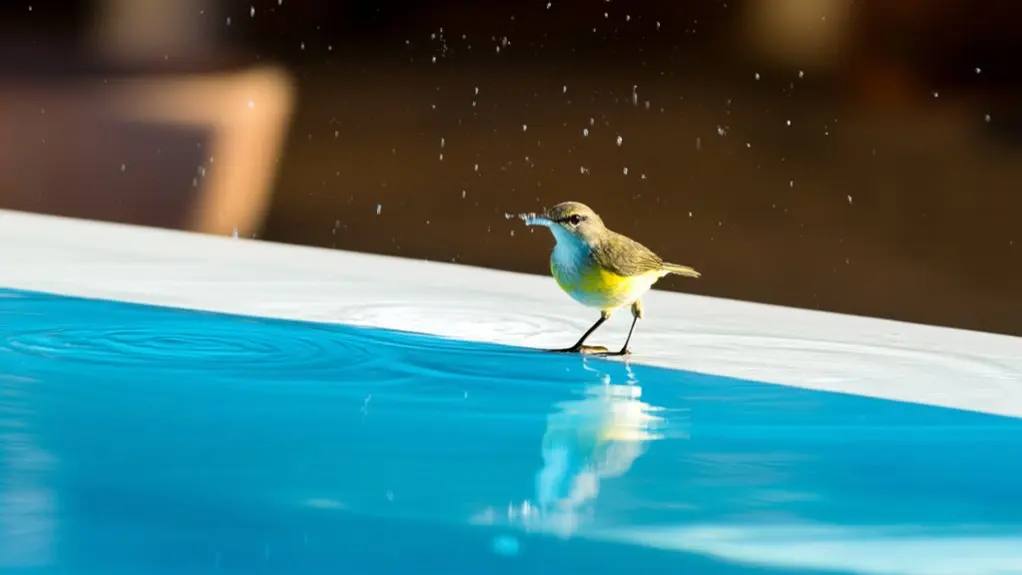
You can let birds drink from your pool if you maintain proper chlorine levels, typically between 1 and 4 ppm. These levels are similar to safe drinking water standards.
This chlorine range disinfects the water and minimizes pathogens while posing little risk to birds during short exposure. However, poorly maintained pools can get contaminated from bird droppings carrying diseases like Salmonella or Cryptosporidium.
By managing water quality and pool hygiene, you support bird safety and health. More detailed guidance on this topic follows.
Why Do Birds Drink From Pools During Drought?
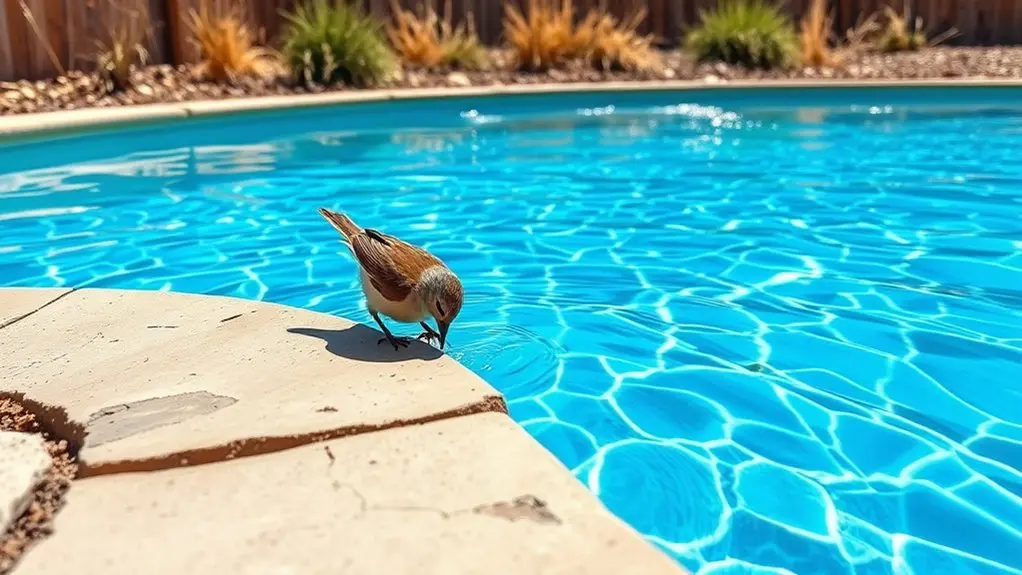
When natural water sources shrink during droughts, birds turn to alternative hydration options like residential pools. You’ll see species such as ducks and herons visiting these pools when wetlands, ponds, and other natural bodies dry up or become scarce.
Pools provide a consistent and accessible water supply, which is vital for birds’ survival during long dry spells.
The depletion of natural water increases birds’ dependence on these artificial sources, especially in areas hit hard by drought. By using pool water, birds reduce their risk of dehydration and keep up essential bodily functions.
This change in behavior shows how important residential pools can be as backup watering spots during tough environmental times. It also highlights how water availability directly affects birds’ feeding and survival strategies in ecosystems struggling with drought.
Is Pool Water Safe for Birds to Drink?
Although pool water contains chemicals like chlorine, it can be safe for birds to drink when properly maintained and chlorinated within recommended levels.
Chlorine in pools usually ranges from 0.2 to 5 mg/l, aligning with safe drinking water standards. So, birds can hydrate without harm if the water quality is monitored.
Chlorine levels in pools typically match safe drinking standards, allowing birds to hydrate safely when monitored.
To assure safety, you should maintain consistent chlorine levels within recommended limits through regular testing. It’s also important to keep the pool free from contaminants that could increase toxicity or bacterial growth.
Make sure to monitor and adjust water chemistry frequently, especially during dry periods when birds rely on pools more. That way, you’re helping keep the water safe for our feathered friends.
How Does Chlorine in Pools Affect Birds?
You’ll find that chlorine levels in well-maintained pools usually range from 1 to 4 ppm. That’s pretty much in line with safe drinking water standards and generally poses minimal risk to birds.
This controlled amount of chlorine helps reduce pathogens, which is great for protecting both bird health and human safety.
Chlorine Levels And Safety
Since properly maintained pools contain chlorine levels between 1-4 ppm, which is similar to safe drinking water standards, birds drinking from these pools are exposed to low, generally non-harmful concentrations. Chlorine acts as a disinfectant, effectively killing bacteria and viruses. This helps reduce disease risks for birds.
However, chlorine also reacts with organic matter like bird droppings to form chloramines. These compounds are responsible for pool odor and additional disinfection.
You should consider these key points regarding chlorine levels and safety:
- Chlorine concentrations at 1-4 ppm are low and comparable to safe drinking water, posing minimal risk to birds.
- Proper pool maintenance, including regular chlorine testing, guarantees water safety for wildlife.
- Chloramines form from chlorine-organic matter reactions but don’t notably increase harm at recommended chlorine levels.
Maintaining balanced chlorine keeps pool water safe for both birds and humans. It’s all about keeping things in check so everyone stays healthy.
Impact On Bird Health
How does chlorine in pool water affect birds that come into contact with it? Chlorine concentrations in pools typically range between 1-4 ppm, similar to drinking water, making short-term exposure generally safe for birds.
When pools are properly maintained, chlorine helps eliminate pathogens found in bird droppings, reducing infection risks.
However, if chlorine levels become too high or birds are exposed for prolonged periods, it can irritate their respiratory and digestive systems.
Birds swimming in chlorinated water might experience mild skin or eye irritation, kind of like what humans feel.
Overall, well-balanced chlorine levels in pools pose minimal health risks to birds drinking or bathing.
It’s important to keep an eye on chlorine levels and avoid letting them get too high to prevent any problems.
Pool Maintenance Importance
Although chlorine is essential for keeping pool water clean, maintaining proper levels is crucial to protect birds that drink or bathe in it. Chlorine concentrations between 1–4 ppm are generally safe, mimicking safe drinking water standards.
To minimize risks, you should focus on regular testing and filtration. This means monitoring chlorine and pH levels consistently to keep the disinfectant working well and avoid harmful fluctuations.
Keeping the pH between 7.2 and 7.8 is important too. This helps chlorine effectively neutralize pathogens without creating too many chloramines.
Also, timely cleaning and chemical adjustments are key. Removing debris and adjusting chemicals quickly reduces contaminants that can lead to toxic byproducts.
Proper pool maintenance helps keep birds safe by limiting their exposure to harmful chlorine derivatives. It also prevents disease spread through contaminated water. So, staying on top of these steps really makes a difference.
What Health Risks Do Bird Droppings Pose to Birds and Humans?
You should know that bird droppings can carry germs like Salmonella and Cryptosporidium, which can be harmful to both birds and humans.
When water and surfaces get contaminated, it becomes easier for diseases to spread and for parasites to affect the health of birds.
That’s why keeping your pool clean and getting rid of droppings quickly is really important to reduce these risks.
Disease Transmission Risks
When bird droppings contaminate pool water, they can introduce harmful pathogens such as Salmonella, E. coli, and Cryptosporidium. These microorganisms threaten both human and animal health. They can persist in inadequately chlorinated water, which increases the risk of infection.
You should be aware of a few key points to minimize disease transmission risks. First, pathogens primarily spread through direct contact with contaminated droppings or surfaces—not just by swallowing the water.
Also, Avian Influenza viruses mainly affect birds and rarely transmit to humans through water.
Maintaining proper pool disinfection is really important. Promptly removing bird droppings also significantly reduces pathogen survival and exposure. So, keeping your pool clean and well-treated is the best way to stay safe.
Dropping Contamination Effects
Since bird droppings harbor pathogens like Salmonella, E. coli, and Cryptosporidium, they pose significant health risks to both birds and humans. When you come into contact with contaminated droppings, you risk gastrointestinal infections and other illnesses.
In pools, bird feces promote harmful bacterial and fungal growth if not cleaned promptly, increasing contamination levels. This environment helps spread disease not only among birds but also to humans who use the pool.
To minimize these risks, you need to remove droppings quickly and sanitize affected areas thoroughly. Proper sanitation breaks the lifecycle of zoonotic pathogens, which lowers the chance of infections.
Understanding these contamination effects is key to keeping both public health and bird safety in check, especially in shared water sources like pools.
What Diseases Can Birds Spread Through Contaminated Pool Water?
Although pools provide a refreshing place to cool off, they can also become breeding grounds for various pathogens when birds contaminate the water. Bird droppings introduce harmful microorganisms that can pose health risks to humans. It’s important to be aware of a few key diseases that might be lurking in your pool.
First, there’s Salmonella and Campylobacter. These bacteria cause gastrointestinal illnesses and can survive in pool water, especially if the sanitation isn’t up to par.
Then, there’s Cryptosporidium. This is a chlorine-resistant protozoan that can cause severe diarrhea. It tends to hang around in pool water that hasn’t been treated properly.
Lastly, we’ve Avian Influenza Viruses. These viruses are present in bird feces and can potentially infect humans through contact with contaminated water or surfaces.
Knowing about these risks highlights why it’s so important to keep an eye on your pool water quality. Proper management helps prevent diseases that can jump from birds to humans.
How Does Proper Pool Maintenance Protect Birds and Humans?
Understanding the risks posed by pathogens introduced through bird droppings shows why proper pool maintenance is so important for protecting both birds and humans. You can keep everyone healthier by maintaining balanced pH levels (7.2–7.8), chlorine levels (1–4 ppm), and continuous filtration.
Doing weekly shock treatments, cleaning filters, and skimming the surface helps reduce contaminants even more. Plus, using advanced disinfection methods like UV or ozone systems can inactivate harmful microbes, making the water safer for all.
| Maintenance Action | Benefit |
|---|---|
| Balanced pH & Chlorine | Kills pathogens in droppings |
| Filtration & Shock | Removes organic matter and germs |
| Filter Cleaning & Skimming | Minimizes pathogen survival |
| UV/Ozone Disinfection | Inactivates viruses and bacteria |
This approach helps lower the chances of disease spreading, so the water stays safer for both birds and humans alike.
Simple Ways to Keep Birds Away From Your Pool
You can cut down on bird visits to your pool by putting up some effective deterrents, like reflective tapes or motion-activated devices that give birds a little surprise.
Keeping the pool area clean and clearing away any plants nearby that might attract birds also helps keep them away.
Plus, using physical barriers like netting or spikes creates obstacles that make it harder for birds to land or hang out near your pool.
It’s all about making the spot less inviting for them!
Effective Bird Deterrents
When birds frequently visit your pool, implementing effective deterrents becomes essential to maintain cleanliness and safety. You can reduce bird presence by disrupting their behavior and access.
Try installing aluminum foil strips, shiny tape, or reflective scare tapes around your pool. These create sudden light flashes that startle birds and discourage them from landing.
Using physical barriers like bird spikes or netting can also help. They prevent birds from perching or nesting near the pool, which limits their physical access effectively.
Another simple way is to use a sturdy pool cover when the pool isn’t in use. This denies birds water access and the chance to land, which can really decrease their visits.
These scientifically backed deterrents work by disrupting bird behavior patterns. So, they help keep your pool cleaner and safer overall.
Pool Area Cleanliness
Beyond installing deterrents, keeping your pool area clean plays a big role in keeping birds away. Regularly removing bird droppings and organic debris from the pool deck helps reduce smells and sights that attract birds.
You should also get rid of any standing water or puddles nearby since birds use these for drinking or bathing.
Taking away food sources like bird feeders, fruit trees, and overhanging branches cuts down on their foraging spots.
Covering your pool with a secure, properly fitted cover when it’s not in use physically blocks birds from getting into the water and lowers the risk of contamination.
All these cleanliness steps work together to make your pool area less appealing to birds, so you don’t have to rely only on deterrents.
Physical Barriers Installation
How can physical barriers effectively reduce bird presence around your pool? Physical barriers interrupt birds’ access to water and resting spots, which minimizes their attraction.
By installing these structures, you create an environment that discourages birds from landing or drinking.
Consider these three effective methods:
- Pool Covers and Netting: Temporary or permanent covers block direct access. Netting prevents larger birds like ducks and herons from landing on or near the pool.
- Bird Spikes and Fencing: Spikes on ledges and mesh fencing around the pool limit entry points without obstructing airflow or visibility.
- Reflective and Visual Deterrents: Shiny tape, aluminum foil strips, and predator decoys take advantage of birds’ aversion to reflections and perceived threats. This helps reduce their presence even more.
Implementing these physical barriers reduces bird activity by restricting access and encouraging avoidance behavior. It’s a smart and effective way to keep your pool bird-free.
How to Provide Safe Water for Birds Near Your Pool
Although pools can provide water for birds, you should offer separate, shallow containers like bird baths or small dishes filled with clean water to guarantee their safety. These containers reduce exposure to pool chemicals, supporting avian health.
Change the water every few days to maintain freshness and prevent mosquito breeding.
Positioning these water sources near bushes or shaded areas lowers predation risk, encouraging birds to drink comfortably.
Regularly clean and refill containers to make sure water remains free of contaminants.
Additionally, use natural deterrents, such as reflective objects or scare devices, around the pool to discourage birds from contaminating pool water while still granting access to safe hydration points. This approach balances bird well-being with pool hygiene effectively.
What to Do If You Find Sick or Dead Birds Near Your Pool
If you discover a sick or dead bird near your pool, you should immediately wear personal protective equipment such as gloves and masks to minimize the risk of disease transmission. Handling birds without protection can expose you to pathogens like avian flu viruses.
After securing yourself, follow these steps:
- Remove dead birds promptly and place them in sealed plastic bags, complying with local disposal regulations to prevent environmental contamination.
- Observe nearby birds for symptoms such as lethargy, disorientation, or abnormal behavior, and document these signs carefully.
- Report your findings to local wildlife authorities or health departments to aid in disease monitoring and control efforts.
Finally, clean and disinfect the pool area thoroughly to reduce pathogen presence and protect both human and avian health.
How Communities Can Help Birds During Hot, Dry Seasons
After addressing the risks posed by sick or dead birds near pools, it’s important to think about proactive measures communities can take to support bird populations during hot, dry seasons. Providing shallow dishes or bird baths filled with fresh water offers essential hydration when natural sources dry up. Make sure to change the water frequently to prevent mosquito breeding and keep it safe for wildlife.
Putting up signs and setting up designated water stations can encourage the community to get involved in bird conservation. It’s a great way to raise awareness and get more people caring about the birds around them.
Placing these water sources near bushes or shaded areas helps protect birds from predators while they drink and bathe.
Frequently Asked Questions
Can Birds Develop a Preference for Pool Water Over Natural Sources?
Yes, you’ll notice birds can develop a preference for pool water when natural sources are scarce. They seek consistent, accessible hydration, which pools often provide.
Factors like clarity, temperature, and predator safety play a role in why they might choose pools over natural bodies. It’s all about what feels safest and easiest for them. So, yeah, pools can become their go-to spot for a drink.
Do Different Bird Species React Differently to Pool Chemicals?
Yes, different bird species react differently to pool chemicals. Waterfowl tend to tolerate chlorinated water better, while land birds like sparrows are more sensitive.
You’ll notice that reactions depend on the species, how long they’re exposed, and the concentration of the chemicals. So, it’s really a mix of factors that determines how birds respond.
How Does Pool Water Temperature Impact Birds Drinking From It?
You might think birds drink pool water regardless, but temperature greatly influences them. Warmer water can promote harmful algae, while cooler water discourages drinking.
Keeping the water at a moderate, stable temperature helps make sure birds can safely hydrate and bathe. It’s all about making the pool a welcoming spot for them.
Can Birds Transmit Diseases to Pets Through Pool Water?
Yes, birds can transmit diseases to pets through pool water if infected droppings contaminate it. You should maintain proper chlorination and regularly clean the pool to minimize infection risks from waterborne pathogens carried by birds.
Keeping your pool clean is really important. Proper chlorination helps kill germs and keeps the water safe. Regular cleaning means less chance for anything harmful to stick around. So, stay on top of pool maintenance to protect your pets.
Are There Bird-Safe Pool Cleaning Products Available?
Yes, you can find bird-safe pool cleaning products that are made with non-toxic, biodegradable ingredients like vinegar or enzymes.
It’s a good idea to always check the labels carefully to make sure there aren’t any harmful chemicals. This way, you’ll help keep birds and other wildlife around your pool safe.
Using gentle, natural cleaners is a smart choice if you want to protect the environment while keeping your pool clean.
Conclusion
When drought dries up natural sources, you might notice birds cautiously sipping from your pool, a shimmering oasis amid cracked earth. While pool water isn’t ideal because of chlorine and contaminants, it can be a tempting spot for thirsty birds.
Providing clean, fresh water nearby is a much better idea. It helps protect their health and yours too. By understanding the risks and acting thoughtfully, you can keep both birds and your pool safe.
This way, birds get to thrive safely, and your pool stays a clear, inviting refuge rather than a hidden hazard. It’s all about finding that delicate balance.