
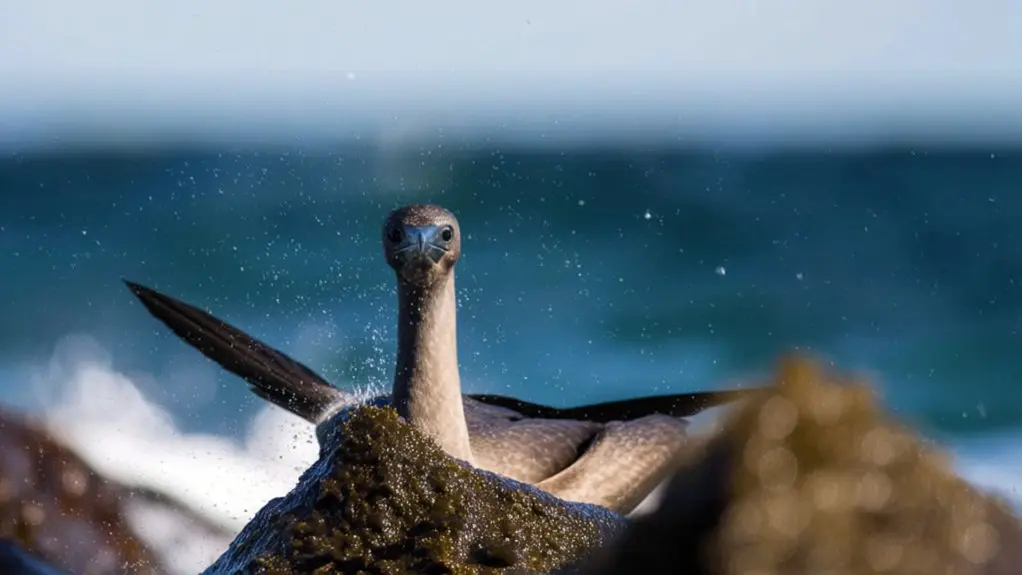
You can’t expect most birds to drink seawater safely because they lack the specialized salt glands needed to remove excess salt. Drinking seawater without these glands leads to salt buildup, dehydration, and kidney stress.
However, seabirds like albatrosses and penguins have efficient salt glands above their eyes that filter and excrete salt. This allows them to stay hydrated in marine environments.
These glands work alongside behaviors like head-shaking to maintain balance. It’s pretty amazing how these adaptations enable survival in such harsh saline habitats.
Can Seabirds Drink Seawater Safely?
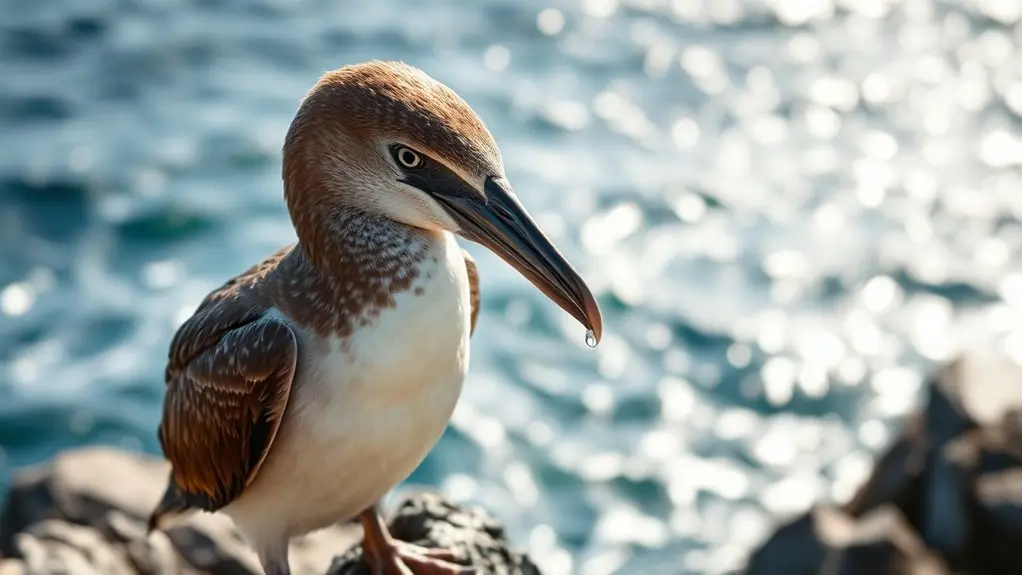
Although most birds can’t tolerate high salt levels, seabirds can safely drink seawater because they’ve specialized salt glands that remove excess salt from their bodies. These glands sit above the eyes and actively excrete a highly concentrated saline solution through the nostrils.
This process effectively eliminates the salt absorbed during seawater intake.
This mechanism prevents dehydration and salt toxicity, which helps seabirds maintain osmotic balance despite their marine environment.
Species such as albatrosses, penguins, and gulls have larger salt glands. That makes sense since they rely on seawater as a hydration source.
You can see how this physiological adaptation is critical for their survival. It allows them to exploit marine habitats without the risks linked to high salt consumption that would harm most terrestrial birds.
Pretty amazing, right?
Why Is Drinking Salt Water Risky for Most Birds?
Because most birds lack the specialized salt glands found in seabirds, drinking salt water poses significant risks to their health.
When you consume seawater, your kidneys struggle to eliminate excess salt efficiently, causing dangerous salt buildup in your bloodstream. This condition, called hypernatremia, disrupts your electrolyte balance and increases the osmotic load on your body.
As a result, retaining freshwater becomes difficult, and you can quickly become dehydrated. Unlike seabirds equipped to handle high salt intake, most birds can’t process this excess salt, leading to salt poisoning.
Drinking salt water stresses your physiological systems, impairing essential functions and potentially causing serious health issues or death if you ingest large quantities.
Consequently, salt water ingestion is inherently risky for the majority of bird species.
What Are Salt Glands and How Do They Work?
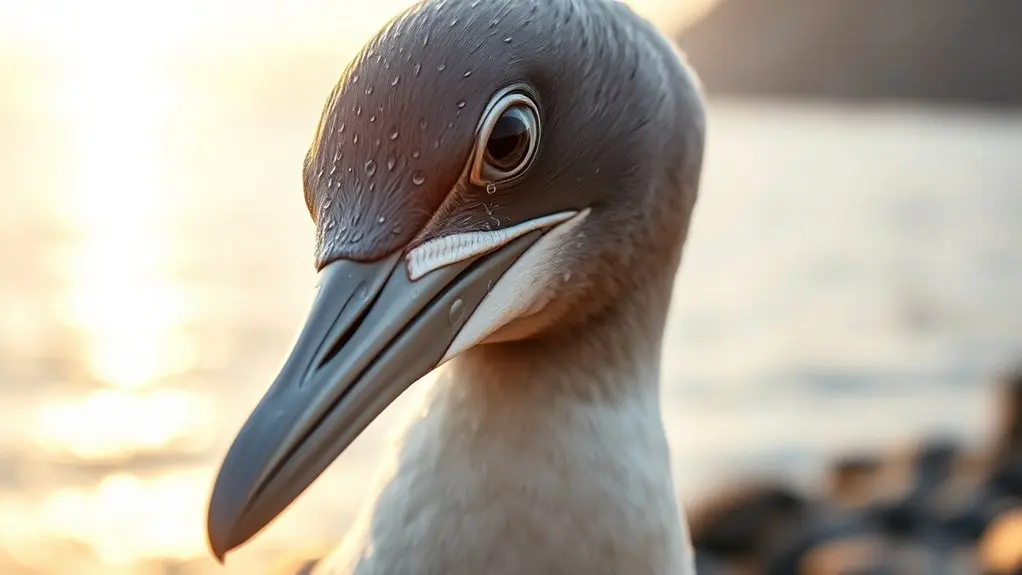
When seabirds consume seawater, their specialized salt glands actively remove excess salt from their bloodstream to maintain internal balance. These paired glands, located above the eyes, absorb surplus salt via capillaries and generate a concentrated salty fluid as a byproduct.
This fluid travels through ducts to the bird’s nostrils, where it’s expelled as drops or a briny secretion.
The glands vary in size, often large in species like albatrosses, penguins, and gulls, reflecting their adaptation to saltwater diets. By efficiently excreting excess salt, these glands prevent harmful salt buildup.
This helps seabirds safely ingest seawater and thrive in salty environments where freshwater is scarce.
Which Bird Species Rely Most on Drinking Salt Water?
Understanding how salt glands function sets the stage for identifying which bird species rely most on drinking seawater. Albatrosses, penguins, and petrels have highly developed salt glands, which enable them to survive exclusively on salt water. These adaptations support their long oceanic flights and life in marine environments.
Gulls and pelicans can excrete excess salt too, but they mostly drink seawater only when freshwater is hard to find. On the other hand, puffins and loons have smaller salt glands and prefer freshwater sources.
The degree to which birds rely on salt water varies depending on their habitat, diet, and physiology. Species living in dry coastal areas or traveling extensively over the ocean depend the most on seawater. It’s clear that environmental needs play a big role in how much saltwater seabirds consume.
How Do Seabirds Get Rid of Excess Salt?
You’ve got these special salt glands right above your eyes that help get rid of extra salt in your bloodstream. They work by concentrating the salt into a salty fluid.
Then, you push that salty fluid out through your nostrils. Sometimes, you even shake your head to flick the salty solution back into the ocean.
This whole process is super important because it stops salt poisoning and keeps your body balanced.
Salt Glands Function
How do seabirds manage to drink seawater without suffering from salt overload? They rely on specialized salt glands positioned above their eyes. These glands filter excess salt from their bloodstream, producing a highly concentrated saline fluid.
This fluid then travels through ducts and exits via the bird’s bill or nostrils. By excreting this salty solution, seabirds prevent dehydration and maintain electrolyte balance despite ingesting seawater. It’s pretty clever how they handle all that salt.
Species undertaking extended offshore journeys, like albatrosses and penguins, have larger salt glands to handle greater salt loads. The excreted salt appears as droplets or a viscous brine, which the bird often shakes off or lets drain away.
This glandular function is vital for seabirds’ survival. It enables them to thrive in marine environments rich in salt, where fresh water is hard to come by. Without it, these birds just wouldn’t make it out there.
Salt Excretion Process
Once the salt glands filter excess salt from the bloodstream, seabirds must efficiently expel this concentrated saline solution to maintain their internal balance. You’ll notice these glands, located above their eyes, produce a salty fluid that flows through ducts into the nostrils and down the bill.
Depending on the species, such as albatrosses or puffins, the salt glands vary in size to accommodate different oceanic travel demands. The expelled fluid appears as drops or a viscous brine at the bill’s tip.
To prevent salt accumulation, seabirds actively shake their heads, causing the saline to drip or splash back into the sea.
This salt excretion process is vital for osmoregulation, enabling seabirds to survive in saline environments without dehydrating. It’s pretty amazing how they manage this constant balance, isn’t it?
Behavioral Adaptations
Although seabirds rely on physiological mechanisms like salt glands to handle excess salt, they also exhibit specific behavioral adaptations that complement this process. You’ll notice that seabirds frequently shake their heads to expel salty fluid produced by their glands, preventing salt accumulation.
This behavior helps drain salt-laden fluid from their nostrils back into the ocean. Larger salt glands in species like albatrosses and gulls go hand in hand with more active head-shaking behaviors, which optimize salt removal.
These behavioral responses work alongside physiological salt excretion, making sure seabirds maintain osmotic balance despite ingesting seawater and salt-rich prey.
| Behavior | Function |
|---|---|
| Head shaking | Facilitates salt fluid expulsion |
| Bill grooving | Channels salty fluid outward |
| Nostrils drainage | Prevents salt buildup |
| Frequent drinking | Manages salt intake balance |
Can All Seabirds and Coastal Birds Drink Salt Water?
Because seabirds and coastal birds live in places where freshwater is often hard to find, they’ve developed special salt glands that let them drink seawater without any problems. All seabirds and coastal species have these glands to get rid of extra salt, but the size and how well they work can be quite different.
For example, albatrosses and penguins depend only on seawater for drinking, thanks to their very well-developed salt glands. On the other hand, gulls and pelicans usually drink seawater only when they can’t find freshwater. They rely on their glands to control how much salt they take in.
This difference affects how much each species depends on seawater. Knowing about these body adaptations helps us understand how seabirds and coastal birds handle salt intake and keep their body fluids balanced. It’s a key survival trick for living in salty places.
How Does Salt Water Drinking Affect Seabird Survival?
You know, seabirds have this pretty amazing adaptation that helps them handle salt water. They rely on specialized salt glands to get rid of the extra salt in their bodies. These glands basically filter the salt out of their bloodstream and then push it out through their nostrils.
Because of this, seabirds can stay hydrated even though they don’t have access to freshwater. It’s really important because without this system, the salt could build up and become toxic.
Salt Gland Functionality
How do seabirds manage to survive by drinking seawater without becoming dehydrated or poisoned? They rely on specialized salt glands located above their eyes that actively remove excess salt absorbed from seawater. These glands secrete a concentrated saline solution expelled through the nostrils, maintaining the bird’s osmotic balance.
The efficiency of this salt excretion process allows seabirds to use seawater as their primary hydration source without salt toxicity. Species like albatrosses and penguins have larger, more efficient salt glands, enabling them to tolerate higher salt loads.
The gland’s functionality directly affects seabird survival in habitats lacking freshwater. It ensures they remain hydrated despite constant exposure to saline conditions. This physiological adaptation is critical for living in marine environments where freshwater is scarce or absent.
Hydration Without Freshwater
Why can seabirds thrive for extended periods without access to freshwater? You can attribute this ability to their specialized salt glands, located above their eyes. These glands extract and excrete excess salt from the seawater they ingest, producing a concentrated saline fluid expelled through their nostrils.
By processing and removing about 10% of seawater’s salt content, these glands prevent salt buildup and help maintain the bird’s internal balance. This mechanism allows seabirds like albatrosses and penguins to rely solely on seawater for hydration.
Without freshwater sources, you’d expect dehydration, but their salt gland system guarantees they stay hydrated even in saline conditions. This adaptation is vital for survival. It enables seabirds to inhabit vast oceanic environments where freshwater is scarce or absent.
Survival in Harsh Environments
Where do seabirds find the water they need to survive in vast oceanic regions devoid of freshwater? They rely on their specialized salt glands located above the eyes, which efficiently excrete excess salt from the seawater they ingest. This adaptation allows them to maintain osmotic balance by producing a concentrated saline fluid expelled through their nostrils.
Experiments show seabirds can consume large amounts of seawater and eliminate surplus salt within hours, highlighting their resilience. This ability is crucial during extended oceanic flights when freshwater is unavailable.
However, species differ. Some depend heavily on seawater for hydration, while others prefer freshwater when accessible.
Understanding this physiological mechanism explains how seabirds thrive in harsh marine environments that lack traditional freshwater sources. It’s pretty amazing how they’ve adapted to survive where many other animals couldn’t.
Frequently Asked Questions
How Do Salt Glands Develop in Young Seabirds?
You observe that salt glands in young seabirds develop progressively, starting small near the eyes. They grow in size and function over time, influenced by diet and habitat. These glands become fully efficient only in adulthood for salt excretion.
It’s interesting how their development ties closely to what the birds eat and where they live. So, you can say that these factors really shape how well the salt glands work as the birds grow.
Can Freshwater Birds Adapt to Drinking Seawater?
You can’t teach a freshwater bird to sail the salty seas. Their salt glands just don’t have the capacity to desalinate seawater effectively.
Without genetic adaptation over generations, drinking seawater would cause dehydration and physiological stress. It’s not something they can just learn or adjust to quickly.
What Happens if a Bird’s Salt Glands Fail?
If your bird’s salt glands fail, it can’t get rid of excess salt. This causes dangerous salt buildup and dehydration.
That can really mess with how the organs work, leading to salt poisoning. When that happens, the bird’s chances of surviving in marine environments without freshwater drop a lot.
Do Seabirds Prefer Seawater or Freshwater When Both Are Available?
You’re standing at a fork in nature’s hydration road: seabirds prefer freshwater for bathing to keep their feathers pristine. But when freshwater isn’t available, they rely on seawater for drinking.
This showcases their remarkable salt gland adaptation. It’s pretty amazing how they manage to thrive in such salty environments!
How Much Seawater Can a Seabird Safely Consume Daily?
You can safely consume seawater up to about 10% of your body weight daily if you’re a seabird like a gull. This is thanks to specialized salt glands that excrete excess salt efficiently through your nostrils and bill.
These glands work hard to keep you hydrated without the salt buildup that would harm most animals. So, while seawater is salty for us, it’s not a problem for seabirds. They’ve got this natural system that handles it smoothly.
Conclusion
You might think drinking seawater would be fatal for birds, but some have evolved remarkable adaptations to survive it. Their salt glands efficiently expel excess salt, allowing them to thrive where freshwater is scarce.
Yet, this ability isn’t universal. Many birds still face severe risks from saltwater intake. Understanding these mechanisms not only reveals the resilience of seabirds but also hints at the delicate balance that sustains their survival in harsh marine environments.