
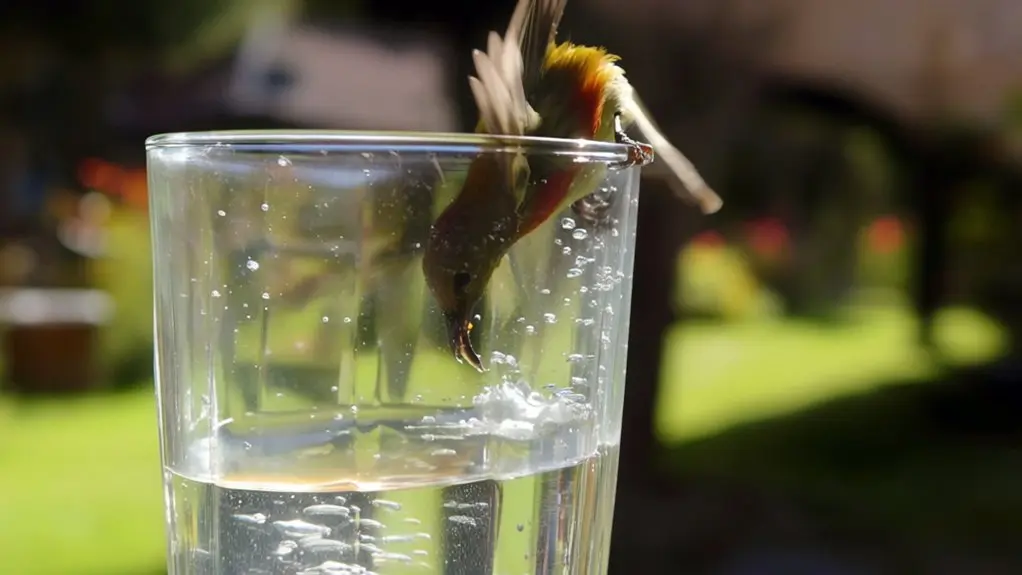
You shouldn’t give birds sparkling water because its carbonation introduces carbon dioxide gas that can cause digestive discomfort and imbalance. Birds’ specialized digestive systems, including the crop, help manage gases by burping or regurgitation. But repeated exposure to carbonation and additives like sugars or artificial flavors can irritate their digestive tract and harm their health.
Providing fresh, still water supports proper hydration and digestion. Understanding how birds’ anatomy and nutrition work together reveals why sparkling water poses risks. So, it’s always better to stick with plain water for your feathered friends.
Why the Myth of Birds Exploding From Sparkling Water Is False
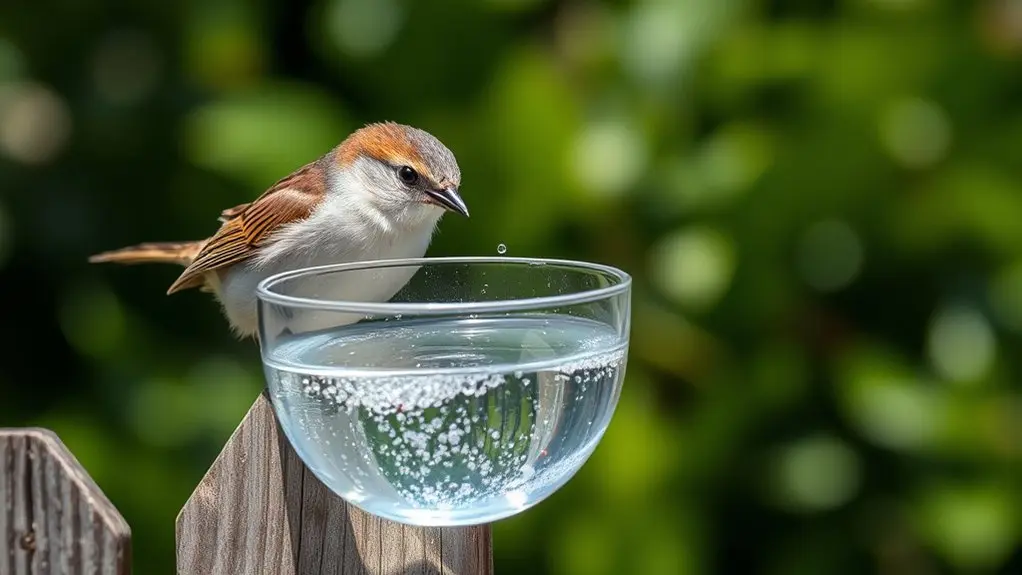
Although the idea of birds exploding from drinking sparkling water sounds alarming, it’s a myth unsupported by scientific evidence. You should know that birds possess a specialized digestive system, including a crop, which stores food and manages ingested gases efficiently.
When birds consume fizzy water, any carbon dioxide gas enters this system, but it doesn’t accumulate dangerously. Instead, birds release excess gas through burping or regurgitation, natural mechanisms that prevent pressure buildup.
Scientific studies confirm that these processes effectively manage gas without harm, disproving the notion of explosive consequences. As a result, giving birds sparkling water poses no risk of internal gas accumulation leading to an explosion.
Understanding this helps dispel the myth and highlights the adaptive physiology birds use to handle varying dietary inputs safely.
How Sparkling Water Affects Birds’ Digestion
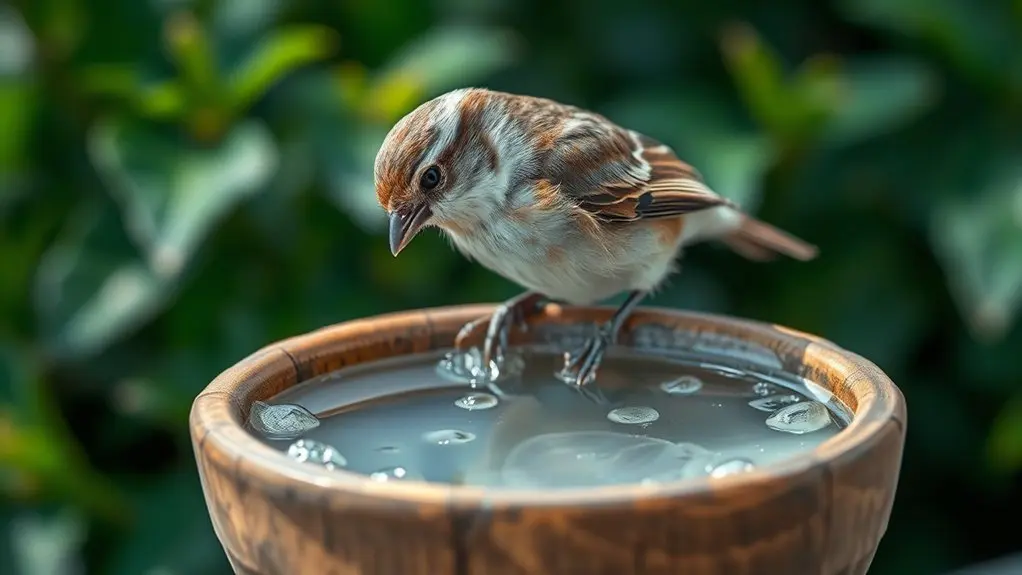
When birds consume sparkling water, the carbonation introduces carbon dioxide gas into their digestive system, which includes the crop, a specialized organ that stores and can regurgitate food. This gas can cause temporary distension, but birds can typically manage it by burping, preventing harmful buildup.
However, their digestive system isn’t really adapted to process added gases from fizzy water, which can disrupt normal digestion. While the crop allows some gas regulation, repeated exposure to sparkling water may interfere with nutrient absorption and digestive efficiency.
Birds won’t suffer explosive consequences from carbonation, but the unnatural presence of gas might cause mild discomfort or digestive imbalance. So, while birds can expel carbon dioxide, sparkling water isn’t a suitable or recommended drink for keeping their digestive health in check.
How Bird Anatomy Influences Digestion of Sparkling Water
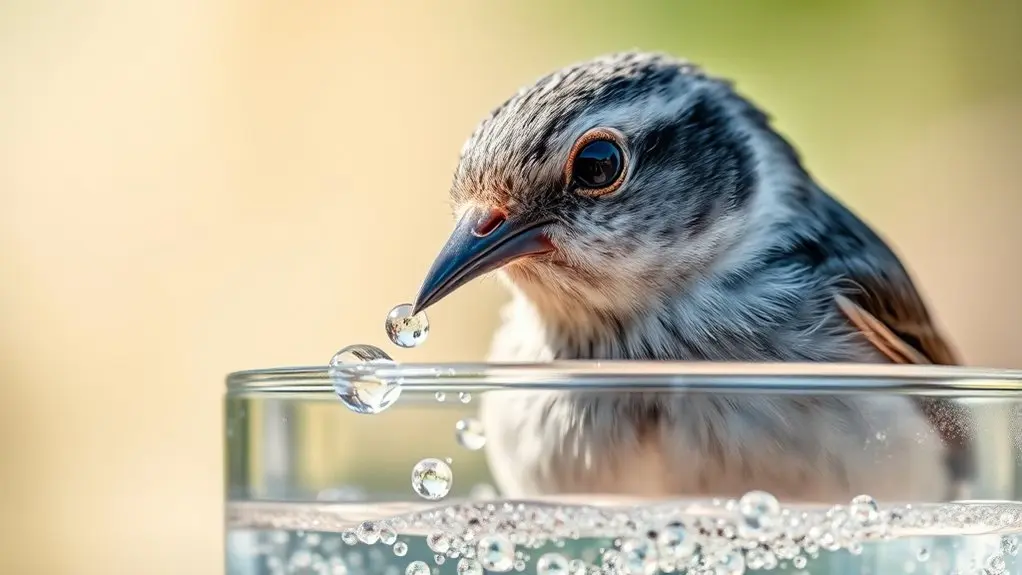
You’ll find that a bird’s specialized gut structure, including its multi-chambered digestive system, plays a key role in processing sparkling water.
For instance, the crop temporarily stores ingested liquids, which can help manage gas buildup by allowing the bird to regurgitate if needed.
When you understand these anatomical features, it becomes clearer how birds expel excess gas and handle carbonation without any harmful effects.
Bird Gut Structure
Because birds lack teeth and swallow food whole, their digestive system relies on specialized structures like the crop, proventriculus, and gizzard to process ingested materials efficiently. This unique anatomy plays a critical role in how birds handle sparkling water.
You should understand:
The oesophagus leads to the crop, where food and fluids are temporarily stored. Birds can regurgitate contents from the crop, aiding digestion and gas release.
The proventriculus secretes digestive enzymes to break down substances.
The gizzard mechanically grinds food, compensating for the absence of teeth.
Birds’ ability to burp and regurgitate suggests they can manage gas from carbonated liquids.
This gut structure ensures birds efficiently digest liquids like sparkling water without harmful effects from carbonation.
Role Of The Crop
Although sparkling water introduces carbon dioxide gas into a bird’s digestive system, the crop plays a crucial role in managing this intake. The crop, a specialized pouch in the esophagus, stores and softens food before digestion. Its structure allows it to hold liquids and gases temporarily, providing a buffer for the bird’s digestive tract.
Because the crop can regurgitate contents, including gases, birds have a mechanism to release excess carbon dioxide from bubbly drinks like sparkling water. This means the crop not only facilitates digestion but also helps regulate swallowed air or gas.
Understanding the crop’s function clarifies how birds adapt anatomically to handle carbonated liquids. This adaptation helps prevent potential discomfort or digestive disruption caused by trapped gases.
Gas Expulsion Mechanism
The crop’s ability to store and regurgitate gases naturally leads to the broader gas expulsion mechanisms present in birds. When you think about how birds digest sparkling water, several anatomical features come into play to manage gas safely.
First, there’s a specialized crop that stores both food and gas temporarily. Then, efficient regurgitation allows birds to expel excess gas and undigested material. Birds can even burp, releasing carbon dioxide generated from carbonation.
On top of that, rapid gastrointestinal transit helps minimize gas buildup and pressure. These mechanisms work together to prevent dangerous gas accumulation. So, the idea that birds might explode from fizzy drinks is just a myth.
Understanding these factors helps you appreciate how bird anatomy effectively handles sparkling water digestion. Their precise gas expulsion system keeps them safe from any potential harm caused by carbonated liquids.
How Birds Manage Gas in Their Digestive System
You’ll find that birds’ digestive systems have multiple chambers designed to handle gas efficiently. Their crop doesn’t just store food—it also helps them get rid of gas by regurgitating or burping.
This special setup lets birds release extra gas safely, so they don’t have to worry about pressure building up, even when they drink fizzy liquids.
Bird Digestive Anatomy
Three main chambers, the crop, stomach, and gizzard, form the core of a bird’s specialized digestive system. This setup allows efficient food processing even though birds don’t have teeth.
Birds swallow food whole, which then moves down the esophagus to the crop. The crop stores and softens food, getting it ready for digestion. It also helps manage gas by enabling regurgitation. This way, birds can keep their digestive system running smoothly.
Here are some key features: birds lack teeth, so mechanical digestion happens in the gizzard. The crop acts as temporary food storage and softening site. The stomach starts chemical digestion using enzymes and acids.
Regurgitation helps expel gas and undigested material. Overall, the anatomy supports gas management without the risk of buildup. Understanding this helps explain how birds handle internal gas so effectively.
Gas Expulsion Mechanisms
Understanding how birds process and store food in their crop and gizzard gives us a glimpse into how they manage internal gas. These digestive parts don’t just store and grind food; they also hold gases produced during fermentation or decomposition.
Birds mainly get rid of gas by burping or regurgitating, which stops pressure from building up in their digestive tract. Regurgitation has a couple of jobs: feeding their young and releasing extra gas or stuff they can’t digest.
On top of that, birds have multiple stomach chambers that help control gas buildup, so they don’t get uncomfortable. Their ability to burp shows they can effectively release carbon dioxide and keep their digestion balanced.
Risks of Giving Birds Sparkling Water
Although birds can burp to release excess gas from their digestive system, giving them sparkling water poses specific risks because of its unnatural carbonation and chemical makeup. You should know that carbonation can cause discomfort and digestive upset in birds.
Also, their bodies aren’t built to handle the chemicals found in fizzy drinks, which might harm their health over time. It’s worth thinking about these risks before offering sparkling water to your feathered friend.
Here are some things to keep in mind:
- Possible gastrointestinal irritation from carbonation
- Disruption of normal digestive processes
- Exposure to additives and preservatives that can be harmful to birds
- Increased chance of dehydration due to diuretic effects
- Potential long-term health problems from chemical ingestion
To keep your bird healthy, it’s best to avoid sparkling water and stick with fresh, still water instead. It’s a simple way to make sure they stay happy and safe.
Why Your Bird Needs Still Water
You should give your bird still water because fizzy water has dissolved gases that can upset its digestive system. These gases might cause bloating or discomfort, which birds don’t usually experience.
Risks Of Fizzy Water
While birds can burp to expel gas, the carbonation in fizzy water still poses risks to their digestive systems. The gases introduced by fizzy water may cause discomfort or disrupt the natural balance within their crop and stomach. Birds’ digestive anatomy isn’t designed to handle excess gas from carbonated liquids, which can lead to complications.
To keep your bird healthy, it’s best to avoid giving them sparkling water. Instead, stick to still, fresh water.
Here are some key risks to watch out for:
- Potential irritation of the digestive tract lining
- Distention of the crop due to gas buildup
- Disruption of normal digestive processes
- Increased discomfort leading to stress behaviors
- Possible interference with nutrient absorption
Providing still water helps support ideal digestion and reduces unnecessary stress on your bird’s body. It’s a small change that makes a big difference!
Digestive System Considerations
Because birds have a unique digestive system with specialized chambers like the crop, they require still water to maintain proper hydration without introducing excess gas. The crop temporarily stores food and helps with regurgitation, so birds can manage their digestion efficiently. Their anatomy allows them to expel gas through burping or regurgitation.
But drinking carbonated water can introduce unnecessary gas, which messes with this balance and causes discomfort. Still water, free from dissolved gases and chemicals, supports the crop’s function and overall digestion. It provides hydration without interfering with the bird’s natural processes.
Offering clean, still water matches their natural dietary needs and promotes ideal digestive health. This way, your bird’s specialized system works smoothly without any problems caused by fizzy drinks.
Best Hydration Practices
Although birds can tolerate a range of water sources, fresh water is still essential for their hydration and digestive health. Your bird’s digestive system isn’t built to handle carbonation, which can cause discomfort or gastrointestinal issues. So, it’s best to stick with clean, plain water.
To keep your bird happy and healthy, focus on offering fresh, still water daily to meet their natural hydration needs. Avoid sparkling water to prevent any carbonation-related digestive problems.
Also, make sure to clean water containers regularly to stop bacterial growth.
Keep an eye on your bird’s drinking habits so you can spot any hydration issues early on. And always use water free from additives or flavorings, as those might irritate their system.
Following these simple tips helps ensure your bird stays hydrated safely and supports its overall health effectively.
How Birds Naturally Hydrate
When birds need to hydrate, they rely primarily on fresh, still water found in natural sources like lakes, rivers, and ponds. Their beaks are specifically adapted to scoop or sip water efficiently, enabling quick and controlled intake.
Unlike some animals, birds don’t depend solely on moisture from food; they require direct water consumption to maintain proper hydration.
You’ll notice that birds drink small amounts frequently throughout the day, which helps regulate their hydration levels effectively.
In the wild, birds naturally avoid carbonated or fizzy liquids, as these substances are foreign to their physiology and could interfere with their delicate digestive systems.
Understanding these natural behaviors helps you appreciate how birds maintain hydration in their native environments. It’s pretty fascinating once you think about how perfectly they’re adapted to their surroundings.
Harmful Ingredients in Sparkling Water for Birds
If you offer birds sparkling water, you’re exposing them to several harmful ingredients that their bodies aren’t equipped to handle. The carbonation and additives in sparkling water can negatively impact a bird’s delicate physiology. Specifically, you should be aware of these risks:
Carbon dioxide gas from carbonation can cause digestive discomfort. Added sugars and artificial flavorings may be toxic. Citric acid and preservatives can irritate sensitive digestive tracts. Artificial sweeteners found in flavored varieties are unsafe.
Carbonation, sugars, artificial flavors, acids, preservatives, and sweeteners can harm birds’ digestion and overall health.
Birds lack adaptations to process carbonation or chemical additives. Providing sparkling water to birds introduces substances that may disrupt their normal hydration and digestion processes.
It’s scientifically advisable to stick to plain, still water to ensure their health and well-being. So, when it comes to keeping birds healthy, plain water is really the best choice.
Spotting Digestive Trouble Signs in Birds
Because birds cannot verbally communicate discomfort, you need to carefully observe behavioral and physical signs to detect digestive trouble early. Look for decreased appetite, weight loss, lethargy, or fluffed feathers. Abnormal droppings, such as diarrhea or unusual coloration, also signal issues.
Vomiting beyond normal regurgitation and abdominal swelling warrant immediate attention.
| Sign | Description |
|---|---|
| Decreased Appetite | Reduced food intake over several days |
| Abnormal Droppings | Diarrhea, odd colors, or foul smell |
| Lethargy & Fluffed Feathers | Low activity, puffed-up feathers indicating distress |
| Vomiting/Abdominal Swelling | Repeated vomiting or visible abdominal tenderness |
Tips for Providing Safe and Healthy Water to Pet Birds
Maintaining your bird’s digestive health involves careful attention to its water supply, as hydration directly influences overall well-being. To provide safe and healthy water, follow these scientifically supported tips:
Always offer still, fresh water. Avoid sparkling or carbonated types containing dissolved gases that may cause digestive discomfort. Change the water daily to prevent bacterial growth and contamination.
Never give flavored or sweetened beverages, which can disrupt your bird’s delicate digestive system. Keep an eye on your bird’s water intake regularly to ensure proper hydration and spot any potential health issues early.
Use clean, sanitized containers to reduce infection risks and promote ideal water quality. This simple step makes a big difference for your feathered friend’s health.
Frequently Asked Questions
Can Birds Drink Flavored Sparkling Water?
No, you shouldn’t give birds flavored sparkling water. The added sugars, artificial sweeteners, and chemicals can harm their respiratory and digestive systems.
It’s best to stick to plain, still water. That way, you can make sure your bird stays healthy and happy.
Is Sparkling Water Safer for Wild Birds Than Pet Birds?
You know the saying, “Don’t put all your eggs in one basket.” Sparkling water isn’t safer for wild birds than pet birds; both can suffer digestive issues from carbonation.
How Much Sparkling Water Is Too Much for a Bird?
You shouldn’t give your bird any sparkling water. Even small amounts can cause digestive discomfort, gas buildup, or regurgitation.
Birds just don’t tolerate carbonation well. So, it’s best to avoid it entirely to keep them healthy and feeling good.
Are Some Bird Species More Sensitive to Carbonation?
Think of carbonation as a tiny storm in a bird’s belly. Yes, some species are more sensitive because they have delicate digestive systems or specific diets.
Their ability to handle gas varies a lot. This makes sensitivity really species-specific and, honestly, scientifically plausible.
Can Sparkling Water Affect a Bird’s Feather Condition?
Yes, sparkling water can affect your bird’s feather condition by causing digestive irritation and discomfort. This can disrupt their preening routine, which is essential for keeping feathers in good shape.
The carbonation and acidity might also lead to stress or nutritional imbalances. Over time, these issues can impair your bird’s feather health and overall quality. So, it’s best to avoid giving sparkling water to your feathered friend.
Conclusion
While birds won’t explode from drinking sparkling water, it’s best to avoid giving them fizzy drinks. The carbonation can disrupt their delicate digestive systems like a storm unsettling calm waters. Their anatomy isn’t designed to handle gas buildup efficiently.
Also, harmful additives may pose risks. Stick to fresh, plain water to keep your feathered friend healthy and hydrated.
Keep an eye out for any signs of digestive distress. Monitoring them guarantees early care and helps maintain their well-being.