
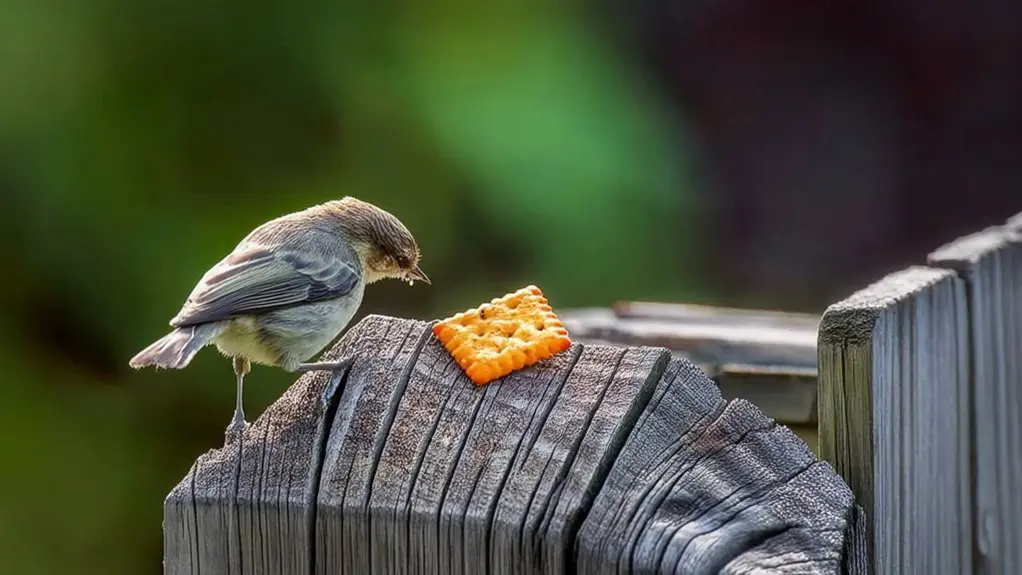
You shouldn’t feed Cheez-Its to birds because their high salt, fat, and artificial additives can harm your bird’s health. It can cause dehydration, kidney stress, and digestive irritation. Even small amounts don’t provide any nutritional benefit and might trigger digestive upset or long-term health issues.
Regular feeding can lead to obesity, nutritional imbalances, and behavioral problems. Instead, go for safe, natural treats like fruits, vegetables, and unsalted nuts. Keep exploring to learn how to protect your bird’s well-being effectively.
What Are Cheez-Its Made Of and Why It Matters for Birds
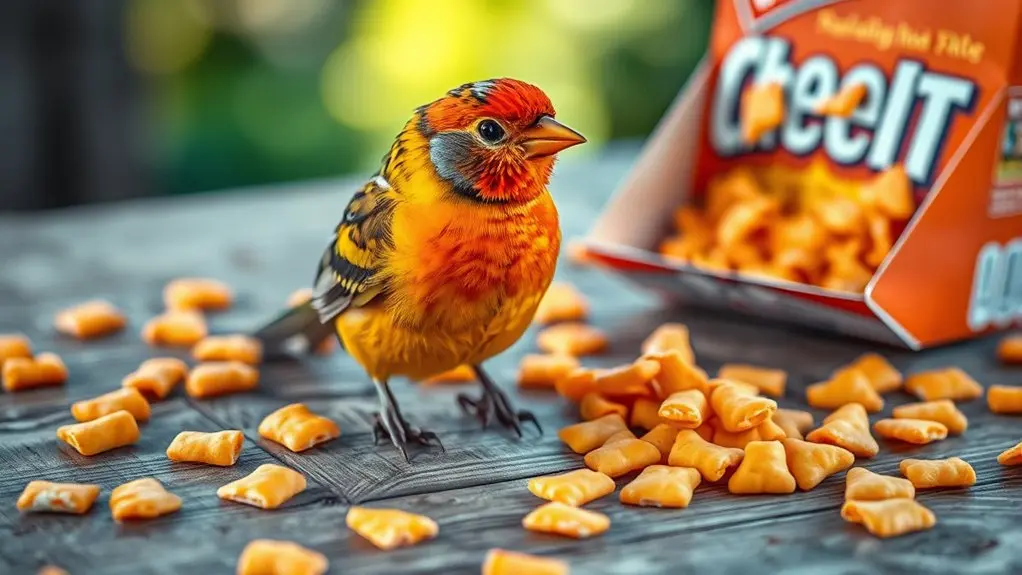
Although Cheez-Its might seem like a harmless snack, you should know they’re made from enriched wheat flour, vegetable oil, cheese, and various flavoring agents. Many of these ingredients aren’t safe for birds.
The cheese flavor comes from a mix of natural and artificial flavorings that include additives birds can’t process well.
These processed ingredients offer no nutritional benefit to birds and may even pose health risks. The baking process creates a crunchy texture but also involves preservatives and flavor powders. These further reduce their suitability for avian diets.
Understanding these components helps you see why feeding Cheez-Its to birds could harm them. Their digestive systems aren’t designed to handle artificial additives or processed snack foods.
Why Salt and Fat in Cheez-Its Are Bad for Birds
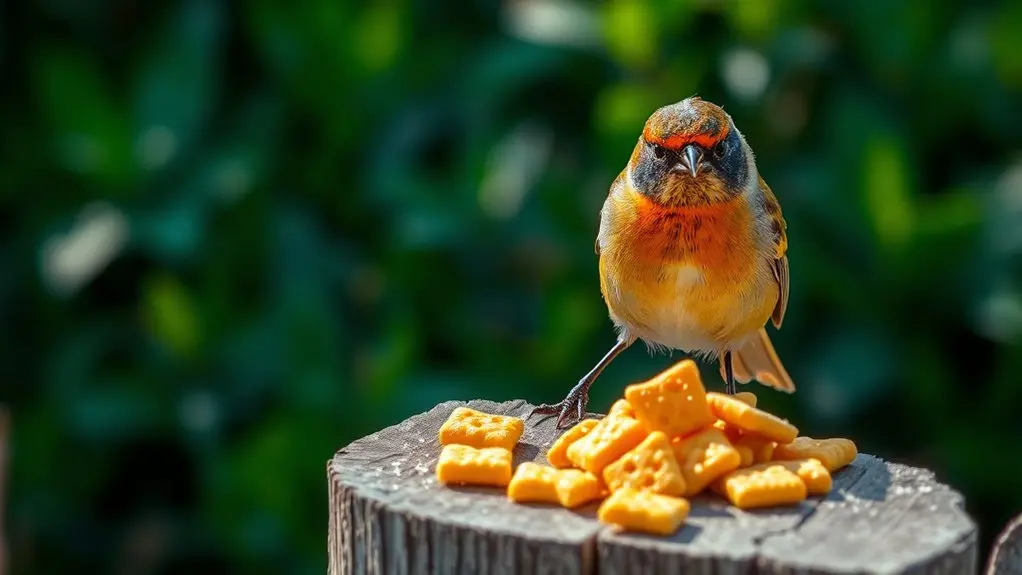
Because birds have small, sensitive bodies, the high levels of salt and fat in Cheez-Its can quickly harm their health. The excessive salt can cause dehydration and strain their kidneys, which aren’t built to handle such intake.
Meanwhile, the fat content can lead to obesity and related complications, disrupting their normal metabolism.
When birds eat salty, fatty snacks like Cheez-Its, their electrolyte balance gets unsteady, which affects their overall health. This is especially risky because their small size makes these effects more intense.
Regular exposure to these ingredients raises the chance of long-term problems for both pet and wild birds.
Safety of Feeding Small Amounts of Cheez-Its to Birds?
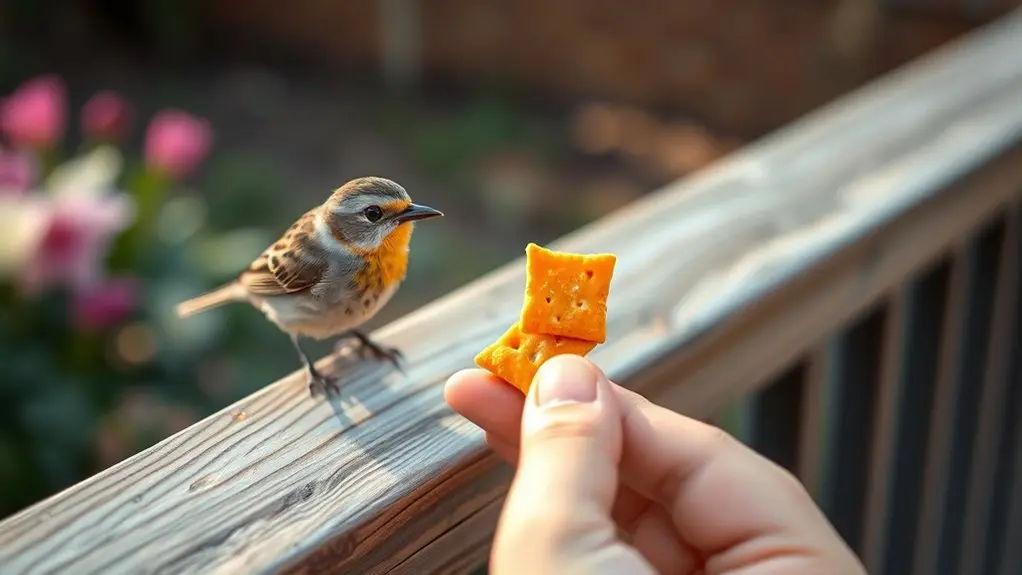
Even small amounts of Cheez-Its can pose risks to birds because of their high salt, fat, and artificial ingredient content. A tiny piece might not cause immediate harm, but it’s best to avoid offering Cheez-Its as treats. The processed nature of Cheez-Its can lead to dehydration and upset your bird’s digestion.
Birds aren’t adapted to handle processed snacks, so even occasional feeding is questionable. Here’s a quick overview:
| Factor | Impact on Birds |
|---|---|
| Salt | Causes dehydration, kidney stress |
| Fat | Leads to obesity, liver strain |
| Artificial Ingredients | Potential toxicity, digestive upset |
| Processed Snack | Not natural, harms gut health |
| Occasional Feeding | Still risky, best avoided |
You’re better off choosing natural, bird-safe treats to support your pet’s health. It’s a safer and healthier choice for your feathered friend.
Risks of Feeding Cheez-Its Regularly to Pet Birds
If you feed Cheez-Its to your bird regularly, you could be setting yourself up for some nutritional problems. These snacks are pretty high in salt and fat, which isn’t great for your feathered friend.
On top of that, the additives and preservatives found in Cheez-Its mightn’t sit well with your bird’s digestive system over time.
And that’s not all—giving treats like this too often can actually encourage some unwanted behavior. Your bird might start to expect unhealthy snacks more and more, which isn’t good for their overall eating habits.
Nutritional Imbalance Concerns
While Cheez-Its might seem like a convenient snack to share, feeding them regularly to your pet birds can cause serious nutritional imbalances. These snacks are high in salt, fat, and artificial flavors but lack essential nutrients like vitamins, minerals, and protein that birds need for ideal health.
Over time, this can weaken their immune system and overall well-being. Excessive salt intake may lead to dehydration and kidney problems, while the high-fat content raises the risk of obesity and related complications.
Plus, offering Cheez-Its often can encourage your bird to prefer unhealthy processed foods. This makes it harder to maintain a balanced diet rich in natural, nutritious options.
To protect your bird’s health, it’s best to avoid making Cheez-Its a regular part of their diet. It’s always better to stick with foods that support their well-being and keep them happy and healthy.
Health Risks From Additives
Because Cheez-Its contain artificial flavors, preservatives, and colorings, feeding them regularly to your pet bird can pose serious health risks. These additives aren’t approved for avian consumption and may cause toxicity or allergic reactions, especially in sensitive species.
The high sodium content in Cheez-Its can lead to dehydration and kidney problems over time, which are critical health concerns for birds.
Regularly offering processed snacks like Cheez-Its disrupts your bird’s nutritional balance, increasing the risk of long-term health issues.
To protect your bird’s wellbeing, avoid making Cheez-Its a part of their diet. Instead, focus on providing fresh, species-appropriate foods that support their natural nutritional needs and help maintain ideal health.
Behavioral Feeding Issues
Beyond the physical health risks posed by Cheez-Its, feeding these snacks regularly can considerably affect your bird’s behavior around food. Your bird may start preferring the salty, processed taste of Cheez-Its and reject healthier, balanced diets that are essential for its well-being.
This shift can lead to overeating and persistent begging for unhealthy treats, which creates some challenging behavioral patterns.
Also, relying on Cheez-Its encourages your bird to associate human food cues with feeding. That messes with their natural foraging instincts, which are really important for mental stimulation.
Over time, these habits can make your bird less interested in appropriate, natural foods and promote poor food choices.
Spotting Digestive Trouble From Junk Food in Your Bird
If your bird starts showing changes in its droppings, such as looseness, unusual color, or foul odor after eating junk food like Cheez-Its, these signs may indicate digestive trouble.
High salt, fat, and artificial flavors in such snacks can upset your bird’s digestion, leading to diarrhea or vomiting. Excessive sodium may cause dehydration and kidney stress, further signaling distress.
Watch closely for repeated digestive issues, as unhealthy fats and additives can accumulate and impair gut health over time. Noticing discomfort or irregular droppings promptly helps you address problems early.
If you observe these symptoms, it’s best to stop feeding junk food immediately and consult an avian vet to guarantee your bird’s digestive system recovers safely.
Better Bird Treats Than Cheez-Its
You can give your bird nutrient-rich natural options like seeds, safe fruits, and vegetables to keep them healthy.
Plus, protein-packed treats like unsalted nuts are a great way to provide essential nutrients without the risks that come with processed snacks.
Choosing these alternatives makes it easier to meet your bird’s dietary needs in a safer and more effective way.
Nutrient-Rich Natural Options
Why settle for processed snacks like Cheez-Its when you can offer birds nutrient-rich natural treats that better support their health? Natural options such as dried fruits, unsalted nuts, and seeds provide essential vitamins and minerals without harmful additives.
Small amounts of cooked grains and legumes supply protein and fiber, aiding digestion.
Insects like mealworms or crickets offer high-quality protein and fats that closely match birds’ natural diets. These alternatives avoid the excessive salt, preservatives, and artificial flavors found in Cheez-Its, which can be harmful in excess.
By choosing these nutrient-dense options, you help maintain your bird’s immune system and overall well-being.
Always introduce new treats gradually and observe your bird’s response to make sure they’re safe and well accepted. It’s a simple way to keep your feathered friend happy and healthy!
Safe Fruit And Veggies
How can you provide your bird with treats that nourish rather than harm? Unlike Cheez-Its, fresh fruits and vegetables offer essential nutrients without harmful additives. You’ll want to focus on safe, natural options that support your bird’s health and well-being.
Here are three great choices to contemplate:
- Apple slices – rich in vitamins and hydration, but remove seeds first.
- Blueberries – antioxidant-packed and easy to serve.
- Carrot sticks – provide fiber and stimulate natural foraging behaviors.
These options are low in unhealthy fats and sodium, unlike processed snacks, and help prevent nutritional imbalances. Offering a variety of fresh produce diversifies your bird’s diet and encourages healthier eating habits.
Always wash fruits and veggies thoroughly to remove pesticides. Avoid processed snacks like Cheez-Its to keep your feathered friend safe and thriving.
Protein-Packed Bird Treats
Although Cheez-Its might seem like a convenient treat, they lack the essential nutrients your bird needs for ideal health. Instead, offering protein-packed bird treats like unsalted nuts, dried fruits, cooked grains, and legumes provides far greater nutritional value.
Protein-rich options such as mealworms and cooked eggs support muscle development, feather repair, and overall vigor.
You should also consider commercial bird treats formulated with seed blends or insect proteins, as these are designed to meet avian dietary needs more effectively than processed snacks.
Incorporating these natural protein sources in moderation helps maintain a balanced diet and prevents deficiencies caused by junk foods like Cheez-Its.
Why Cheez-Its and Processed Snacks Are Bad for Wild Birds
Since Cheez-Its and other processed snacks contain high levels of salt, artificial flavors, and preservatives, they pose serious health risks to wild birds. Feeding these snacks can disrupt their natural diet and lead to serious complications.
Here’s why you should avoid offering Cheez-Its to wild birds:
- Health Problems: The high salt content can cause dehydration and kidney issues in birds.
- Nutritional Deficiency: These snacks lack essential nutrients, leading to imbalances and poor health.
- Digestive Irritation: Artificial cheese flavoring and coloring may irritate their digestive systems.
Processed snacks encourage a junk food diet that increases obesity risk and related health complications.
Wild birds are best left to find their natural, nutrient-rich foods rather than human-processed treats like Cheez-Its.
It’s always better to let birds enjoy what nature intended for them!
Safe Ways to Offer Kitchen Scraps and Treats to Birds
When you decide to offer kitchen scraps and treats to wild birds, it’s important to choose items that support their health rather than harm it. Offer small amounts of natural, unsalted nuts, cooked grains, and fruit or vegetable trimmings. Just make sure all seasoning and salt are removed.
Avoid processed snacks like Cheez Its because they contain harmful preservatives and high salt levels. Treats should never replace a balanced diet; use them sparingly, no more than once every few weeks.
Always provide these treats in small quantities to prevent nutritional imbalance or health issues.
What to Do If Your Bird Eats Cheez-Its (and Other Junk Food)
If your bird accidentally eats Cheez-Its or other junk food, you should closely watch for any signs of digestive distress such as vomiting, diarrhea, or unusual lethargy.
Cheez-Its contain high salt, fat, and artificial flavorings, which are harmful to birds.
Here’s what you should do:
- Monitor your bird carefully for any abnormal behavior or symptoms.
- Contact your veterinarian immediately if you notice vomiting, diarrhea, lethargy, or any unusual signs.
- Avoid trying to induce vomiting unless a vet specifically instructs you, as this can make things worse.
To prevent future incidents, always keep junk food and human snacks out of your bird’s reach.
Prompt action and staying alert are key to keeping your bird safe.
Frequently Asked Questions
Can Cheez-Its Affect a Bird’s Behavior or Mood?
Yes, Cheez-Its can affect your bird’s behavior and mood. The high salt and artificial ingredients may cause dehydration, irritability, and hyperactivity.
Are There Any Bird Species More Sensitive to Cheez-Its?
Yes, you’ll find canaries, finches, and budgerigars more sensitive to Cheez-Its due to their delicate digestive systems and food sensitivities. Smaller species often can’t handle the high salt, artificial flavors, or preservatives safely.
It’s really about their size and how their bodies process these ingredients. So, it’s best to avoid giving Cheez-Its to these birds altogether. They just aren’t built to handle that kind of snack.
How Quickly Do Symptoms Appear After a Bird Eats Cheez-Its?
Watch closely. Symptoms often show up within 1 to 4 hours after your bird eats Cheez-Its. Sometimes, distress begins as quickly as 30 minutes.
You should act fast if you notice any changes in behavior or digestion. It’s always better to be safe when it comes to your feathered friend. Keep an eye out and don’t hesitate to get help if needed.
Can Cheez-Its Cause Allergies in Birds?
Yes, Cheez-Its can cause allergies in birds, especially if they have sensitivities. You should avoid feeding them these snacks to prevent allergic reactions like sneezing, swelling, or digestive issues from artificial additives.
It’s better to stick with bird-safe treats instead. That way, you can keep your feathered friend happy and healthy without any worry.
Are There Any Natural Alternatives to Commercial Bird Treats?
You can offer natural alternatives like dried fruits, unsalted nuts, fresh vegetables, and uncooked grains. These options provide essential nutrients and avoid artificial additives.
This way, you’re helping promote healthier, more balanced nutrition for your birds. It’s a simple switch that can make a big difference!
Conclusion
While an occasional crumb of Cheez-Its might not harm your bird, keep in mind that processed snacks contain up to 25% salt and unhealthy fats. These ingredients can quickly disrupt their delicate systems.
Feeding Cheez-Its regularly increases the risks of obesity, dehydration, and digestive issues in birds. So, it’s really best to avoid making them a regular treat.
Instead, stick to safer, natural treats to protect your bird’s health. If your bird does eat junk food, watch closely for any signs of distress. And don’t hesitate to consult a vet promptly if you notice anything unusual.