
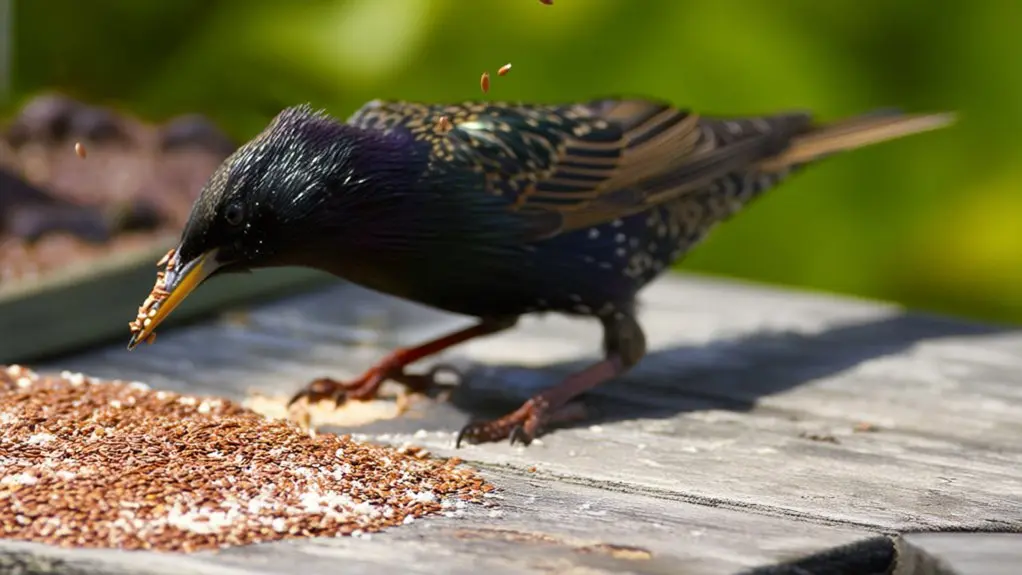
You can safely feed birds chia and flax seeds in moderation, as they’re rich in omega-3 fatty acids, fiber, antioxidants, and essential minerals that promote healthy feathers, digestion, and immunity. Soaking chia and grounding flax improve nutrient absorption and reduce choking risks.
But be careful not to overfeed, as that may cause digestive issues or expose them to trace toxins in flax. Proper storage is also important to prevent spoilage and keep the seeds fresh.
Understanding the right preparation, portion, and your bird’s preferences will help you get the most benefit from these seeds. It’s all about balance and paying attention to what works best for your feathered friends.
Key Nutrients in Chia and Flax Seeds for Birds
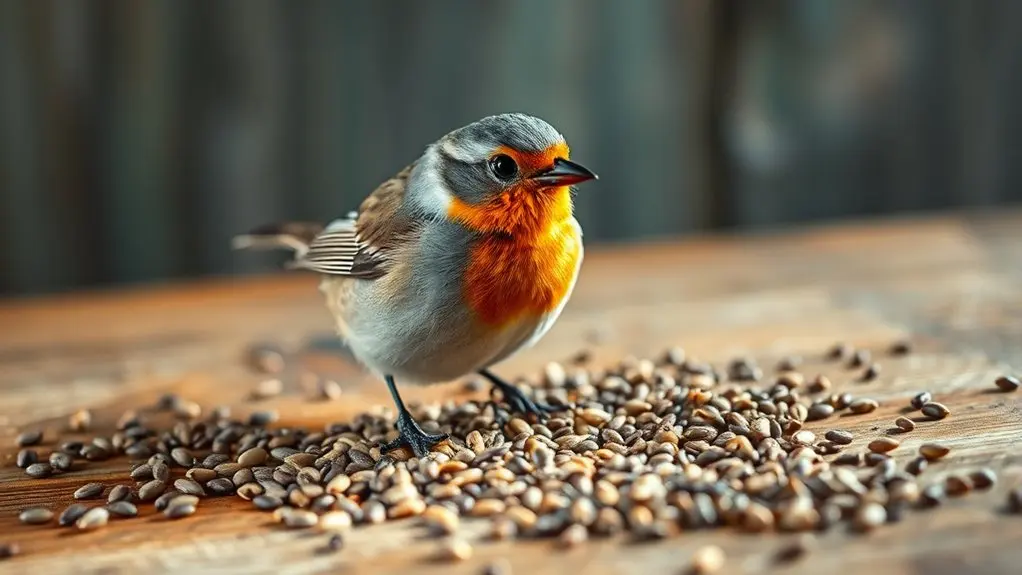
What makes chia and flax seeds such valuable additions to a bird’s diet? Both seeds are rich in omega-3 fatty acids, which are essential for maintaining healthy plumage and good cardiovascular function.
Chia and flax seeds boost birds’ health with omega-3s for vibrant feathers and strong hearts.
You’ll also find a high fiber content in chia and flax, helping to optimize digestion and nutrient absorption in birds.
These seeds supply essential minerals like calcium, magnesium, and phosphorus. These minerals support bone strength and eggshell formation.
Chia seeds really stand out because of their high antioxidant levels, which help reduce oxidative stress and boost immune defense.
Meanwhile, flax seeds contain lignans, which are plant-based antioxidants that may improve overall bird health and longevity.
Adding these nutrient-dense seeds to your bird’s diet can make a big difference in their physiological wellness. It really highlights how important they’re in avian nutrition.
Safety Guidelines for Feeding Wild and Pet Birds Chia and Flax Seeds
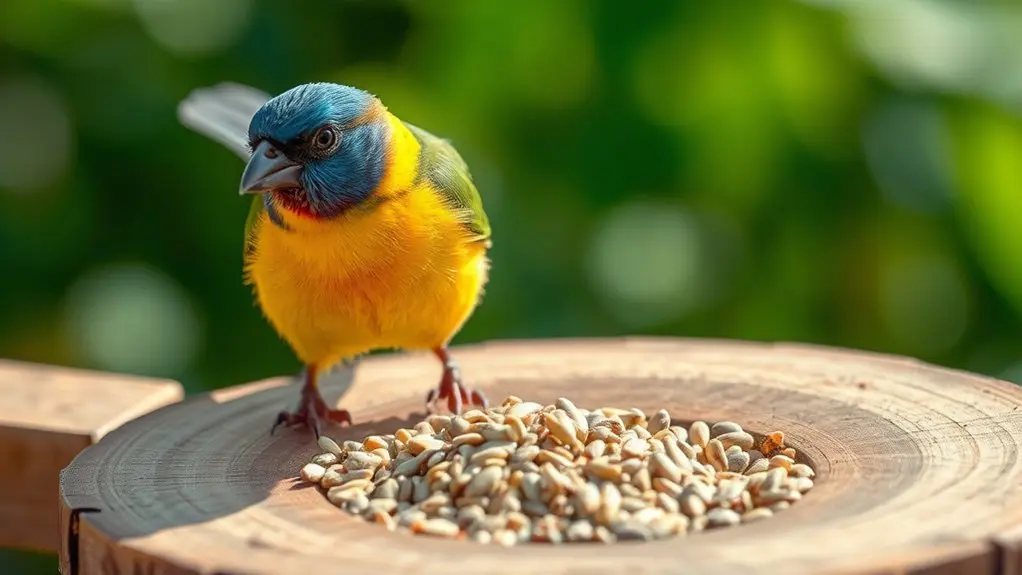
When you feed chia seeds to birds, it’s a good idea to introduce them slowly. You might also want to soak the seeds first because this helps with nutrient absorption and keeps the birds hydrated.
As for flax seeds, just make sure they’re fresh, organic, and free from any mold. That way, you avoid any contamination risks.
Both chia and flax seeds are great sources of omega-3 fatty acids, which are really beneficial. But remember, moderation is important to keep your pet and wild birds from having any digestive problems.
Chia Seed Feeding Tips
Although chia and flax seeds offer valuable nutrients for birds, you should introduce them gradually into their diet to monitor for any adverse reactions or digestive issues. Always serve these seeds plain, without salt or additives, to guarantee safety. Soaking seeds before feeding enhances digestibility and hydration, making nutrients more accessible.
Mixing chia and flax seeds with other natural foods, such as berries or mealworms, guarantees a balanced diet. Observe birds regularly for signs of allergies or discomfort, and stop feeding if negative symptoms arise.
| Tip | Description | Benefit |
|---|---|---|
| Gradual Introduction | Start with small amounts | Prevents digestive upset |
| Plain Seeds | No salt or additives | Ensures safety |
| Soaking | Hydrate seeds before feeding | Enhances nutrient absorption |
| Mixed Diet | Combine with other foods | Promotes balanced nutrition |
Flax Seed Safety Measures
How can you guarantee the safe feeding of flax seeds to wild and pet birds? First, grind flax seeds to enhance nutrient absorption and prevent choking hazards. Raw flax seeds contain cyanogenic compounds, so you must feed them in moderation and assure proper preparation.
Store flax seeds in an airtight container, placed in a cool, dark environment to avoid rancidity and nutrient loss. Introduce flax seeds gradually into your bird’s diet, allowing you to monitor any digestive discomfort or sensitivities.
Always provide flax seeds as a supplement to a balanced diet, never as a staple, since excessive intake can cause health issues. By following these guidelines, you’ll optimize the nutritional benefits of flax seeds while minimizing risks to both wild and pet birds.
How to Introduce Chia and Flax Seeds Into Your Bird’s Diet
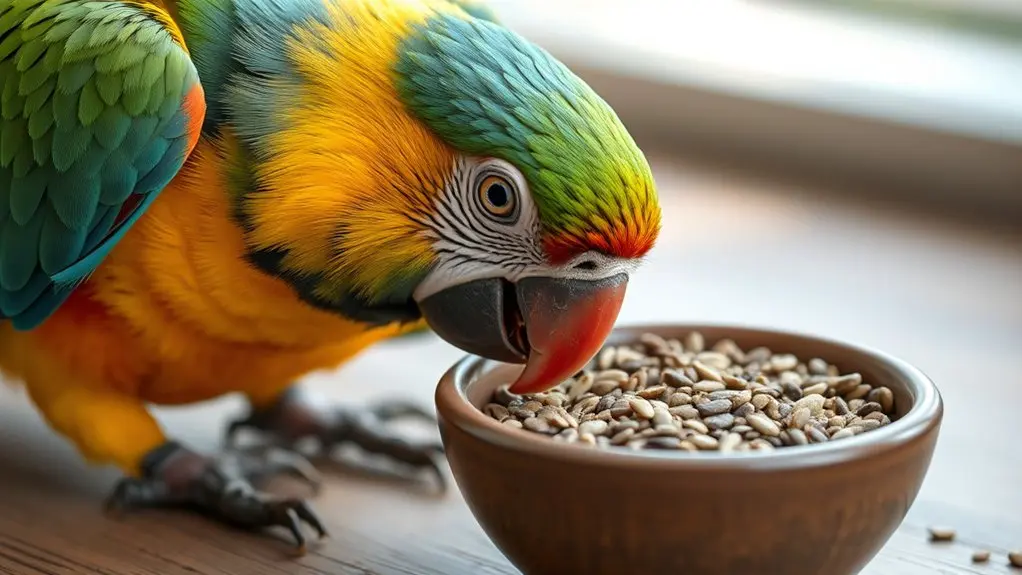
Since introducing new foods can affect your bird’s digestive system, you should start by mixing small amounts of chia and flax seeds into their regular diet to minimize the risk of upset. Begin with a tiny pinch daily during the first week, observing your bird closely for any allergic reactions or digestive discomfort.
To enhance digestibility and hydration, soak the seeds in water or juice until they form a gel-like consistency before offering them. Always choose organic, unflavored seeds to avoid additives that might harm your bird.
Gradually increase the amount only if no adverse reactions occur. Throughout this period, monitor your bird’s behavior and stool to ensure tolerance.
If you have concerns regarding your bird’s specific dietary needs, consult a veterinarian to tailor the introduction safely.
How Much Chia and Flax Seed Should You Feed Birds?
When introducing chia and flax seeds to your bird’s diet, you should carefully control the quantity to prevent digestive upset or weight gain. Small birds can safely consume about a teaspoon per feeding, while larger species tolerate up to a tablespoon.
Start with a tiny portion, a pinch or just a few seeds, and gradually increase the amount based on your bird’s tolerance and response.
Overfeeding these nutrient-dense seeds risks digestive issues and excessive weight gain, so moderation is essential.
Keep in mind that flax seeds should be ground or soaked to enhance digestibility, as whole seeds may pass undigested.
Always observe your bird closely for adverse reactions and adjust the seed quantity accordingly to maintain a balanced, healthy diet.
Best Ways to Serve Chia and Flax Seeds for Easy Digestion
Although chia and flax seeds are nutrient-rich, serving them properly is essential to guarantee your bird digests them effectively. Soaking these seeds in water or juice creates a gel-like texture that enhances digestibility by softening their tough outer coating.
You can also grind the seeds or mix soaked seeds with other bird foods, which improves nutrient absorption and minimizes choking risks. Offering small amounts of soaked seeds as treats encourages birds to accept them without overwhelming their digestive systems.
Regularly providing soaked seeds helps prevent potential digestive issues linked to raw, dry seeds. Always prepare and serve these seeds fresh to maintain their nutritional benefits and support ideal digestion in your backyard birds.
This careful preparation ensures your feathered friends gain maximum advantage from chia and flax seeds.
Seasonal Benefits of Feeding Birds Chia and Flax Seeds
Proper preparation of chia and flax seeds sets the stage for their effective use throughout the year. These seeds provide targeted nutritional benefits that match up with seasonal demands.
In winter, omega-3 fatty acids help birds stay warm and boost their immune system. When it’s breeding season, protein and calcium come into play to support egg production and chick growth.
Summer feeding helps with feather repair and recovery from the stress of migration. By offering these seeds seasonally, you’re helping birds become more resilient to environmental challenges.
| Season | Key Nutrients | Benefits |
|---|---|---|
| Winter | Omega-3 fatty acids | Body warmth, immune support |
| Breeding | Protein, Calcium | Nesting, egg production, chick development |
| Summer | Nutrients for repair | Feather repair, stress recovery |
This balanced approach makes sure birds get the essential nutrients they need all year long.
Bird Species That Eat Chia and Flax Seeds
Which bird species are most likely to consume chia and flax seeds in your backyard? Common seed-eaters such as finches, sparrows, and doves frequently include these seeds in their diet.
In the US, bluejays and blackbirds naturally consume chia seeds, while in the UK, finches and buntings incorporate flax seeds, particularly during breeding seasons.
Cardinals and grosbeaks also show a preference for flax seeds due to their rich nutritional profile.
Although primarily insectivorous, woodpeckers may occasionally supplement their diet with chia and flax seeds.
Understanding these species’ dietary habits helps you provide appropriate feeding options, supporting their health and natural behavior.
This scientific insight allows you to tailor seed offerings to attract and nourish specific bird species in your area effectively.
Do Birds Prefer Chia or Flax Seeds Compared to Other Bird Seeds?
You’ll notice that many birds prefer chia seeds over flax seeds. That’s mostly because chia seeds have more omega-3s and are smaller, which fits better with how birds like to eat.
Plus, chia seeds absorb water, making them easier for birds to digest.
On the other hand, flax seeds are tougher and not as easy for birds to get into. When you think about these nutritional and physical differences, it makes sense why chia usually comes out on top when birds pick their favorite seeds in your backyard.
Seed Preference Among Birds
Although birds often favor seeds high in fat for their energy needs, their preferences vary markedly between chia, flax, and more traditional seeds like sunflower or millet.
You’ll find that finches and sparrows readily consume flax seeds, attracted by their omega-3 fatty acids, yet flax is less favored overall compared to sunflower or safflower seeds.
Chia seeds, despite their rich nutrition, tend to draw a broader range of seed-eating birds but are less preferred because of their small size and unique texture.
Typically, both chia and flax serve as supplementary options rather than primary food sources.
So, when you offer a mix, birds often prioritize traditional seeds for regular feeding, turning to chia or flax mainly for added nutritional benefits.
It’s interesting how they balance taste and nutrition, isn’t it?
Nutritional Appeal Comparison
Birds don’t just pick seeds based on taste. They’re actually looking for nutritional benefits, especially from seeds rich in omega-3 fatty acids like chia and flax. These are way more nutrient-packed compared to traditional options like sunflower or millet.
When you offer chia and flax, you’ll see some clear preferences. Finches and sparrows really like chia because it’s small and loaded with nutrients. Blue jays also tend to go for chia seeds.
Ground-feeding birds, on the other hand, benefit from soaked flax seeds since they’re softer to eat. Flax seeds give a nice balance of omega-3s and fiber, which helps with digestion and boosts immunity.
Risks to Watch for When Feeding Birds Chia and Flax Seeds
When feeding chia and flax seeds to wild or pet birds, it’s essential to monitor the quantity and quality of these seeds to prevent health complications. Both seeds are high in fiber, so excessive feeding can cause digestive issues like diarrhea or bloating.
Flax seeds contain cyanogenic compounds that may release trace cyanide if consumed in large amounts, posing a risk to birds. Also, old or moldy seeds can lead to illness, so always provide fresh, uncontaminated seeds.
Overfeeding may disrupt birds’ nutritional balance, causing deficiencies or excesses in crucial nutrients. To minimize these risks, introduce chia and flax gradually and observe your birds closely for any adverse reactions.
Adjust their diet accordingly to guarantee their health and well-being.
How to Store Chia and Flax Seeds to Keep Them Fresh
To keep chia and flax seeds fresh, it’s best to store them in airtight, opaque containers. This helps protect them from light and moisture, which can cause them to spoil more quickly.
You might also want to refrigerate or freeze the seeds. Doing this slows down oxidation and prevents rancidity, so their nutrients stay intact for longer.
Just remember to check the seeds regularly for any signs of spoilage.
And try to use them before their expiration date to make sure they’re safe for your birds.
Optimal Storage Conditions
How can you guarantee chia and flax seeds remain fresh and retain their nutritional value over time? Proper storage is essential to prevent oxidation and rancidity.
You should store seeds in airtight, opaque containers to block light, air, and moisture exposure. Keep containers in a cool, dark place to slow down degradation processes.
If you don’t use them frequently, especially ground flax seeds, refrigerate or freeze seeds to maintain nutrient integrity.
Also, regularly inspect seeds for spoilage signs like sour odors or mold before feeding birds. It’s a simple way to keep your seeds fresh and healthy!
Preventing Seed Spoilage
Ensuring chia and flax seeds stay fresh requires attention beyond just choosing the right storage location. You need to store them in airtight containers to block moisture and air, which accelerate spoilage. Keep these containers in a cool, dark area to minimize exposure to heat, light, and humidity. All of these factors degrade seed quality.
Refrigerating or freezing seeds after opening slows oxidation and rancidity, which extends their shelf life markedly. Using opaque containers helps protect seeds from light-induced nutrient loss.
You should regularly inspect seeds for mold, off-odors, or discoloration before feeding them to birds.
Also, stick to the recommended shelf lives—about 1 to 2 years for whole seeds and less for ground varieties. This helps make sure seeds remain safe and nutritionally intact. Proper handling prevents spoilage and keeps seed quality high for your birds.
Packaging and Containers
Where you store chia and flax seeds plays a vital role in preserving their freshness and nutritional value. To keep these seeds fresh and prevent degradation, follow these scientifically backed storage practices:
Store seeds in airtight containers to limit oxygen exposure and prevent oxidation. Use opaque or dark-colored containers to block light, which breaks down essential nutrients.
Refrigerate or freeze seeds, especially once opened, to slow rancidity and extend shelf life. Seal packaging tightly after each use to avoid moisture absorption and spoilage.
Also, it’s a good idea to label containers with purchase or expiration dates so you can keep track of freshness. These simple steps help ensure chia and flax seeds keep their nutritional integrity.
That way, both you and your birds get all the good stuff when feeding.
Frequently Asked Questions
Can Chia and Flax Seeds Help With Bird Feather Molting?
Yes, chia and flax seeds help with bird feather molting by providing omega-3 fatty acids, protein, and antioxidants. These nutrients are essential because they support feather growth and tissue repair. Plus, they help reduce oxidative stress, which is really important during molting.
When birds molt, their bodies go through a lot of changes, so having the right nutrition can make a big difference. Feeding them chia and flax seeds promotes healthier, faster feather regeneration. It’s a simple way to support their overall feather health during this time.
Do Chia and Flax Seeds Affect Bird Behavior or Energy Levels?
Imagine your bird suddenly auditioning for a circus. Chia and flax seeds boost their omega-3s, which can enhance energy and alertness.
But don’t overfeed them. Too much fat might cause hyperactivity or digestive issues. This can change their usual behavior in ways you might not expect.
Are Chia and Flax Seeds Suitable for Baby Birds or Chicks?
Yes, you can feed baby birds chia and flax seeds if you prepare them properly. Grind flax seeds and soak chia seeds to help with digestion and nutrient absorption.
Just make sure to introduce them gradually and watch carefully for any adverse reactions. It’s always best to keep an eye on how the little ones respond before making them a regular part of their diet.
Can Feeding Chia and Flax Seeds Reduce Bird Susceptibility to Diseases?
Yes, feeding chia and flax seeds can reduce bird susceptibility to diseases by boosting their immune system with omega-3 fatty acids and antioxidants. These nutrients help combat oxidative stress and inflammation.
This promotes overall health and stronger disease resistance. So, including these seeds in a bird’s diet is a smart move for keeping them healthier.
How Do Chia and Flax Seeds Compare Nutritionally to Other Superfoods for Birds?
You’ll find chia and flax seeds offer denser omega-3s, antioxidants, and fiber than millet or sunflower seeds. Their concentrated nutrients better support plumage health and hydration, making them superior supplements in your bird’s diet.
These seeds pack a powerful nutritional punch that really stands out. Plus, they help keep your bird’s feathers shiny and skin well-moisturized. It’s a simple way to boost their overall health.
Conclusion
You now know that chia and flax seeds offer birds essential omega-3 fatty acids and fiber, boosting their health considerably. Remarkably, just a teaspoon of these seeds can provide up to 30% of a small bird’s daily fat requirement.
When introducing these nutritious seeds, be mindful of portion sizes and proper storage to maintain freshness. By doing so, you’ll support your feathered friends’ well-being while minimizing risks.