
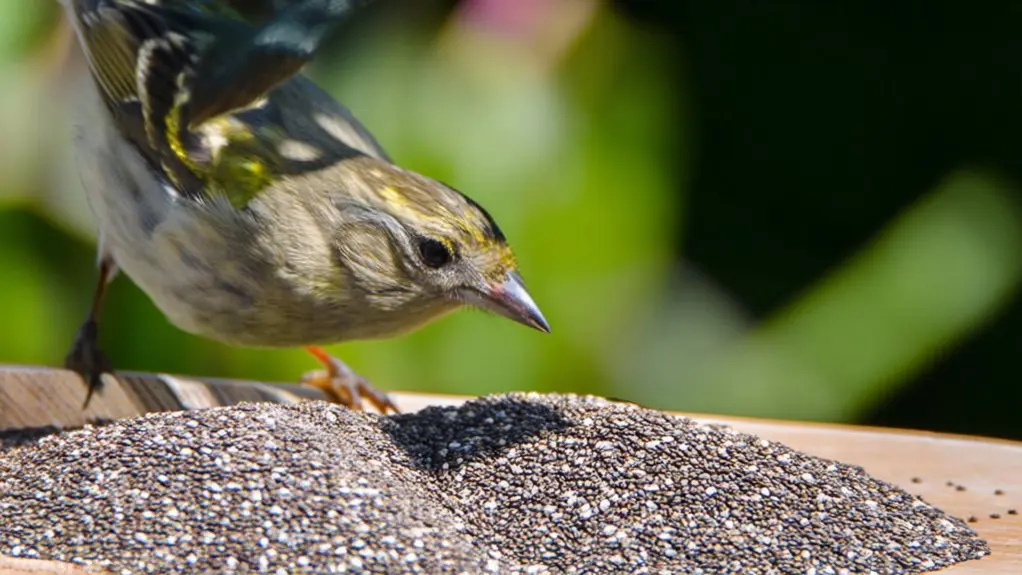
Yes, you can safely feed birds chia seeds in moderation. They provide important nutrients like omega-3 fatty acids, protein, fiber, and minerals that support overall health.
Chia seeds are suitable for many seed-eating birds, including finches, sparrows, and doves. Just be sure to introduce them gradually to prevent any digestive issues.
Always choose organic, unsalted seeds to avoid harmful additives. Understanding the right serving amounts and which species can eat chia helps make sure your birds get the benefits without any risk.
Why Are Chia Seeds Good for Birds?
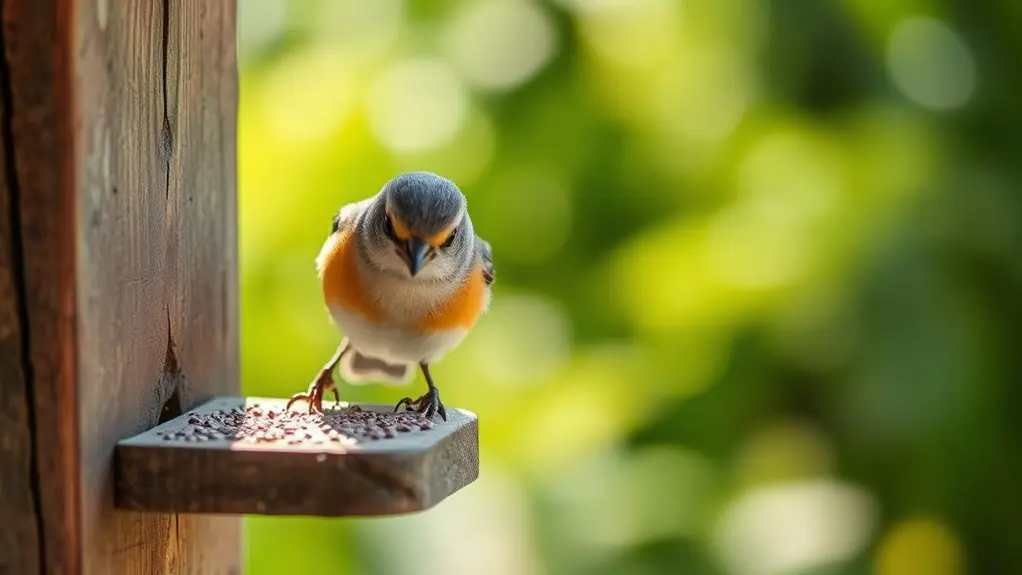
Although you mightn’t immediately recognize chia seeds as a bird superfood, their rich composition offers numerous health benefits. You’ll find they’re packed with omega-3 fatty acids, essential for maintaining healthy feathers and overall robustness.
Chia seeds, rich in omega-3s, are essential for vibrant feathers and bird vitality.
When birds consume chia seeds, the calcium, magnesium, and phosphorus support bone strength and tissue growth, critical for their structural integrity.
The high fiber content promotes efficient digestion, ensuring a well-functioning gastrointestinal system.
Additionally, the protein content plays a pivotal role in feather development and tissue repair, helping birds recover from daily wear.
Finally, antioxidants in chia seeds protect birds against oxidative stress, bolstering their immune systems.
What Nutrients Do Chia Seeds Provide Birds?
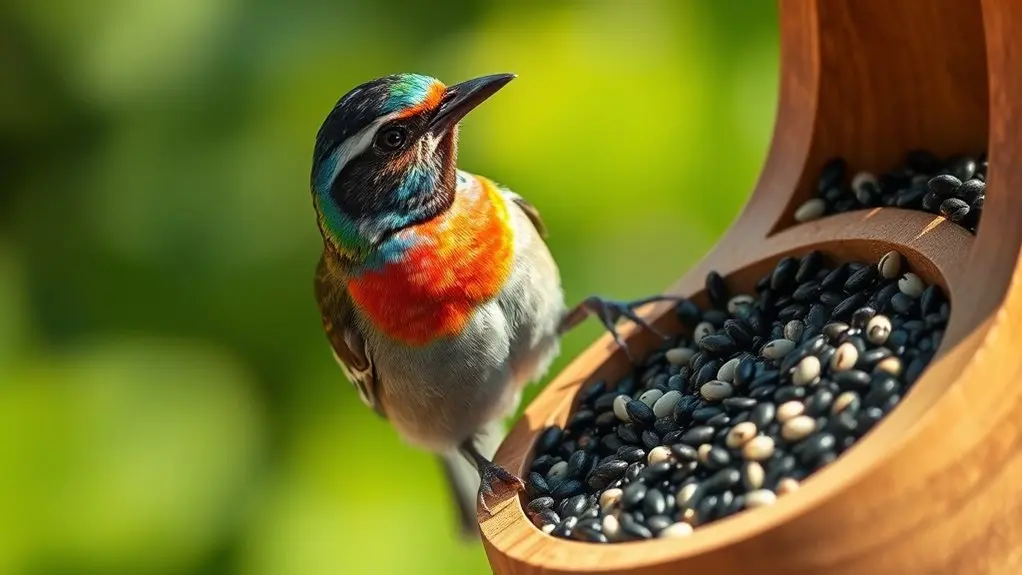
When birds consume chia seeds, they get a concentrated source of essential nutrients that support different body functions. Chia seeds are packed with omega-3 fatty acids, which help keep their feathers healthy and contribute to their overall well-being.
They also provide high-quality protein, which birds need for tissue repair, feather growth, and energy.
Important minerals like calcium, magnesium, and phosphorus found in chia seeds help strengthen bones and support tissue development.
Plus, these seeds have antioxidants that protect birds from oxidative stress and boost their immune systems.
The high fiber content in chia seeds promotes good digestion and helps birds absorb nutrients better.
All these nutrients together make chia seeds a great addition to a bird’s diet. They effectively support both their structural health and metabolic processes.
Are Chia Seeds Safe for All Bird Species?
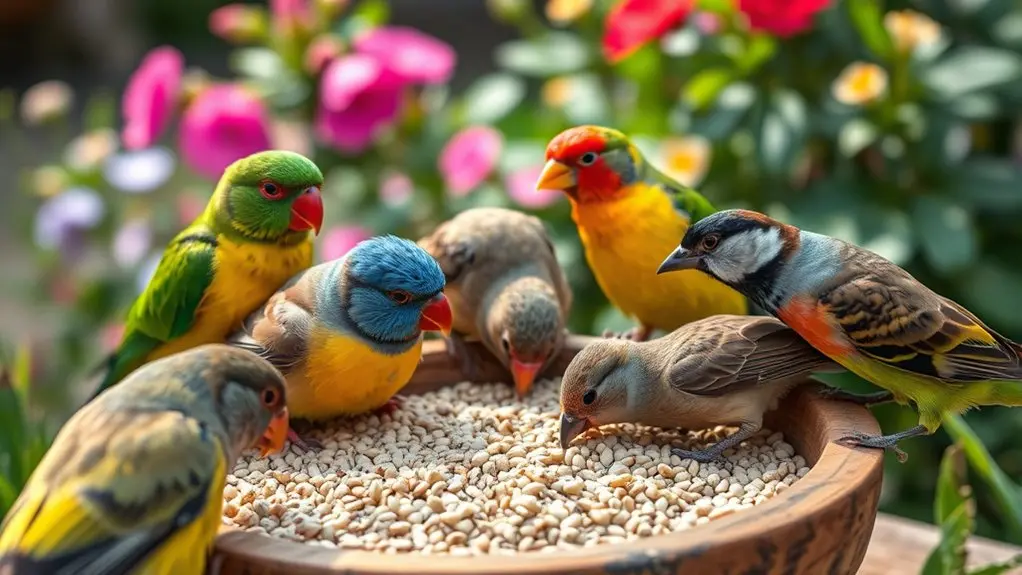
Since chia seeds offer valuable nutrients, you might wonder if all bird species can safely consume them. Generally, chia seeds are safe for most birds when given in moderation and free from additives. Seed-eating wild birds like finches, sparrows, and doves benefit from chia.
Insectivorous birds such as woodpeckers may eat them occasionally but don’t rely on them as a main food source. Pet birds like budgerigars and lovebirds also safely consume chia, supporting their health. Introducing chia gradually is essential to monitor any adverse reactions or allergies.
| Bird Type | Chia Seed Safety |
|---|---|
| Seed-eaters | Safe with moderation |
| Insectivores | Occasionally safe |
| Pet birds | Safe and beneficial |
| Unknown species | Exercise caution |
How Many Chia Seeds Can Birds Eat Safely?
You should offer birds just a small pinch or about a teaspoon of chia seeds per feeding. This helps avoid any digestive issues or too much fat intake.
Keep an eye on how they react after eating. If you notice any signs of discomfort or illness, it’s important to take note.
Every bird is a little different, so adjust the amount based on how each one responds. That way, you can make sure they’re eating safely and happily.
Recommended Serving Sizes
How much chia seed can birds safely consume without risk? Typically, small birds tolerate about a pinch or a teaspoon of chia seeds each.
Larger seed-eaters like pigeons or doves can handle up to a tablespoon.
It’s best to introduce chia gradually, starting with minimal amounts to see how their digestion handles it.
Offering chia in moderation helps prevent issues like bloating or constipation.
Always mix chia seeds with other seeds and foods to keep their diet balanced.
This avoids nutritional imbalances or overfeeding.
Sticking to these serving sizes makes sure chia supplements your bird’s nutrition safely.
It supports their health without overwhelming their digestive system.
Precise portion control is key to fitting chia seeds into your bird’s daily feeding routine effectively.
Monitoring Bird Reactions
Although chia seeds offer nutritional benefits, monitoring your bird’s reactions is essential to guarantee safe consumption. Start by offering a pinch of chia seeds per bird to observe tolerance. Watch closely for any digestive issues like diarrhea or bloating, which indicate overfeeding.
Limit chia seeds to 5-10% of your bird’s overall diet to avoid nutrient imbalance. Gradually increase the quantity only if your bird shows no adverse signs.
Also, keep an eye out for allergic reactions such as itching or lethargy.
If any negative symptoms appear, reduce or discontinue chia seed feeding. By observing your bird’s behavior and physical condition carefully, you can figure out the safe amount of chia seeds to include in their diet without risking health complications.
How Can You Safely Introduce Chia Seeds to Birds?
You should start by mixing a small pinch of chia seeds with your birds’ regular food to see how they react. Take it slow and gradually increase the amount over time.
Just keep an eye out for any signs of digestive discomfort or allergies. Watching them closely during this phase helps make sure they stay safe and lets you adjust the feeding process as needed.
Gradual Feeding Steps
When introducing chia seeds to birds, start by offering a small pinch mixed with their regular food to observe their initial reactions. Gradually increase the amount over a week, allowing the birds’ digestive systems to adjust without being overwhelmed.
You can soak chia seeds in water or juice beforehand, which softens them, enhances hydration, and facilitates digestion.
Introduce the seeds slowly, making sure you don’t cause sudden dietary changes. During this period, watch closely for any signs of digestive discomfort or allergic responses.
If any adverse reactions appear, stop feeding chia seeds right away.
This careful, gradual approach helps you safely add chia seeds to their diet. It minimizes health risks and ensures the birds can enjoy the benefits of this nutrient-rich addition.
Monitoring Bird Reactions
Since chia seeds are a new dietary component for birds, carefully monitoring their reactions during initial feedings is essential. Start by introducing small amounts mixed into their regular diet and observe closely for any signs of digestive upset such as lethargy, diarrhea, or vomiting.
Keep an eye out for allergic responses, including swelling, itching, or unusual behavior. Make sure the chia seeds are fresh, unsalted, and free from mold to avoid contamination or illness.
If you notice any adverse symptoms, remove the seeds immediately and consult a veterinarian if concerns persist. This kind of careful observation helps you confirm the seeds’ safety and suitability for your bird’s health before increasing the quantity.
It ensures a controlled and safe dietary adjustment.
What Are the Best Ways to Feed Birds Chia Seeds?
Although chia seeds offer valuable nutrients for birds, feeding them properly guarantees maximum benefit and safety. You can provide chia seeds raw by sprinkling them directly onto feeders or mixing them with other seeds and dried fruits to create a balanced diet.
Soaking chia seeds in water or juice forms a gel-like consistency. This enhances nutrient accessibility and makes digestion easier for birds. It’s a simple way to help them get the most out of these tiny seeds.
Make sure to use organic, unsalted chia seeds to avoid pesticide exposure or harmful additives. Introduce chia gradually by starting with small amounts. This way, you can monitor how well the birds accept them and check their digestive response.
Adding chia seeds to existing bird seed mixes often attracts diverse backyard species and supports their health.
Do Wild Birds Eat Chia Seeds Naturally?
You’ll notice that wild birds like finches and sparrows naturally eat chia seeds where the plant grows. They often forage for seeds that have fallen to the ground.
Natural Consumption Habits
When you observe wild birds like finches, sparrows, and doves in regions where chia plants grow naturally, you’ll notice they regularly consume chia seeds. This behavior reflects their adaptation to local flora and the seeds’ nutritional benefits.
You’ll find that chia seeds offer essential nutrients such as omega-3 fatty acids, fiber, and protein, which align with the dietary needs of many seed-eating birds.
Birds often ingest chia seeds incidentally while foraging among plants producing similar small, oily seeds.
The presence of chia seeds in their natural habitat supports their integration into the birds’ diets without requiring behavioral changes.
These observations confirm that chia seeds form a natural, compatible food source for certain wild bird populations in chia-growing regions.
Common Wild Bird Species
Observations of bird species across different regions reveal that several wild birds naturally include chia seeds in their diets. You’ll find finches, sparrows, and doves consuming chia seeds where the plant grows natively.
Seed-eating species like US bluejays and blackbirds also eat chia seeds when accessible, either in the wild or at feeders.
Desert woodpeckers, although primarily insectivorous, occasionally supplement their diet with chia seeds in arid zones.
In the UK, finches and buntings benefit from chia’s high nutritional content, integrating the seeds into their feeding habits.
Since wild birds have evolved digestive systems adapted to varied seeds, chia seeds are naturally suitable and easily processed as a food source.
This dietary inclusion highlights chia’s ecological role and value to seed-eating bird species globally.
When Is the Best Time to Feed Birds Chia Seeds?
Although chia seeds provide valuable nutrients year-round, feeding them strategically can maximize benefits for wild birds. You’ll want to take into account seasonal needs to optimize their health.
Feeding chia seeds thoughtfully throughout the year enhances wild birds’ health by meeting their seasonal needs.
In winter, feed chia seeds to support warmth and immunity. The omega-3 fatty acids help birds endure cold stress and stay healthy through chilly days.
During spring and summer, offer chia during breeding seasons. It promotes nesting success, feather development, and healthy offspring thanks to its calcium and protein content.
Consistent supplementation throughout the year keeps birds’ nutritional balance steady and supports their overall vitality. Regular feeding really makes a difference in their well-being.
Which Birds Eat Chia Seeds in the US and UK?
Feeding chia seeds year-round benefits various bird species, but knowing which birds actually consume them can help you target your feeding efforts more effectively. In the US, finches, sparrows, bluejays, blackbirds, pigeons, doves, and desert woodpeckers commonly eat chia seeds.
In the UK, garden birds such as finches and buntings readily consume them. Seed-eating backyard birds in both regions show a strong preference for chia seeds, while insectivorous species like Red-bellied Woodpeckers may occasionally include them in their diet.
| United States | United Kingdom |
|---|---|
| Finches | Finches |
| Sparrows | Buntings |
| Bluejays | |
| Desert Woodpeckers |
This data can really help you shape your feeding strategy based on the birds you want to attract in your area.
What Precautions Should You Take When Feeding Chia Seeds?
When you offer chia seeds to birds, choosing organic, pesticide-free seeds is essential to avoid exposing them to harmful chemicals. To guarantee their safety and well-being, take these precautions:
Introduce chia seeds gradually and in small quantities to monitor any digestive or allergic reactions. Use only unsalted, unflavored chia seeds without additives, as these can be toxic to birds.
Observe birds closely after feeding for signs of discomfort or adverse effects; discontinue if necessary.
Also, it’s a good idea to consult an avian veterinarian if you’re unsure about feeding chia seeds to specific bird species.
Careful observation and gradual introduction help prevent health issues. This way, you can be confident that chia seeds are a safe supplement when handled responsibly.
Frequently Asked Questions
Can Chia Seeds Help Birds During Migration Periods?
Yes, chia seeds help birds during migration by providing omega-3 fatty acids, protein, and essential minerals. These nutrients are super important for birds as they prepare for their long journeys.
You’ll notice better energy levels, improved muscle function, and stronger immune support in birds eating chia seeds. All of this helps them endure long flights and handle environmental stresses more effectively. It’s like giving them a natural boost to power through tough times!
Do Chia Seeds Affect Bird Behavior or Activity Levels?
You might notice birds becoming more lively after eating chia seeds, coincidentally as you observe them. Scientifically, these seeds boost omega-3 intake, enhancing energy and alertness. But overfeeding could reduce activity due to digestive discomfort.
Can Baby Birds Eat Chia Seeds Safely?
Yes, you can safely feed baby birds small amounts of soaked chia seeds once they’re weaned. Soaking the seeds helps with digestion, making it easier for the little birds to handle. Introducing the seeds gradually is a good idea because it lets you keep an eye on how they react.
Always choose fresh, organic chia seeds without any additives to keep your baby birds healthy. It’s better to be cautious with new foods, especially for young birds. So, start slow and watch for any changes before giving more.
Are Chia Seeds Beneficial for Pet Birds Like Parrots?
Yes, chia seeds benefit your pet parrots by providing omega-3s, protein, calcium, and fiber. You should soak them and introduce gradually to enhance digestion and nutrient absorption while monitoring your bird’s response for safety.
Just take it slow when you start giving chia seeds. Soaking them first really helps your bird digest and get the most nutrients. Keep an eye on how your parrot reacts to make sure everything’s going well.
How Do Chia Seeds Compare to Other Bird Seed Supplements?
You’ll find chia seeds richer in omega-3s, higher in fiber, and packed with antioxidants compared to typical supplements. You’ll also benefit from their natural minerals and hydrating gel form.
That makes them a superior, minimally processed option. Plus, they’re easy to add to your bird’s diet without any fuss. Overall, chia seeds really stand out as a great choice.
Conclusion
Just as the legendary Finch thrived by adapting to diverse seeds, you can safely offer chia seeds to many birds, enriching their diet with essential nutrients. However, not all species digest chia equally, so proceed with care. Introduce these seeds gradually and observe your feathered friends closely, ensuring their well-being.
By doing so, you become a mindful steward of their health, blending nature’s wisdom with modern knowledge for balanced avian nutrition.