
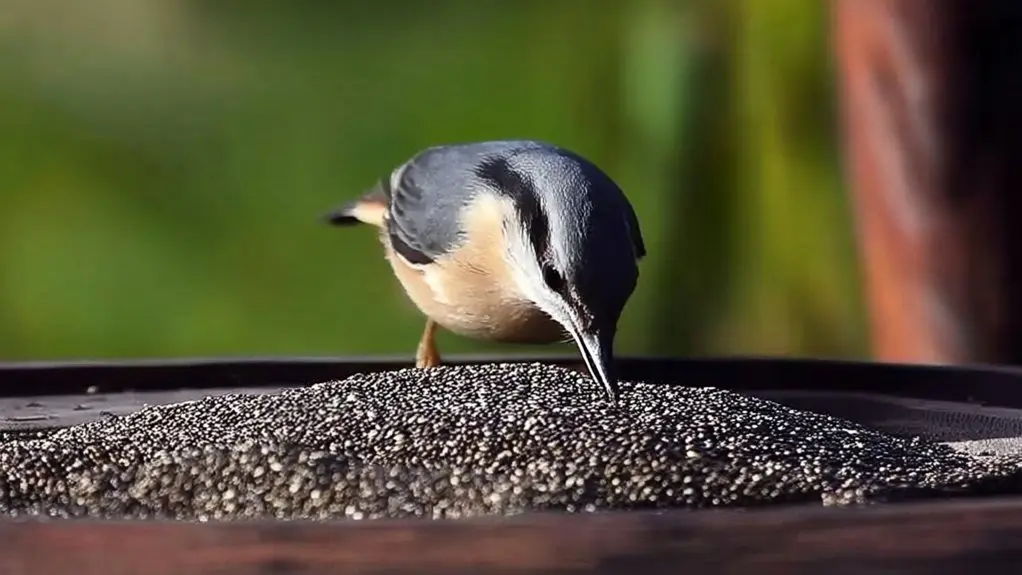
You can safely feed chia seeds to many pet and wild birds like budgies, finches, and sparrows. They’re rich in omega-3s, protein, and essential minerals that boost health and robustness.
Start with small amounts, preferably soaked to reduce choking risk. Also, watch for any allergic or digestive issues.
Chia seeds work well mixed with other foods and are especially valuable during scarce seasons. Keep exploring for detailed tips on safe introduction, portioning, and storage.
What Makes Chia Seeds Healthy for Birds?
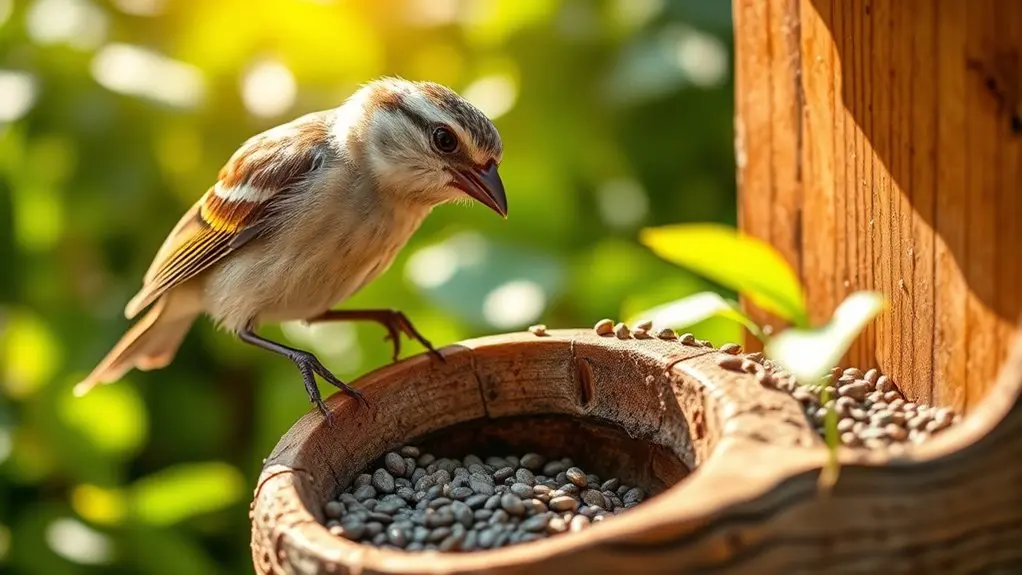
Because chia seeds are packed with essential nutrients, they offer significant health benefits for birds. You’ll find they’re rich in omega-3 fatty acids, which support healthy plumage and overall vitality. The high-quality protein in chia seeds is essential for tissue repair, feather growth, and sustained energy levels.
Their antioxidants protect birds from oxidative stress and prevent immune system decline, helping maintain robust health. Plus, chia’s fiber content promotes healthy digestion and reduces the risk of gastrointestinal issues.
You also benefit your bird by providing critical minerals like calcium, magnesium, and phosphorus, which strengthen bones and support metabolic functions. Adding chia seeds to a bird’s diet delivers a balanced nutritional boost that enhances both physical condition and well-being.
Are Chia Seeds Safe for Different Bird Species?
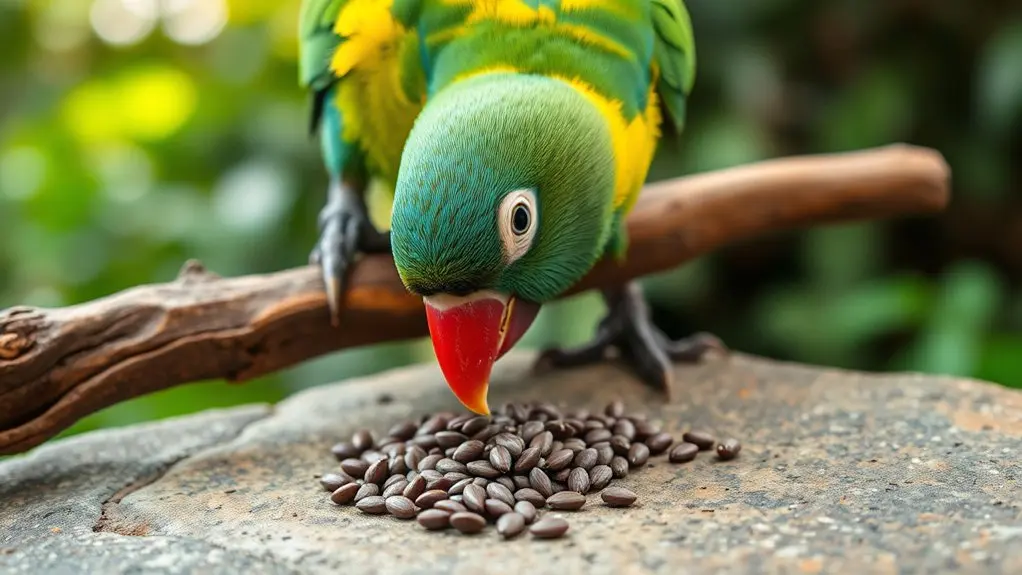
While chia seeds offer numerous health benefits, it’s important to make sure they suit the specific bird species you have. Chia seeds are generally safe for most birds, including finches, sparrows, and pigeons, as long as you offer them in moderation.
Pet birds like budgies, canaries, and lovebirds can also eat chia seeds safely as part of their diet. Wild seed-eating birds naturally consume chia seeds in their habitats without any problems.
Pet birds such as budgies, canaries, and lovebirds can safely enjoy chia seeds in their diet.
Even some insectivorous and omnivorous birds, such as woodpeckers, might occasionally eat chia seeds without any health concerns. That said, you should introduce chia seeds gradually and keep an eye on your birds.
Watch for any signs of allergic reactions or digestive issues to keep them safe and healthy.
How to Safely Introduce Chia Seeds to Birds
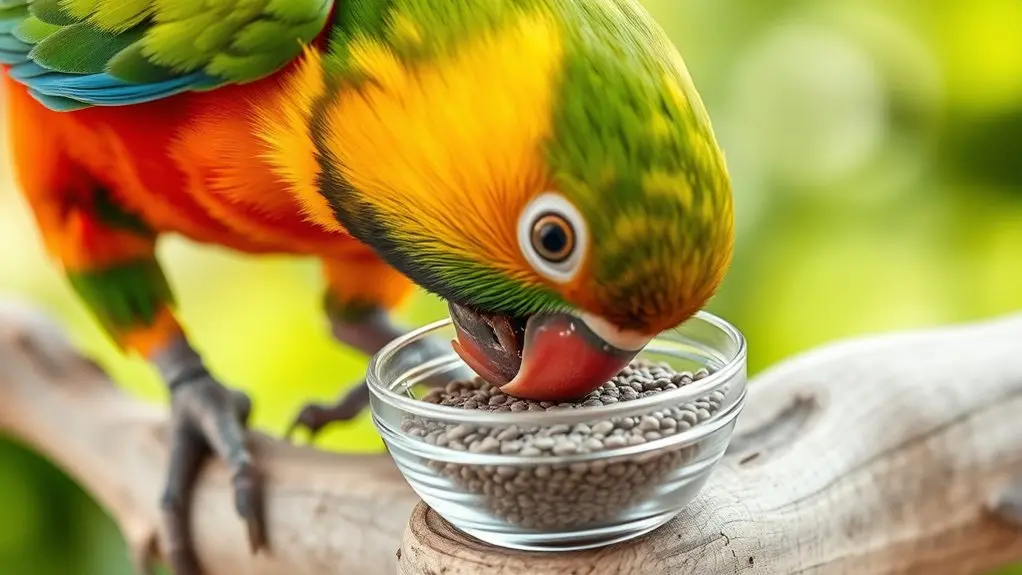
To get started, mix a small pinch of unsalted, organic chia seeds into your bird’s regular food.
Keep an eye on your bird for any changes in digestion or behavior during that first week.
If everything seems fine and your bird shows no signs of discomfort or allergic reactions, you can slowly increase the amount over time.
Just make sure to keep monitoring closely so you know your bird is handling the seeds safely and comfortably.
Gradual Feeding Process
When introducing chia seeds to your birds, start with a small pinch mixed into their regular food to see how they react. Gradually increase the amount over a week or two. Make sure the seeds don’t cause any digestive issues.
To reduce choking risks or discomfort, try soaking chia seeds in water or juice to create a gel before feeding. Introduce this gel slowly so your birds can adjust. Keep increasing the quantity carefully based on how well they accept it and their overall health.
This gradual feeding process helps your birds get used to the new food safely and lowers the chance of problems. By following these steps, you give your birds the nutritional benefits of chia seeds while keeping their well-being a top priority.
Monitoring Bird Reactions
After gradually introducing chia seeds into your birds’ diet, pay close attention to how they react. Start by mixing a small amount with their regular food and observe for any digestive issues, such as abnormal droppings or lethargy.
Watch carefully for allergic reactions like swelling or unusual behavior, especially during the initial feedings.
If you notice mold, foul smell, or discoloration on the seeds, remove them immediately to prevent illness.
Keep a detailed record of your bird’s responses over several days to assess tolerance.
Adjust the quantity or frequency accordingly, making sure chia seeds stay a safe supplement rather than a risk.
Monitoring closely during this phase is essential for your bird’s health and wellbeing when introducing new foods like chia seeds.
It might take a little time, but it’s worth it to keep your feathered friends happy and healthy!
How Much Chia Seed Is Safe for Birds?
You should offer birds just a small pinch or up to a teaspoon of chia seeds per feeding to avoid overdoing it. Keep an eye on how they react and adjust the amount if needed to make sure they’re handling it well.
It’s a good idea to balance chia seeds with other foods, too, so their diet stays healthy and they don’t run into any health problems.
Recommended Serving Size
How much chia seed should you offer your bird to guarantee safety and nutritional benefit? A small pinch or about a teaspoon of chia seeds per bird daily provides essential nutrients without risking overconsumption. Since there’s no strict maximum, moderation remains vital to avoid digestive upset.
Tailor serving sizes to your bird’s species and size. Smaller portions suit petite or young birds better.
To control intake and enhance digestibility, try mixing chia seeds with other foods or soaking them before serving. This approach helps regulate portion size and eases digestion.
While these guidelines serve well, always adjust amounts based on your bird’s response to chia seeds. That way, you can ensure you meet their nutritional needs safely and effectively.
Monitoring Bird Intake
While offering the right serving size of chia seeds lays the foundation for safe feeding, keeping a close watch on your bird’s intake guarantees ongoing health and well-being. Since there’s no specific daily limit, you should start with small amounts to prevent digestive upset and observe how your bird reacts.
Overfeeding can cause weight gain or digestive problems, so it’s vital to balance chia seeds with other seeds in their diet. Regularly check for any signs of discomfort or allergic reactions after introducing chia seeds.
Adjust the quantity depending on your bird’s species, size, and overall diet to maintain a safe and balanced intake. This attentive approach ensures chia seeds remain a healthy supplement rather than a risk.
It’s all about finding that sweet spot where your bird benefits without any issues. So, keep an eye on them and tweak portions as needed.
Should You Soak Chia Seeds Before Feeding?
Although raw chia seeds are safe for birds, soaking them before feeding enhances nutrient availability and eases digestion. When soaked for 10-15 minutes in water or organic juice, chia seeds absorb liquid and form a pudding-like texture.
This not only makes the nutrients more accessible but also helps small birds avoid choking or digestive blockages caused by dry seeds.
Soaked chia seeds are easier to swallow and can provide additional hydration, which benefits your bird’s overall health. While you can offer raw seeds, soaking reduces the risk of digestive upset and improves palatability.
To guarantee safety and maximize nutritional benefits, it’s best to soak chia seeds before feeding them to your birds.
Best Times to Feed Chia Seeds to Birds
Soaking chia seeds enhances their nutritional benefits, but knowing when to feed them can further support your bird’s health throughout the year. You can safely offer chia seeds year-round, as their rich nutrients provide consistent dietary support.
Soaking chia seeds boosts nutrition, and year-round feeding supports your bird’s health consistently.
In winter, their high omega-3 content helps birds maintain body warmth and strengthen immunity.
During breeding seasons, the calcium and manganese in chia seeds promote successful nesting and chick development.
Feeding chia seeds in summer supports fledglings’ growth and overall importance.
Consistently providing chia seeds is especially valuable when natural food sources dwindle, ensuring birds receive essential nutrients.
Which Common Birds in the US and UK Eat Chia Seeds?
You’ll find that finches, sparrows, and blackbirds commonly eat chia seeds in both the US and UK, especially at backyard feeders.
In the US, bluejays and doves also enjoy chia’s nutritional benefits.
Over in the UK, buntings join finches in regularly munching on these seeds.
Knowing which birds prefer chia seeds helps you provide the right food to attract and support wild seed-eating birds safely.
US Birds That Consume
When you observe common seed-eating birds across the US and UK, you’ll notice many readily consume chia seeds as part of their diet. Focusing on the US, species like finches, sparrows, bluejays, blackbirds, pigeons, and doves naturally include chia seeds when available.
Desert woodpeckers also benefit from chia seeds as a nutritious supplement. Even insectivorous birds such as Red-bellied Woodpeckers occasionally consume chia seeds, especially when insects are scarce.
These birds often access chia seeds directly from native plants or bird feeders, making chia a familiar and safe food source.
Understanding which US birds consume chia helps you provide nutritious options in your backyard, supporting their health and natural feeding behaviors effectively.
UK Birds Eating Chia
Just as many seed-eating birds in the US enjoy chia seeds, several common garden birds in the UK also include them in their diet. You’ll find that finches and buntings readily consume chia seeds, appreciating their nutritional value. These seeds often fall naturally to the ground, where wild birds take advantage of this food source.
While insectivorous birds like woodpeckers may eat chia seeds occasionally, seed-eaters dominate their consumption. In the UK, birds that commonly eat chia seeds include finches, known for their seed-rich diet and affinity for small seeds like chia. Buntings thrive on a variety of seeds found in gardens.
Blackbirds and bluejays are versatile feeders that incorporate chia into their meals too. This shows chia seeds are a safe, beneficial choice for many UK garden birds.
Wild Birds Seed Preferences
Although wild birds have varied diets, many common species in both the US and UK show a clear preference for chia seeds because they’re packed with nutrients.
In the US, finches, sparrows, bluejays, and blackbirds happily eat chia seeds and often include them in their regular meals.
In the UK, finches and buntings also naturally eat chia seeds and easily take them from feeders.
Seed-eating birds in both regions especially rely on chia seeds when food is scarce, benefiting from their rich nutritional content.
While mostly seed-eaters like finches and doves favor chia seeds, some insect-eating birds such as woodpeckers might eat them too if other food sources run low.
Knowing these preferences can really help you support local wild bird populations in the best way possible.
Mixing Chia Seeds With Other Bird Foods
Since chia seeds are nutrient-dense and versatile, you can mix them with other bird foods like seeds, berries, and dried mealworms to create a balanced diet that boosts nutrient intake. Combining soaked chia seeds with traditional seed mixes improves hydration and digestion, benefiting backyard birds.
Adding chia seeds to existing bird feed provides essential omega-3 fatty acids and calcium, which support overall health. Plus, it helps prevent overeating by offering a nutrient-dense supplement. Just remember to serve chia seeds in moderation as part of a diverse diet to avoid digestive issues.
You might want to try mixing soaked chia seeds with sunflower and millet seeds. Or blend chia seeds with dried berries to add antioxidants.
Another great option is combining chia seeds with dried mealworms for a protein boost.
This approach makes sure your birds get varied, well-rounded nutrition.
Signs of Allergies or Digestive Issues From Chia Seeds
If your bird shows signs like sneezing, respiratory distress, or excessive scratching after eating chia seeds, you might be witnessing an allergic reaction. Digestive issues can also occur, showing up as diarrhea, vomiting, or lethargy.
Pay close attention to any sudden drops in your bird’s activity or appetite, as these often signal discomfort.
Sudden decreases in your bird’s activity or appetite can be clear signs of discomfort or illness.
Changes in droppings, such as abnormal looseness or discoloration, also indicate digestive upset. If you notice any of these symptoms, stop feeding chia seeds immediately. Then, promptly consult an avian veterinarian to ensure your bird’s health and safety.
Monitoring your bird closely after introducing chia seeds helps you catch potential problems early. This way, you can prevent serious complications and keep chia seeds a safe part of their diet.
It’s always better to be cautious when it comes to your feathered friend’s well-being.
How to Store Chia Seeds to Keep Them Fresh
Keeping your bird safe doesn’t stop at monitoring reactions to chia seeds. It also involves proper storage to maintain their freshness and nutritional value.
To keep chia seeds fresh, store them in an airtight container away from light, heat, and moisture.
Avoid direct sunlight and high humidity because these factors can speed up spoilage. If you want to store them longer, refrigeration or freezing works well to preserve nutrients and prevent rancidity.
Make sure to seal the container tightly after each use to keep out moisture and contamination.
Also, regularly check the expiration date. If the seeds have an off smell or look strange, it’s best to discard them.
Key storage tips include:
- Use airtight containers in cool, dark places
- Refrigerate or freeze for extended shelf life
- Seal containers tightly after each use to avoid moisture
Frequently Asked Questions
Can Chia Seeds Help Improve a Bird’s Feather Condition?
Yes, chia seeds can improve your bird’s feather condition by providing essential omega-3 fatty acids, protein, and antioxidants. These nutrients promote healthy, strong, and vibrant feathers, especially during molting and feather growth periods.
Feathers need good nutrition to stay in top shape, and chia seeds offer just that. Adding them to your bird’s diet can make a noticeable difference in how their feathers look and feel. It’s a simple way to support your feathered friend’s health.
Are Chia Seeds Suitable for Baby Birds or Chicks?
You shouldn’t feed chia seeds to baby birds or chicks directly. Their delicate digestive systems can’t handle them well.
If you must, introduce soaked seeds sparingly. And it’s a good idea to consult an avian vet to guarantee safety and proper nutrition.
Do Chia Seeds Affect a Bird’s Weight or Metabolism?
Think of chia seeds as a double-edged sword: they boost your bird’s metabolism with essential fats but can cause weight gain if overfed.
You should feed them sparingly to keep your feathered friend healthy and balanced. It’s all about moderation to make sure your bird gets the benefits without any downsides.
Can Chia Seeds Be Used as a Training Treat for Birds?
Yes, you can use chia seeds as a training treat for birds. They’re small, nutritious, and easy to portion. Soaked seeds offer a gel-like texture, making them appealing while providing essential omega-3s and protein during training.
Plus, birds tend to enjoy the texture and taste, which helps keep them motivated. Just be sure to introduce chia seeds gradually to see how your bird responds. It’s a simple, healthy option that can mix things up during training sessions.
Are There Any Risks of Chia Seeds Causing Seed Allergies in Birds?
Think of chia seeds as tiny keys. They are mostly safe but can occasionally reveal allergies in birds. You shouldn’t ignore potential reactions.
Introduce chia seeds gradually and watch closely for any symptoms. Also, avoid giving your bird old or moldy seeds to keep them healthy. It’s all about being cautious and attentive.
Conclusion
If you’ve ever wondered whether chia seeds are safe for your birds, you’re in luck. They’re not only safe but packed with nutrients that support your feathered friend’s health.
The way you introduce and store these tiny seeds can make all the difference in keeping your bird happy and thriving. So, start slow and watch for any reactions.
Enjoy the benefits of chia seeds as a nutritious addition to your bird’s diet.