
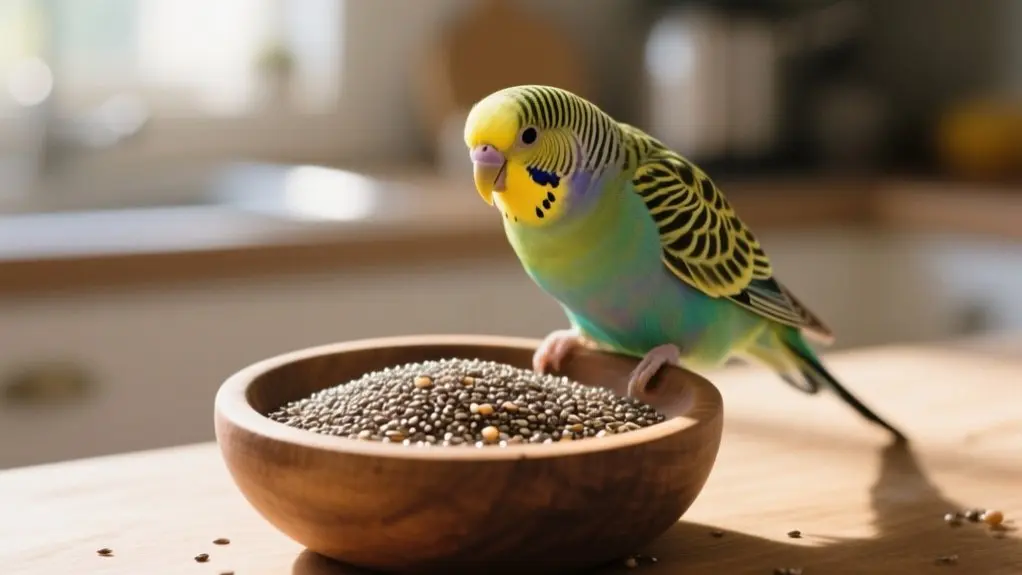
You can safely feed chia seeds to UK garden birds as a nutritious supplement. They offer essential omega-3s, fiber, protein, and minerals to support their health year-round.
Introduce the seeds gradually by mixing them with other foods. You might also want to soak them to improve digestibility and reduce the risk of mold.
Always use fresh, mold-free seeds and give moderate portions to avoid overfeeding. This approach benefits a range of species, especially during winter and breeding seasons.
If you want to learn more, there are plenty of details available on best practices and how to support birds through different seasons.
Are Chia Seeds Safe and Nutritious for UK Birds?
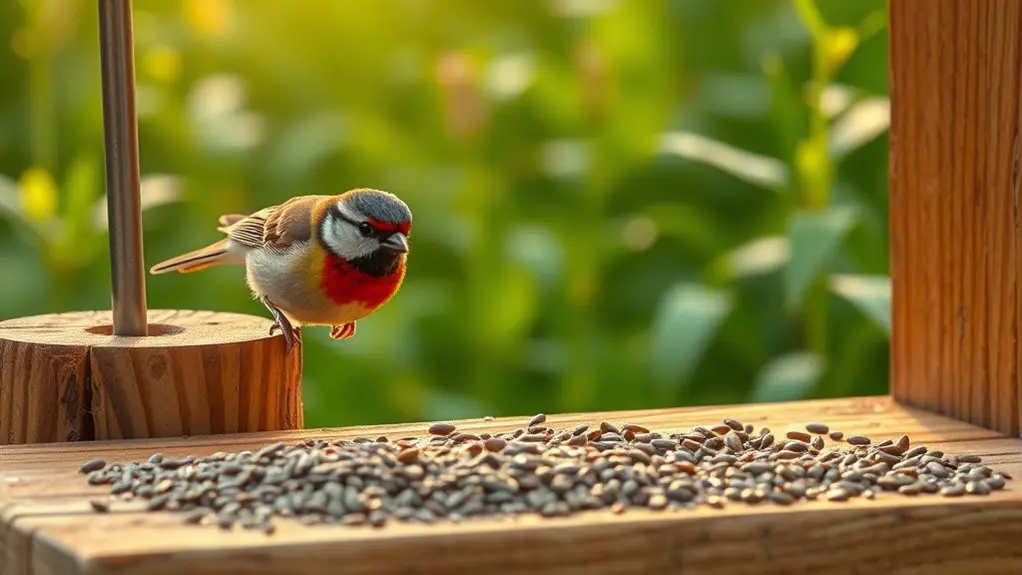
Although you might hesitate to introduce new foods to your garden birds, chia seeds are safe and nutritious for UK birds when offered in moderation. You can feed them raw or mix them with other seeds, berries, and dried mealworms to support a balanced diet.
Finches and buntings in the UK readily consume chia seeds, as they naturally occur in their wild diet. Choosing properly stored organic chia seeds ensures they’re free from pesticides and harmful chemicals, making them a safe supplement.
However, you should avoid expired or moldy seeds because mold can cause illness in birds.
What Nutrients Do Chia Seeds Provide UK Wild Birds?
You’ll find that chia seeds offer UK wild birds crucial nutrients like omega-3 fatty acids, protein, fiber, and key minerals that support their health and development.
These nutrients play an essential role in feather quality, digestion, and immune function, especially during seasonal changes.
Key Nutrients Overview
What key nutrients do chia seeds offer to wild birds in the UK? Chia seeds provide essential omega-3 fatty acids, which support healthy brain function and vibrant plumage. They’re rich in fiber, aiding digestion and maintaining gastrointestinal health.
These seeds also supply important minerals like calcium, phosphorus, and manganese. These minerals are essential for bone development and metabolic processes.
Plus, chia seeds contain protein, which strengthens feathers and supports tissue repair.
B vitamins in chia seeds contribute to energy production, enhancing overall vitality. By including chia seeds in their diet, wild UK birds gain a concentrated source of nutrients that promote physical health and resilience.
This nutrient profile makes chia seeds a valuable supplement for birds, complementing their natural diet without replacing it.
Seasonal Nutrient Benefits
Chia seeds deliver five essential nutrients that support UK wild birds throughout the year, adapting to their seasonal needs. You’ll find these nutrients critical for different periods.
Omega-3 fatty acids enhance brain function and cardiovascular health, which is essential year-round. Calcium is key during the breeding season, helping with strong eggshell formation. High fiber content improves digestion, especially in winter when food is limited.
Manganese and phosphorus contribute to bone strength and tissue growth. These nutrients support young birds’ development. Additionally, B vitamins boost the immune system and energy metabolism continuously.
Which UK Bird Species Eat Chia Seeds Naturally?
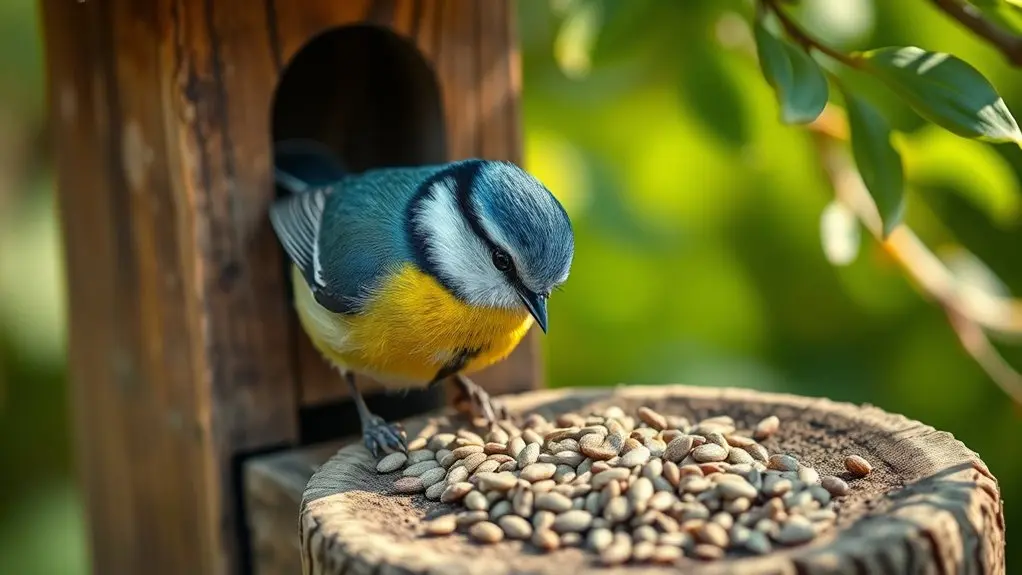
Although chia seeds aren’t native to the UK, several bird species naturally include them in their diet. Finches and buntings commonly consume chia seeds or similar seeds found in the wild.
Garden birds such as goldfinches, chaffinches, and house sparrows readily eat chia seeds when you offer them at feeders.
Goldfinches, chaffinches, and house sparrows eagerly enjoy chia seeds at garden feeders.
Wild birds incorporate chia seeds especially during seed-rich seasons, benefiting from their nutritional value and energy boost.
Even insectivorous birds like the common woodpecker may occasionally eat chia seeds when other food sources are limited.
Understanding which UK birds naturally consume chia seeds helps you provide appropriate food options that support their dietary needs effectively.
This way, you’re ensuring these species thrive in your garden or local environment.
How to Safely Introduce Chia Seeds Into Your Bird Feeder
Many UK birds enjoy chia seeds when offered, but introducing them to your feeder requires care to guarantee the birds benefit without any harm. To do this safely, start by gradually mixing small amounts of organic chia seeds with existing bird food. This helps you monitor acceptance and avoid overfeeding.
It’s a good idea to soak chia seeds in water before adding them to feeders. This enhances nutrient accessibility and reduces the risk of mold.
Also, try scattering chia seeds at different times daily. This encourages consistent feeding and lets you observe how the birds respond.
Don’t forget to clean feeders regularly to prevent mold growth and keep the feeding environment safe. Following these steps ensures your feathered visitors get the most nutritional benefits from chia seeds while minimizing any potential hazards.
Can UK Birds Eat Chia Seeds All Year Round?
You can feed UK birds chia seeds all year round. They’re packed with essential nutrients that help birds through different seasons.
In winter, the healthy fats in chia seeds give birds extra energy to stay warm and keep their immune systems strong.
Then, when it’s breeding season, minerals like calcium come into play, supporting nesting and helping chicks grow.
Seasonal Nutritional Benefits
Because UK birds benefit from essential nutrients throughout the year, you can safely include chia seeds in their diet regardless of the season. These seeds provide consistent nutritional support, helping birds thrive in varying conditions.
Specifically, chia seeds deliver healthy fats that are indispensable for energy and immune function all year round. They also supply calcium and manganese, which enhance breeding success and egg production.
Plus, chia seeds support feather growth and overall vitality during spring and summer. They aid in maintaining overall health by offering a reliable nutrient source.
It’s a simple way to give birds the boost they need, no matter the time of year.
Winter Feeding Advantages
How can chia seeds support UK birds during the challenging winter months? You can supply crucial energy through chia seeds’ high-fat content, which helps birds maintain warmth and insulation. Their omega-3 fatty acids improve feather condition, boosting cold-weather resilience.
Soaking chia seeds creates a hydrating gel that aids birds in staying nourished and hydrated during dry winter days. Adding chia seeds to winter feeders also strengthens immunity, offering essential nutrients when natural food becomes scarce.
Since UK birds can safely consume chia seeds year-round, including them in your winter feeding routine ensures continuous nutritional support. This simple addition can help birds survive harsher conditions by enhancing energy reserves and overall health throughout the colder season.
Breeding Season Support
Although UK birds benefit from chia seeds throughout the year, their nutritional value becomes especially important during the breeding season. You can rely on chia seeds to support key biological processes during this critical time. Here’s how they help:
- Provide calcium and manganese essential for strong eggshell formation and healthy embryo development.
- Supply healthy fats that boost energy for both adults and growing nestlings.
- Aid in feather repair, ensuring birds maintain ideal plumage for protection and warmth.
- Support overall health, enhancing breeding success and post-breeding recovery.
Feeding chia seeds year-round guarantees birds meet their increased nutritional demands, particularly during breeding. It makes chia seeds an excellent addition to any bird feeding routine in the UK.
Should You Soak Chia Seeds Before Feeding Birds?
When you soak chia seeds before feeding birds, you make their nutrients more accessible and reduce the risk of choking, especially for smaller species. Soaking transforms the seeds into a pudding-like texture, which helps birds digest them more easily. It also retains moisture, aiding hydration, particularly in dry weather.
Additionally, soaking lowers the chance of mold developing on older seeds, ensuring safer consumption. While birds can eat dry chia seeds, soaked ones provide enhanced digestibility and nutritional availability.
By preparing chia seeds this way, you support birds’ health and safety effectively.
How Much Chia Seed Should You Feed Wild Birds?
Since chia seeds are highly nutritious but calorie-dense, you should offer them to wild birds in moderation to avoid overfeeding. While there’s no strict limit, providing chia seeds as a supplement to their regular diet is best.
Here’s how you can manage the amount effectively: Offer a small handful or about a teaspoon at feeding stations. Mix chia seeds with other bird foods to guarantee dietary variety.
Avoid letting birds become dependent on chia seeds alone. Also, monitor bird behavior and health regularly to adjust quantities if needed. This way, you can make sure they’re getting the right balance without any issues.
Can Birds Eat Old or Moldy Chia Seeds Safely?
If you notice chia seeds that look moldy or smell off, you should never feed them to birds. Moldy chia seeds can produce mycotoxins that are harmful or even toxic to birds if ingested.
While some birds might naturally avoid moldy seeds, others may still consume them, risking digestive issues, respiratory problems, or poisoning.
Some birds may eat moldy seeds, risking serious health problems like digestive or respiratory issues.
Old chia seeds that have developed mold or an unpleasant odor should be discarded immediately to prevent these health risks.
To guarantee the safety and well-being of the birds you care for, always use fresh, properly stored chia seeds.
Avoiding old or moldy seeds is essential for maintaining their health and preventing unnecessary illness.
How Chia Seeds Support UK Birds During Breeding Season
Although breeding season demands extra energy and nutrients, chia seeds provide UK birds with essential support during this important time. When you offer chia seeds, you help birds meet their heightened nutritional needs efficiently.
Here’s how chia seeds assist breeding birds:
- They supply calcium and manganese, essential for strong eggshells and healthy chick development.
- Their rich omega-3 fatty acids promote healthy feather growth and overall vitality.
- High protein content supports tissue growth in nesting females and their young.
- Nutrients boost immune function, enhancing resilience during this physically demanding period.
It’s a simple way to make a big difference for birds when they need it most.
Frequently Asked Questions
Can Chia Seeds Help Improve UK Birds’ Migration Stamina?
Yes, chia seeds can help improve UK birds’ migration stamina by providing concentrated energy, essential omega-3s, and nutrients that support muscle repair and immune function. These benefits help birds sustain energy and recover during long migratory flights.
Do Chia Seeds Affect the Taste of Bird Eggs in the UK?
You won’t notice any rainbow in your bird’s egg flavor from chia seeds. They nourish birds without altering taste, so you can confidently include chia in their diet without worrying about changing the eggs’ natural essence.
Adding chia seeds is an easy way to boost nutrition. But when it comes to flavor, the eggs stay just the way you expect. So go ahead and add chia without any hesitation!
Are Chia Seeds Safe for Baby Birds or Only Adults?
You can safely feed chia seeds to baby birds if you grind or soak them first, making digestion easier. Always introduce gradually, guarantee freshness, and supervise to prevent choking or overfeeding, just as you would with adults.
It’s all about making sure they can handle the seeds without any trouble. Just take it slow and keep an eye on them while they get used to this new food.
Can Chia Seeds Cause Allergies in UK Wild Birds?
Chia seeds rarely cause allergies in UK wild birds, but you should introduce them gradually. Watch for itching, swelling, or unusual behavior.
Make sure seeds are fresh and uncontaminated to minimize any allergic reactions effectively. It’s always better to be cautious when trying new foods for birds. This way, you can keep your feathered friends safe and happy.
How Do Chia Seeds Compare to Other Superfoods for UK Birds?
Think of chia seeds as a nutritional Swiss Army knife for UK birds. They offer balanced omega-3s, protein, fiber, and antioxidants.
You’ll find them more versatile and easier to store than many other superfoods. This makes them great for enhancing bird health efficiently.
Conclusion
Feeding chia seeds to UK birds can be a nutritious boost, like a sprinkle of sunshine on a cloudy day. By offering them in moderation and ensuring they’re fresh, you’ll support your feathered friends’ health year-round.
Remember to soak seeds if needed and avoid old or moldy ones to keep birds safe. With these simple steps, you’re helping UK birds thrive, turning your garden into a vibrant haven of life and energy.