
You can safely feed birds corn kernels, especially cracked corn, which many species like Blue Jays and sparrows enjoy, particularly in colder months. Corn provides quick energy, fiber, and essential nutrients but should be offered moderately and never moldy or raw to avoid digestive issues.
Mixing corn with other seeds promotes a balanced diet and attracts more bird varieties. If you want to keep your feathered friends happy and your garden healthy, there are a few key tips and facts worth exploring further.
What Types Of Birds Eat Corn Kernels
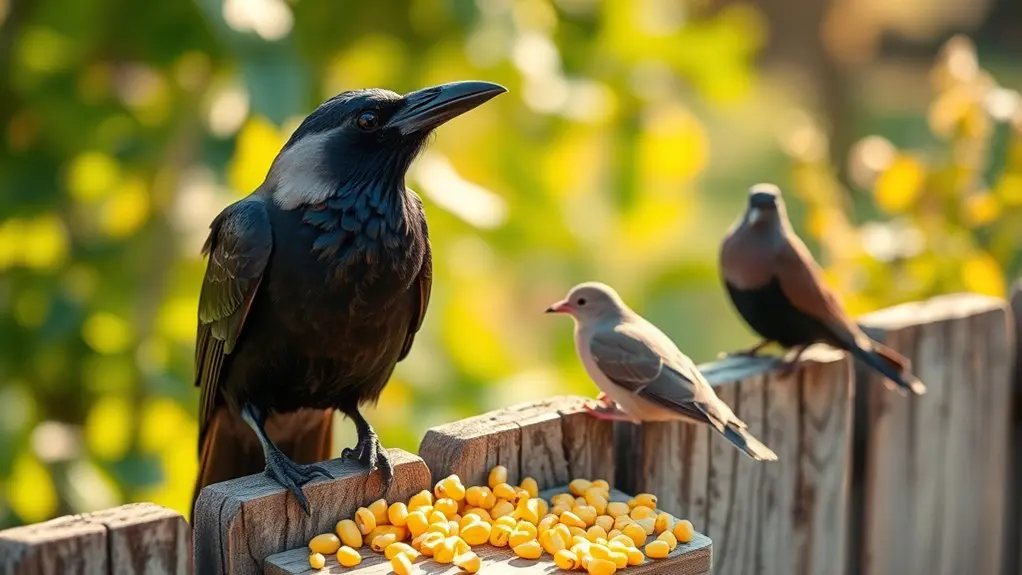
Although many birds enjoy a variety of foods, you’ll find that Blue Jays and Red-winged Blackbirds are especially drawn to corn kernels, particularly in winter when other options are scarce.
As a wild bird enthusiast, you’ll notice that cracked corn also attracts Dark-eyed Juncos and sparrows, who prefer to feed on the ground.
Nuthatches and chickadees usually favor tube feeders but won’t hesitate to eat corn from ground feeders if it’s available.
Offering cracked corn can provide essential carbohydrates and energy for these birds, especially during colder seasons or migration.
Why Birds Love Corn Kernels
Because corn kernels pack a high carbohydrate punch, birds rely on them as a quick energy boost, especially during chilly months or migration.
When you use smart bird feeding strategies, like offering cracked corn, you cater to corn kernel preferences since many birds find it easier to eat than whole kernels.
This not only helps a variety of species, including blue jays and cardinals, but also increases the chances of diverse visitors at your feeder.
If you’re into backyard birdwatching tips, adding corn kernels alongside other seeds can enrich your experience by attracting different birds.
Nutritional Benefits Of Corn For Birds
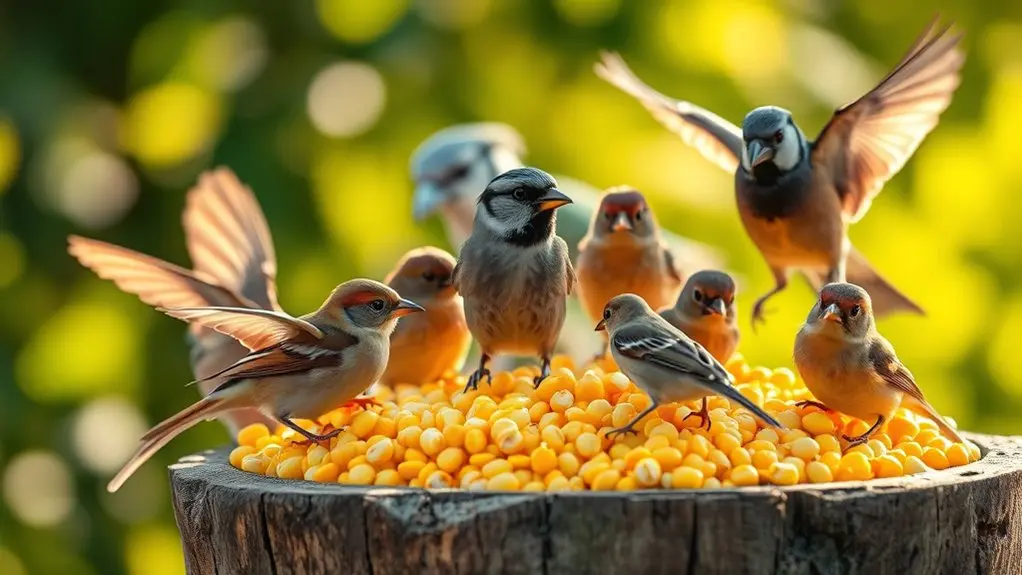
When you add corn kernels to your bird feeder, you provide birds with a quick source of energy thanks to their high carbohydrate content. This corn energy source fuels their daily activities and metabolism efficiently.
Adding corn kernels offers birds a fast energy boost to support their daily activities and metabolism.
Beyond energy, corn offers essential corn vitamin benefits, including B vitamins that support feather growth and overall health. The fiber in corn promotes corn digestive health, helping birds maintain a strong digestive system.
Plus, corn is low in fat and protein, making it a great complement to other seeds for a balanced diet.
Here’s why corn is such a valuable addition:
- Provides immediate energy for active birds
- Supports healthy feather and growth development
- Aids digestion and gut health
- Attracts a variety of bird species to your feeder
When Is Corn Safe For Birds To Eat?
If you want to feed corn to birds safely, you should offer it in moderation and preferably in cooked or dried form.
These preparation methods make the kernels easier for birds to digest and reduce the risk of digestive issues. Raw corn can be tougher for some birds, so sticking to cooked or dried kernels follows essential corn digestion tips.
Pay attention to corn feeding frequency. Feeding corn too often can unbalance their diet, so combine it with other seeds and grains for complete nutrition.
Also, always avoid moldy or spoiled corn to prevent health problems.
Risks Of Feeding Corn Kernels To Birds
You need to be careful when feeding corn kernels to birds. They can cause digestive issues, especially for species with sensitive stomachs.
Plus, corn doesn’t have all the essential nutrients birds need. So, if birds eat too much corn, it can lead to a harmful nutritional imbalance.
Knowing these risks can help you keep birds healthy and safe.
Digestive Issues Risk
Although corn kernels might seem like a harmless snack, feeding them to birds in large amounts can cause serious digestive issues. You should be aware that:
- Corn’s high starch content can lead to digestive blockages or upset stomachs.
- Birds don’t have the enzymes needed to break down corn efficiently, which causes nutrient malabsorption.
- Over time, birds might prefer corn over healthier foods, risking an imbalanced diet.
- Excess corn consumption increases obesity risks, possibly leading to fatty liver disease.
To protect birds’ health, you shouldn’t make corn a staple in their diet. Instead, offer it only occasionally as a treat. This way, you avoid serious digestive problems and help birds maintain a balanced, healthy lifestyle.
Nutritional Imbalance Concerns
Beyond digestive troubles, feeding birds too many corn kernels can create serious nutritional imbalances. Corn lacks essential vitamins and minerals, so relying on it exclusively leads to nutritional deficiencies, especially in protein and calcium.
This can harm birds’ growth, reproduction, and overall health. Plus, the high carbohydrate content in corn risks obesity if birds consume too much without a balanced diet.
Some species may even develop a preference for corn, reducing their interest in other nutritious foods.
To avoid these issues, you should adopt careful feeding strategies by offering corn in moderation and combining it with a variety of seeds, fruits, and vegetables.
This approach guarantees birds receive a balanced diet that supports their wellbeing.
How Do Birds Eat Corn Kernels In The Wild?
You’ll notice that birds use their natural foraging behaviors to find and eat corn kernels. They often go for types that are easier to handle.
Many species actually change their feeding habits with the seasons, relying more on corn during the colder months. When you understand these patterns, it’s easier to see how corn fits into their diet in the wild.
Natural Foraging Behaviors
When food becomes scarce, birds turn to corn kernels as a reliable energy source. In their natural habitats, you’ll notice distinct foraging techniques that showcase their bird behavior. Here’s how they do it:
- Ground-feeders like sparrows scratch soil to uncover hidden kernels.
- Strong-beaked species, such as cardinals, break kernels into smaller pieces to access nutrients.
- Blue jays and red-winged blackbirds actively seek out corn as a high-carb energy boost.
- Birds rely on corn especially during harsh weather and migration for survival.
These natural foraging behaviors highlight how birds adapt to their environment, using corn kernels to fuel essential activities like breeding and flying long distances.
Understanding this helps you appreciate their resilience and resourcefulness in the wild.
Preferred Corn Kernel Types
Although birds eat a variety of foods in the wild, many prefer whole corn kernels because they offer a rich source of carbohydrates and energy.
Different corn kernel varieties, like whole and cracked corn, influence how birds feed. Species such as blue jays use their strong beaks to crack open whole kernels, while smaller birds like sparrows favor cracked corn for easier consumption.
Understanding corn feeding methods helps you attract various birds. Scattering cracked corn can bring in a wider range of species.
To keep corn fresh and appealing, follow proper corn storage tips by keeping it dry and sealed to prevent mold or pests.
Seasonal Feeding Patterns
Many bird species rely heavily on corn kernels during colder months when their natural food sources dwindle. You’ll notice birds like Dark-eyed Juncos and Blue Jays adapting their behavior to cope with food scarcity by increasing corn consumption. Their behavioral adaptations boost foraging efficiency, especially on the ground where fallen kernels are easier to access.
Here’s what you should know about their seasonal feeding patterns:
- Birds peck at corn kernels to gain essential carbohydrates for energy during winter and migration.
- Sparrows and Red-winged Blackbirds rely more on corn as other foods vanish.
- Cracked corn is preferred since it’s simpler to eat and digest.
- These adaptations help birds survive harsh conditions by maximizing food intake.
How Corn Affects Birds And Crop Damage
Since you provide corn kernels in your fields, you’ll notice birds like Dark-eyed Juncos and Red-winged Blackbirds flocking to feed. Their increased presence can lead to crop damage, as these birds may consume not only the kernels but also emerging plants and seeds.
Observing bird behavior helps you understand their feeding patterns and implement effective bird feeding strategies to minimize harm. You’ll need crop protection methods, such as deterrents or designated feeding areas, to reduce losses and avoid repeated replanting.
While corn attracts various species, balancing bird feeding and crop safety requires careful management. By watching how birds interact with your crops, you can adapt your approach, protecting your harvest while supporting local wildlife.
Best Ways To Offer Corn To Backyard Birds
A handful of cracked corn can quickly attract a variety of backyard birds like Cardinals, Blue Jays, and Dark-eyed Juncos.
A handful of cracked corn attracts backyard favorites like Cardinals, Blue Jays, and Dark-eyed Juncos fast.
To make the most of your bird feeding techniques, follow these ground feeder tips:
- Use a ground feeder since many birds prefer picking corn off the ground.
- Offering a corn mix benefits you by combining cracked corn with other seeds to entice more species.
- Always choose clean, high-quality corn from trusted suppliers to keep birds healthy.
- Avoid feeding only corn; mix it with other seeds for a balanced diet and greater bird diversity.
Alternatives To Corn Kernels For Feeding Wild Birds
Although corn kernels are popular for feeding wild birds, you can attract a wider variety of species by offering alternatives like sunflower seeds, millet, and high-protein options such as peanuts and suet.
Embracing seed diversity benefits both birds and your backyard ecosystem by inviting more species with different dietary needs.
You can create homemade birdseed mixes using safflower seeds, dried fruits, and other nutritious ingredients to boost appeal and nutrition.
Incorporating these alternatives into your bird feeding strategies prevents birds from relying too much on corn and encourages a balanced diet.
Seasonal Changes In Bird Interest For Corn
You’ll notice that bird interest in corn shifts with the seasons. It’s especially noticeable when some species migrate south for the winter.
During the colder months, feeding patterns change quite a bit. For example, cracked corn can become more attractive to birds like juncos and sparrows.
Knowing these seasonal changes can really help you adjust your feeding strategy and get better results all year round.
Winter Bird Migration
When winter arrives, many bird species migrate south, so you’ll notice fewer birds around and less interest in corn as a food source.
Understanding migration patterns helps you anticipate these changes in bird behavior.
Some species, like Dark-eyed Juncos, stick around and rely on ground feeders offering corn for winter survival.
To support them, try these tips:
- Provide cracked corn at feeding stations to help sustain local birds.
- Offer a variety of seeds to attract diverse species during scarce months.
- Observe which birds visit and adjust your feed accordingly.
- Remember, corn alone won’t meet all nutritional needs, so supplement wisely.
Seasonal Feeding Patterns
Since bird populations shift throughout the year, you’ll notice changes in how much interest they show in corn. Migration patterns cause many species to head south, reducing the variety of birds visiting your feeders during winter feeding.
However, species adaptability shines through as dark-eyed juncos and sparrows stick around, often relying on cracked corn when other food sources are scarce. This seasonal feeding pattern means corn remains a valuable option in colder months, attracting birds that wouldn’t be present otherwise.
To keep a steady flow of visitors year-round, consider mixing seeds with corn. This blend caters to different species and their changing preferences, ensuring your feeders stay appealing despite the natural ebb and flow of bird populations throughout the seasons.
Corn Attraction Variability
Although bird interest in corn changes with the seasons, you can still attract a variety of species by adjusting your feeding strategy.
Understanding bird behavior changes helps you refine your corn feeding strategies to suit seasonal shifts.
Here’s how to adapt your backyard feeding tips for corn attraction variability:
- Offer cracked corn in winter to lure cardinals, blue jays, and sparrows seeking high-energy food.
- Mix corn with other seeds to extend feeder visits during colder months.
- Use ground feeders to attract chickadees and nuthatches when tube feeders aren’t their first choice.
- Recognize that finches prefer accessible cracked corn over specialized seed blends in winter.
How To Keep Birds Happy Without Hurting Your Garden
If you want to keep birds happy without harming your garden, providing dedicated feeders with seeds like sunflower and millet can attract a variety of species while protecting your plants. Incorporate bird friendly plants like native shrubs to offer natural food and cover.
Regular feeder maintenance keeps birds coming back and reduces garden damage. Use netting or row covers to safeguard vulnerable crops while letting birds enjoy feeders and nearby plants.
| Tip | Benefit |
|---|---|
| Bird friendly plants | Natural food and shelter |
| Feeder maintenance | Healthy visits, less garden harm |
| Garden protection | Protects crops, supports wildlife |
Debunking Myths About Feeding Corn To Birds
When you feed birds corn kernels, you might hear myths that it’s harmful or incomplete nutrition.
Let’s clear up these corn feeding myths to help you feed birds confidently. Corn is safe and offers energy, especially in cold months.
However, bird dietary misconceptions can lead to unnecessary worry. Here are four key corn safety tips:
Bird dietary myths can cause needless concern; follow these four essential corn safety tips for healthy feeding.
- Don’t rely solely on corn; birds need a varied diet for full nutrition.
- Avoid moldy or spoiled corn to prevent health issues.
- Introduce corn gradually to watch for adverse reactions.
- Offer different foods since some birds prefer seeds or fruits over corn.
Frequently Asked Questions
Can Baby Birds Digest Corn Kernels Safely?
Yes, baby birds can digest corn kernels safely if you prepare them right.
When feeding baby birds, you should cook or steam the kernels to soften them, which helps with baby bird digestion.
Offering small, soft pieces guarantees they get corn kernel nutrition without choking risks. You’ll want to avoid whole kernels since they’re too hard.
Always watch for any bad reactions when introducing new foods to their diet.
Do Birds Prefer Cooked or Raw Corn Kernels?
If birds had Yelp reviews, they’d give raw corn kernels five stars for that unbeatable crunch and nutritional value. Talk about a superfood snack!
Sure, cooked corn offers some benefits like easier digestion, but most birds prefer raw preferences when it comes to corn.
You’re basically serving a five-star buffet by mixing both, but skip the butter; birds aren’t fans of fancy seasoning.
Keep it simple, and they’ll flock to your feeder in no time!
How Does Corn Consumption Affect Bird Migration Patterns?
Corn consumption can change migration triggers by providing steady nutritional benefits that make birds less likely to leave early.
You’ll notice that when birds find reliable corn sources, their habitat preferences shift toward those areas.
Often, this causes them to stay longer during stopovers. This energy boost can delay migration timing, especially in winter, altering traditional routes and patterns as birds rely more on accessible corn than natural food sources.
Are There Specific Times of Day Birds Eat Corn Most?
You’ll notice birds prefer morning feeding and evening foraging when eating corn kernels since they’re most active then.
Seasonal habits play a big role too; during milder weather, birds are more likely to visit feeders multiple times a day.
Can Corn Kernels Help Rehabilitate Injured Wild Birds?
Yes, corn kernels can help rehabilitate injured wild birds by providing essential nutritional benefits like carbohydrates for energy.
You can use feeding strategies that include soft, easy-to-digest corn kernels to support recovery without stressing their injuries.
Incorporating corn into rehabilitation techniques attracts birds to feeders, encouraging them to eat and regain strength.
Just remember to balance corn with protein-rich foods to guarantee a complete diet during their healing process.
Conclusion
You might be surprised to learn that up to 70% of wild birds enjoy snacking on corn kernels, showing just how much they love this treat. While corn offers great nutrition, you’ll want to feed it carefully to keep birds safe and your garden healthy.
By understanding when and how to offer corn and exploring alternatives, you can keep your feathered friends happy without unintended risks. So, go ahead and share the love, but do it wisely!