
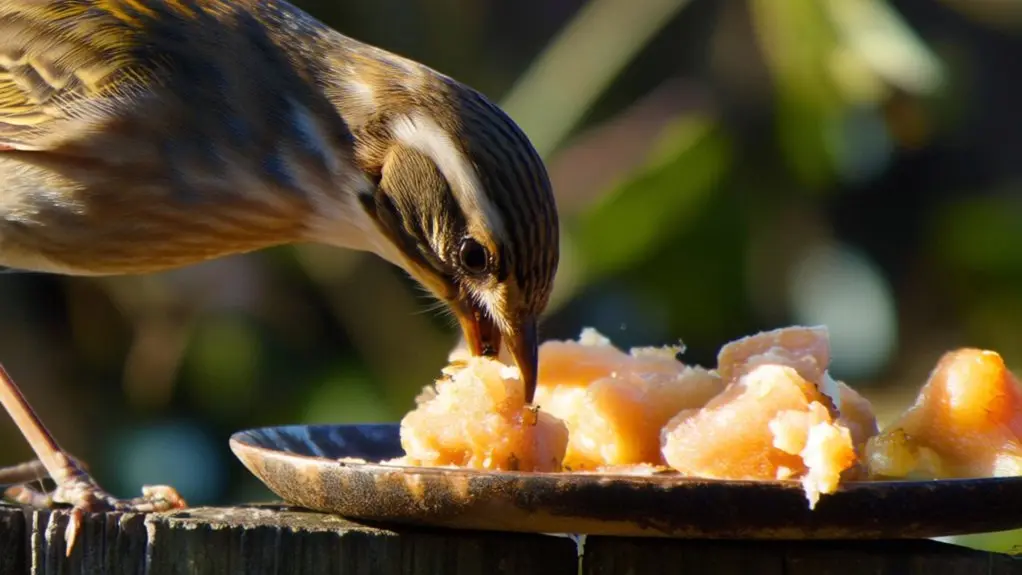
You can safely feed birds chicken fat if you render it properly, removing impurities and salt. Chicken fat offers valuable energy, especially during cold months when birds need quick, concentrated fuel. Unlike beef suet, it has more unsaturated fats but less stability, so storage and freshness matter.
Always store it in cool, airtight containers and avoid seasoned fats. Use it sparingly and refresh frequently to keep birds healthy. Exploring the details will help you provide the best care.
Why Birds Need Fat in Their Winter Diet
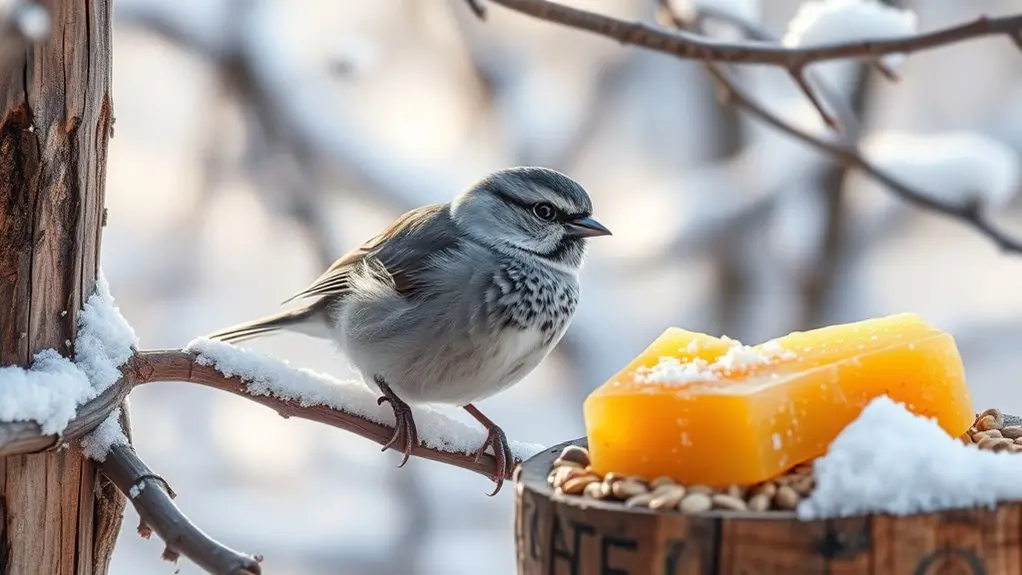
Although you mightn’t realize it, birds rely heavily on dietary fats to survive the cold winter months. Fats offer a concentrated energy source that birds metabolize quickly to maintain their body temperature.
During winter, their metabolic rates increase markedly, demanding more fuel to stay active and warm.
In winter, birds burn energy faster, needing extra fuel to keep warm and active.
In the wild, birds often scavenge animal fats from carcasses to meet these energy needs. Suet, a traditional bird food rich in fat, plays a critical role in supporting their survival through harsh conditions.
By providing essential calories, fats help birds endure low temperatures and sustain their heightened activity levels.
It’s pretty interesting when you think about it—understanding why birds need fat in their winter diet really highlights the importance of offering high-fat foods during colder seasons. So, if you’re feeding birds in winter, remember that a little extra fat goes a long way!
What Is Chicken Fat and How Does It Compare to Beef Suet
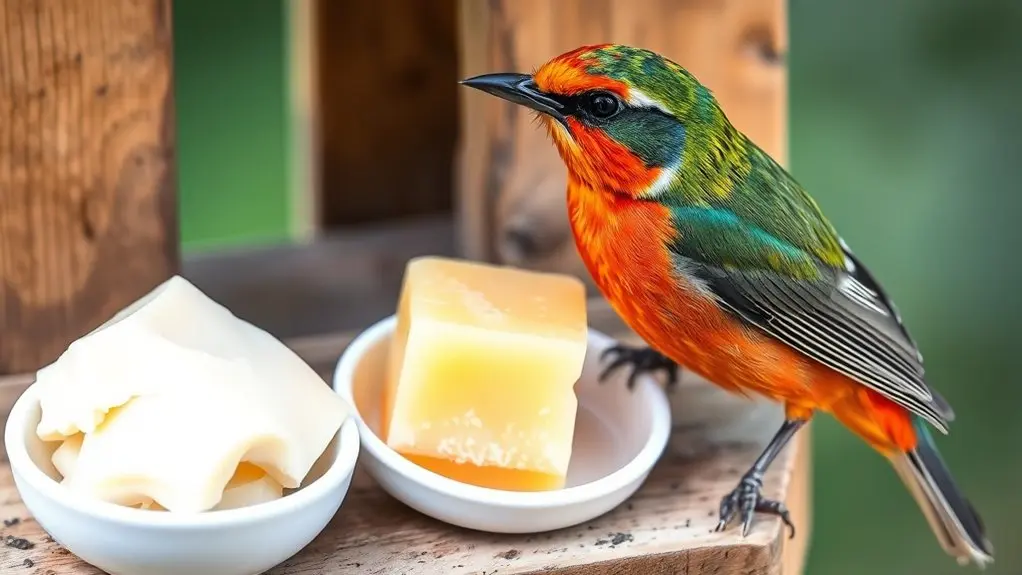
How does chicken fat stack up against traditional beef suet when feeding birds? Chicken fat, or schmaltz, is rendered from chicken and tends to have less saturated fat than beef suet, which is the hard fat near cattle kidneys. Understanding their differences helps you choose the right fat for bird feeding.
Beef suet melts around 110°F, making it stable and energy-rich. Chicken fat melts at a lower temperature, which means it can spoil quicker. So, if you’re worried about storage, that’s something to keep in mind.
When it comes to nutrition, chicken fat offers more unsaturated fats but has lower caloric density than beef suet. Beef suet provides dense energy, which is great for birds needing a quick calorie boost.
Also, chicken fat can contain impurities or additives if it’s not properly rendered. Beef suet tends to be purer and safer in comparison.
All in all, these differences explain why beef suet remains the preferred fat source for bird feeding. It’s stable, energy-rich, and reliable.
Is Chicken Fat Safe for Feeding Birds?
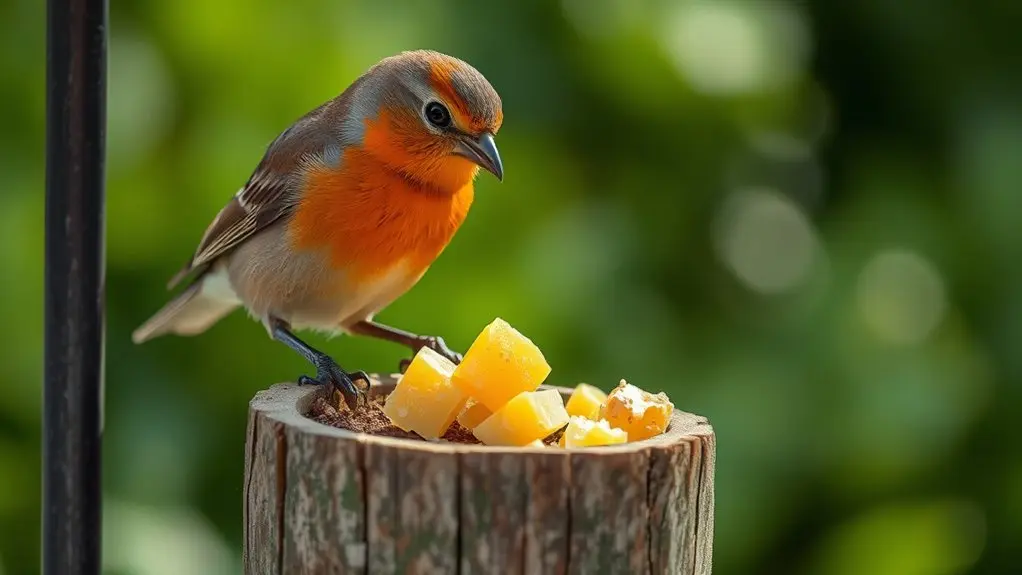
Because chicken fat melts at a lower temperature and can spoil quickly, you need to make sure it’s properly rendered and free from additives before offering it to birds.
Raw chicken fat may contain harmful impurities or bacteria, so rendering it eliminates these risks and makes the fat safer.
Its melting point, around 95°F, makes it prone to rancidity, especially in warm conditions. So, use it sparingly and store it properly.
Avoid salted or seasoned chicken fat, as additives can harm birds.
When feeding, provide only small amounts of well-rendered, unsalted chicken fat to prevent contamination of feathers and reduce health risks.
With proper preparation and moderation, chicken fat can be a safe occasional treat for wild birds.
Health and Safety Risks of Chicken Fat for Birds
You need to be careful when offering chicken fat to birds. Its low melting point means it can spoil easily and get on their feathers.
When the fat goes rancid, it can upset their digestive system and make their feathers less waterproof. This leaves them more exposed to the weather.
Plus, if the chicken fat isn’t rendered properly, it might contain impurities and bacteria, which can make birds sick or cause contamination.
Feather Waterproofing Concerns
Although chicken fat might seem harmless, it poses serious risks to birds by compromising their feather waterproofing. When chicken fat contaminates feathers, it prevents birds from shedding water effectively. This leaves them vulnerable to cold and hypothermia.
Birds can’t easily remove fats through grooming alone. Soap and water are necessary for proper cleaning. So, it’s important to pay attention to where the fat gets on them.
Focus especially on belly feathers and feet. Contact with grease in these areas severely disrupts waterproofing.
Also, sun exposure melts fats, which increases feather contamination. Losing waterproofing leads to a higher risk of hypothermia and starvation because the bird’s insulation is impaired.
Risks of Low Melting Points
Chicken fat’s low melting point, around 95°F, poses significant challenges for maintaining feather integrity in warm weather. When temperatures rise, chicken fat liquefies easily and spreads oils onto birds’ feathers. This messes with their waterproofing and leaves them vulnerable to cold and hypothermia.
You should also know that melted fat can drip onto surfaces, causing feather matting and skin irritation.
Plus, the greasy residue attracts pests and predators, which increases risks around feeding sites.
Because of these health and safety concerns, using chicken fat in warm conditions is problematic. If you want to protect visiting birds, consider alternatives with higher melting points. These won’t liquefy and contaminate feathers, so your birds stay safe and comfortable all year round.
Contamination and Rancidity Issues
When stored improperly, chicken fat can spoil rapidly, creating serious health risks for birds. Rancid fats produce harmful free radicals that lead to oxidative stress and tissue damage.
Also, contaminated or improperly rendered fat can harbor bacteria and mold, which increases the risk of illness.
You need to be especially cautious because exposure to sunlight and warm temperatures speeds up spoilage and contamination. To protect birds, consider these key points:
- Store chicken fat in a cool, dark place to prevent rancidity.
- Avoid feeding fat that smells off or looks discolored to prevent digestive problems.
- Check that chicken fat is properly rendered and uncontaminated to reduce bacterial risks.
Rendering Chicken Fat for Bird Feeding
To render chicken fat properly, start by melting it slowly over low heat. This helps separate the impurities and solids from the fat.
Once it’s melted, strain the liquid fat through some cheesecloth to catch any leftover bits.
After straining, let the fat cool down so it can solidify before you use it.
When it’s ready, store the rendered fat in airtight containers. Keeping it in the refrigerator or freezer will help it stay fresh and safe for your birds.
Rendering Process Steps
Although rendering chicken fat requires patience, you’ll find the process straightforward if you follow each step carefully. Rendering involves slowly melting the fat at low temperatures to separate impurities and solids. This ensures a clean product suitable for bird feeding.
Follow these key steps:
- Chop the chicken fat into small, uniform pieces. This helps promote even melting and prevents burning.
- Heat the fat gently over low heat. Let it melt slowly and release impurities without overheating.
- Once melted, get ready to strain the fat. Remove solids to achieve a smooth, pure fat that’s ideal for birds.
Mastering these steps guarantees high-quality rendered chicken fat that’s safe and nutritious for wild or backyard birds. It’s easier than you might think once you get the hang of it!
Straining And Cooling
Once you’ve gently melted the chicken fat and separated it from solids, the next step is straining and cooling to guarantee purity and longevity.
Strain the warm fat through cheesecloth or a fine sieve to remove any remaining impurities or solid bits. This step is vital to ensure the fat is clean and safe for bird consumption.
After straining, let the fat cool slightly before pouring it into molds or mixing it with other ingredients. Proper cooling allows the fat to solidify correctly, which helps maintain its quality and reduces the risk of spoilage.
Handling the fat carefully during these stages preserves its nutritional value and texture, making it an ideal, safe supplement for birds.
Safe Storage Methods
When you’ve strained and cooled the rendered chicken fat, proper storage becomes essential to preserve its quality and prevent spoilage. To guarantee the fat remains safe and nutritious for birds, follow these storage methods:
Pour the slightly cooled fat into clean, airtight containers to avoid contamination and moisture exposure. Store containers in the refrigerator if you plan to use the fat within a few weeks.
For longer storage, freeze the fat to maintain freshness for several months.
Make sure to regularly inspect the stored fat for any signs of rancidity or spoilage, such as off smells or discoloration. If you notice anything unusual, discard the fat to protect bird health.
Taking these simple steps will keep the fat safe and tasty for your feathered friends.
Ingredients to Mix With Chicken Fat Suet
To create a nutritious and appealing chicken fat suet, you should mix in ingredients like ground oats, corn flour, or dried seeds. These provide essential energy and texture for birds.
Adding dried fruits such as cranberries or raisins enhances flavor and supplies extra energy, supporting birds’ winter diets.
Including a small amount of crushed nuts like walnuts or pecans improves both texture and nutritional value. Just make sure these nuts are bird-safe to avoid any harm.
Stick to ingredients known to be safe for birds, and avoid any additives that could be toxic.
By combining chicken fat with these components, you produce a high-energy, attractive suet that encourages birds to feed and thrive during colder months.
This balanced mix meets their dietary needs effectively and safely. It’s a simple way to help your feathered friends stay healthy all winter long.
Storing and Serving Chicken Fat Suet
Although chicken fat suet offers excellent nutrition for birds, you need to store it properly to maintain its quality and safety. Improper storage can lead to rancidity, spoilage, and contamination, which are harmful to birds.
Follow these key guidelines to guarantee freshness:
- Store suet in an airtight container in the refrigerator or freezer and label it with the date to track freshness. Use it within 2-4 weeks.
- Keep the suet frozen until ready to serve. Thaw only small portions as needed to prevent spoilage.
- Reheat or soften frozen suet gently before serving, ensuring it remains solid and manageable. Avoid leaving melted suet exposed to deter pests and spoilage.
Safer Alternatives to Chicken Fat for Bird Suet
Since chicken fat can spoil quickly and pose risks to bird health, you should consider safer alternatives for making bird suet. Commercial suet cakes made from rendered beef or other high-quality animal fats with higher melting points offer greater stability and reduce rancidity risks.
Pure, minimally processed rendered fats like beef kidney suet are excellent choices because they maintain consistency in warmer weather and are less likely to harm birds. Avoid vegetable oils such as coconut or palm oil; their low melting points cause rapid melting and feather contamination.
You can also enhance suet mixtures by adding seeds, dried fruits, and nuts, which attract birds naturally without relying on potentially harmful chicken fat. Choosing properly rendered, high-quality animal fats ensures safety, longevity, and overall bird health.
How Often to Replace Chicken Fat Suet in Feeders
Choosing the right fat for your bird suet is only part of the care needed to keep birds healthy. You must replace chicken fat suet regularly to prevent spoilage and health risks.
Here’s how to maintain fresh feed:
Replace chicken fat every 1 to 2 weeks under normal conditions to avoid rancidity and mold growth. During warm months, swap the fat every 3 to 4 days since heat speeds up melting and spoilage.
Inspect the suet frequently for signs like melting, discoloration, unpleasant odors, or pest activity. These are clear signals that it’s time to refresh the feeder.
Frequently Asked Questions
Can Baby Birds Safely Consume Chicken Fat?
No, you shouldn’t feed baby birds chicken fat. Their digestive systems can’t handle high-fat foods, which may cause upset or harm.
It’s best to stick to species-appropriate, easily digestible foods. This way, you support their healthy growth and development.
Does Chicken Fat Attract Unwanted Pests or Predators?
Imagine shiny drops of chicken fat glistening, drawing curious rats and sneaky foxes near your feeder. Yes, it attracts pests and predators.
How Does Chicken Fat Impact Migratory Bird Species?
You should know chicken fat provides migratory birds quick energy but can spoil easily, causing health risks and deterring feeding.
Managing its use carefully prevents digestive issues, toxicity, and disruptions to their navigation during long flights. It’s all about balance when it comes to feeding birds on the move.
Can Chicken Fat Cause Allergic Reactions in Birds?
You might find chicken fat occasionally causes mild sensitivities in birds, especially if it’s processed or spoiled.
Always watch for signs like swelling or itching, and stop feeding it if any discomfort appears to keep your birds safe.
Better safe than sorry, right? Just keep an eye on your feathered friends when introducing anything new to their diet.
Is Chicken Fat Biodegradable in Outdoor Feeders?
Yes, chicken fat is biodegradable in outdoor feeders. You’ll find it breaks down naturally through sunlight, temperature, and microbes.
In warm, moist conditions, decomposition speeds up. Just be careful not to add too much because excess fat can go rancid and might harm soil and plants.
Conclusion
Now that you know the benefits and risks of feeding chicken fat to birds, you can make smarter choices for their health. Chicken fat can provide essential energy in winter, but it must be rendered properly and offered in moderation.
Is it worth risking their well-being when safer alternatives exist? Always prioritize clean, fresh suet and replace it regularly to keep your feathered friends thriving through the cold months. Your careful feeding makes all the difference.