
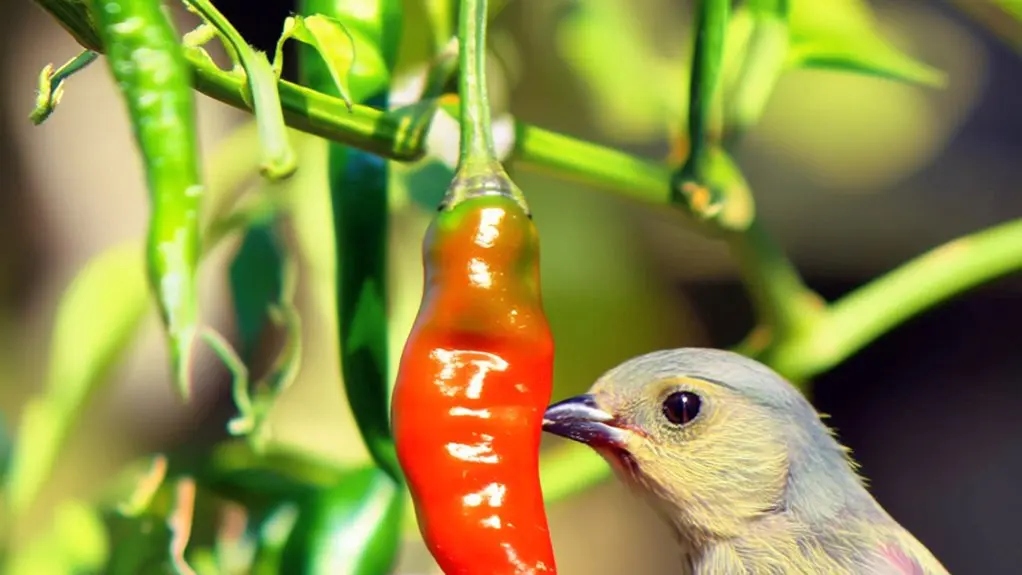
You can safely feed birds chili peppers because their unique TRPV1 receptors don’t trigger the burning pain mammals feel from capsaicin. Birds can handle high spice levels, up to 20,000 ppm, without any trouble. Their altered receptors and fewer taste buds make them less sensitive to heat.
This cool adaptation helps chili plants rely on birds to spread their seeds effectively. If you’re curious about how this works in detail and what it means for feeding birds and protecting seeds, there’s a lot more to discover.
Why Birds Can Eat Chili Peppers Without Pain
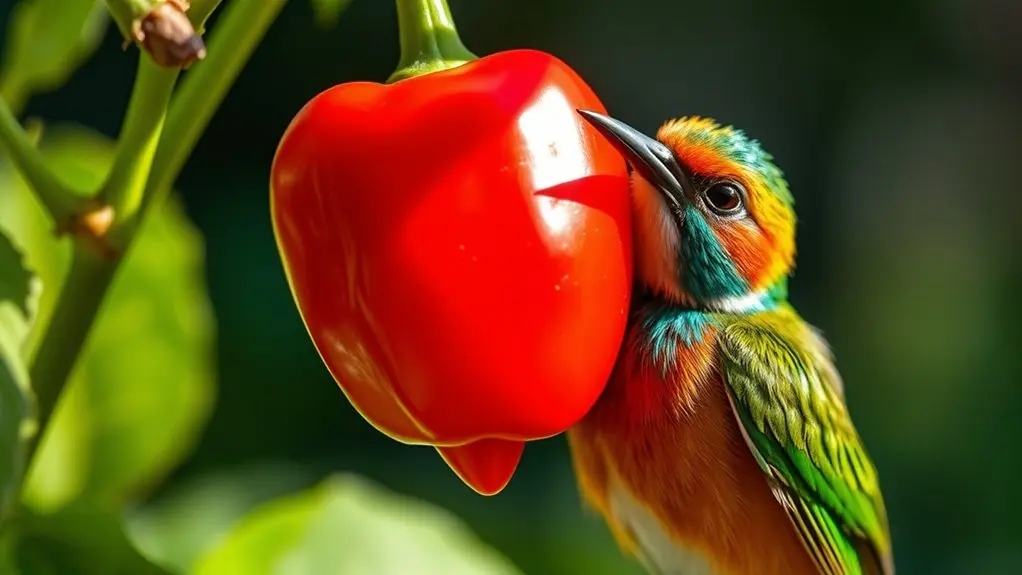
Although mammals experience intense burning from chili peppers, birds can eat them without pain because their TRPV1 receptors, the proteins that detect heat and pain, differ markedly from those in humans. Specifically, bird TRPV1 receptors share only about 68% similarity with human receptors.
Birds can eat chili peppers pain-free due to their unique TRPV1 receptors, unlike mammals.
This results in a structural configuration that doesn’t respond to capsaicin.
This means birds lack the pain sensation mammals feel when consuming spicy peppers. Plus, birds have fewer taste buds, which further reduces their ability to detect capsaicin’s heat.
Studies confirm that birds tolerate capsaicin concentrations up to 20,000 ppm without discomfort.
Those are levels that would cause significant pain in mammals.
How Capsaicin Affects Mammals and Birds Differently
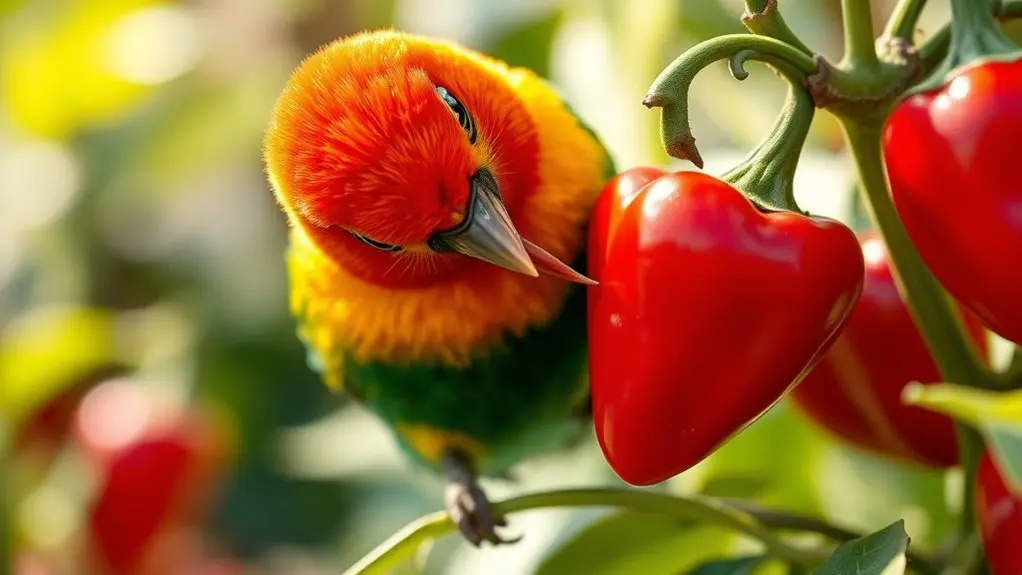
When you consume chili peppers, capsaicin binds to the TRPV1 receptors in your body, triggering a burning sensation and pain. But birds experience this compound differently because their TRPV1 receptors have distinct molecular differences.
In mammals, capsaicin activates these receptors extensively, causing pain and discomfort throughout the body. Birds’ TRPV1 receptors share only about 68% molecular similarity with those of mammals, which results in an altered receptor structure. This difference prevents activation of pain pathways in birds.
Although birds can detect capsaicin’s presence, they don’t perceive the burning sensation that mammals do. This physiological difference allows birds to consume high levels of capsaicin without any adverse effects, whereas mammals respond strongly with pain.
Do Birds Actually Perceive Heat From Capsaicin?
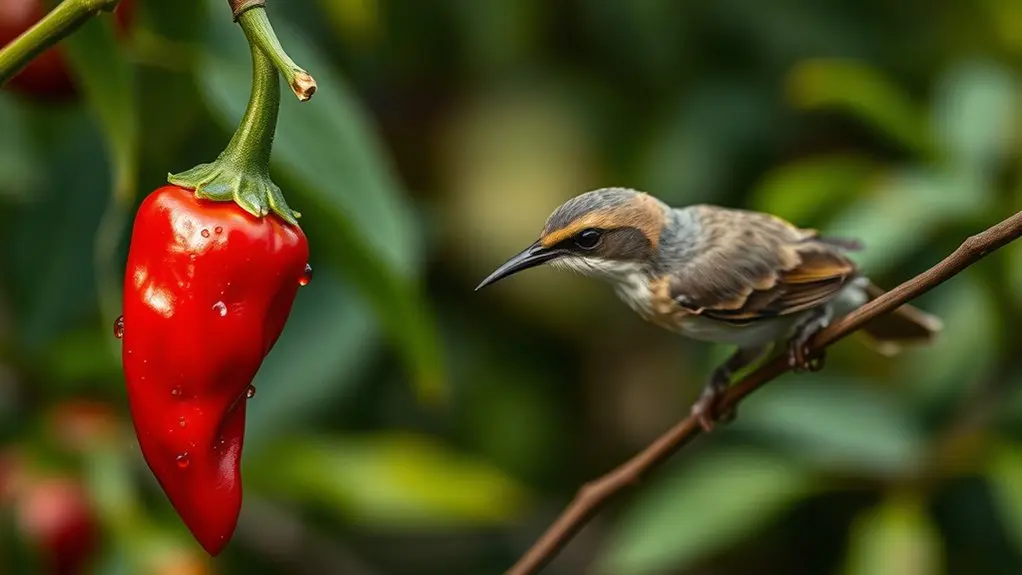
The molecular differences in birds’ TRPV1 receptors explain why they don’t experience the burning pain mammals feel from capsaicin. But this doesn’t mean birds completely miss the sensation of heat.
You should know birds possess a distinct version of this receptor, which reduces their sensitivity to capsaicin’s pain-inducing effects.
Research indicates that birds can detect capsaicin’s presence and may avoid consumption at very high Scoville Heat Units, around 500,000 or more. This shows they’ve some level of heat perception or aversion.
Unlike mammals, birds lack the specific pain receptors that trigger a burning sensation.
Yet their sensory system still allows them to recognize capsaicin’s intensity. So, while birds don’t feel the characteristic burning pain, they do perceive capsaicin’s spicy properties to some extent.
This influences their feeding behavior.
Why Chili Peppers Rely on Birds to Spread Their Seeds
You rely on birds to spread chili pepper seeds because birds aren’t bothered by capsaicin. This means they can eat the peppers and carry the seeds without any trouble.
Plus, the bright colors of ripe peppers have evolved specifically to catch birds’ attention. This helps the seeds get carried farther and have a better chance of growing.
It’s a win-win situation because the birds get food, and the chili peppers get their seeds dispersed.
Also, since mammals don’t like the heat, they leave the seeds alone, which means less seed loss and better chances for the plants to thrive.
Bird Seed Dispersal
Because birds are immune to capsaicin, chili peppers have evolved to rely on them for seed dispersal. When birds eat these peppers, they spread seeds efficiently through their digestive tracts. You should know these key reasons why birds are essential for this process:
First, birds consume peppers without discomfort, unlike mammals who are deterred by capsaicin’s heat. Also, the bright red color and ultraviolet reflectance signal ripeness, attracting birds visually.
Plus, seeds passing through birds’ digestive systems resist fungi better and show up to 370% higher germination rates.
On top of that, birds disperse seeds over long distances, promoting wider plant propagation.
Understanding this interaction highlights how chili peppers exploit bird physiology to guarantee successful reproduction and survival in their ecosystems. It’s pretty fascinating how nature works, right?
Pepper Plant Evolution
Although chili peppers produce capsaicin to deter mammals from consuming their seeds, they have evolved a unique relationship with birds, which remain unaffected by this compound. Birds’ immunity to capsaicin allows them to consume ripe peppers, attracted by their bright colors and ultraviolet signals, and disperse seeds effectively.
Passing through their digestive systems enhances seed germination and fungal resistance, optimizing plant reproduction. Wild peppers balance capsaicin levels to deter mammals while still enticing birds.
| Feature | Mammals | Birds |
|---|---|---|
| Capsaicin Sensitivity | Sensitive, repelled | Immune, unaffected |
| Seed Dispersal Role | Ineffective | Primary dispersers |
| Attraction to Peppers | Avoid bright, spicy fruits | Attracted by bright colors |
| Seed Germination Impact | Negative | Enhanced |
Health Benefits of Capsaicin and Peppers for Birds
While birds consume chili peppers without experiencing the burning sensation that humans do, they gain significant health benefits from capsaicin and the nutrients in these fruits. Capsaicin contains antioxidants that support birds’ immune systems, enhancing their ability to combat infections.
Additionally, hot peppers provide Vitamin A, which is essential for maintaining healthy feathers and sharp vision. Birds tolerate capsaicin well—some species handling up to 20,000 Scoville Heat Units without distress. The anti-inflammatory properties of capsaicin may also improve circulation and overall vitality.
When you feed birds chili peppers, consider these benefits:
- Immune system support through antioxidants
- Feather and vision health via Vitamin A
- High tolerance to capsaicin reducing discomfort
- Enhanced circulation and reduced inflammation
These factors collectively boost birds’ resilience and well-being. So, adding chili peppers to their diet can really make a positive difference!
How Hot Peppers Help Protect Bird Feeders From Squirrels
You can use capsaicin, the active compound in hot peppers, to keep squirrels away from bird feeders. It causes a burning sensation in their mouths, which they definitely don’t like.
The cool thing is, birds don’t have the receptors that sense capsaicin, so they can eat the chili-coated seeds without any discomfort. This makes it a great natural way to deter squirrels.
That said, applying the right amount of chili and keeping the coverage consistent can be a bit tricky when you’re actually trying to use it.
Capsaicin Deterrent Effect
How exactly do hot peppers protect bird feeders from squirrels? The key lies in capsaicin, the active compound in chili peppers. Capsaicin irritates mammals like squirrels, causing discomfort in their mouths and noses, but it doesn’t affect birds because they lack the specific pain receptors.
When you add hot pepper or capsaicin-treated seeds to your feeder, it creates a natural barrier against unwanted mammalian visitors.
Here’s how this works:
- Capsaicin triggers irritation in squirrels’ sensitive membranes.
- Squirrels experience discomfort and avoid the treated seeds.
- Birds remain unaffected and feed normally.
- This method reduces squirrel visits without using harmful chemicals.
This scientific approach lets you protect bird food effectively while making sure it’s safe for the birds themselves.
Practical Usage Challenges
Although hot peppers offer an effective natural deterrent against squirrels, their practical application in bird feeders presents several challenges. You need to balance the concentration of capsaicin carefully; too little won’t discourage squirrels, while too much may cause excessive irritation. This could lead to squirrels avoiding feeders entirely, which protects seed but might impact local wildlife behavior.
Applying chili pepper additives uniformly in seed coatings requires precision to guarantee consistent deterrence. Also, environmental factors like rain can degrade capsaicin’s effectiveness over time, reducing its protective benefits.
While incorporating hot peppers is cost-effective compared to physical barriers, maintaining the right dosage and reapplying treatments regularly is essential.
You have to consider these factors to optimize chili peppers as a natural squirrel-proofing strategy for bird feeders. It’s all about finding the right balance so you keep your seeds safe without causing unnecessary harm or disruption.
Challenges and Costs of Using Hot Pepper Bird Seed
Because factory-installed hot pepper bird seed contains high levels of capsaicin, it demands specialized manufacturing processes that substantially increase its cost. It often reaches around $228.85 for 50 pounds. You’ll face several challenges when using this seed.
First, there’s the high cost due to safety and potency controls. You also need to wear mandatory protective gear like rubber gloves to avoid skin and eye irritation.
Plus, the practical benefits are limited compared to the expense and handling risks.
Most bird enthusiasts choose alternative squirrel-proof feeders instead. These factors make hot pepper bird seed a less attractive option despite its effectiveness.
The financial burden and safety precautions often outweigh the advantages, restricting its widespread adoption.
If you consider using it, be prepared for both the monetary and handling complexities involved. It’s not just about buying the seed; it’s also about managing the risks that come with it.
What Research Says About Birds’ Preferences for Spicy Seeds
While the challenges and costs of using hot pepper bird seed are well documented, understanding birds’ actual preferences for spicy seeds requires looking at real research.
Studies show that seed consumption drops sharply once chili pepper spiciness goes beyond 500,000 Scoville Heat Units. In fact, many bird species refuse seeds at ghost pepper levels.
Northern Cardinals show the steepest decline in intake, which means they’ve a low tolerance for capsaicin.
Interestingly, some birds can actually detect capsaicin, which changes their feeding behavior when the spice gets really high. So, birds generally avoid extremely spicy peppers, suggesting they don’t tolerate much capsaicin.
This avoidance affects how seeds get spread and even influences how pepper plants evolve.
Pepper plants have to balance their spice level just right to get birds to spread their seeds without scaring them off. It’s all about finding that sweet spot between spicy and bird-friendly.
Practical Tips for Feeding Birds Without Deterring Them
If you want to incorporate chili peppers into bird feeding, start with mild varieties like jalapeños or habaneros in small quantities to prevent overwhelming the birds. Birds lack capsaicin pain receptors, so they tolerate spicy peppers, but excessive heat may deter them.
Start bird feeding with mild chili peppers like jalapeños to avoid overwhelming birds while benefiting from their spice tolerance.
To feed birds effectively without causing distress, use minimal amounts of chili flakes or powder mixed into seeds to deter pests without affecting birds. Avoid overly hot peppers that might trigger chemical or olfactory aversion.
Make sure to monitor bird behavior closely after introducing spicy feed to confirm they’re comfortable. Gradually increase chili content only if birds continue feeding normally.
Following these guidelines guarantees birds benefit from chili-enhanced feeding without disruption, keeping a balanced ecosystem at your feeder.
Frequently Asked Questions
Can All Bird Species Eat Chili Peppers Safely?
Not all bird species can safely eat chili peppers. You’ll find most tolerate capsaicin well, but some species show aversion or reduced feeding at high concentrations. This happens because of variations in their taste receptor sensitivity and evolutionary adaptations.
Do Chili Peppers Affect Bird Digestion or Metabolism?
Think of chili peppers as nature’s fire, sparking no harm within a bird’s engine. You’ll find their digestion and metabolism unaffected. Their unique biology processes capsaicin efficiently without irritation or disruption.
It even benefits their immunity. So, birds handle chili peppers quite well, with no trouble at all. Pretty cool, right?
Are There Any Risks if Birds Eat Too Many Chili Peppers?
Yes, if you let birds eat too many chili peppers, they might experience digestive irritation, reduced appetite, or nutritional imbalances.
Though birds don’t feel heat, excessive capsaicin can still cause stress and potential health complications. So, it’s best to offer chili peppers in moderation to keep them safe and healthy.
Can Chili Peppers Be Used in Homemade Bird Food Recipes?
You’d think chili peppers could set a birdhouse ablaze, but you can safely add small amounts to homemade bird food. Just finely chop and mix thoroughly to provide nutrients without overwhelming their delicate feeding experience.
It’s a neat way to spice things up for the birds without causing any harm. Plus, many birds aren’t bothered by the heat like we are, so it can actually help keep pests away from the food. Just remember, a little goes a long way!
How Do Birds React Behaviorally After Eating Chili Peppers?
You’ll notice birds typically show no distress after eating chili peppers, as they lack capsaicin pain receptors. But some species might reduce consumption or avoid extremely spicy seeds at high Scoville levels due to mild aversion.
It’s interesting because they don’t experience the heat like we do. So, while humans might shy away, birds often keep eating without any fuss.
Conclusion
You can feed birds chili peppers without worry because they don’t feel the heat like mammals do. Birds help disperse pepper seeds, which benefits both species. Plus, capsaicin offers health advantages to birds and helps keep pests like squirrels away from feeders.
However, there are some challenges to consider, like potential costs and seed preferences. By understanding these factors, you can provide nutritious and enjoyable food for birds while protecting your feeders.
It’s all about balancing care, science, and practicality in a way that works for you and the birds.