
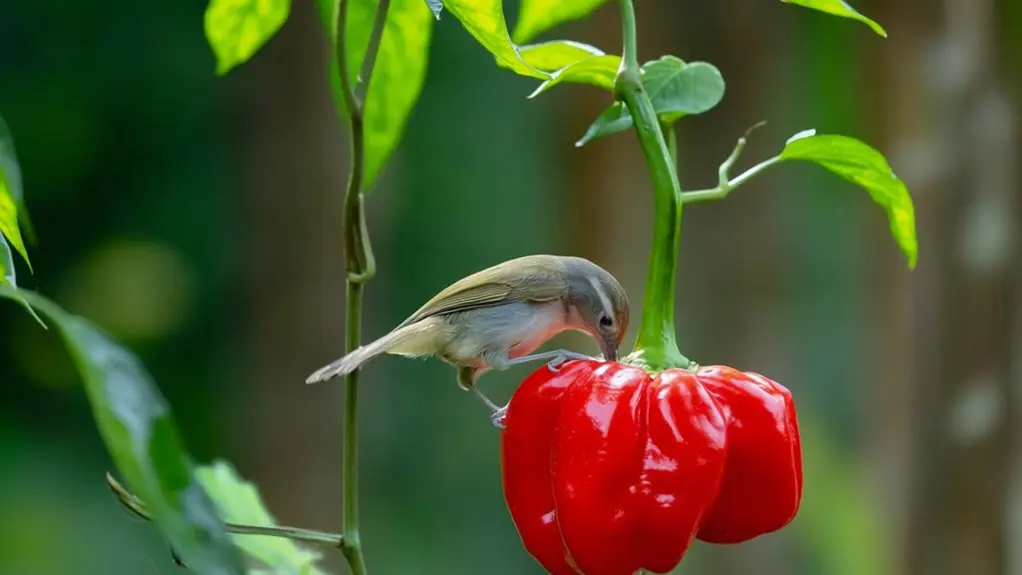
You can safely offer chili peppers to many birds because they lack the pain receptors mammals have. So, they don’t feel the heat and can enjoy the fruit without discomfort. Chili peppers also provide birds with essential nutrients like Vitamin A and antioxidants.
These nutrients support their health and help with seed dispersal. However, tolerance to spicy seeds varies by species. Some birds might not like extremely hot peppers, which can repel them.
Knowing these details can help you feed birds better and protect your feeders at the same time. It’s all about finding the right balance for the birds you want to attract.
How Capsaicin Affects Mammals and Why Birds Tolerate It
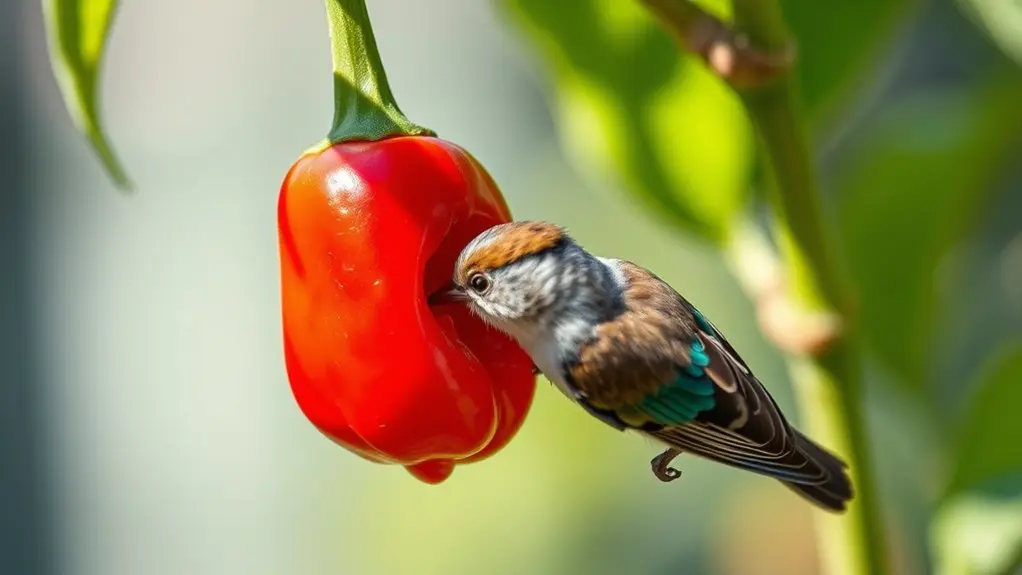
Although capsaicin causes a burning sensation in mammals by activating specific pain receptors, birds remain unaffected because they lack the receptor responsible for detecting this heat.
Capsaicin burns mammals, but birds feel no heat due to missing pain receptors.
Mammals possess a vanilloid receptor that capsaicin binds to, triggering a pain response and discomfort, which leads to avoidance behavior.
Birds, however, have a modified version of this receptor gene that doesn’t activate when exposed to capsaicin, making them insensitive to the spicy compound. This difference allows you, as a bird, to eat chili peppers without experiencing pain.
While mammals avoid consuming spicy seeds, birds can safely ingest and disperse them.
Remarkably, research shows that extremely high capsaicin concentrations, around one million Scoville units, can deter birds, suggesting limited sensitivity only at intense spice levels. So, birds pretty much enjoy their spicy snacks without much trouble!
Evolution of Chili Peppers and Their Relationship With Birds
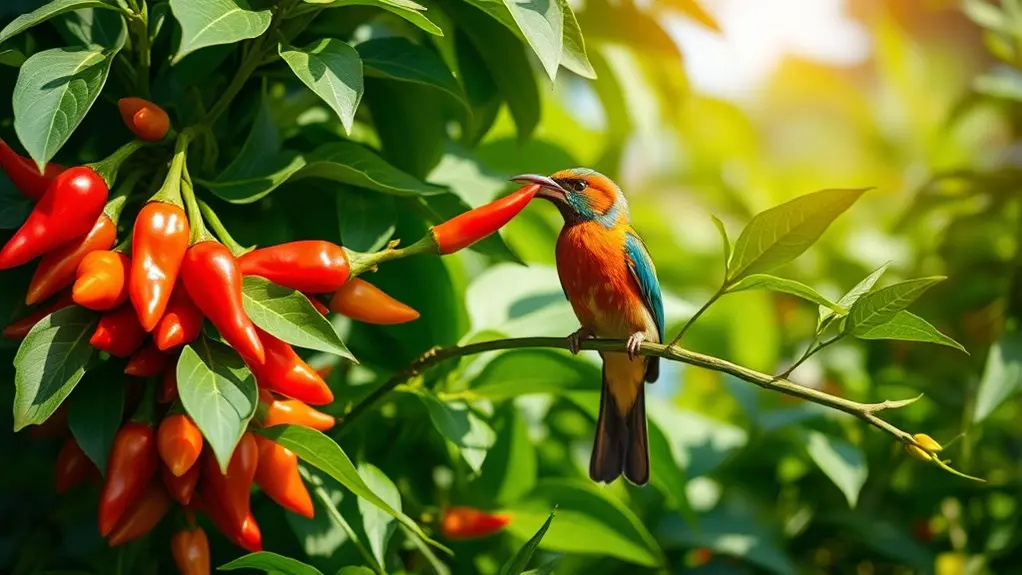
Understanding why birds tolerate capsaicin leads directly to the evolutionary strategies of chili peppers. Capsaicin acts as a chemical defense, deterring mammals that would destroy seeds during consumption.
Birds, however, remain unaffected by capsaicin’s heat, allowing them to consume ripe peppers and disperse seeds effectively.
You’ll notice wild chili peppers produce moderate capsaicin levels, balancing deterrence against mammals with attractiveness to birds. Additionally, ripe peppers display red and ultraviolet signals specifically evolved to catch birds’ attention, enhancing seed dispersal.
Birds can tolerate capsaicin concentrations up to 1 million Scoville Heat Units, yet they tend to avoid unripe or excessively spicy peppers.
This way, only mature seeds get spread. It’s a win-win for both the plants and the birds.
This mutualistic relationship reflects a finely tuned evolutionary adaptation benefiting both chili plants and avian dispersers.
Nutritional and Health Benefits of Chili Peppers for Birds
You’ll find that chili peppers provide birds with essential Vitamin A. This vitamin plays a crucial role in keeping their immune system strong and supporting their overall health.
Plus, the antioxidants found in chili peppers help fight off oxidative stress. This means birds can boost their disease resistance.
Vitamin A Benefits
Three key benefits of Vitamin A in chili peppers make them particularly valuable to birds. First, Vitamin A supports healthy vision and skin, which are essential for survival and interaction.
Second, it maintains mucous membranes, enhancing respiratory health. Third, it contributes to the bright coloration of feathers through its carotenoid content. This improves visual appeal and signals fitness.
| Benefit | Effect on Birds |
|---|---|
| Vision support | Maintains healthy eyesight |
| Skin health | Promotes skin integrity |
| Respiratory health | Strengthens mucous membranes |
| Feather coloration | Enhances plumage brightness |
| Immune function | Supports overall immune response |
Antioxidant Properties
Beyond supporting vision and feather health through Vitamin A, chili peppers also provide significant antioxidant benefits that enhance avian well-being. The antioxidants in chili peppers help reduce oxidative stress by neutralizing free radicals, thereby protecting cells from damage.
This reduction in oxidative stress contributes to improved overall health and is crucial in birds. By incorporating chili peppers into their diet, birds can experience enhanced feather quality and plumage shine, reflecting their improved physiological condition.
While antioxidants support cellular health, they don’t directly influence immune responses, which will be discussed separately. Including chili peppers as a dietary supplement offers a valuable source of bioactive compounds that promote longevity and resilience in avian species.
You should consider these benefits when evaluating chili peppers as part of a balanced nutritional plan for your birds.
Immunity Support
How exactly do chili peppers support immunity in birds? Chili peppers are rich in Vitamin A, which is essential for maintaining healthy feathers, skin, and immune function. This vitamin boosts birds’ ability to resist infections by supporting mucous membranes and cellular repair.
On top of that, chili peppers contain antioxidants that protect cells from oxidative damage, which helps strengthen immune responses. Birds eating chili peppers may also see improvements in their vision and reproductive health thanks to these nutrients.
Adding chili peppers to their diet can really elevate their overall vitality and disease resistance, much like what we see in humans. By providing essential nutrients and bioactive compounds, chili peppers help build a stronger immune system.
This makes birds better equipped to handle environmental stressors and fight off pathogens.
How Different Bird Species Vary in Chili Heat Tolerance
Although many bird species consume chili seeds, their tolerance to capsaicin, the compound responsible for heat, varies widely. Some birds, like the Northern Cardinal, reduce seed intake as Scoville heat increases. On the other hand, birds such as the Micronesian Starling show significant tolerance and actively disperse seeds.
Research reveals species-specific sensitivity. Mild to moderate spicy peppers are generally accepted, but extremely hot varieties like ghost peppers are avoided. Understanding these differences helps explain birds’ ecological roles in chili seed dispersal.
| Bird Species | Heat Tolerance Level | Behavior with Spicy Seeds |
|---|---|---|
| Northern Cardinal | Low | Avoids high-heat seeds |
| Micronesian Starling | High | Disperses seeds despite spiciness |
| General Wild Birds | Moderate | Accept mild/moderate heat |
Do Spicy Seeds Really Keep Squirrels and Pests Away?
You’ll find that capsaicin irritates squirrels’ mouths, which effectively keeps them from munching on bird seed. The good news is, birds don’t seem to mind the heat at all.
That said, using spicy seeds isn’t always straightforward. You’ve got to be careful with the heat level — too much might end up turning birds away too.
Because of this, it’s a good idea to think about other ways to keep squirrels at bay along with using hot seeds.
Capsaicin’s Effect On Squirrels
When squirrels encounter bird seed coated with capsaicin, the compound responsible for the spicy sensation, they often experience irritation that discourages feeding. Capsaicin activates sensory neurons causing a burning feeling, which squirrels instinctively avoid.
Research shows that hot pepper coatings reduce squirrel visits and seed consumption at feeders. However, the effectiveness varies and depends on factors like hunger level. So, it’s not always a guaranteed fix.
Key points to contemplate include:
- Capsaicin irritates squirrels and other mammals, deterring them from eating treated seeds.
- Squirrels can taste and learn to avoid spicy seeds after initial exposure.
- Hot pepper coatings have been demonstrated to reduce feeder damage.
Some squirrels may still nibble when food is scarce. Also, excessive spiciness risks deterring certain bird species as well.
Practical Challenges Of Hot Seed
While hot seed products promise a chemical deterrent against squirrels and pests, their practical application raises significant challenges. You’ll find that seeds coated with high capsaicin levels cost around $228.85 for 50 pounds, which limits their accessibility for most bird enthusiasts. Handling these spicy seeds requires rubber gloves and careful storage to avoid eye irritation or accidental ingestion.
Despite these precautions, squirrels often bypass this barrier, reducing the treatment’s effectiveness. Plus, the intense spiciness can repel not only pests but also birds, which means fewer visits to your feeder and less seed dispersal.
When you weigh the high cost, safety concerns, and limited efficacy, traditional physical barriers and squirrel-proof feeders generally prove more reliable and economical for protecting bird feeders.
Alternative Squirrel Deterrents
Considering the drawbacks of hot seed coatings, exploring alternative squirrel deterrents becomes necessary for effective bird feeder protection. While spicy seeds contain capsaicin to irritate squirrels’ mouths, their effectiveness is limited by squirrels’ hunger tolerance and the need for frequent reapplication.
Physical barriers offer a more reliable solution. You can consider these alternatives:
- Squirrel-proof feeders designed with weight-sensitive mechanisms
- Baffles installed above or below feeders to block access
- Wire cages surrounding feeders allowing only small birds inside
- Motion-activated sprinklers or noise devices to startle pests
- Regular feeder maintenance to minimize spilled seeds attracting squirrels
These methods provide consistent exclusion without the mess or cost associated with hot pepper seed mixes. They’re scientifically sound choices for deterring squirrels and protecting your birdseed.
Using Chili Peppers Safely in Your Bird Feeders
Although chili peppers can effectively deter mammals from bird feeders, you need to handle them carefully to protect the birds themselves. Avoid using fresh or raw chili peppers directly, as their high capsaicin concentration can cause discomfort or harm to birds.
Instead, opt for commercially prepared seed mixes coated with capsaicin extracts in specialized facilities. This ensures the chili’s deterrent properties don’t negatively affect avian species. These processed products minimize the risk of birds ingesting excessive capsaicin while still keeping mammals like squirrels away.
Using untreated or pure chili peppers can deter birds from feeding or cause adverse reactions.
Alternatives to Chili for Protecting Bird Feeders From Squirrels
Chili peppers offer a chemical approach to deterring squirrels, but you can also protect bird feeders using physical methods that don’t involve spicy additives. These alternatives rely on mechanical barriers and feeder design to prevent squirrel access effectively.
Consider these strategies: use squirrel-proof feeders designed to block entry without relying on deterrents. You can also install baffles or cages around feeders to create insurmountable physical obstacles.
Mount feeders on poles with smooth or metal surfaces to reduce squirrels’ grip.
Another trick is to employ weighted or spring-loaded feeders that close off when squirrels attempt to cling or jump.
Plus, placing feeders away from trees or other launching points helps limit squirrel reach.
Using these methods gives you a cleaner, more reliable way to protect bird food from squirrels without introducing potentially irritating substances.
Tips for Choosing the Best Squirrel-Resistant Bird Feeders
When selecting a squirrel-resistant bird feeder, you should prioritize designs that use mechanical barriers like weighted perches or metal cages. These effectively block squirrels without harming the birds.
Choose feeders with metal or durable plastic cages around seed compartments to physically keep squirrels out.
Opt for feeders with sturdy metal or durable plastic cages to effectively block squirrels from accessing the seeds.
Also, consider feeders that use spicy, capsaicin-coated seed. This can further deter squirrels while still being safe for birds. It’s a smart way to keep those pesky critters away.
Make sure to position your feeder away from trees or structures, so squirrels don’t have easy jumping access.
Plus, regular cleaning and maintenance are key. This helps your feeder’s mechanical parts work properly and stops squirrels from sneaking in.
By combining these features and placing your feeder thoughtfully, you can boost its resistance to squirrels.
At the same time, you’ll create a safe and welcoming feeding spot for your feathered friends.
Frequently Asked Questions
Can Chili Peppers Affect a Bird’s Digestion or Gut Health?
Yes, chili peppers can stimulate your bird’s digestive system, potentially aiding digestion without causing burning sensations. Although some evidence suggests possible stomach discomfort, capsaicin may also offer antioxidant benefits.
That said, more research is needed to confirm the effects on gut health. So, while there could be some perks, it’s good to keep an eye on how your bird reacts.
Are There Any Bird Species That Avoid Chili Peppers Entirely?
Do some bird species avoid chili peppers entirely? Yes, a few pigeons and thrushes do. This is likely due to sensitive taste receptors or their dietary preferences.
But most birds tolerate or even enjoy chilies unless the spice level is extremely high. So, unless the chili is super spicy, many birds won’t mind eating them.
How Should Chili Peppers Be Prepared Before Feeding Birds?
You should thoroughly dry or cook chili peppers before feeding them to birds. Removing stems and seeds helps reduce the heat, making them safer for the birds to eat.
It’s best to cut the peppers into small pieces so the birds can easily handle them. Avoid adding salt or any spices because those aren’t good for birds. Also, make sure the peppers are pesticide-free to keep the birds safe and healthy.
Can Chili Peppers Attract Unwanted Wildlife Besides Squirrels?
If you notice raccoon visits increasing near feeders, chili peppers likely attract unwanted wildlife besides squirrels. Raccoons actually consume chilies for territorial cues, which is pretty interesting.
Do Chili Peppers Impact Bird Behavior or Mating Rituals?
You won’t find evidence that chili peppers impact bird mating rituals directly. Instead, peppers influence feeding behavior and seed dispersal. Any energy boost from nutrients may indirectly support reproductive success without altering mating behaviors specifically.
Conclusion
Think of chili peppers as nature’s fiery gatekeepers. While their capsaicin burns mammals, birds glide through unscathed, evolving in harmony with these spicy fruits. This unique interaction not only benefits birds nutritionally but also helps you protect feeders from pests.
By understanding these dynamics and choosing safe, squirrel-resistant feeders, you create a balanced ecosystem. The heat of chili peppers acts as a natural shield, preserving the delicate dance between birds and their environment. It’s a simple way to keep your garden thriving and your feathered visitors happy.