
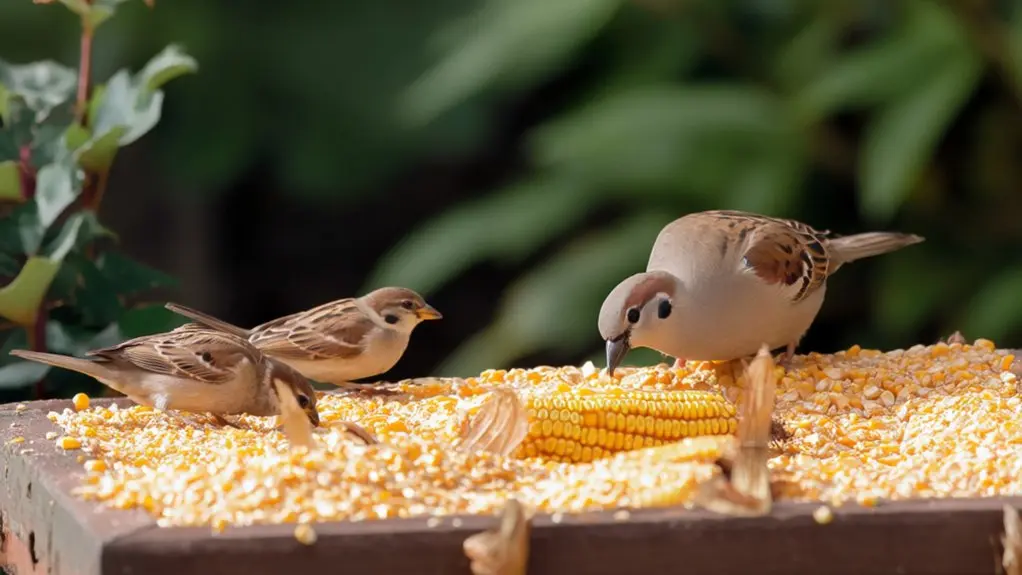
You can safely feed cracked corn to many wild birds and backyard chickens as a high-energy treat that supports their natural diets when given in moderation. It’s easy for birds like doves, sparrows, and game birds to eat, providing quick carbohydrates and boosting energy.
Just make sure to store it properly to avoid mold and spoilage, and balance it with other nutritious foods to keep birds healthy. Keep exploring to find out how to feed cracked corn the right way.
What Is Cracked Corn And Why Do Birds Like It?
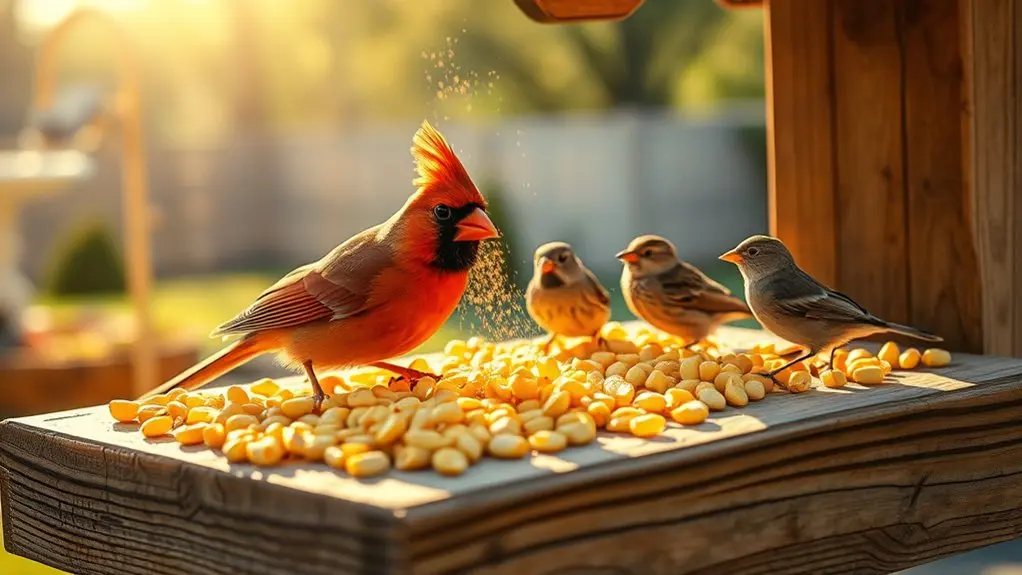
Cracked corn, made by breaking whole dried corn kernels into smaller pieces, offers birds an easy-to-eat and energy-rich food source.
When you feed cracked corn, you provide birds with a high-carbohydrate snack that quickly boosts their energy.
This supplement complements their natural diet and encourages foraging behaviors, keeping them active and engaged.
While cracked corn has good nutritional value, it’s important to offer it in moderation to prevent nutritional imbalances.
You may notice some birds kicking out cracked corn from feeders, but many species appreciate its accessibility and energy content.
Which Birds Eat Cracked Corn?
Wondering which birds are most likely to visit your feeder for a snack? Cracked corn attracts a variety of wild birds, offering an energy-rich, supplemental food source that benefits their diet.
Cracked corn draws many wild birds, providing a nutritious, energy-packed treat to enhance their diet.
Here are four common birds you’ll see enjoying cracked corn:
- Doves – These gentle birds love cracked corn and are frequent visitors during backyard birdwatching.
- Jays – Known for their boldness, jays appreciate the high carbohydrate content.
- Sparrows – Ground-feeding sparrows easily pick cracked corn from the ground.
- Game Birds – Quails and pheasants rely on cracked corn as part of their diet.
Feeding cracked corn can boost your enjoyment of backyard birdwatching, but remember to offer it in moderation to avoid dietary imbalances among birds.
Is Cracked Corn Safe For Wild Birds?
Many wild birds enjoy nibbling on cracked corn, especially when temperatures drop and energy needs rise. Cracked corn provides wild birds with a good source of carbohydrates and energy, making it a valuable food during colder months.
However, feeding cracked corn exclusively can cause nutritional imbalances since it lacks essential vitamins and minerals. To keep wild birds healthy, offer cracked corn in moderation and combine it with a mixed seed diet that includes sunflower seeds, millet, and other nutritious options.
Always make sure the cracked corn you provide is fresh and free from spoilage or mold, as contaminated corn can harm wild birds.
Is Cracked Corn Safe For Backyard Chickens?
How much cracked corn should you feed your backyard chickens? You should limit cracked corn to no more than 10% of their daily diet to maintain nutritional balance. Here’s why:
- Cracked corn provides quick energy, helping your backyard chickens stay active, especially in colder weather.
- It contains about 9.5% protein but lacks essential vitamins and minerals, so it can’t replace balanced feed.
- Feeding cracked corn can enhance egg yolk color thanks to its carotenoid content.
- Overfeeding may cause obesity and reduce egg production, so moderation is key.
Nutritional Benefits Of Cracked Corn For Birds
Although cracked corn isn’t a complete food, it offers valuable nutritional benefits for birds by providing a quick source of energy and easily digestible carbohydrates.
You’ll find cracked corn supplies about 9.5% protein, which helps supplement birds’ diets when given in moderation.
It’s easier for smaller birds to digest than whole corn, making it a practical choice to support their activity levels, especially in colder months. Offering cracked corn also encourages natural foraging behavior, enriching their feeding experience.
However, you should limit cracked corn to no more than 10% of their diet to maintain a balanced diet and avoid nutritional imbalances.
Whole Corn Vs Cracked Corn: Which Should You Feed?
When deciding between whole corn and cracked corn for your birds, consider their size and digestive abilities. Here’s a quick guide to help you choose:
- Digestibility: Cracked corn is easier to digest, perfect for smaller or younger birds.
- Nutritional Retention: Whole corn retains more nutrients, benefiting adult birds that can handle it with grit.
- Feeding Preference: Birds often prefer cracked corn since smaller pieces are easier to pick up.
- Energy Source: Both provide quick energy, but cracked corn is especially useful in colder months for extra warmth.
How Much Cracked Corn Should You Feed Birds?
Feeding cracked corn to birds can be a great way to supplement their diet, but you’ll want to keep the amount in check. Limit cracked corn to no more than 10% of their daily intake to avoid nutritional imbalances.
Overfeeding can cause health issues like obesity, so offering cracked corn in limited quantities is key. Always monitor consumption to adjust feeding practices and guarantee birds maintain a balanced diet.
Spread the cracked corn in small amounts to reduce spoilage and contamination risks, especially in humid conditions. Remove any uneaten cracked corn within 24 hours to keep it fresh and safe.
When Is The Best Time To Offer Cracked Corn?
Why choose a specific time to offer cracked corn? Timing matters because it maximizes the benefits for birds while preventing nutritional imbalances.
Here’s when you should offer cracked corn:
Late afternoon is the best time to provide cracked corn. It gives birds an energy source to last overnight.
In colder months, feed cracked corn before roosting to help birds generate natural heat.
Scatter cracked corn around feeding areas to encourage natural foraging behavior and make feeding more engaging.
Always offer cracked corn in moderation, no more than 10% of their diet, to avoid nutritional imbalances.
How To Store Cracked Corn To Keep It Fresh And Safe
To keep cracked corn fresh and safe, it’s best to store it in airtight containers. These help block moisture and keep pests out.
You’ll want to find a cool, dry spot for storage because that helps prevent mold and spoilage.
Also, try to avoid using plastic bags since they can trap condensation, which isn’t good for the corn.
It’s a good idea to check your corn regularly for any signs of damage or spoilage, just to be on the safe side.
Proper Storage Containers
Although cracked corn is a sturdy feed, you’ll want to store it properly to keep it fresh and safe. Choosing the right storage containers plays a vital role in preventing moisture and mold growth, which can compromise safety.
Here’s how to handle your cracked corn:
- Use airtight storage containers to block moisture and reduce the risk of mold growth.
- Opt for opaque or breathable containers to protect cracked corn from light exposure, preserving freshness.
- Store containers in a cool, dry place to minimize spoilage and maintain quality.
- Regularly inspect the cracked corn for off smells or visible mold, and discard any spoiled portions immediately.
Following these tips guarantees your cracked corn stays fresh, safe, and ready for your birds.
Moisture Prevention Tips
Since moisture can quickly ruin your cracked corn, you need to store it in a cool, dry place and use airtight containers that keep humidity and pests out.
Moisture buildup promotes spoilage and mold growth, which not only reduces quality but can be harmful to birds.
Avoid non-breathable plastic bags, as condensation inside them encourages moisture buildup and accelerates spoilage.
Instead, choose well-sealed storage containers designed to block humidity.
To further maintain quality, consider adding desiccants or moisture-absorbing packets inside these containers.
Regularly inspect your cracked corn for any musty odors or signs of spoilage and discard contaminated portions immediately.
Following these moisture prevention tips will help you keep cracked corn fresh, safe, and nutritious for your birds.
Avoiding Mold Growth
When you store cracked corn, keeping it in a cool, dry place with airtight containers is essential to prevent mold growth and spoilage. To keep your cracked corn fresh and safe, follow these steps:
- Use airtight containers to avoid moisture buildup that leads to mold growth.
- Regularly check your cracked corn for musty odors or visible mold, and discard any spoiled portions right away.
- Avoid non-breathable plastic bags since they trap moisture and encourage spoilage.
- Spread small amounts of cracked corn in clean feeding areas to prevent contamination and reduce mold risks.
Also, clean feeding areas regularly to remove leftover corn and debris. This helps keep a healthy environment for birds and keeps your cracked corn mold-free.
What Are The Risks Of Feeding Too Much Cracked Corn?
You’ve got to be careful not to feed birds too much cracked corn. It might seem like a tasty treat, but overdoing it can cause nutritional imbalances and lead to health problems for the birds.
Plus, if there’s leftover cracked corn that spoils, it can create environmental issues around your feeding area. So, it’s really important to keep these risks in mind to help your birds stay healthy and your surroundings clean.
Nutritional Imbalance Concerns
Although cracked corn offers a tasty treat for birds, feeding them too much can cause serious nutritional imbalances. Cracked corn is low in essential vitamins and minerals, so excessive corn consumption can lead to:
- Nutritional imbalances by displacing more nutritious foods in their diet.
- Protein deficiencies, which are vital for growth and reproduction.
- Decreased egg production and poor egg quality due to lack of key nutrients.
- Increased risk of obesity, affecting overall health and lifespan.
To avoid these issues, stick to the 10% rule for treats. Limit cracked corn to no more than 10% of their diet.
This helps maintain a balanced diet and ensures your birds get the essential nutrients they need without the risks that come from overfeeding cracked corn.
Health Risks For Birds
Feeding too much cracked corn can create several health risks for birds beyond simple nutritional imbalances.
While cracked corn provides energy, its low levels of essential vitamins and minerals mean relying on it too heavily disrupts a balanced diet.
The high carbohydrate content in cracked corn can lead to obesity in birds, causing mobility issues and other health problems.
Plus, spoiled corn may harbor dangerous mycotoxins, like aflatoxins, which pose serious risks including liver damage and cancer.
Overfeeding cracked corn reduces birds’ intake of diverse nutrients and can affect reproductive health and egg production.
To keep birds healthy, it’s vital to avoid overfeeding cracked corn and make sure they get a varied, balanced diet that meets all their nutritional needs.
Environmental Contamination Issues
When birds consume too much cracked corn, the surrounding environment often suffers as well. Feeding excessive cracked corn can cause:
- Nutritional imbalances and deficiencies in birds, since corn lacks essential vitamins and minerals.
- Increased risk of obesity, leading to health problems and reduced reproductive success.
- Mold growth on spoiled corn, producing harmful mycotoxins like aflatoxin that threaten bird health.
- Environmental contamination as moldy, spoiled corn spreads toxins, disrupting local wildlife and ecosystems.
You should avoid overfeeding cracked corn to protect both birds and the environment.
Relying too much on cracked corn displaces more nutritious foods, causing deficiencies and health issues.
Plus, environmental contamination from mold and toxins harms bird populations and other wildlife, making balanced feeding essential.
How To Prevent Mold And Aflatoxin Contamination In Corn
To keep your corn free from mold and aflatoxin contamination, store it in airtight, moisture-proof containers placed in cool, dry areas. Moisture is the main culprit behind spoilage and contamination in stored corn.
Regularly inspect your corn for signs of mold or a musty smell, and discard any affected kernels immediately. Avoid feeding birds corn that’s been exposed to damp conditions, as this can promote harmful aflatoxin development.
Limit the amount of corn you offer to prevent leftovers that can quickly spoil.
Also, clean feeding areas regularly and remove uneaten corn within 24 hours, especially during humid weather, to reduce contamination risks.
These steps help guarantee your birds get safe, uncontaminated corn without the dangers of mold or aflatoxin.
Best Foods To Feed Alongside Cracked Corn And Feeder Setup Tips
If you want to attract a variety of birds, it’s a good idea to offer foods that go well with cracked corn. Things like black oil sunflower seeds and protein-rich treats work great. They’ll bring in different kinds of birds and keep things interesting.
When it comes to setting up your feeders, think about using tube feeders for the smaller birds and hopper feeders for the larger ones. This way, you can reduce competition among your feathered visitors, and everyone can enjoy their meal without any fuss.
Also, try to place your feeders in spots that are safe and easy to see. Birds feel more comfortable visiting places where they can keep an eye out for predators.
Plus, it makes feeding time a lot easier and more enjoyable for you too!
Complementary Bird Food
Although cracked corn provides a valuable energy boost for wild birds, you should always pair it with nutrient-rich foods like seeds, fruits, or high-protein options such as mealworms and suet cakes. This helps keep your feathered visitors healthy and attracts a wider variety of species.
To complement cracked corn effectively, follow these tips:
- Mix cracked corn with black oil sunflower seeds to attract variety and offer balanced nutrition.
- Include high-protein foods like mealworms or suet cakes to promote overall bird health.
- Use platform or hopper feeders at your feeding station for easy access and minimal waste.
- Regularly clean feeders and refresh cracked corn to prevent mold growth and provide safe food.
This balanced approach guarantees your feeding station supports diverse, healthy birds year-round.
Effective Feeder Placement
Placing your feeders strategically can make a big difference in attracting a variety of birds while keeping them safe. For effective feeder placement, position feeders in open areas near cover to provide safety from predators.
Use ground feeders for cracked corn to attract larger birds like doves and jays, and complement them with tube feeders for smaller seed-eaters. Pair cracked corn with high-protein options such as mealworms or suet cakes to offer a balanced diet that meets birds’ nutritional needs.
Incorporate multiple feeder types and placements to cater to diverse feeding preferences, which will attract a variety of bird species.
Don’t forget to regularly clean feeders to prevent mold and keep food fresh, ensuring healthy feeding and encouraging repeat visits to your backyard setup.
Frequently Asked Questions
Can Baby Birds Safely Eat Cracked Corn?
Yes, baby birds can safely eat cracked corn, but you need to take into account baby bird nutrition carefully.
Cracked corn benefits include easier digestion compared to whole corn, making it suitable once they’ve started on proper feed.
Follow feeding guidelines by limiting cracked corn to about 10% of their diet.
Keep age considerations and bird species preferences in mind, and offer alternative grains too.
Always guarantee safe bird diets and watch for any digestion process issues.
Does Cracked Corn Attract Unwanted Pests or Animals?
Yes, cracked corn does attract unwanted pests and animals, which can challenge your pest control methods.
To keep your bird feeding tips effective, consider wildlife management strategies like preventing rodent access and using birdseed alternatives.
Proper corn storage solutions and mindful seasonal feeding habits help avoid inviting raccoons or squirrels.
Focus on attracting native species while limiting spillage, ensuring your feeding area stays pest-free and enjoyable for the birds you want to support.
Can Cracked Corn Cause Allergies in Birds?
Yes, cracked corn allergies can occur, so you need to watch for allergy symptoms like respiratory issues or digestive discomfort.
Since cracked corn has good nutritional value, it’s tempting to include it in your bird’s diet, but corn digestion issues can arise, especially if it’s a major part of their meals.
To guarantee safe feeding practices, monitor your birds closely, consider wild bird preferences, and offer alternative grains to reduce bird diet concerns.
How Does Cracked Corn Affect Bird Behavior or Activity?
You’ll notice feeding habits brighten when you offer cracked corn, gently nudging birds’ foraging behavior into high gear.
Activity levels rise as they gather, sparking lively social interactions.
Nutritional impact fuels their energy, but watch for subtle aggressive tendencies or territorial disputes, especially during seasonal variations.
Is Cracked Corn Suitable for Birds During Winter Months?
Yes, cracked corn suits winter bird feeding well because its nutrition offers needed energy during cold weather.
You’ll notice bird species preferences vary, so mix cracked corn with seed blends to attract more birds and support balanced diets.
Store food properly to prevent mold, and adjust feeding frequency based on weather impact.
Encouraging foraging behavior helps birds stay active and healthy, making cracked corn a smart addition to your winter feeding routine.
Conclusion
Cracked corn can be a clever, cost-effective choice for feeding your feathered friends, but don’t plunge in without due diligence. By balancing bites, banishing bad bacteria, and blending in better birdseed, you’ll boost birds’ health and happiness.
Stay savvy, store it safely, and serve smartly to support strong, spirited songbirds and backyard buddies alike. Remember, moderation and maintenance make your cracked corn cornucopia a clean, caring, and enchanting culinary treat!