
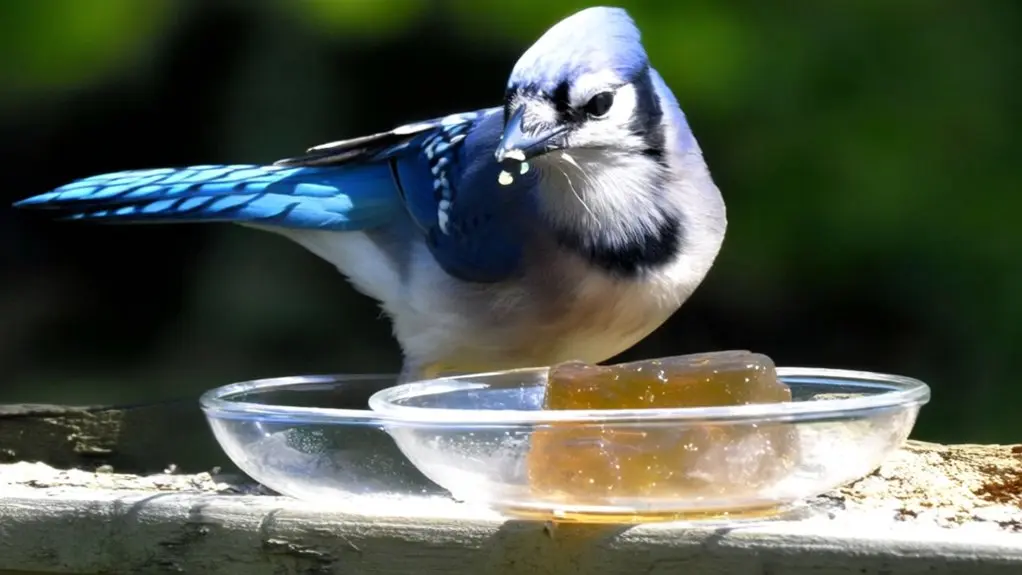
You can safely feed certain birds, especially orioles, natural jelly to support their high energy needs during migration and nesting. Orioles prefer grape, orange, and berry jellies without artificial additives or preservatives.
Offer jelly sparingly in clean, shallow feeders placed in shaded, visible areas, replacing it frequently to avoid spoilage. Avoid overfeeding and always combine with natural foods.
Proper timing during May and June maximizes benefits. Keep exploring to understand feeding best practices and bird behavior.
Can Birds Eat Jelly? Is It Safe for Them?
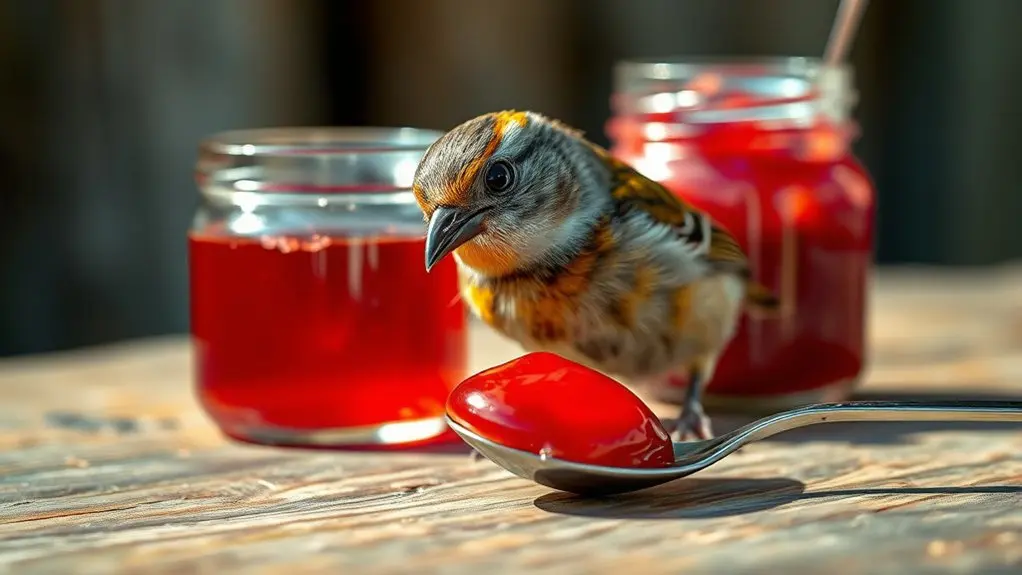
Although it may seem unusual, many bird species such as orioles, tanagers, and woodpeckers can safely consume jelly. It offers a quick source of energy through its sugar content.
To guarantee safety, you should provide bird-safe jelly free from artificial sweeteners, additives, or preservatives that could negatively affect their health. Opt for grape, orange, or berry flavors, as they closely resemble the natural fruit in certain birds’ diets.
Moderation is key; offer jelly sparingly and promptly remove any leftovers to prevent spoilage and pest attraction. Also, place the jelly in a clean feeder or on a safe surface to minimize contamination risks.
Which Birds Eat Jelly (Orioles and Others)?
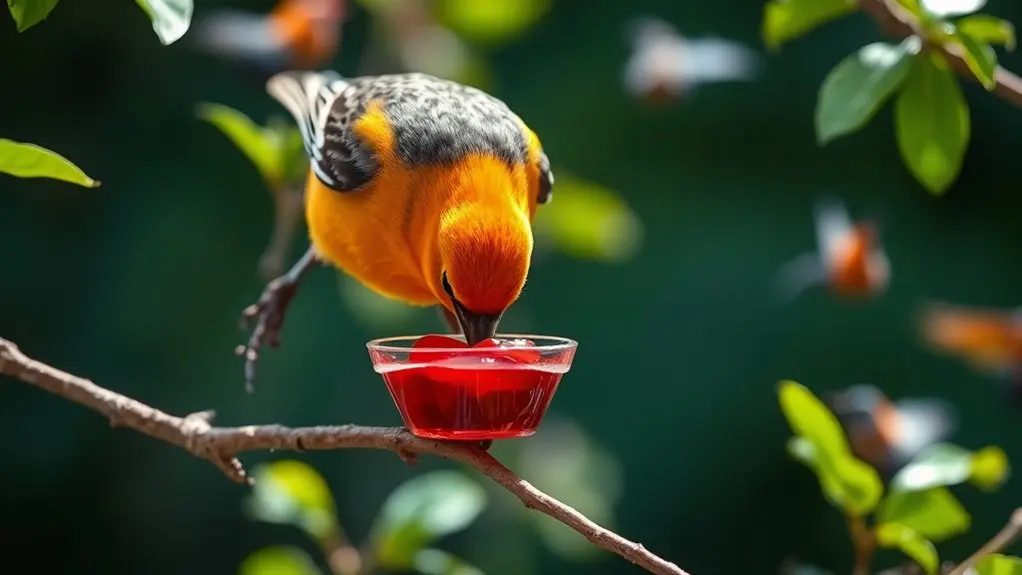
You’ll notice orioles are the main birds attracted to jelly, especially grape jelly, because it’s packed with sugar. But they’re not the only ones who enjoy it.
Some woodpeckers, catbirds, and tanagers might also snack on jelly from time to time. Knowing which birds prefer jelly can help you offer the right food when they’re most active and foraging.
Orioles’ Jelly Preference
When you observe Orioles during their feeding season, you’ll notice they consistently prefer jelly, especially grape jelly. It delivers the high energy and sugars they need for breeding and migration. These birds consume jelly daily, mainly from May to June, aligning with nesting.
Orioles’ strong preference is clear since they return to the same jelly feeders year after year. It’s like they know exactly where to go for their favorite treat.
| Species | Jelly Type Preferred | Feeding Season | Energy Need | Behavioral Note |
|---|---|---|---|---|
| Orioles | Grape Jelly | May – June | High | Regular daily consumption |
| Warblers | Occasional | Spring | Moderate | Sporadic jelly consumption |
| Tanagers | Occasional | Spring | Moderate | Less frequent jelly feeding |
Orioles show a unique and consistent jelly preference that really supports their lifecycle needs. It’s pretty cool how important jelly is to them!
Other Birds Eating Jelly
Which bird species besides Orioles consume jelly, and how common is this behavior? Orioles are the primary consumers of jelly, especially grape jelly. They often eat large quantities daily.
However, some other birds, like certain woodpeckers and tanagers, may occasionally feed on jelly if it’s accessible. This behavior is less common among these species and tends to happen during migration seasons when birds look for high-energy, sweet foods.
While Orioles show a strong preference and frequently feed on jelly, most birds favor natural food sources over it. Still, offering jelly can be a great way to attract and supplement the diets of specific birds like Orioles.
Understanding these differences helps you provide the right food choices and better support local bird populations during critical times.
Why Jelly Helps Orioles During Migration
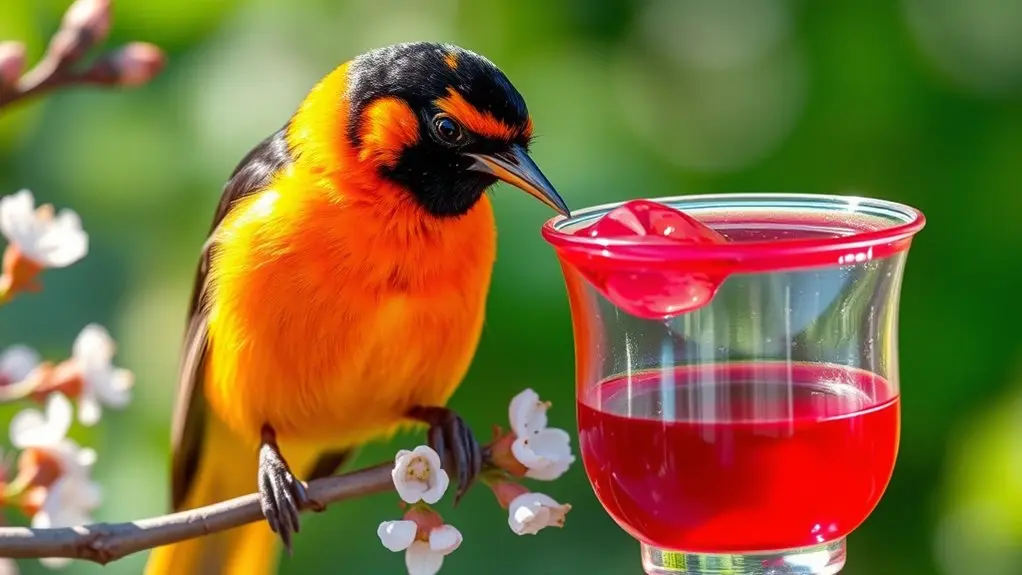
You’ll notice that jelly offers orioles a quick burst of energy because it’s packed with sugar, much like the natural fruit juices they love.
When they’re migrating, natural food sources can be pretty scarce. So, feeding them jelly helps meet their nutritional needs and gives them the strength they need for their long journey.
It’s also important to pay attention to when you feed them—spring and early summer are the best times to make the most of these benefits.
Nutritional Benefits Of Jelly
Although Orioles rely on various natural food sources during migration, jelly provides a concentrated and easily accessible energy supply rich in sugars. This high carbohydrate content sustains their energy needs, supporting endurance through long flights.
Grape jelly, in particular, offers natural sugars and nutrients that enhance immune function and overall health. By feeding on jelly, Orioles improve stamina, increasing their chances for successful travel and nesting.
Jelly’s consistent availability serves as a reliable carbohydrate source when natural foods are scarce.
| Nutritional Component | Benefit to Orioles |
|---|---|
| Sugars | Immediate energy supply |
| Carbohydrates | Sustained fuel for flight |
| Natural nutrients | Immune system support |
| Consistency | Reliable resource during scarcity |
| Energy density | Enhances stamina and endurance |
Jelly’s Role In Migration
When Orioles begin their long migratory journeys, jelly serves as a crucial high-energy food source that helps replenish their rapidly depleted energy reserves. You’ll find that jelly’s high sugar content provides the carbohydrates necessary to sustain the stamina and endurance required for migration.
Since natural food sources can be scarce during these periods, jelly acts as an important supplemental nutrition.
Feeding Orioles jelly during migration increases their survival chances by offering a readily accessible, energy-dense meal. It’s a simple way to support these birds when they need it most.
Here are the key reasons why jelly is essential during migration:
- Supplies rapid energy through carbohydrate-rich sugars
- Compensates for limited natural food availability
- Supports prolonged flight endurance
- Aligns with peak migration feeding activity in spring and late summer
This makes jelly a critical resource for migrating Orioles. It really plays a big role in helping them make their journey safely.
Feeding Timing And Patterns
The timing of feeding Orioles jelly aligns closely with their migration and nesting cycles, primarily from early May through June. During this period, natural food sources like insects and nectar may be scarce, making jelly a vital supplemental energy source.
You’ll notice Orioles visiting jelly feeders daily for about a month before nesting begins, reflecting a consistent feeding pattern.
This regular availability of jelly not only sustains them through long migratory journeys but also encourages site fidelity, as Orioles return annually to reliable feeding locations.
By providing jelly at these key times, you support their elevated energy demands required for migration and nesting preparation.
Understanding these feeding patterns helps you optimize your efforts to aid Orioles during critical life stages with scientifically backed timing. It’s a simple way to make a big difference for these beautiful birds.
When Is the Best Time to Feed Orioles Jelly?
Since Orioles require high-energy food sources to support their migration and nesting activities, feeding them jelly from early May through June is ideal. This period aligns with their peak migration and nesting season, guaranteeing they get the energy needed for these demanding activities.
Oriole typically begin visiting feeding areas about a week before their full arrival, making early preparation beneficial.
To optimize feeding during this time, consider these points:
- Start offering jelly in early May, just before Orioles arrive in large numbers.
- Continue feeding through June to support nesting energy demands.
- Use large jars of grape jelly, as Orioles consume approximately two jars daily.
- Ensure jelly availability during peak migration to provide a consistent, high-energy food source.
How to Feed Orioles Jelly Safely
Although Orioles readily consume jelly, feeding them safely requires careful attention to hygiene and food quality. Use a clean, sturdy feeder or jar lid to offer grape or fruit-flavored jelly, avoiding contaminated or moldy supplies. Replace the jelly every few days to prevent spoilage and bacterial growth, which can harm the birds.
Choose jellies without artificial ingredients, preservatives, or excessive sugar to guarantee the Orioles’ health. Position the feeder in a shaded area to slow down spoilage and keep the jelly fresh longer. Maintaining these practices minimizes the risk of disease and nutrient imbalance.
This way, you support the Orioles’ energy needs effectively while keeping them safe during feeding. It’s pretty simple once you get the hang of it!
Tips for Attracting Orioles to Jelly Feeders
If you want to attract orioles, it’s best to choose jelly types that are high in sugar, like grape jelly. This kind of jelly mimics the natural nectar they love.
Try placing your feeders in shaded spots where they’re easy to see, ideally close to trees.
A great trick is to pair the jelly feeders with fresh orange halves nailed to the trunks. Orioles really seem to go for that combo!
Also, keep in mind that the best time to feed orioles is from May to June. That’s when they’re migrating and nesting, so you’ll have a much better chance of seeing them visit regularly.
Choosing Jelly Types
When selecting jelly to attract Orioles, you should prioritize high-quality, natural grape jelly that contains no added sugars or artificial ingredients. Artificial dyes can harm birds and discourage Orioles from feeding.
To optimize feeding, consider these key points: use natural grape jelly free from artificial additives. Serve jelly in shallow dishes or specialized feeders for easy access. Slightly warm the jelly to improve its consistency and appeal.
And don’t forget to clean feeders regularly to prevent mold and bacterial growth. That way, you’ll keep the Orioles happy and healthy!
Feeder Placement Tips
Where should you place jelly feeders to maximize their effectiveness in attracting Orioles? Position feeders in shaded areas to prevent jelly spoilage and increase bird visits. Place them at or slightly above eye level, making access easier and more visible from perches.
Avoid dense foliage where predators may lurk, ensuring a safe feeding environment. Bright colors like red or orange on feeders effectively draw Orioles’ attention. Clean and refill feeders regularly to maintain appeal and encourage consistent feeding.
| Placement Factor | Reason | Effect on Orioles |
|---|---|---|
| Shaded Location | Prevents spoilage | Increases feeding duration |
| Eye-level Height | Easier access and visibility | Promotes frequent visits |
| Away from Foliage | Reduces predator risk | Enhances safety during feeding |
Timing Feeding Period
Although Orioles may visit jelly feeders sporadically outside the breeding season, their activity really picks up starting in early May, just before nesting begins. You should focus your feeding efforts from May to June, which is the critical time when Orioles rely heavily on supplemental food. Providing consistent food during this period encourages them to return year after year.
That said, once nesting starts, you’ll want to stop feeding because Orioles tend to disappear quickly after that.
To get the timing right:
- Begin feeding in early May, about a week before nesting begins.
- Keep feeders stocked through June to catch peak activity.
- Stop feeding as soon as you see nesting behavior.
- Place feeders near natural perches to make visits more likely.
Following this schedule helps you attract Orioles effectively and supports their natural habits.
How to Tell If Orioles Are Enjoying Your Jelly Feeders
If you want to determine whether orioles are enjoying your jelly feeders, observe their feeding frequency and behavior closely. Orioles typically visit multiple times a day and spend extended periods feeding when the jelly is appealing. Fresh, brightly colored jelly replaced regularly encourages increased activity.
Watch for orioles actively pecking at the jelly and returning consistently over several days. This behavior signals their preference. Peak feeding times, especially in early May, often see heightened oriole activity around feeders.
Conversely, if orioles reduce visits or disappear after initial interest, the jelly may be stale or feeder placement might hinder accessibility.
Mistakes to Avoid When Feeding Birds Jelly
When feeding birds jelly, you must avoid common mistakes that can harm their health or reduce feeder effectiveness. Choosing the wrong jelly or feeding method can lead to illness or deter birds from returning. To guarantee safe feeding, follow these key guidelines:
First, avoid store-bought jellies with artificial preservatives, flavors, colors, or sweeteners. These additives can negatively affect birds’ health.
Also, always check the jelly for mold or spoilage before offering it, since contaminated jelly can cause digestive issues.
Use feeders that provide easy access without sharp edges to prevent injury.
And don’t overfeed or rely solely on jelly. Birds need a balanced diet that includes natural forage for the best nutrition and health.
How to Clean and Maintain Jelly Feeders
Proper cleaning and maintenance of jelly feeders are essential to prevent the growth of mold and bacteria that can harm birds. You should disassemble the feeders regularly to access all crevices, ensuring thorough cleaning.
Use hot, soapy water combined with a brush or small scrubber to remove any residue or mold from feeding ports and surfaces.
Rinse the feeders thoroughly to eliminate soap traces, as residues might damage birds. Avoid bleach or harsh chemicals since they can leave harmful residues.
After cleaning, allow the feeders to dry completely before refilling with fresh jelly.
This drying step is critical to maintain a healthy feeding environment and to inhibit microbial growth.
Consistent maintenance reduces contamination risks, supporting safe bird feeding practices. Keeping up with this routine really helps keep the birds healthy and happy.
Alternatives to Jelly for Attracting Orioles and Other Birds
Maintaining jelly feeders is just one approach to attract Orioles and other birds, but exploring alternative food sources can broaden your options. You can use fresh orange halves nailed to trees or placed near feeders, which Orioles find highly appealing.
Additionally, ripe berries and fruit-based feeders designed for cavity-nesting birds serve as natural attractants.
Specialized nectar feeders with sugar water can also entice Orioles and hummingbirds alike.
To encourage natural feeding behaviors, you might provide succulents or native wildflowers with nectar-producing blooms.
Consider these alternatives:
- Fresh orange halves positioned near feeding areas.
- Ripe berries and fruit-based cavity bird feeders.
- Sugar water nectar feeders targeting Orioles and hummingbirds.
- Native nectar-producing plants and succulents to promote natural foraging.
Frequently Asked Questions
Can Jelly Attract Unwanted Pests or Animals to My Feeder?
Like bees to honey, jelly attracts unwanted pests and animals to your feeder. You’ll invite ants, wasps, and larger critters like squirrels.
To keep them away, use pest-proof feeders and clean up spills promptly. It really helps to stay on top of it so your feeder stays a happy place for the birds.
Does Jelly Feeding Affect Birds’ Natural Foraging Behavior?
Yes, feeding jelly can reduce birds’ natural foraging behavior. You’ll notice they might rely more on easy food sources, which can decrease their motivation to seek insects and fruits. This can ultimately impact their survival skills and dietary balance.
When birds depend too much on jelly, they might not practice the skills they need to find food in the wild. Over time, this can affect how well they adapt to their natural environment. So, it’s a good idea to offer jelly sparingly and encourage natural foraging whenever possible.
How Long Can Jelly Be Left Outside Before It Spoils?
You might think jelly lasts long outside, but in warm weather, it spoils within hours. Cooler temperatures can extend its safety up to 24 hours.
Still, you should always check it regularly to avoid bacterial growth. If it looks or smells off, it’s best to toss it out promptly. Better safe than sorry!
Are Homemade Jellies Safe for Feeding Orioles?
You can feed orioles homemade jellies only if they’re free from added sugars, high-fructose corn syrup, and preservatives. Make sure the jelly is fresh, mold-free, and made from pure fruit juice with natural pectin for safety.
It’s really important to keep an eye on the jelly’s condition. If you notice any mold or if the jelly has been sitting out too long, it’s best to toss it. Freshness is key to keeping your feathered friends healthy.
Can Jelly Feeding Cause Dependency in Wild Birds?
Yes, feeding jelly regularly can cause dependency in wild birds by reducing their natural foraging instincts and adaptability.
You should limit jelly offerings to brief periods, making sure birds still get a balanced diet from natural food sources.
It’s all about helping them stay independent and healthy in the wild.
Conclusion
Feeding birds jelly is like offering a carefully crafted key to a hidden garden. It unlocks essential energy during their demanding journeys. While orioles thrive on this sweet source, you need to make sure it’s pure and given at the right time to avoid harm.
By understanding their needs and keeping feeders clean, you create a safe haven for them. Think of it like tending plants with care—your mindful attention helps these feathered travelers benefit without any risk.