
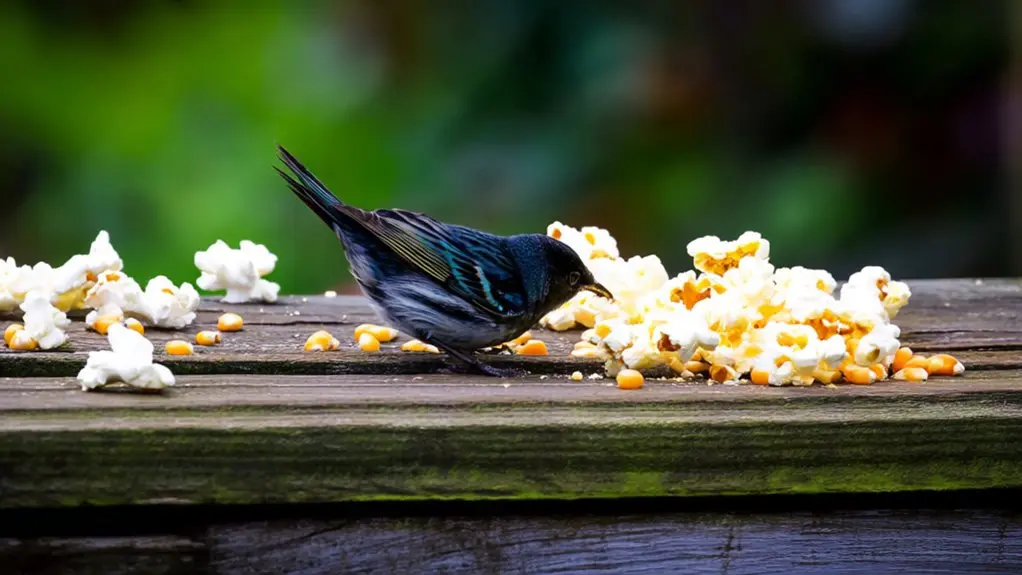
You shouldn’t feed microwave popcorn to birds because it contains salt, butter, artificial chemicals, and harmful preservatives that can cause serious health problems. The plastic lining and hard hulls pose choking and toxicity risks, and the popcorn lacks essential nutrients birds need.
While plain air-popped popcorn can be a safe occasional treat if prepared correctly, regular feeding can weaken their immune system and cause malnutrition. Keep going to discover safer ways to offer treats your feathered friends will enjoy.
Should You Feed Popcorn to Backyard Birds?
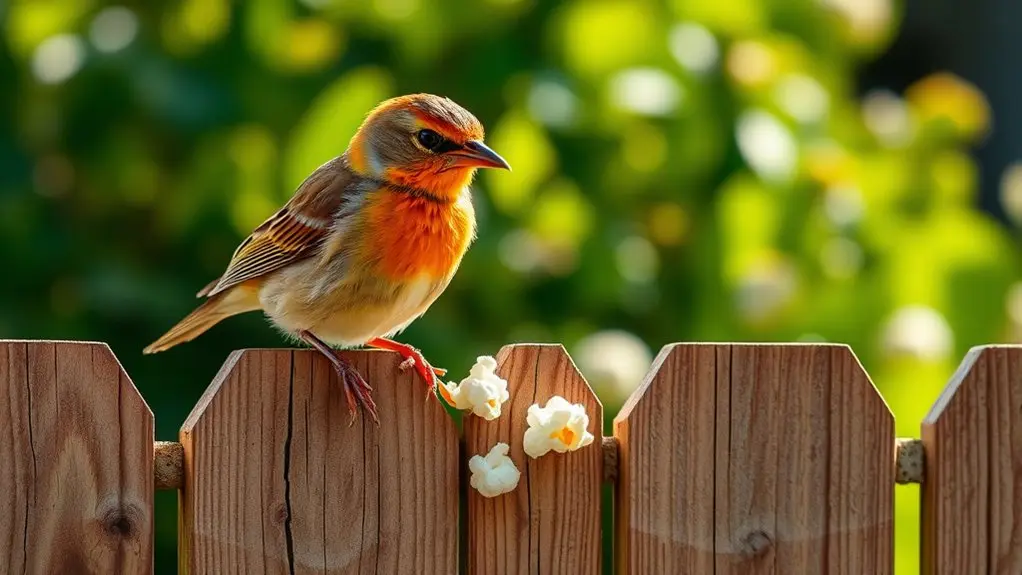
Although you might be tempted to share your microwave popcorn with backyard birds, it’s best to avoid doing so because the added salt, butter, and flavorings can harm them. Instead, if you want to offer popcorn, stick to plain, air-popped varieties without any salt or additives.
Even then, popcorn should only be an occasional treat and never replace their natural diet of seeds, nuts, and fruits. Those provide essential nutrients birds need to thrive.
Be cautious, as the hulls can pose choking risks or be hard for some birds to digest.
Why You Should Avoid Microwave Popcorn for Birds
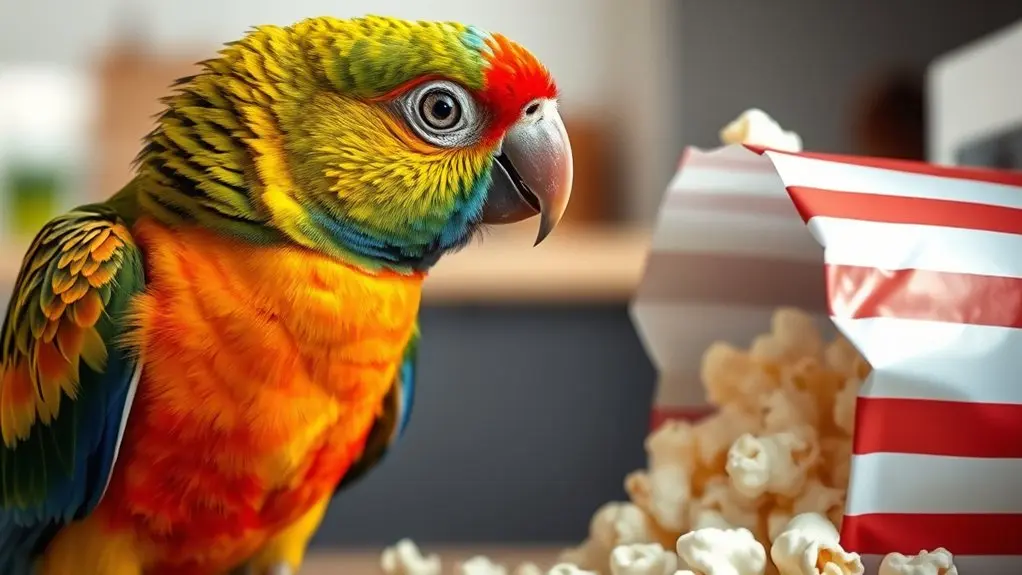
You really shouldn’t offer microwave popcorn to birds. It’s loaded with harmful additives like salt, butter, and artificial chemicals that can make them sick.
These ingredients throw off their natural diet and can lead to serious nutritional imbalances.
Harmful Additives In Popcorn
Why should you steer clear of microwave popcorn when feeding birds? Because it often contains harmful additives like salt, artificial flavorings, and preservatives that can negatively affect their health.
Many microwave popcorn varieties include butter or margarine, which are high in fat and salt, posing serious risks to birds.
The chemical coatings and additives found in these products can be toxic or cause digestive problems. Plus, microwave popcorn frequently contains diacetyl, a flavoring linked to respiratory issues in humans and potentially harmful to birds as well.
You should also be cautious of the plastic bags, as they may introduce dangerous chemicals or plastic debris if ingested.
Nutritional Deficiency Risks
Beyond the harmful additives found in microwave popcorn, its nutritional profile poses serious risks to birds. You might think popcorn is a harmless treat, but it lacks essential vitamins, minerals, and proteins your bird needs to stay healthy.
The high carbohydrate content provides little nutritional value and can contribute to obesity if fed too often.
When you offer popcorn regularly, it can replace more nutrient-rich foods in your bird’s diet, leading to deficiencies that weaken their immune system and overall well-being.
Over time, this imbalance can cause serious health issues.
To keep your feathered friend thriving, it’s best to avoid microwave popcorn and focus on providing a balanced diet tailored to their specific nutritional needs.
Is Plain Air-Popped Popcorn Safe for Birds?
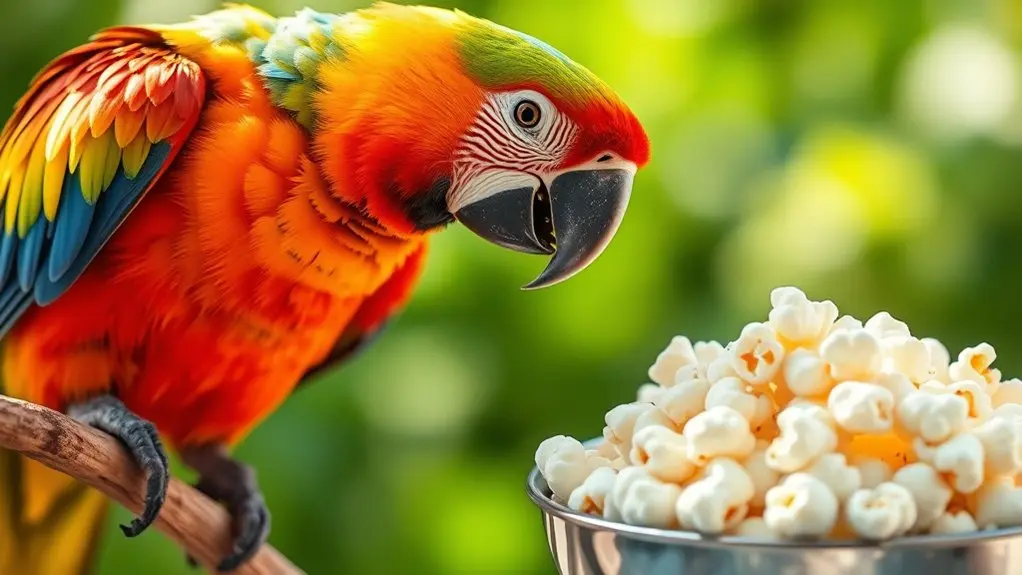
Although plain air-popped popcorn isn’t a nutritional powerhouse, it can be a safe, occasional treat for birds when you offer it without salt, butter, or any flavorings. You should provide only plain popcorn to avoid harmful additives like salt or flavorings.
Plain air-popped popcorn can be a safe, occasional bird treat if offered without salt or flavorings.
To make it easier for birds to eat and reduce choking risks, consider soaking or boiling the popcorn to soften the hulls.
Keep in mind popcorn is low in nutrients, so it shouldn’t replace their natural diet of seeds, nuts, and fruits.
Offering plain air-popped popcorn sparingly shows you care about your feathered friends’ safety and well-being while giving them a fun, occasional snack they can enjoy without harm.
Health Risks of Feeding Popcorn to Birds
When you feed birds microwave popcorn, you’re actually putting them at risk. That’s because microwave popcorn often contains harmful additives like salt and artificial flavorings. These can cause nutritional problems for the birds.
Plus, the hard hulls of the popcorn can be a choking hazard. They might also mess with the birds’ digestion.
Nutritional Deficiencies Risks
If you feed popcorn to birds regularly, you risk causing nutritional deficiencies because popcorn lacks the essential vitamins, minerals, and proteins birds need to stay healthy. Popcorn’s high carbohydrate content offers little nutritional value and shouldn’t replace natural foods like seeds, fruits, and insects, which provide crucial nutrients.
Relying too much on popcorn can weaken birds’ immune systems, making it harder for them to fight illness or reproduce successfully. This malnutrition can severely impact their overall well-being.
While popcorn might seem like a harmless treat, it doesn’t support the balanced diet birds require.
To help birds thrive, it’s important you offer a variety of natural foods that meet their nutritional needs, rather than relying on popcorn that leaves them undernourished. It’s all about giving them what they really need to stay strong and healthy.
Additives And Choking Hazards
Because microwave popcorn often contains salt, artificial flavorings, and preservatives, feeding it to birds can pose serious health risks. These additives may lead to dehydration, nutritional imbalances, or toxic reactions in your feathered friends.
Also, the hard popcorn hulls present a choking hazard and can injure or block small birds’ digestive tracts. You should be careful about the plastic or paper lining from microwave popcorn bags too. Scavenging birds might ingest these materials, causing dangerous blockages or poisoning.
While plain, air-popped popcorn reduces hull-related risks, any flavored or processed popcorn still carries additives harmful to birds. To keep birds safe and healthy, it’s best to avoid giving them microwave popcorn altogether.
Instead, opt for safer, natural treats that won’t jeopardize their well-being.
How to Make Safe Popcorn Treats for Your Birds
Although birds can enjoy popcorn as a treat, you need to prepare it carefully to keep them safe. Use plain, air-popped popcorn without salt, butter, or flavorings. These additives can harm birds.
To make a nutritious treat, mix the popcorn with birdseed, chopped raisins, and natural peanut butter. If you want the treats to hold their shape, add a bit of gelatin and form small balls or shapes.
Hang these treats from trees, feeders, or inside cages to provide safe enrichment. Always watch your birds while they eat to prevent choking and make sure they’re consuming the treats safely.
Tips for Attracting Birds Without Using Popcorn
When you want to attract a variety of birds without relying on popcorn, offering natural foods like sunflower seeds, millet, and fresh fruit can make a big difference. You’ll draw different species by providing a mix of these favorites.
Make sure to supply clean, fresh water for drinking and bathing. It’s essential for their health and encourages visits.
Place feeders at varying heights near trees or shrubs to mimic natural foraging spots. This helps birds feel safer.
Creating shelter with dense foliage or birdhouses invites them to stay longer.
Also, try to minimize outdoor cat access and keep noise levels low to maintain a safe, calm environment.
Frequently Asked Questions
Can Popcorn Hulls Cause Digestive Blockages in Birds?
Yes, popcorn hulls can cause digestive blockages in birds because they’re hard to break down. You should avoid feeding them unsoftened hulls.
Also, watch for any signs of discomfort to keep your bird healthy and safe. It’s better to be cautious when it comes to their digestion.
Are There Bird Species More Sensitive to Popcorn Ingredients?
When it comes to popcorn, smaller birds like finches and warblers are the canaries in the coal mine. They’re more sensitive to hulls and additives. You’ll want to avoid giving them anything that might upset their delicate systems.
It’s kind of like how some people can’t handle certain foods. These little birds just need a bit more care when it comes to what they eat. So, keeping their snacks simple is always a good idea.
How Does Popcorn Affect Wild Birds Versus Pet Birds?
You’ll find popcorn poses more risks to pet birds because their systems are super sensitive. Wild birds might occasionally eat it, but they can still face choking or digestive issues.
It’s always best to prioritize natural, safe foods over microwave popcorn for any bird. Just keep their health in mind and stick to what’s good for them!
Can Popcorn Seasoning Cause Allergic Reactions in Birds?
Yes, popcorn seasoning can cause allergic reactions in birds. You should avoid giving them seasoned popcorn because additives like garlic or onion powder may trigger respiratory issues or itching.
Always stick to plain, unseasoned popcorn for their safety. It’s better to keep things simple when it comes to bird snacks. They’ll thank you for it!
Is Microwave Popcorn Packaging Harmful if Ingested by Birds?
You wouldn’t feed microwave popcorn packaging to a pet dinosaur, and neither should you for birds. Its chemicals and materials can cause choking, toxicity, or digestive blockages.
Conclusion
You might be surprised to learn that over 70% of microwave popcorn brands contain additives harmful to birds. So, while plain air-popped popcorn can be an occasional treat, avoid microwave varieties to keep your feathered friends safe.
Instead, focus on natural seeds and nuts to attract birds healthily. By making mindful choices, you’ll help create a safe, nourishing environment where birds can thrive without risking their health.