
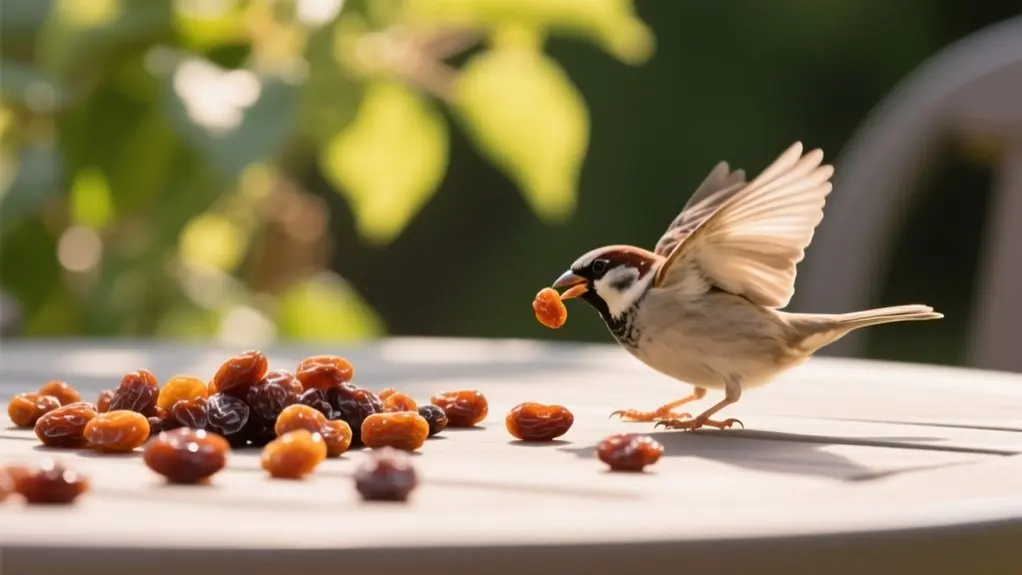
You can safely feed dried raisins to birds if you soak them first to soften and remove potential choking hazards. Offer raisins in moderation as a sweet, energy-rich treat that supports digestion and immunity, especially in colder months.
Avoid overfeeding to prevent digestive issues and obesity, and always mix raisins with other natural foods for a balanced diet. If you want to attract a variety of healthy birds while keeping their diet safe, there’s more important info ahead.
Can Birds Safely Eat Dried Raisins?
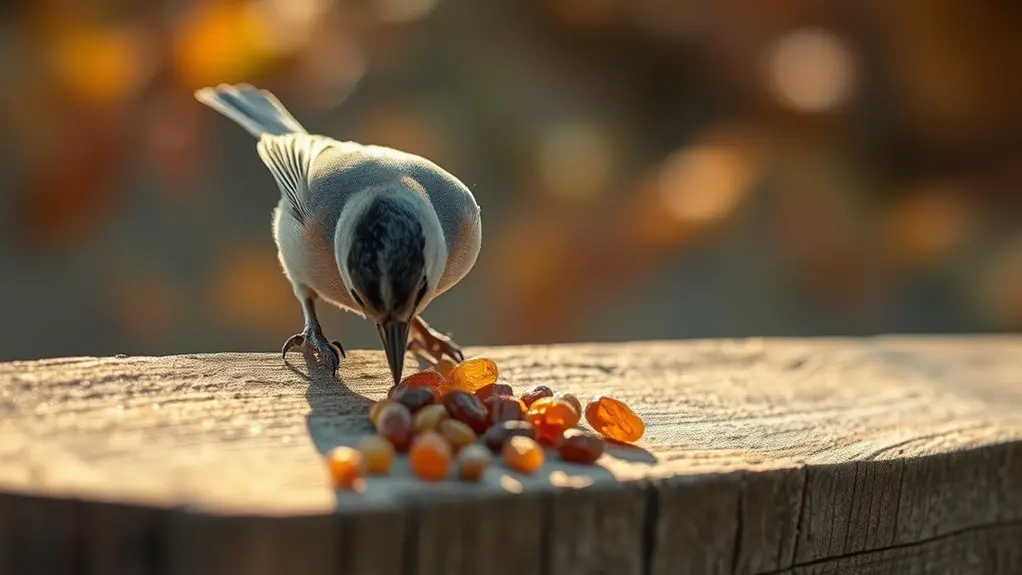
How can you safely offer dried raisins to birds? Start by soaking the dried fruit overnight in water. This makes raisins easier for birds to digest and enhances their texture and moisture, making them more appealing.
Soak dried raisins overnight to soften them, making them easier for birds to digest and more appealing.
You’ll want to verify the raisins don’t contain added sugars or preservatives, as these can harm birds.
While raisins are a nutritious treat for many species like blackbirds and robins, it’s best to provide them in moderation to avoid disrupting natural wildlife behavior.
Keep an eye on how local birds respond. Some may prefer natural food sources, especially during seasonal changes.
Why Should You Feed Raisins to Birds in Moderation?
You should feed raisins to birds in moderation because too many can cause digestive problems and mess up their balanced diet.
Birds need a variety of foods to get all the nutrients they require.
Potential Health Concerns
Although raisins make a tasty treat for many birds, feeding them too often can cause digestive problems and contribute to obesity. When you offer dried raisins, it’s important to do so in moderation to prevent digestive issues and other health concerns.
Soaking raisins before feeding helps make them easier to eat and reduces the risk of dehydration. Be careful to avoid raisins with added sugars or preservatives, as these can harm birds.
Overfeeding dried raisins may lead to obesity, especially in species that love them, like blackbirds. By controlling portion sizes and preparing raisins properly, you can provide a safe, enjoyable treat without risking your feathered friends’ health.
Balanced Dietary Needs
Feeding raisins to birds can be a delightful way to supplement their diet, but keeping it balanced is important. Since dried fruits like raisins have a high sugar content, you should offer them in moderation to avoid digestive issues.
Soaking raisins before feeding not only makes them more appealing but also contributes to birds’ hydration, especially during dry seasons. Always choose raisins free from additives and preservatives to keep your feathered friends safe.
How Should You Prepare Raisins for Wild Birds?
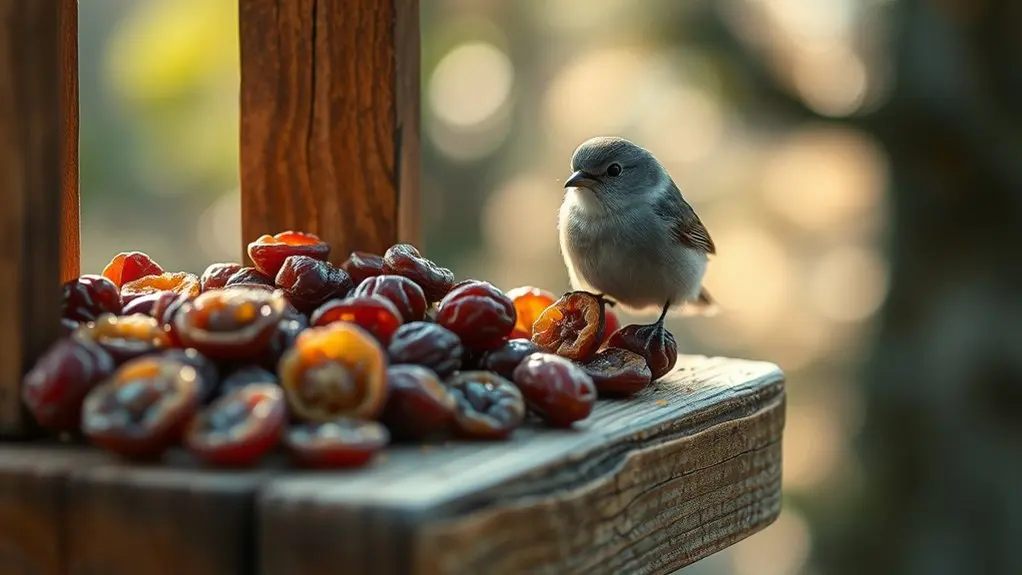
To get raisins ready for wild birds, start by soaking them in water overnight. This softens them up and makes them easier for the birds to digest.
If you’re dealing with bigger raisins, it’s a good idea to cut them into smaller pieces—especially if you’re feeding little birds like finches.
And don’t forget to put the soaked raisins outside early in the morning. That way, the birds get first dibs before other animals show up.
Soaking Raisins Benefits
When you soak raisins in water for several hours, you make them softer and more appealing to wild birds like blackbirds and robins. Soaking raisins improves their texture, making them easier for birds to eat, which supports better digestion and lowers choking risks.
This simple process also provides hydration, especially helpful during dry or hot weather. By offering soaked raisins, you can attract a wider variety of birds to your backyard, enhancing your birdwatching experience.
However, it’s important to discard any uneaten soaked raisins after a few hours to prevent spoilage and avoid health issues for the birds.
Serving Timing Tips
Although serving raisins seems simple, timing and preparation play key roles in attracting wild birds effectively.
To optimize your serving timing and guarantee raisins are available for birds, follow these tips:
Soak dried raisins for several hours to soften them, making feeding easier for smaller birds.
Place raisins outside early in the morning when birds start their foraging to maximize availability for local wildlife like robins.
Monitor the weather closely; warm days can spoil raisins quickly, so serve them promptly or remove leftovers.
Use a sheltered area to protect raisins from raccoons and other animals that might eat the food before birds do.
Raisin Size Preparation
Preparing raisins properly can make a big difference in how easily wild birds can enjoy them. To start, soak the raisins overnight in water to soften them, making them easier to digest and more appealing.
Next, consider the raisin size. Halving or quartering raisins is especially helpful for smaller birds, reducing choking risks and encouraging consumption.
Always serve soaked raisins fresh since their texture quickly deteriorates if left out too long.
Remember to offer raisins in moderation as part of a varied diet that includes other bird-friendly foods like seeds and fresh fruits.
Finally, keep an eye on local wildlife behavior to verify your feeding habits don’t cause dependency on human-provided food. This balanced approach supports wild birds’ health and enjoyment.
What Are the Nutritional Benefits of Raisins for Wild Birds?
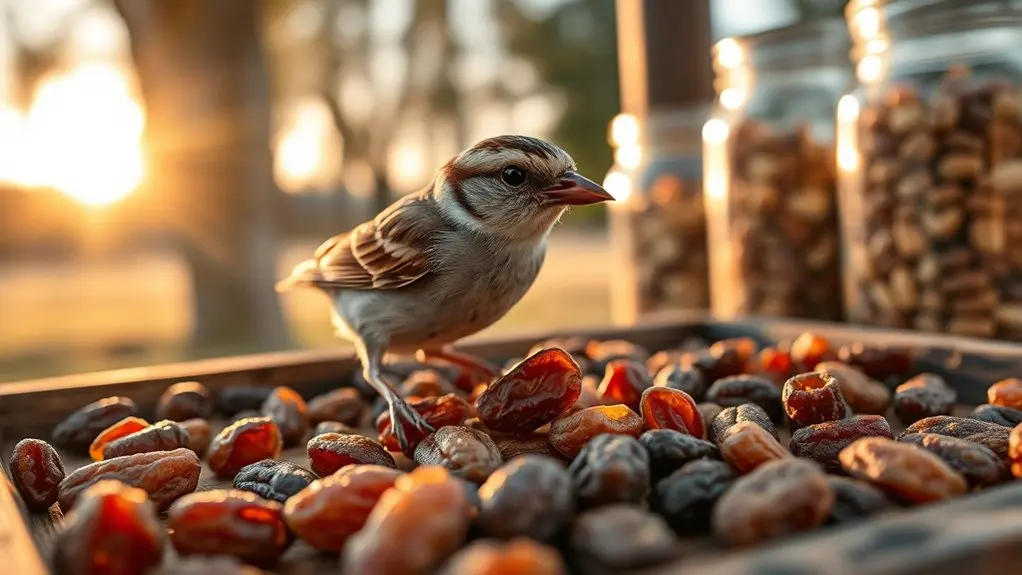
Because raisins are packed with natural sugars, they provide wild birds with an essential energy boost, especially during colder months when food can be scarce. When you offer dried raisins as a high-energy food, you support their survival and activity.
Raisins also deliver antioxidants and vitamins that strengthen birds’ immune systems. Plus, the fiber in raisins aids digestion, helping maintain healthy guts.
Here’s what raisins do for wild birds:
- Fuel energy-demanding activities with natural sugars
- Supply antioxidants and essential vitamins like potassium and iron
- Promote healthy digestion through dietary fiber
- Attract species like robins and blackbirds during backyard bird feeding
What Risks Come From Feeding Birds Too Many Raisins?
If you feed birds too many raisins, it can lead to digestive problems and even obesity because raisins are high in sugar and calories.
So, it’s best to offer them only in moderation.
Also, soaking the raisins before giving them to birds is a good idea—it helps prevent choking.
Raisin Overconsumption Effects
While raisins can be a tasty treat for birds, feeding them too many can cause serious health problems. Overconsumption often leads to gastrointestinal distress, such as diarrhea or vomiting, which can weaken your bird.
Too many raisins disrupt nutrient balance, causing deficiencies in essential vitamins and minerals. Since raisins are high in sugar, excessive feeding may result in obesity and related health issues.
Birds might also develop a preference for sugary foods, which interferes with their natural foraging habits. To keep your bird healthy, practice moderation and maintain a varied diet.
Remember these effects of raisin overconsumption:
- Gastrointestinal distress
- Nutrient imbalance
- Obesity risk
- Preference for sugary foods
Offer raisins soaked and sparingly for better digestibility and safety.
Potential Bird Health Issues
Feeding birds too many dried raisins can lead to several health problems you should watch for. Overfeeding raisins, which are high in sugar, often causes digestive issues like diarrhea or crop impaction.
To help prevent dehydration, soak raisins before offering them.
It’s important to provide raisins in moderation as part of a varied diet to avoid nutritional imbalances that might harm the birds. Some birds may have sensitivities or allergies to dried fruit, so monitor their reactions closely.
Furthermore, leaving out too many raisins can attract unwanted wildlife, increasing competition for food and potential risks to smaller birds.
Safe Feeding Quantities
Offering just a few dried raisins a day can provide birds with a tasty treat without risking their health. To guarantee safe feeding quantities and avoid digestive issues, keep these points in mind:
- Limit raisins to a few pieces daily to prevent overindulgence and obesity.
- Soak raisins before feeding to reduce choking risks and aid digestion.
- Observe individual dietary preferences, as some birds may not tolerate dried fruits well.
- Maintain a balanced diet by offering a variety of foods, reducing dependence on raisins.
Which Bird Species Enjoy Eating Dried Raisins Most?
If you want to attract a variety of birds to your backyard, you’ll find that blackbirds, robins, and sparrows especially enjoy dried raisins. These bird species benefit from dried raisins as a high-energy food source, perfect during colder months when natural options dwindle.
To make dried raisins more appealing, soak raisins overnight; this softens them and increases their palatability for many birds. When you offer soaked raisins, you attract birds that might otherwise pass by, boosting local biodiversity.
Just be sure to provide dried raisins free from harmful additives or preservatives to keep birds safe.
How Can You Introduce Raisins Without Upsetting Birds’ Natural Diets?
How can you add raisins to birds’ diets without disrupting their natural eating habits? To introduce raisins smoothly, follow these steps:
- Soak dried raisins overnight to soften them, making their texture closer to natural fruits.
- Mix soaked raisins in moderation with regular seeds or natural foods to avoid sudden diet changes.
- Monitor how birds respond, ensuring they continue foraging for insects and seeds essential to their natural diet.
- Adjust raisin offerings based on seasonal availability of natural foods, providing more treats when other sources are scarce.
When Is the Best Time to Offer Raisins Outside?
When should you put out raisins to attract the most birds? The best time to offer raisins is early morning when birds are most active and foraging.
Before placing them outside, soak raisins in water to make them more appealing and easier to eat.
Keep an eye on the temperature, especially during warmer days, since heat can cause raisins to spoil quickly. To prevent spoilage and avoid attracting pests, leave raisins out only for a few hours.
Offering raisins during winter months is particularly helpful, as natural food sources become scarce and birds need extra nourishment.
What Alternative Foods Can Complement Raisins for Backyard Birds?
Although raisins offer a sweet treat for backyard birds, providing alternative foods can enhance their diet and attract a wider variety of species.
To create a balanced diet and keep your feathered visitors happy, try these options:
- Mealworms add protein and are loved by robins and bluebirds, complementing the raisins’ sweetness.
- Sunflower seeds supply essential fats and proteins, attracting diverse birds when offered alongside dried fruits.
- Suet cakes, especially those with fruits and seeds, offer high-energy nourishment during colder months.
- Fresh fruits like apples and berries provide hydration and dietary variety, enriching the feeding experience.
Including nuts and a mix of seeds with dried fruits guarantees your backyard birds enjoy a nutritious, balanced diet beyond just raisins.
How Can You Monitor Your Birds’ Health After Feeding Raisins?
Adding raisins and other foods to your birds’ diet means keeping a close eye on their health afterward. You should monitor them for any signs of digestive upset, like diarrhea or vomiting, which can indicate their system isn’t handling raisins well.
Pay attention to changes in behavior, such as lethargy, that might suggest an adverse reaction. Observing their droppings for shifts in color or consistency also helps you assess their health.
Remember to offer raisins in moderation to avoid issues like weight gain. If you notice any unusual signs or have concerns about how raisins affect your birds’ diet, don’t hesitate to consult an avian vet.
Staying vigilant guarantees your feathered friends stay healthy and happy while enjoying new treats.
What Precautions Should Pet Owners Take to Keep Pets Safe Around Raisins?
Since raisins can cause severe kidney damage in dogs and cats even in small amounts, you need to keep these dried fruits well out of your pets’ reach.
Taking precautions is essential to protect your pets from this toxic danger. Here’s what you can do:
Create a designated safe zone in your home where raisins and other harmful foods are never accessible.
Always monitor pets closely during gatherings or holidays when food is more readily available.
Educate yourself about toxic foods, including raisins, to avoid accidental exposure.
If you suspect your pet has ingested raisins, contact your veterinarian immediately for advice and treatment.
Are Other Dried Fruits Safe for Backyard Birds?
How safe are other dried fruits for the backyard birds you enjoy watching? Many backyard birds love dried fruits like raisins and currants, especially when soaked to soften them.
Offering unsweetened dried fruits such as apricots and sultanas can be a nutritious treat, but you should always give them in moderation.
Unsweetened dried fruits like apricots and sultanas make nutritious treats when offered in moderation.
Soaking dried fruits before feeding helps improve digestibility and makes them more appealing to birds.
While these treats can supplement natural diets, be cautious not to overfeed, as too much dried fruit may cause health issues.
Always verify the dried fruits are free from additives or sugars.
Frequently Asked Questions
Can Baby Birds Eat Dried Raisins Safely?
Yes, baby birds can eat dried raisins safely if you follow safe feeding practices. Soak raisins first to aid baby bird digestion and avoid choking hazards.
Raisins offer dried fruit benefits like natural sugars but should be an occasional treat in baby bird nutrition. Always choose raisins without additives and monitor for reactions.
For common bird species, consider alternative snacks like softened fruits or insects to balance their diet and support healthy growth.
How Long Can Dried Raisins Be Stored for Bird Feeding?
Imagine opening a cool, dark pantry where dried raisins rest in airtight containers, perfectly preserved. You can store them up to 12 months under ideal storage conditions, maintaining their nutritional value and moisture levels.
For longer shelf life, refrigerate or freeze them, extending freshness to 2-3 years.
Always follow feeding guidelines, check for spoilage, and use sealed container types to guarantee pest prevention and keep your bird’s treats safe and tasty.
Do Birds Prefer Raisins Over Fresh Grapes?
You’ll find that many birds prefer raisins over fresh grapes because of the raisin nutrition. They’re sweeter and easier to eat, especially after soaking.
However, bird preferences can vary, so offering a fruit variety helps meet their dietary choices and feeding habits.
Grapes still provide benefits like hydration and vitamins, but the taste differences make raisins more appealing in some cases.
Mixing both fruits supports diverse bird preferences effectively.
Can Dried Raisins Attract Unwanted Pests or Animals?
Dried raisins can act like a beacon, attracting wildlife beyond just birds. You’ll notice pests like rodents and insects drawn to their sugary sweetness, which complicates pest control.
Understanding animal behavior helps you manage feeding habits and maintain garden cleanliness. Using natural deterrents and removing leftover food prevents unwanted visitors.
If you’re composting, avoid adding raisins to stop attracting pests. Staying vigilant keeps your feeding area safe and inviting for birds only.
Are There Specific Seasons When Birds Crave Raisins More?
Yes, birds tend to crave raisins more in autumn and winter due to changes in their nutritional needs and seasonal food preferences.
During autumn foraging behavior, they seek extra energy for migration, while winter food sources become scarce.
Your bird feeding habits should adapt to these shifts, as migratory bird diets rely on high-energy foods like raisins.
Food scarcity impacts their survival, so offering raisins supports them through tough seasons.
Conclusion
Feeding dried raisins to birds can be a sweet treat, but like all good things, it’s best in moderation. Think of raisins as a small sparkle in their varied diet, not the whole show.
By preparing them properly and watching your feathered friends closely, you’ll help keep their health soaring. Remember, balance is key. Just like a well-tuned song, every ingredient matters for your backyard birds’ happiness and safety.