
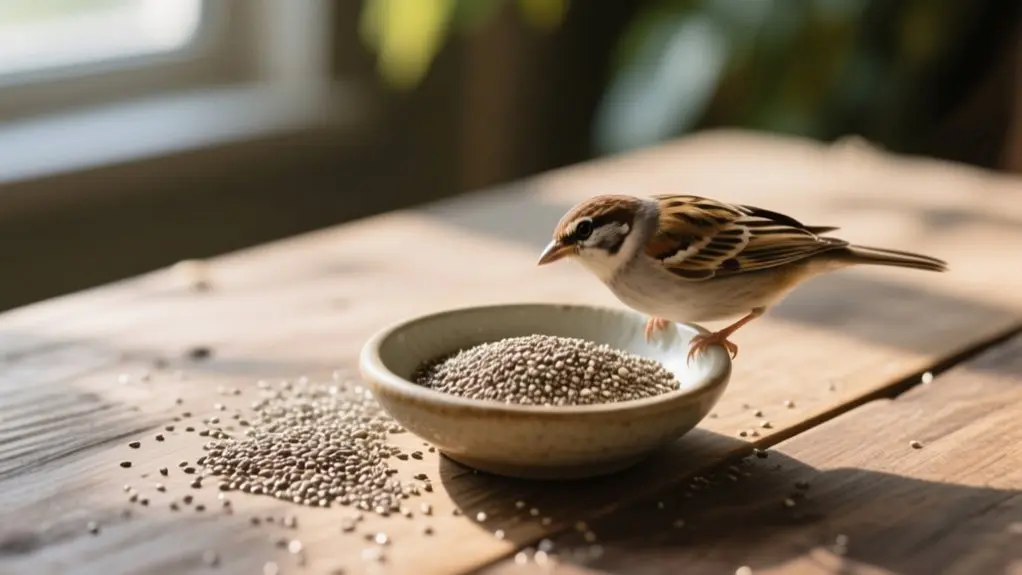
You can feed dry chia seeds to many seed-eating birds safely, but you should introduce them gradually and keep the amount to about 10% of their diet. Since dry chia seeds swell when wet, verify your birds always have fresh water to avoid digestive blockages, especially for smaller species like finches.
Soaking the seeds first can reduce risks and improve digestion. Keep an eye on their response to confirm they stay healthy and happy with this nutrient boost.
What Are Dry Chia Seeds? Benefits for Birds Explained
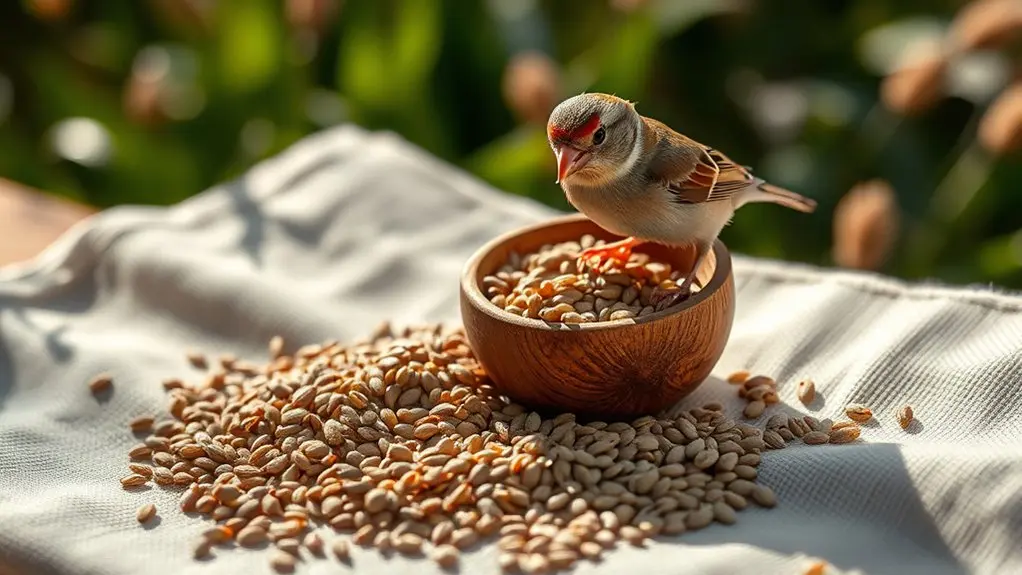
Dry chia seeds are tiny powerhouses packed with omega-3 fatty acids, protein, fiber, and essential minerals like calcium and phosphorus that can boost your bird’s health.
Adding chia seeds to your bird’s diet brings several benefits, including supporting strong feathers and enhancing immune function thanks to their high antioxidant content.
Most seed-eating birds readily accept chia seeds since they don’t require hulling and can be mixed easily into their regular seed blends or offered directly.
To maximize the benefits and avoid digestive discomfort, especially in smaller birds, start with small amounts and introduce chia seeds gradually.
Also, provide plenty of water because dry chia seeds absorb moisture and swell, helping prevent dehydration or digestive issues.
Incorporating chia seeds smartly can improve your bird’s diet and overall well-being.
Nutritional Benefits of Dry Chia Seeds for Birds
You’ll find that dry chia seeds are full of essential nutrients like omega-3s, protein, and important minerals that help keep your birds healthy and strong.
Plus, they’re great for digestion because of their high fiber content, which promotes regularity.
Adding these seeds to your birds’ diet can really give their nutrition and digestion a nice boost.
Essential Nutrients Provided
Although you might not realize it, chia seeds pack a powerful nutritional punch that can greatly benefit your bird’s health. These tiny seeds provide essential nutrients like omega-3 fatty acids, proteins, and antioxidants that support your bird’s overall health, including strong feathers, immune defense, and well-being.
Here’s a quick look at the key nutrients chia seeds offer:
| Nutrient | Benefit | Impact on Birds |
|---|---|---|
| Omega-3 Fatty Acids | Healthy plumage | Supports feather quality |
| Protein | Growth and tissue repair | Maintains strong feathers |
| Calcium & Phosphorus | Bone health and cell growth | Strengthens skeletal system |
Including chia seeds in your bird’s diet guarantees they get these essential nutrients to thrive.
Digestive Health Support
When you include chia seeds in your bird’s diet, you’re supporting their digestive health in a powerful way. These seeds are packed with fiber, which helps promote healthy digestion and prevents constipation, a common issue in birds.
By improving digestive health, chia seeds contribute to better nutrient absorption, boosting your bird’s overall health.
Beyond fiber, the protein in chia seeds aids tissue repair and growth, which is crucial for maintaining strong, healthy birds.
The omega-3 fatty acids support feather quality, while antioxidants protect against oxidative stress, further enhancing birds’ health.
Including chia seeds guarantees your feathered friend receives essential nutrients that strengthen bones and metabolism.
Feeding your bird dry chia seeds is a simple, natural way to enhance their digestive health and overall well-being.
Are Dry Chia Seeds Safe for Different Bird Species?
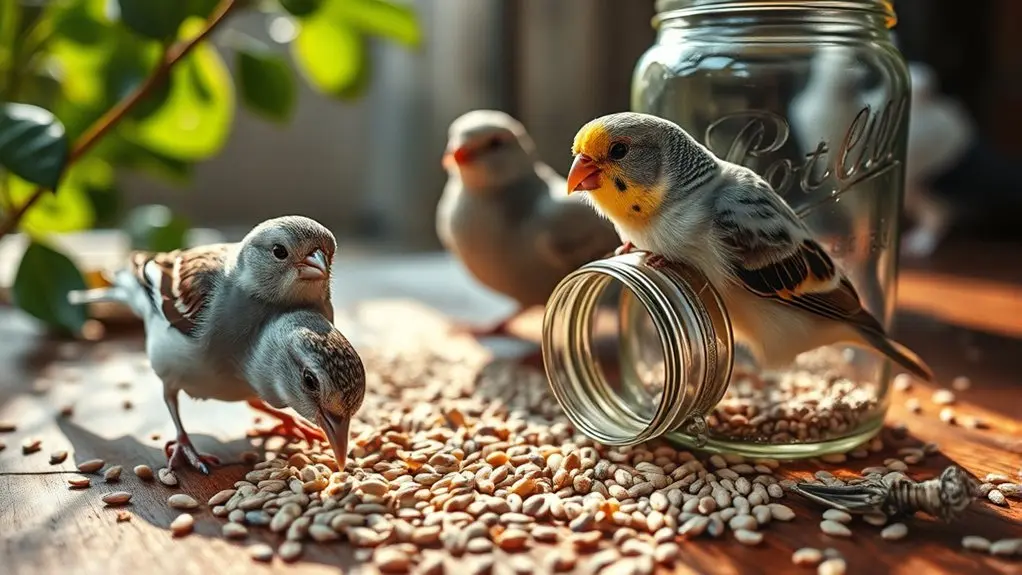
How safe are dry chia seeds for different bird species? You’ll find that chia seeds are generally safe for most seed-eating birds like finches and sparrows, offering notable health benefits.
However, you should be cautious with small birds because dry chia seeds can swell in their stomachs, potentially causing discomfort.
To keep chia seeds safe, always provide unsalted, additive-free seeds and feed them in moderation.
Introducing chia seeds gradually while monitoring your birds for any signs of allergies or digestive issues is essential. By doing so, you guarantee that chia seeds remain a beneficial supplement rather than a risk.
How Dry Chia Seeds Affect Bird Digestion
You need to watch how dry chia seeds expand in a bird’s digestive system because they can absorb a lot of water and swell up.
This expansion might cause blockages or discomfort, especially if your bird isn’t drinking enough water. So, it’s really important to keep fresh water available at all times.
Also, introducing the seeds gradually can help protect your bird’s digestive health.
That way, you’re making sure your feathered friend stays comfortable and healthy.
Seed Expansion Risks
Although dry chia seeds offer nutritional benefits, they can swell up to twelve times their original size once inside a bird’s digestive system. This poses a risk of blockages, especially for smaller species like finches and budgies.
When chia seeds expand rapidly, small birds may experience digestive blockages that cause discomfort and even dehydration if they don’t have enough water. These blockages can be dangerous, making it harder for your bird to pass food properly.
To minimize risks, it’s best to soak chia seeds before feeding them to your pet. This creates a gel-like texture that’s easier to digest and reduces the chances of expansion-related problems.
Always monitor your bird’s water intake when offering chia seeds to keep their digestion safe and healthy.
Digestive Health Impact
Understanding the effects of dry chia seeds on your bird’s digestion helps you provide safer feeding options. Chia seeds are rich in fiber, which supports digestive health by regulating bowel movements in pet birds.
However, because dry chia seeds expand when they absorb moisture, feeding them gradually is essential to prevent digestive upset or blockages. You should introduce them slowly, allowing your bird’s digestive system to adjust.
Keep a close eye on any signs of diarrhea or discomfort, as some birds might be sensitive to chia seeds.
Also, always make sure your pet birds have plenty of fresh water available to aid digestion and reduce risks.
Water Absorption Effects
Since dry chia seeds can absorb up to twelve times their size in water, feeding them without proper hydration can cause serious digestive issues for your bird.
The water absorption effects of chia seeds mean they expand rapidly, which can lead to blockages or discomfort, especially in smaller birds.
To keep your bird safe, follow these steps:
- Always soak chia seeds before feeding to create a gel-like texture that’s easier to digest.
- Provide plenty of fresh water alongside chia seeds to prevent dehydration from moisture being drawn out of the bird’s digestive tract.
- Introduce chia seeds gradually to avoid sudden digestive upset.
Why Feeding Dry Chia Seeds Without Water Can Be Risky
When you feed birds dry chia seeds without providing enough water, you risk causing serious digestive issues.
Dry chia seeds absorb moisture and swell up to twelve times their size, which can lead to gastrointestinal blockages, especially in smaller birds.
Without sufficient hydration, these seeds expand inside their digestive tracts, increasing the risks of discomfort, distress, or even dehydration.
If you don’t guarantee birds have access to plenty of water, the dry seeds can complicate their health further.
To avoid these risks, it’s best to soak chia seeds before feeding, allowing them to develop a gel-like texture that’s easier and safer for birds to digest.
Always monitor your birds closely for any signs of digestive trouble when introducing chia seeds.
How Much Dry Chia Seeds Are Safe to Feed Birds?
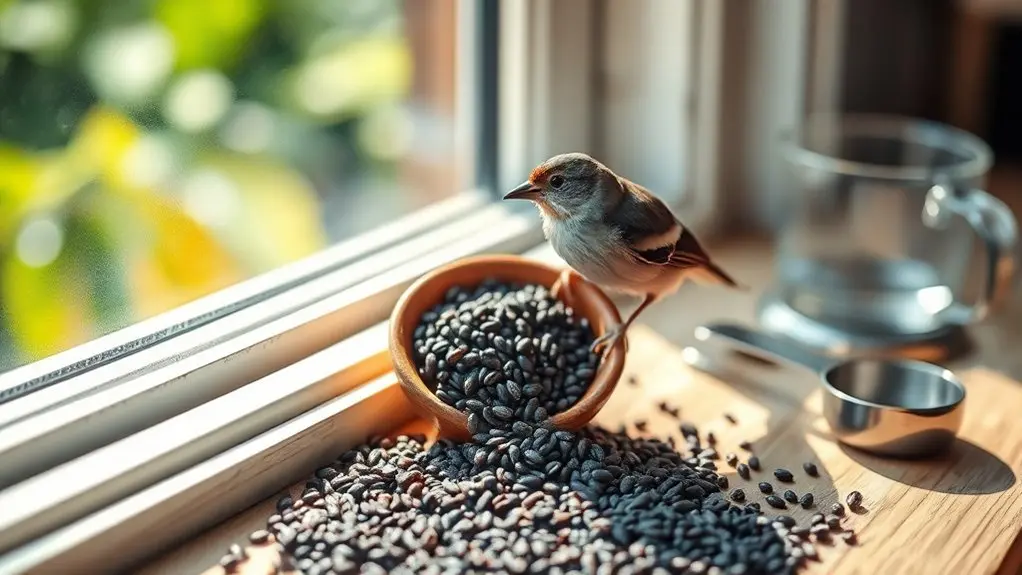
Bird owners should limit dry chia seeds to no more than 10% of their birds’ total diet to keep digestive issues at bay.
Feeding a small amount guarantees it’s safe to feed birds without overloading their system. Here’s how to do it right:
Start with a small amount, like a tiny pinch, and watch your bird’s reaction over several weeks.
Mix chia seeds with other foods to make them more appealing and encourage eating.
Always provide fresh water since dry chia seeds can swell, especially for smaller birds prone to blockages.
Should You Soak Dry Chia Seeds Before Feeding?
Why should you consider soaking dry chia seeds before feeding them to your feathered friends? Soaking chia seeds enhances nutrient availability and helps prevent digestive issues, especially for small bird species.
Because chia seeds can absorb up to twelve times their weight in water, they form a gel-like consistency that’s easier for birds to digest. This soaking process also helps keep birds hydrated, which is essential if they don’t drink enough water.
Small bird species are particularly vulnerable to the swelling properties of dry chia seeds, so soaking makes feeding safer. By soaking, you reduce potential choking risks and improve the seeds’ palatability, encouraging your birds to enjoy their food without discomfort.
Soaking chia seeds is a simple step that benefits your feathered friends’ health and safety.
How to Combine Dry Chia Seeds With Other Bird Foods
Although dry chia seeds offer great nutritional benefits, combining them thoughtfully with other bird foods guarantees your feathered friends get a balanced diet without overwhelming their digestive systems.
When you combine dry chia seeds, keep these tips in mind:
- Mix with regular seeds by adding chia at no more than 10% of the total seed mix to maintain balance and avoid digestive issues.
- Sprinkle dry chia seeds over fresh fruits or vegetables to add texture and boost nutrition, encouraging birds to eat more fresh foods.
- Always provide plenty of fresh water since chia seeds absorb moisture and expand, preventing dehydration.
Which Wild Birds Are Attracted to Dry Chia Seeds?
Curious which wild feathered visitors you might attract with dry chia seeds? Many seed-loving birds, like finches, sparrows, and bluejays, eat chia enthusiastically thanks to their small size and rich nutrition.
Discover which wild birds, like finches and sparrows, eagerly enjoy nutritious dry chia seeds.
Wild birds such as blackbirds and doves also forage for chia seeds in nature, often picking them straight from the plant.
Chia seeds for birds are packed with protein, omega-3s, and fiber, making them a healthy choice.
Since chia seeds don’t require hulling, they’re easy for most birds to consume, increasing their appeal.
Offering dry chia seeds in your feeder, especially mixed with other seeds, can attract a broader variety of wild birds, boosting your chances of enjoyable birdwatching and supporting local bird health.
Seasonal Tips for Feeding Dry Chia Seeds to Birds
Now that you know which wild birds are attracted to dry chia seeds, it helps to understand how to feed them throughout the year. Seasonal tips can optimize benefits like maintaining healthy plumage and energy levels. Here’s what you should do:
- Winter: Offer chia seeds to provide extra protein and energy during cold, scarce months.
- Spring and Summer: Feed chia seeds to support nesting birds with nutrients essential for egg production and chick growth.
- Fall: Increase chia seed availability to help birds build fat reserves before winter.
Always make sure fresh water is accessible since chia seeds swell and can cause dehydration.
Monitor feeders regularly and adjust the seed quantity based on bird activity to keep your feathered friends thriving year-round.
How to Introduce Dry Chia Seeds to Your Birds
When you introduce dry chia seeds to your birds, start by mixing a small pinch into their regular food to see how they respond.
Since birds vary in size, adjust the amount accordingly, ensuring it remains a small diet addition.
Adjust chia seed portions to your bird’s size, keeping the amount small and manageable.
Use pure, unsalted chia seeds without additives to keep their diet safe. Gradually increase the chia seeds over about three weeks, paying attention to your bird’s reaction.
Because chia seeds absorb moisture, always provide plenty of fresh water to prevent dehydration and digestive issues.
Observe your birds’ eating habits closely and modify the serving size based on their acceptance and tolerance.
This careful introduction helps integrate chia seeds smoothly into your bird’s diet, supporting their health without overwhelming their system.
Monitoring Bird Reactions to Dry Chia Seeds
Although introducing dry chia seeds can benefit your birds, you’ll need to watch closely for any adverse reactions or digestive issues. Proper monitoring guarantees your birds stay safe while enjoying these nutritious seeds. Start with a small amount and observe how they respond.
Here’s what to keep an eye on:
- Check for digestive discomfort or blockages since dry chia seeds swell when wet, which can be risky without enough water.
- Watch for signs of allergies or intolerance, like diarrhea or behavior changes.
- Confirm fresh water is always available; hydration is key to safely consuming dry chia seeds.
Frequently Asked Questions
Can Dry Chia Seeds Help Birds With Feather Growth?
Yes, dry chia seeds can help you improve your bird’s feather growth. They provide excellent feather nutrition through omega-3 fatty acids and protein, which are essential for strong, healthy feathers.
You’ll also support seed digestion thanks to their rich fiber content, and that helps nutrient absorption.
Including chia seeds in your bird’s diet offers dietary benefits like antioxidants that protect feathers from damage.
All of this helps your bird develop vibrant, well-maintained plumage over time.
Are There Any Birds That Should Never Eat Dry Chia Seeds?
Yes, you should never feed dry chia seeds to small birds like finches or canaries because of chia seed toxicity risks tied to their digestive health.
These seeds swell and can cause blockages, especially if your bird is prone to dehydration or has sensitive digestion.
To guarantee safe feeding practices, only offer chia seeds soaked in water and always provide fresh water alongside, protecting your bird’s digestive system from harm.
How Do Dry Chia Seeds Compare to Other Bird Superfoods?
Dry chia seeds offer superior nutritional benefits compared to many seed alternatives, thanks to their rich omega-3s, protein, and fiber.
When you include them in your bird’s diet, you provide balanced vitamins and minerals that support overall health.
Just follow feeding guidelines by offering chia seeds in moderation alongside other seeds like sunflower or millet to guarantee variety.
Their unique texture also encourages your bird to eat more, making chia a smart superfood choice.
Can Dry Chia Seeds Cause Allergies in Birds?
Yes, dry chia seeds can cause allergies in some birds, so you need to watch for allergy symptoms like digestive upset or behavior changes.
While chia seed benefits include improved nutrition and energy, feeding precautions are essential.
Start with small amounts mixed into their regular diet and observe your bird closely.
If you notice any adverse reactions, stop feeding chia seeds and consult a vet to keep your feathered friend safe and healthy.
What Is the Best Time of Day to Feed Birds Dry Chia Seeds?
You’ll want to feed birds dry chia seeds early in the morning or late afternoon, as these feeding schedules align with their peak activity times.
Studies show birds consume up to 30% more food during these periods, ensuring ideal nutrition.
Mixing chia with other seed varieties boosts their diet diversity.
Conclusion
Now that you know the ins and outs of feeding dry chia seeds to birds, you’re ready to give it a try. Just remember not to count your chickens before they hatch.
While chia seeds offer great nutritional perks, it’s essential to introduce them carefully and provide water to avoid any digestive issues. Keep a close eye on your feathered friends’ reactions, and you’ll help them enjoy these tiny superfoods safely and happily.