
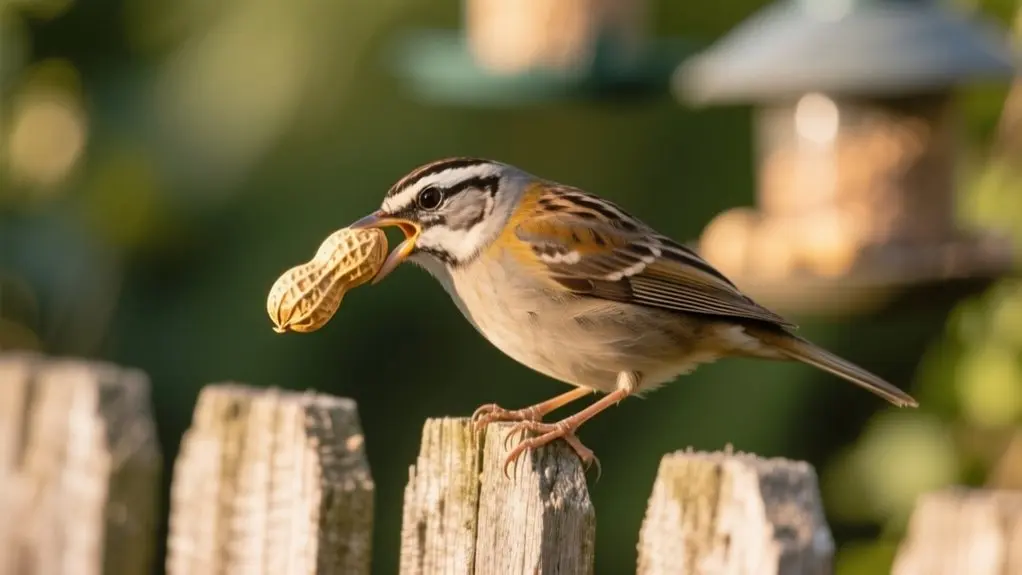
You can offer birds dry roasted peanuts only if they’re unsalted and free from harmful oils. But keep in mind that raw, unsalted peanuts are safer and healthier for them. Salted or flavored peanuts can cause dehydration and serious health issues.
Larger birds may enjoy dry roasted peanuts, but smaller birds might struggle with their hardness. If you want to know which types and feeding methods work best to keep your feathered friends healthy, there’s more to explore.
Are Dry Roasted Peanuts Safe for Birds to Eat?
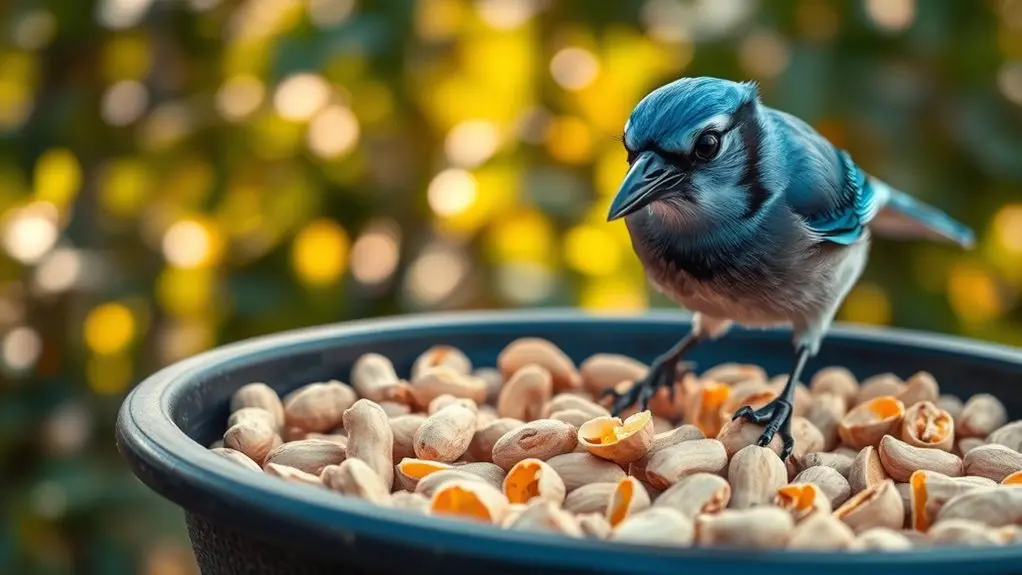
How safe are dry roasted peanuts for birds? You might think offering them a tasty snack is harmless, but dry roasted peanuts can pose health risks.
Even unsalted dry roasted peanuts may contain oils that aren’t ideal for birds. Since birds can’t metabolize salt effectively, any salt content in dry roasted peanuts makes them even less safe.
Even unsalted dry roasted peanuts contain oils unsuitable for birds, and any salt makes them even more harmful.
Experts usually recommend raw peanuts specifically packaged for bird feeding because they avoid these issues and provide better nutrition.
While birds do benefit from high-protein foods like peanuts, the way peanuts are prepared matters a lot.
How Salt in Peanuts Affects Bird Health
Salt in peanuts can seriously harm birds because their bodies aren’t designed to handle high sodium levels. When you offer salted peanuts, you risk causing dehydration, increased blood pressure, and other health issues.
Birds can’t efficiently metabolize salt, leading to dangerous electrolyte imbalances.
Here’s what you need to know about salted peanuts and bird health:
- Salted peanuts can cause lethargy and excessive thirst in birds.
- High salt intake may lead to organ damage over time.
- Avoid salted peanuts and choose unsalted options to keep birds healthy.
Raw vs. Roasted vs. Dry Roasted Peanuts for Birds
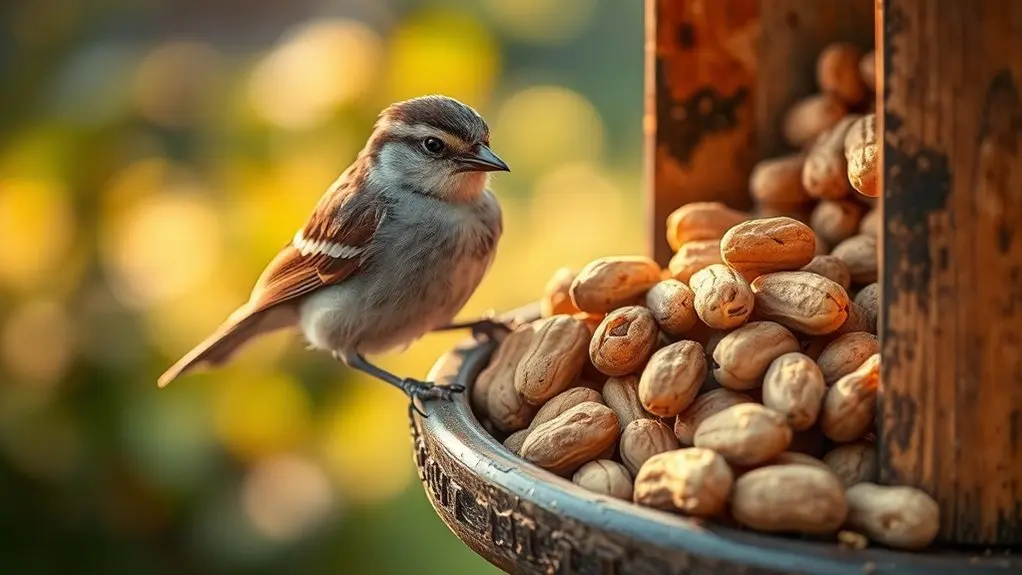
You’ll want to choose raw peanuts when feeding birds because they’re safer and free from harmful additives.
Roasted peanuts might seem like a good option, but they often contain oils and salts that can hurt birds.
Raw Peanuts Safety
Although dry roasted peanuts are popular, they often contain added salt, which can harm birds. So, it’s best to choose unsalted options.
When it comes to raw peanuts, they’re generally safe and nutritious for birds. Experts haven’t found health issues linked to feeding raw peanuts to wild birds, making them a reliable choice.
Here’s why you should consider raw peanuts for your feathered friends:
- They’re free from added salts and oils often found in roasted varieties.
- Raw peanuts provide a high-protein snack that supports bird health.
- You can easily monitor and verify they’re free of harmful additives.
Stick to unsalted, raw peanuts to keep your birds happy and healthy without risking their well-being.
Roasted Peanuts Risks
While raw peanuts offer a safe and nutritious snack for birds, roasted peanuts come with potential risks you should be aware of. Roasted peanuts risks include added salt and oils, which birds can’t metabolize well.
Dry roasted peanuts, especially salted ones, can harm birds. Their hard texture may also make eating difficult, especially for smaller species. To keep your feathered friends safe, stick to raw, unsalted peanuts meant for birds.
| Peanut Type | Safety for Birds | Notes |
|---|---|---|
| Raw Peanuts | Safe and nutritious | Best option, unsalted only |
| Roasted Peanuts | Risky | May contain salt and oils |
| Dry Roasted | Risky, especially salted | Hard texture, difficult to eat |
Which Birds Love Dry Roasted Peanuts?
Because dry roasted peanuts pack a high protein punch, larger birds like blue jays, woodpeckers, and crows can’t get enough of them.
If you want to attract these birds, you’ll notice they eagerly grab peanuts and sometimes even store them for later.
Keep in mind, smaller birds might struggle with dry roasted peanuts and prefer softer, shelled options.
Here are the birds that love peanuts the most:
- Blue jays, known for their habit of storing peanuts
- Woodpeckers, who enjoy cracking open the shells
- Crows, which are attracted to the rich protein content
Offering dry roasted peanuts can draw these favorites to your feeder, but remember to choose unsalted versions to keep them safe and healthy.
Should You Offer Peanuts in the Shell or Shelled Peanuts?
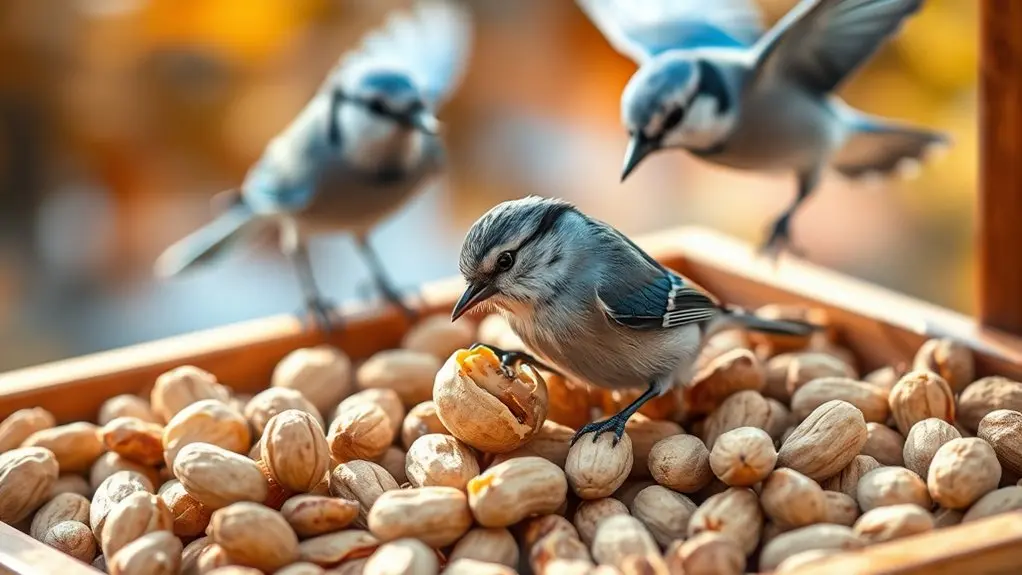
How do you decide whether to offer peanuts in the shell or shelled to your backyard birds? It depends on the birds you want to attract.
Blue jays and red-bellied woodpeckers prefer peanuts in the shell, enjoying the challenge of cracking them open.
However, smaller birds like chickadees and titmice struggle with peanuts in the shell, so shelled peanuts are a better choice for them. Shelled peanuts are more accessible and attract a wider variety of birds.
Keep in mind, offering peanuts in the shell may invite squirrels, which can compete for food.
Regardless of the type, always provide unsalted, unseasoned peanuts to guarantee your feathered visitors stay healthy and benefit from the high protein content.
How to Choose the Best Dry Roasted Peanuts for Your Bird Feeder
Selecting the best dry roasted peanuts for your bird feeder means focusing on the health and safety of your feathered visitors. You want to avoid any peanuts that could harm them, so picking the right type is essential.
Here’s what to look for:
- Unsalted peanuts: Salt can be dangerous for birds, so choose peanuts without added salt.
- Peanuts made for birds: These are free from harmful oils, preservatives, or artificial flavors.
- Fresh, shelled peanuts: Smaller birds find shelled peanuts easier to eat, and freshness prevents mold or spoilage.
How to Prepare Dry Roasted Peanuts Safely for Birds
When you prepare dry roasted peanuts for your birds, ensuring they’re unsalted and free from additives is essential to keep your feathered friends healthy.
Choose peanuts that are plain and avoid those with oils or flavorings to make peanuts safe for avian consumption.
Opt for plain peanuts without oils or flavorings to ensure they are safe and healthy for your birds.
Shelled dry roasted peanuts work best, as many birds can access them easily.
Before offering, check the peanuts for freshness and discard any that show signs of mildew or spoilage.
Serve peanuts in moderation to prevent digestive issues, and always monitor how your birds respond to this treat.
Why Salted and Flavored Peanuts Can Harm Wild Birds
You mightn’t realize it, but salted peanuts can actually be harmful to wild birds. They can mess with the birds’ electrolyte balance and lead to dehydration.
It’s not something you’d immediately think about, right?
And when it comes to flavored peanuts, those often have additives that aren’t good for birds at all. Some of these additives can be toxic and cause real damage to their health.
So, knowing these risks is pretty important.
By understanding this, you can make better choices and pick safer options that help protect our feathered friends.
It’s a small change that makes a big difference!
Salt Effects On Birds
Although salted and flavored peanuts might seem like a tasty treat for wild birds, they can actually cause serious health problems. The salt effects on birds are harmful because birds can’t properly process salt, which leads to dehydration and organ damage.
When you offer salted peanuts, you risk upsetting their delicate electrolyte balance, increasing thirst and urination that can be fatal.
Keep these points in mind about salt effects on birds:
- Excess salt intake disrupts hydration and can cause kidney failure.
- Smaller bird species are especially vulnerable to salt’s harmful effects.
- High sodium diets correlate with higher mortality in wild bird populations.
To protect birds, always choose unsalted, raw peanuts. This way, you provide a nutritious snack without risking their health.
Flavored Peanut Risks
Salted peanuts aren’t the only risk for wild birds. Flavored peanuts can be even more harmful. These peanuts often contain artificial seasonings and preservatives that can be toxic to birds.
Because wild birds can’t process salt well, the added sodium in flavored peanuts disrupts their electrolyte balance. This can lead to dehydration and kidney damage. Feeding on such peanuts may also cause neurological issues and, in severe cases, death.
When birds develop a taste for flavored peanuts, they might ignore their natural diet. That results in nutritional deficiencies.
To protect wild birds, you should only offer unsalted, raw, or dry roasted peanuts without any flavoring.
Avoid flavored peanuts altogether to guarantee you’re supporting birds’ health and well-being.
Health Implications For Wildlife
When you feed wild birds peanuts that contain salt or artificial flavors, you put their health at serious risk. Birds can’t process salt well, which may cause dehydration and kidney problems.
Artificial additives in flavored peanuts can disrupt their natural diets, leading to digestive issues and lethargy. To protect wildlife, always choose unsalted peanuts. They provide the necessary nutrients without harmful effects.
Keep in mind:
- Salted peanuts can cause increased thirst, digestive problems, and even death.
- Flavored peanuts often contain artificial ingredients harmful to birds.
- Unsalted peanuts support healthy wild bird populations and align with community guidelines.
How to Keep Squirrels Away From Your Peanuts
If you want to keep squirrels from raiding your peanuts, using squirrel-proof feeders is a smart move. These feeders let birds feed while blocking squirrels. You can also hang peanuts in mesh feeders or on elevated platforms to limit squirrel access.
Avoid scattering peanuts on the ground, as it attracts squirrels. Setting a feeding schedule reduces the time peanuts are available, which discourages squirrels. Surrounding feeders with natural deterrents like hot pepper flakes can further protect your peanuts without harming birds.
| Method | Description | Benefit |
|---|---|---|
| Squirrel-proof feeders | Designed to exclude squirrels | Only birds feed |
| Elevated feeders | Placed out of squirrels’ reach | Limits squirrel access |
| Natural deterrents | Hot pepper flakes, plants | Discourage squirrels safely |
Alternatives to Dry Roasted Peanuts for Feeding Birds
Although dry roasted peanuts might seem like a convenient choice, they often contain unhealthy oils and salt that can harm birds.
To keep your feathered friends healthy, consider alternatives to dry roasted peanuts for feeding birds that are safe and nutritious.
You can try:
- Unsalted, raw peanuts or shelled peanuts for easier access
- Seed mixes including sunflower, safflower, and nyjer seeds
- Unsalted peanut butter offered in moderation
These options provide essential nutrients without the risks associated with salted or oily peanuts.
By choosing these safe for birds alternatives, you’ll attract a variety of species while supporting their well-being.
Always opt for fresh, unsalted, and natural foods to create a bird-friendly feeding environment.
Tips for Keeping Your Birds Healthy While Feeding Peanuts
When you’re feeding peanuts to your birds, it’s best to choose unsalted, raw, and shelled ones. This helps keep them safe and healthy.
Be careful to avoid peanuts with added salts or oils because those can actually harm your birds’ wellbeing.
Also, try to offer peanuts in moderation.
And don’t forget to regularly check that the peanuts are fresh—this supports a balanced diet for your feathered friends.
Choosing Safe Peanut Types
Since your goal is to keep birds healthy while feeding them peanuts, choosing the right type is essential. Avoid dry roasted peanuts because they often contain added oils or salts that can harm birds. Instead, focus on safer options that promote their well-being.
Here are tips for selecting safe peanut types:
- Always pick unsalted peanuts to prevent salt-related health issues.
- Opt for raw peanuts over dry roasted peanuts to avoid harmful additives.
- Use shelled peanuts for easy consumption or in-shell peanuts to attract larger birds, but be mindful of food competition.
Managing Salt And Additives
Because peanuts can contain hidden salts and additives, managing what you offer is key to keeping your birds healthy.
When feeding dry roasted peanuts, always opt for unsalted varieties specifically labeled for bird feeding.
Salted peanuts pose significant health risks since birds can’t properly metabolize sodium. While washing roasted peanuts might reduce some salt, it’s not a reliable solution.
To avoid harmful preservatives and oils, check the ingredient list carefully before feeding. Unsalted, raw peanuts are the safest choice, providing high protein without the dangers of additives.
By managing salt and additives thoughtfully, you guarantee your feathered friends enjoy tasty treats without compromising their health.
Feeding Methods And Tips
Although feeding peanuts can attract a variety of birds, choosing the right methods guarantees they stay healthy and safe. When feeding peanuts, always select unsalted and unroasted options to avoid harmful salt and oils.
You can make your feeding spot inviting and safe by following these tips: Use mesh or platform feeders to accommodate larger birds while keeping smaller ones from stealing the food.
Scatter peanuts on the ground or table to encourage diverse bird visits. Offer a mix of shelled and in-shell peanuts to cater to different bird preferences.
Remember to check peanuts regularly for freshness and mold to protect birds from illness.
Why Dry Roasted Peanuts Are Popular for Bird Feeding
When you offer dry roasted peanuts to birds, you provide them with a high-protein snack that fuels their energy, especially in colder months.
Dry roasted peanuts are popular because many backyard species like jays and woodpeckers find their flavor irresistible.
You’ll also find that these peanuts have a texture that’s easier for birds to eat compared to raw peanuts, which helps smaller species enjoy the treat.
Just make sure you choose unsalted dry roasted peanuts to protect birds from harmful salt intake.
By feeding dry roasted peanuts, you attract a variety of birds, enhancing your birdwatching experience and connecting you more closely with local wildlife.
This makes dry roasted peanuts a convenient and rewarding choice for your backyard feeders.
Frequently Asked Questions
Can Baby Birds Safely Eat Dry Roasted Peanuts?
You shouldn’t feed baby birds dry roasted peanuts because they don’t support proper baby bird nutrition. The roasting process can change the peanuts’ nutrients and make them hard to digest, potentially causing health issues.
Instead, offer unsalted raw peanuts or softer, age-appropriate foods to meet their dietary needs.
Always prioritize safe options and consult a wildlife expert to guarantee you’re providing the right nutrition for healthy growth and development.
How Should I Store Dry Roasted Peanuts for Bird Feeding?
You should store dry roasted peanuts for bird feeding in airtight storage containers to keep them fresh and dry.
Choose containers that seal well to prevent moisture and mold buildup.
Keep the containers in a cool, dry place away from direct sunlight.
If you buy peanuts in bulk, divide them into smaller portions in separate containers to reduce air exposure.
Regularly check for spoilage to guarantee the peanuts remain safe for your birds.
Do Dry Roasted Peanuts Attract Other Wildlife Besides Birds?
Yes, dry roasted peanuts definitely attract other wildlife besides birds.
When you use them, you’ll notice wildlife interactions increase as squirrels, raccoons, and rodents get drawn in by the peanuts’ strong aroma and high fat content.
If you’re feeding birds outdoors, expect some competition from these opportunistic feeders.
Managing these interactions means you might need to adjust feeding strategies to keep the focus on your feathered friends.
Can Dry Roasted Peanuts Cause Allergies in Wild Birds?
Allergy symptoms in wild birds from dry roasted peanuts are as rare as hen’s teeth. While some birds might show mild reactions, most handle these peanuts just fine.
You shouldn’t worry much about allergies, but watch for signs like puffed-up feathers or lethargy.
Just remember, avoid salted or flavored peanuts since additives can cause more harm than allergy symptoms.
Stick to plain, dry roasted peanuts to keep your feathered friends safe and happy.
How Often Should I Offer Dry Roasted Peanuts to Birds?
You should limit the feeding frequency of dry roasted peanuts to birds, offering them only as an occasional treat.
Since these peanuts can contain added oils and salt, feeding them too often might harm the birds’ health.
Instead, focus on providing unsalted, raw peanuts more regularly.
Pay attention to how the birds respond, and if they seem interested, you can increase the feeding frequency slightly.
Just keep it moderate to guarantee their well-being.
Conclusion
So, can you safely offer dry roasted peanuts to birds? Absolutely. Just watch the salt content and avoid heavily salted varieties.
Think of it like a vintage telegram: keep your message simple and clear. Opt for unsalted, shelled peanuts to attract a variety of birds without risking their health.
Remember, feeding birds wisely helps keep your feathered friends happy and healthy. It turns your backyard into a lively aviary that even the most old-fashioned birdwatcher would admire.